Chapter 7 Flight to Amsterdam, 1751
Jacob Emden, Megillat Sefer · Hebrew (Kahana, Warsaw 1896/97) with an English draft translation · work in progress
Page 178 (scan 198)
it was done, and the rabbinate of the two [communities] was lost [to him] for more than three years. Our friends already thought that the horn of Eybeschütz ⟨S: "the said wicked one"⟩ had been cut off altogether; especially as meanwhile the king, may his majesty be exalted, had been promised that the days of reckoning for the said ⟨S: "abomination"(?)⟩ had drawn near, that "when he is judged, he shall go out guilty" (Ps. 109:7), and that there would be no rising from his fall. And so his case was almost concluded for guilt in the court of the king, may his majesty be exalted, and he had already been charged to answer fourteen claims. But he ⟨S: "the oppressor"⟩ asked for an extension of time of some months; meanwhile his affair changed, to his passing good and his final harm, and to the collecting of old debts from the Three Communities. And I, in general, "never ate with pleasure" (Job 21:25) ⟨S: a nine-line note, partly read: "all his days he sat … boasting of the lusts of his soul … they shall rise up, those that bite him, in time …"⟩.
When the Lord brought me back to my house, everyone said: surely Eybeschütz ⟨S: "the priest"(?)⟩ with his party is obliged to pay the damages they caused me; and even they themselves had already despaired, and thought to come to terms with me. In what they answered me — that it was not fitting for me to ask this of the householders in general ⟨S: a five-line note, partly read: "indeed in this matter my friends persuaded me … and not to me … words"⟩, but that they would endeavour with the opposing party to come to terms with me willingly, for they thought that they would turn back from their evil way and regret what had passed, that they had strengthened the hands of Eybeschütz ⟨S: a two-word note, partly read: "… in his hall"⟩; for they would see that he has no helper, and then others too, and all this people, will come to their place in peace. Therefore they did not seek to go on with the householders in general, as they had thought, since he had already been defeated in the war and had fallen, plundered, without rising. But I answered them: "Let not him that girds on boast" (1 Kgs. 20:11), "and do not boast of tomorrow" etc. [a] (Prov. 27:1); and I had already understood that their words were not at all according to proper judgment. Therefore, I said, one must gird oneself with strength for the war — and not for my own sake only do I say it, but also for the sake of the root of the matter, namely to cut down the rising tree ⟨S: "in the exile"⟩ that harms the many, which turns about in his intrigues, and his helpers are many for evil. And I see that you have not fulfilled your duty, to set out your claims and your demands against him properly; only lightly have you held burning coals in your hands, and gone round and round in a circle, and not come to the centre — for I was not here in all this, and they did not inform me in Amsterdam what they were doing, when they presented their strong arguments in the court of the king, may his majesty be exalted. And they relied on their wisdom, and trusted in their understanding, "and there is no wisdom nor understanding against the Lord" (Prov. 21:30), "who turns the wise backward" (Isa. 44:25). And I, with God's help, was helped, and from Him my judgment went out to the light for good. And I said to them: leave it to me, and I will stand up to judgment with him ⟨S: "with this oppressor, and you"(?)⟩ and those who help him ⟨S: a note cut off, partly read: "and wicked …"⟩; and "be not righteous overmuch" (Eccl. 7:16), and do not have pity on the cruel. I will set out my case in order and as is fitting, and I will show his cunning and deceit clearly to the eyes of the sun; then you will understand and succeed, with God's help, in what you seek too. But I had none to hear me, for my friends in whom I trusted opposed me and protested to me not to ask for payment of my damages; therefore perforce I was forced to "sit and not act". But in truth, as I imagined so it was; and the Lord made their counsel foolish, so that
Kahana's notes
- [a] Abbreviation of: "and do not boast of tomorrow" (Prov. 27:1).
נעשה, ואבד הרבנות מהב' יותר משלש שנים; וכבר חשבו אוהבינו שגם נגדעה קרן אייבשיצר מכל וכל, ביחוד אחר שבתוך כך הבטיחו מחצר המיר"ה, שקרבו ימי הפקודה להנ"ל בהשפטו יצא רשע, ושלא תהיה תקומה למפלתו, וכך היה כמעט נגמר דינו לחובה במשפט המיר"ה, וכבר הוטל עליו להשיב על י"ד טענות; אך הוא בקש הרחבת זמן איזה חדשים, בתוך כך נשתנה ענינו לטובתו העוברת ולרעתו המוחלטת, ולגבות חובות ישנות מג"ק. ואנכי בכלל לא אכלתי בטובה, וכאשר החזירני ה' לביתי היו הכל אומרים, שבודאי מחויב אייבשיצר עם הצד שלו, לשלם נזקי שגרמו לי, ואפילו הם עצמם כבר נתייאשו, וחשבו להתפשר עמדי. במה ענוני, שלא יתכן ממני לבקש זה בעש"ג, אולם הם ישתדלו עם הצד המתנגד להתפשר עמי ברצון טוב, כסבורים היו שישובו מדרכם הרעה ויתחרטו על העבר. מה שהיו מחזיקים ידי אייבשיצר, כי יראו בא עד קצו אין עוזר לו, אז יהיו לאחדים גם כל העם הזה על מקומו יבוא בשלום; לכן לא בקשו לילך עוד בעש"ג כפי מחשבתם, שכבר נצחו במלחמה ונפל שדוד בלי תקומה; אמנם אנכי עניתי להם: אל יתהלל חוגר וא"ת ביום מחר וגו' א; וכבר הבנתי שלא כלכלו דבריהם במשפט כראוי, לכן א"ל צריך להתאזר חיל במלחמה, ולא בשבילי בלבד אני אומר, אלא גם בשביל עיקר הדבר, דהיינו כדי להפיל האילן העולה ומזיק את הרבים, המתהפך בתחבולותיו ורבו עוזריו לרעה, ואנכי הרואה שלא יצאתם די חובתכם, להציע טענותיכם ותביעותיכם נגדו כפי הראוי, ורק כחותה גחלים בידיו, וכסובב בעגלה ולא בא עד המרכז, כי אני לא הייתי כאן בכל אלה, ולא הודיעוני לאמשטרדם מה הם עושים, כשהיו מגישים עצומותיהם במשפט המיר"ה, והמה סמכו על חכמתם, ובטחו על בינתם, ואין חכמה ואין תבונה לנגד ה', משיב חכמים בעיניהם אחור, ואני ב"ה נעזרתי ומידו יצא לאור משפטי לטוב; ואמרתי להם הניחו לי, ואתיצב לדין עמו והעוזרים לו, ולא תהיו צדיקים הרבה ולא תרחמו על אכזרים, אני אערוך משפטי כסדר וכהוגן, ואראה ערמת ומרמת אותו איש בבירור לעיני השמש, אז תשכילו ותצליחו בעזה"י במבוקש שלכם ג"כ; אבל שומע לא היה לי, כי אוהבי אשר בטחתי בהם התנגדו אלי ומיחו בידי שלא לבקש תשלומי נזקי, לכן בהכרח הייתי בשב ואל תעשה, אבל באמת כאשר דמיתי כן היתה, וה' סכל עצתם למען
- [א] ר"ת: ואל תתהלל ביום מחר (משלי כ"ז א').
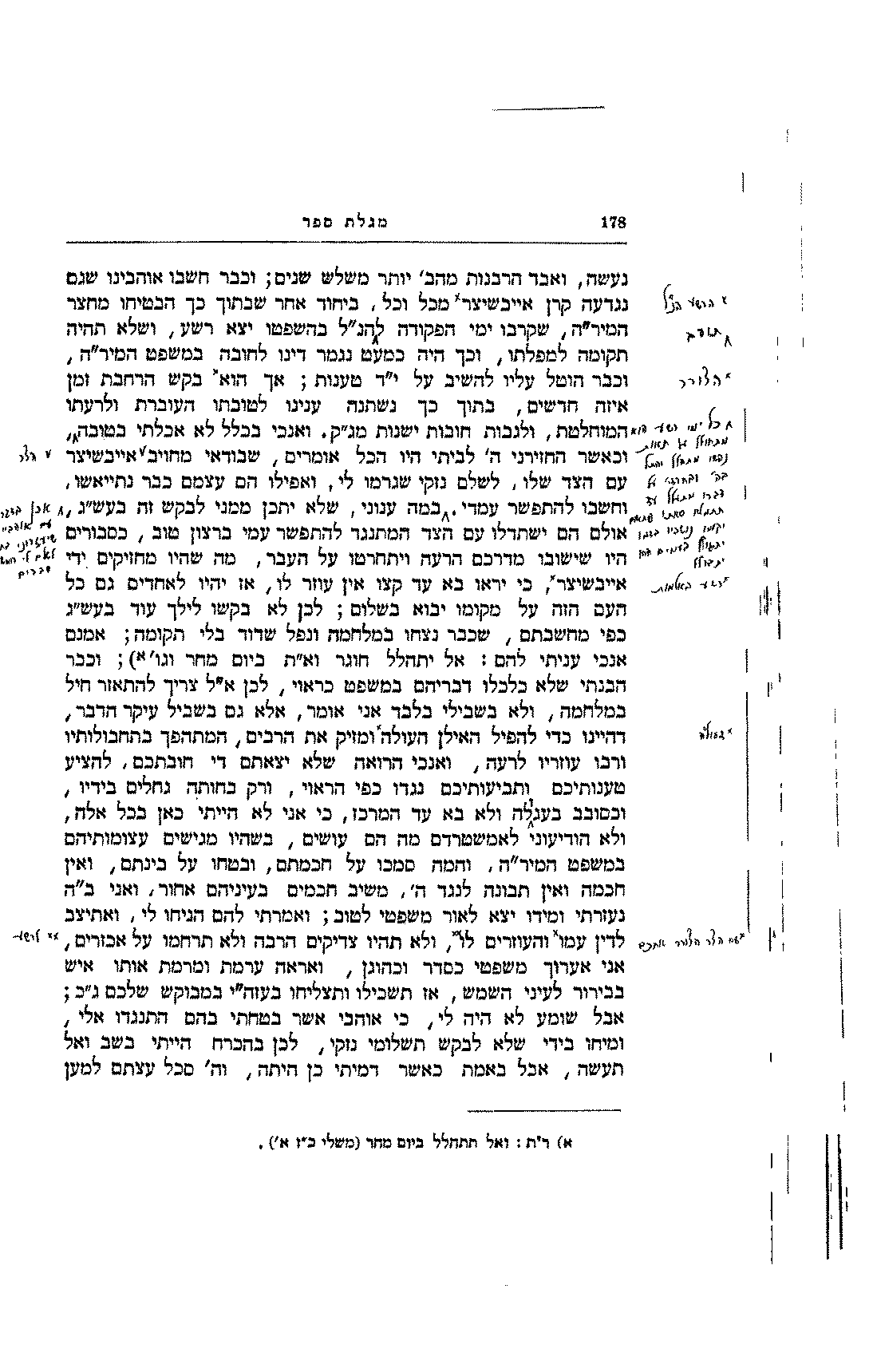
Margin readings in Scholem's copy (10)
| Printed anchor | Type (key sheet) | Mark | Reading | Certainty |
|---|---|---|---|---|
| נגדעה קרן אייבשיצר x מכל וכל | X: substitution | x mark; 2-word note in right margin | הרשע הנ"ל | sure |
| שקרבו ימי הפקודה להנ"ל ^ בהשפטו | V: omission | caret; one word in right margin | תועב(?) | uncertain |
| אך הוא x בקש הרחבת זמן | X: substitution | x mark; one word in right margin | הצורר | sure |
| ואנכי בכלל לא אכלתי בטובה ^, | V: omission | caret; 9-line note in right margin | כל ימי ישב הוא / מחולל על תאוות(?) / נפשו מתהלל והולל(?) / ה' ובתרגי(?) על / דברו מתהלל על(?) / תהלות(?) סאתו(?) ... / יקומו נשכיו בזמן / יתבוללו בזמים הוא(?) / ...בולו (partly read) | partial |
| שבודאי מחויב v אייבשיצר | V: omission | v mark; one word in left margin | גלח(?) | uncertain |
| שלא יתכן ממני לבקש זה בעש"ג ^, | V: omission | caret; 5-line note in left margin (cut off) | אכן בדבר / זה אוהבי / שידלוני ב... / ולא לי ... / ... דברים (partly read) | partial |
| מחזיקים ידי אייבשיצר x, כי יראו | X: substitution | x mark; 2-word note in right margin | ... באולמו (partly read) | partial |
| להפיל האילן העולה x ומזיק את הרבים | X: substitution | x mark; one word in right margin | בגולה | fairly sure |
| ואתיצב לדין עמו x והעוזרים לו | X: substitution | x mark; note in right margin | עם הלז הצורר ואתכם(?) | uncertain |
| והעוזרים לו xx, ולא תהיו צדיקים | X: substitution | double x mark; note in left margin (cut off) | ורשע... (cut off) | partial |
Page 179 (scan 199)
he no longer disturbed the rest of this place. Surely the Holy One, blessed be He, does not do judgment without justice (cf. b. Berakhot 5b). They sought pretexts to "eat of the fruit of their counsel" (Prov. 1:31), for our sins; and the order was turned over, the upper below and the lower above (cf. b. Pesaḥim 50a). Eybeschütz ⟨S: "the wicked one"⟩ and his party went up in deceitful scales, and the heart of the king, may his majesty be exalted, inclined to him, as I wrote above. Therefore "the treacherous dealer deals treacherously, and the spoiler spoils" (Isa. 21:2), "like the piercings of a sword" (Prov. 12:18) — a wicked man and a sinner. All this their foolish counsel caused; "and the sons of iniquity afflicted more than at first" (cf. 2 Sam. 7:10), and were brazen-faced to fall upon me suddenly to plunder my tents. And even if this time too the Lord did not let them harm me, even so they caused great expense, the loss of much money for nothing, and very great worry; and "had it not been the Lord who was for us" (Ps. 124:1), "then they would have swallowed us alive" (Ps. 124:3).
This was when I had rested at home a little. Many of our friends entreated me to write, in the manner of a responsum, on the subject of the quarrel for the Lord and the said case ⟨S: "of the troubler"⟩, and I did as I was commanded. They also asked me to compose a general letter to all the rabbis and sages of the communities, for our friends to come and sign, to make known the certainty of the words of truth (Prov. 22:21), how they had dealt uprightly with him ⟨S: "with the said wicked one, who conspires against the Lord"⟩. In this too I did not turn aside from their commands; I did not transgress, and I did not delay in doing their will. I wished to fulfil what they asked; I hurried and was diligent; but they were slothful in the matter, and did neither this nor that.
Meanwhile there came out in print the book of ⟨S: "the apostate"⟩ Karl Anton mentioned above, whose author is Eybeschütz himself, as said; and he wrote to the king, may his majesty be exalted, to ask him to stand at his right hand, since he shows a friendly face to all men ⟨S: "to the nations of the world"⟩. In the end, at Ḥanukkah [5]513 [1752], the word of the king went out concerning Eybeschütz: that the power and the honour were taken from him, so that he could no longer compel any man to stand in judgment before him, as before, when the rod and the strap had been in the hand of the head of the court of the Three Communities — this power was taken from him; but the rest of the office of head of the court was left to him. And a decree was decreed that no one should speak any more of the matter of the amulets, nor disgrace or condemn him, on pain of a great fine.
But our party did not let its hands slacken because of this, and went back to accept the judgment of the king, may his majesty be exalted. And not only this, but some known men from the other side joined them; for they saw the intrigues of the deceitful party, who at first had promised that in any case he would clear himself in a Jewish court before the sages of the generation, if only they would first help him in the court of the nations; and after he had been acquitted, then his righteousness would be revealed to the eyes of all, according to the law of Moses and of Judaism. And when they had trusted in his deceitful words and had done their part in the court of the king, may his majesty be exalted — how much money and how many lives they sank in this vain building! — they had laboured in vain. They came to him and said to him that it was now incumbent on him to do his part too, to keep his promise to them, to clear his merit in a Jewish court before middle-of-the-road rabbis whom they would choose. Then he laughed and mocked them, and sent them away empty. When they saw that there was deceit in his mouth, and that they had lost their purse and their world because of him ⟨S: "because of the said wicked one, to Heaven and to men(?)"⟩, then they recognised their sin and their transgression, and knew that I and my party are righteous, faithful to the Lord. Therefore they rebelled against him and turned their back on him; and they too were added to his haters ⟨S: "of the abomination"⟩, and joined our party, and wrote and signed to pursue him in a Jewish court
השבית מנוחת המקום הלז עוד, בודאי לא עבד הקב"ה דינא בלא דינא. תאנים היו לאכול מפרי מועצתם בעו"ה, והפכה השיטה עליונים למטה ותחתונים אייבשיצר וסיעתו עלו במאזני מרמה, ולב המיר"ה אליו נטה כמש"ל, על כן הבוגד בוגד והשודד שודד, כמדקרות חרב בוטה, רשע וחוטא, כל זה גרמו בעצתם הסכלות, והוסיפו בני עולה לענות יותר מבראשונה, והעיזו פניהם לפול עלי פתאום לשדוד אהלי, ואף אם גם בפעם הזאת לא נתנני ה' להרע עמדי מ"מ גרמו הוצאה רבה, אבוד ממון רב לבטלה ודאגה רבה מאד, ולולי [ה'] שהי"ל אזי חיים בלעוני. זה שבתי הבית מעט, חלו פני רבים מאוהבינו, שאכתוב דרך שו"ת על נדון הריב לה' ומשפט הנ"ל, ואעש כאשר צויתי, גם בקשו ממני שאסדר מכתב אגרת כללי, לכל רבני וחכמי הקהלות שיבואו על החתום אוהבינו, להודיע קושט אמרי אמת איך התנהגו ביושר עמו, גם בזה לא סרתי ממצותם, לא עברתי ולא אחרתי לעשות רצונם, חפצתי למלא שאלתי מהרתי ונזדרזתי, אך הם נתעצלו בדבר ולא עשו לא זה ולא זה. בתוך כך יצא בדפוס ס' של קארל אנטאן הנ"ל, שמחברו הוא אייבשיצר בעצמו כנ"ל, ונכתב אל המיר"ה לבקש מלפניו שיעמוד לימינו, באשר הוא מסביר פנים לכל אנשים. סוף דבר בחנוכה תקי"ג יצא דבר המלך על אודות אייבשיצר שנטל ממנו הכח והכבוד שלא יוכל לכוף עוד שום אדם לעמוד לדין לפניו, כאשר לפנים היה מקל ורצועה ביד האב"ד דג"ק, כח זה ניטל ממנו, אך שאר דבר האב"ד הונח לו, ונגזרה גזירה שלא לדבר עוד מענין הקמיעות ושלא לבזותו ולגנותו בעונש קנס גדול. אכן הצד שלנו לא רפו ידיהם מחמת זה, וחזרו לקבול במשפט המיר"ה, ולא עוד שנצטרפו עמהם איזה אנשים מסוימים מכת האחרת, כי בראותם תחבולת הצד הרמאי, שמתחלה הבטיח שעכ"פ ינקה עצמו בד"י לפני חכמי הדור, רק ע"י שיעזרוהו תחלה בדא"ה, ואחר שיזכה, אז יגלה צדקתו לעיני הכל כדת משה ויהודית, וכאשר בטחו בדברי מרמתו ועשו את שלהם במשפט המיר"ה, כמה ממון ונפשות שקעו בבנין שוא זה, יגעו לריק, ובאו אליו וא"ל, שמעתה מוטל עליו לעשות הוא ג"כ את שלו, לשמור הבטחתו אליהם לברר זכותו בד"י, לפני הרבנים ממוצעים שיבחרו, אז שחק ולעג עליהם והוציאם בפ"נ; כראותם כך שמרמה בפיו ואבדו כיסם ועולמם בשבילו, אז הכירו חטאתם ופשעם וידעו כי אנכי וצד שלי צדיקים נאמנים לה', על כן מרדו בו הפכו אליו עורף, ונוספו גם הם על שונאיו, ונלוו אל צד שלנו וכתבו וחתמו לרדפו בד"י
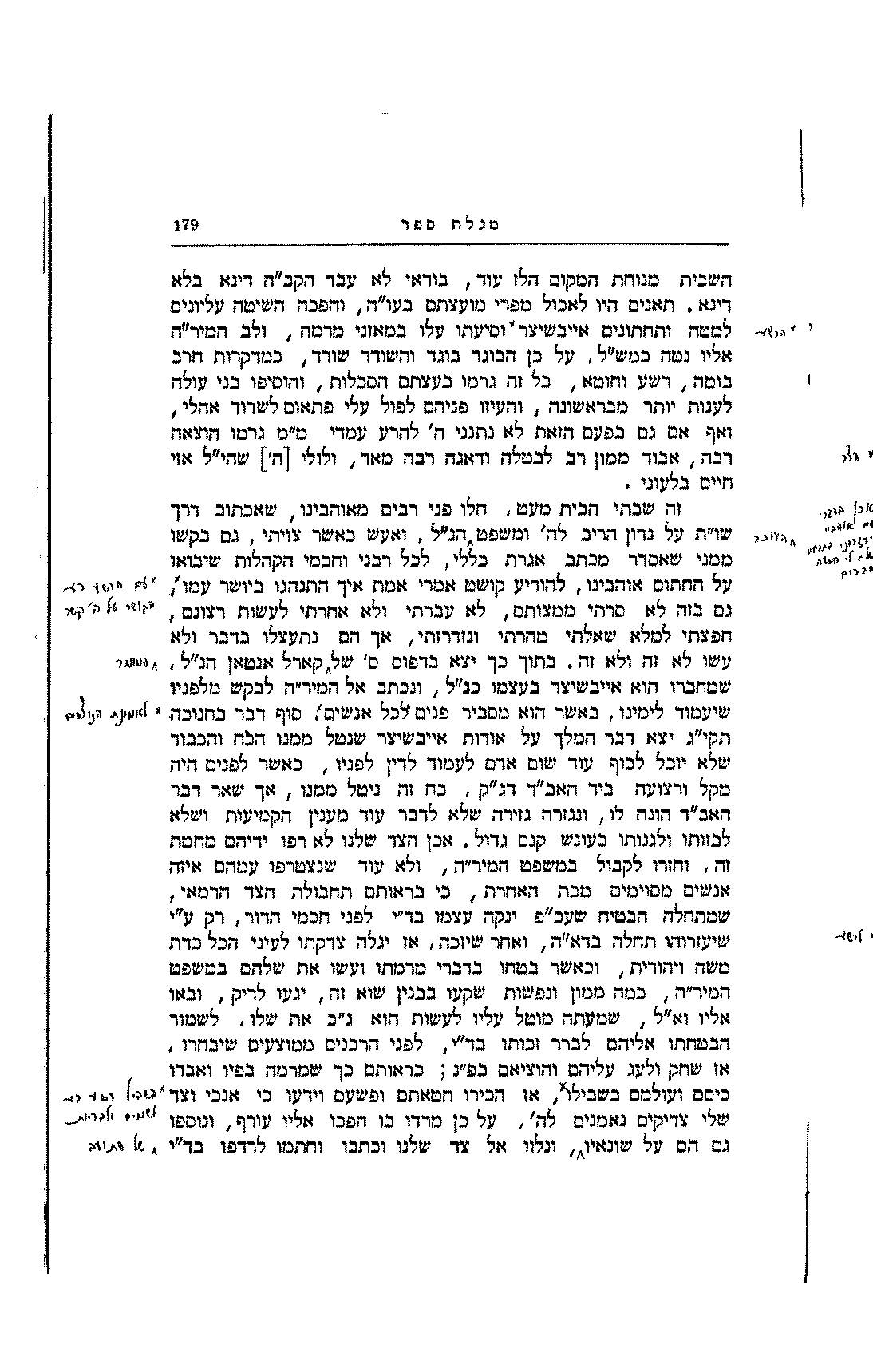
Margin readings in Scholem's copy (7)
| Printed anchor | Type (key sheet) | Mark | Reading | Certainty |
|---|---|---|---|---|
| ותחתונים אייבשיצר x וסיעתו | X: substitution | x mark; one word in right margin | הרשע | fairly sure |
| על נדון הריב לה' ומשפט ^ הנ"ל | V: omission | caret; one word in right margin | העוכר | fairly sure |
| איך התנהגו ביושר עמו x, | X: substitution | x mark; 2-line note in left margin | עם הרשע הנ"ל / הקושר על ה' קשר | fairly sure |
| בדפוס ס' של ^ קארל אנטאן | V: omission | caret; one word in left margin | המומר | sure |
| מסביר פנים לכל אנשים x | X: substitution | x mark; 2-word note in left margin | לאומות העולם | sure |
| ואבדו כיסם ועולמם בשבילו x | X: substitution | x mark; 2-line note in left margin | בשביל הרשע הנ"ל / לשמים ולבריות(?) | fairly sure |
| ונוספו גם הם על שונאיו ^ | V: omission | caret; 2-word note in left margin | של התועב | fairly sure |
Page 180 (scan 200)
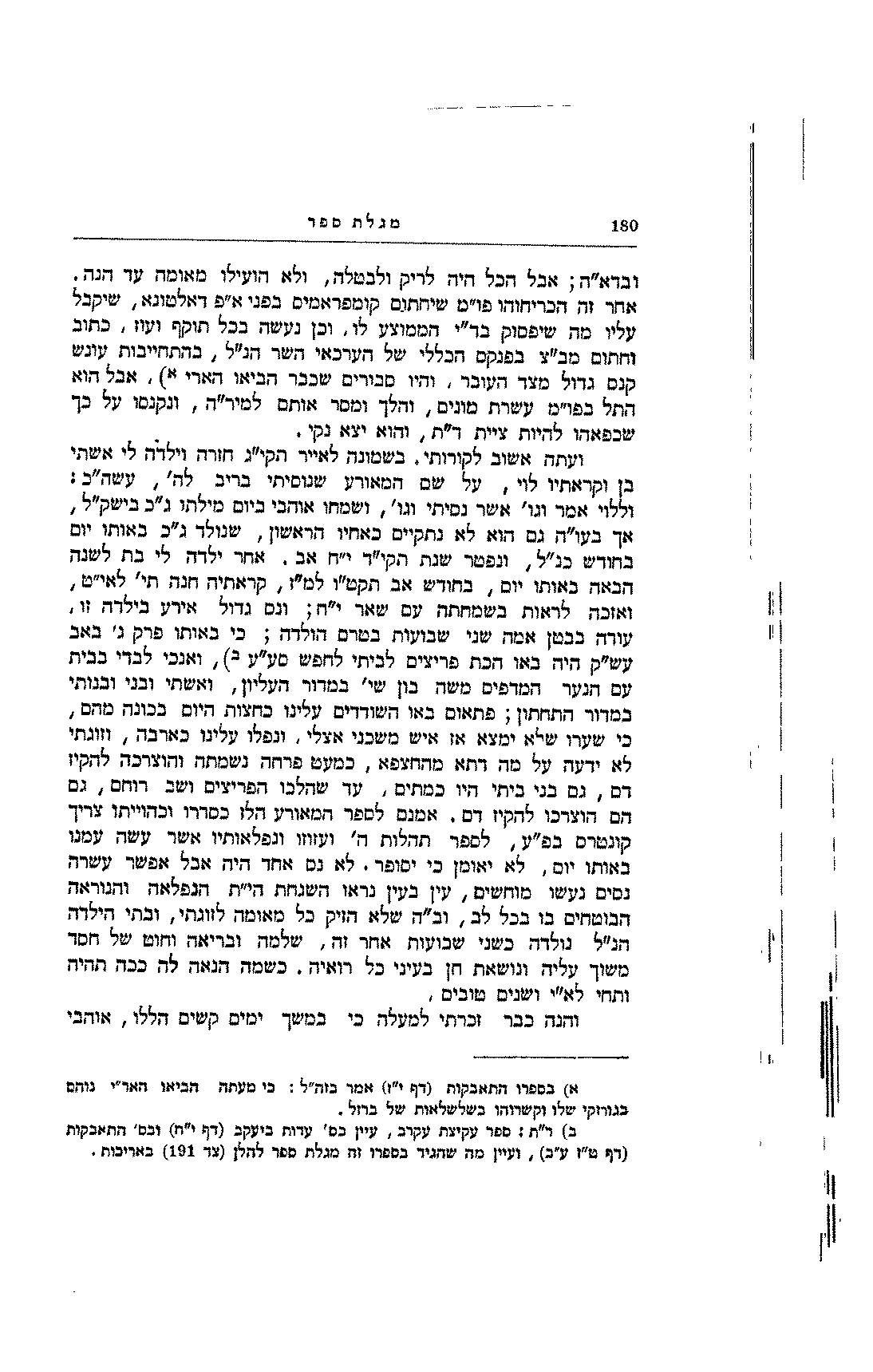
and in the court of the nations. But it was all in vain and for nothing, and they gained nothing until now. After this the parnassim compelled him to sign a compromise before the Oberpräsident(?) of Altona, that he would accept whatever a middle-of-the-road Jewish court would decide for him. And so it was done, with all strength and force, written and signed by both parties in the general register of the said gentile official, with an undertaking of a great fine as penalty on the party that transgressed; and they thought they had already "brought the lion" [a]. But he mocked the parnassim ten times (cf. Gen. 31:7), and went and denounced them to the king, may his majesty be exalted; and they were fined for having compelled him to be judged by the law of the Torah, and he went out clean.
And now I will return to my own events. On 8 Iyyar [5]513 [1753] my wife bore again, and bore me a son, and I called him Levi, after the event in which I was tried in the quarrel for the Lord, as it is written: "And of Levi he said" etc. "whom you tried" etc. (Deut. 33:8). My friends rejoiced on the day of his circumcision, also on the holy Sabbath (?). But for our sins he too did not survive, like his first brother, who was also born on the same day of the month, as said; and he died in the year [5]514 [1754], on 18 Av. After that she bore me a daughter, in the following year, on the same day, in the month of Av [5]515 [1755], for good luck; I called her Ḥannah, may she live long and well, and may I merit to see her joy with the rest of the living.
And a great miracle happened with this child while she was still in her mother's womb, two weeks before the birth. For at that time, on 3 Av, on the holy Sabbath, the band of rioters came to my house to search for the A. A. [b]; and I alone was in the house with the lad, the printer Moses Bun, may he live, on the upper floor, and my wife and my son and my daughters on the lower floor. Suddenly the robbers came upon us at midday, on purpose, for they reckoned that no man would then be found staying with me; and they fell upon us like locusts. And my wife, who did not know what this insolence was about, almost had her soul fly away, and had to be bled; the people of my household too were like dead, until the rioters went away and the spirit returned; they too had to be bled. Indeed, to tell this event in its order and as it happened needs a separate booklet, to tell "the praises of the Lord, and His strength, and His wonders" (Ps. 78:4) that He did with us on that day; "you would not believe it if it were told" (Hab. 1:5). It was not one miracle, but perhaps ten tangible miracles were done; with the eye one saw the wonderful and awesome providence of the Blessed Name over those who trust in Him with all their heart. Blessed be the Name, that He did not harm my wife at all; and my daughter, the said child, was born two weeks after this, whole and healthy, with a thread of grace drawn over her (cf. b. Ḥagigah 12b), and she finds favour in the eyes of all who see her (cf. Esth. 2:15). As pleasant as her name, so may she be, and may she live long, in good years.
Now I have already recorded above that during these hard days my friends
Kahana's notes
- [a] In his book Hit'avkut (p. 17) he says thus: "For now they have brought the lion, roaring, in his cage, and bound him with chains of iron."
- [b] Abbreviation of: the book Akitzat Akrav; see the book Edut be-Ya'akov (p. 18) and the book Hit'avkut (p. 16b), and see what he tells at length in this book Megillat Sefer below (p. 191).
ובדא"ה; אבל הכל היה לריק ולבטלה, ולא הועילו מאומה עד הנה. אחר זה הכריחוהו פו"מ שיחתום קומפראמים בפני א"פ דאלטונא, שיקבל עליו מה שיפסוק בד"י הממוצע לו, וכן נעשה בכל תוקף ועוז, כתוב וחתום מב"צ בפנקס הכללי של הערכאי השר הנ"ל, בהתחייבות עונש קנס גדול מצד העובר, והיו סבורים שכבר הביאו הארי א, אבל הוא התל בפו"מ עשרת מונים, והלך ומסר אותם למיר"ה, ונקנסו על כך שכפאהו להיות ציית ד"ת, והוא יצא נקי. ועתה אשוב לקורותי. בשמונה לאייר תקי"ג חזרה וילדה לי אשתי בן וקראתיו לוי, על שם המאורע שנוסיתי בריב לה', עשה"כ: וללוי אמר וגו' אשר נסיתי וגו', ושמחו אוהבי ביום מילתו ג"כ בישק"ל, אך בעו"ה גם הוא לא נתקיים כאחיו הראשון, שנולד ג"כ באותו יום בחודש כנ"ל, ונפטר שנת תקי"ד י"ח אב. אחר ילדה לי בת לשנה הבאה באותו יום, בחודש אב תקט"ו למ"ז, קראתיה חנה תי' לאי"ט, ואזכה לראות בשמחתה עם שאר י"ח; ונס גדול אירע בילדה זו, עודה בבטן אמה שני שבועות בטרם הולדה; כי באותו פרק ג' באב עש"ק היה באו הכת פריצים לביתי לחפש סע"ע ב, ואנכי לבדי בבית עם הנער המדפיס משה בון שי' במדור העליון, ואשתי ובני ובנותי במדור התחתון; פתאום באו השודדים עלינו כחצות היום בכונה מהם, כי שערו שלא ימצא אז איש משכני אצלי, ונפלו עלינו כארבה, וזוגתי לא ידעה על מה דתא מהחצפא, כמעט פרחה נשמתה והוצרכה להקיז דם, גם בני ביתי היו כמתים, עד שהלכו הפריצים ושב רוחם, גם הם הוצרכו להקיז דם. אמנם לספר המאורע הלז כסדרו וכהוייתו צריך קונטרס בפ"ע, לספר תהלות ה' ועזוזו ונפלאותיו אשר עשה עמנו באותו יום, לא יאומן כי יסופר. לא נס אחד היה אבל אפשר עשרה נסים נעשו מוחשים, עין בעין נראו השגחת הי"ת הנפלאה והנוראה הבוטחים בו בכל לב, וב"ה שלא הזיק כל מאומה לזוגתי, ובתי הילדה הנ"ל נולדה כשני שבועות אחר זה, שלמה ובריאה וחוט של חסד משוך עליה ונושאת חן בעיני כל רואיה. כשמה הנאה לה ככה תהיה ותחי לא"י ושנים טובים, והנה כבר זכרתי למעלה כי במשך ימים קשים הללו, אוהבי
- [א] בספרו התאבקות (דף י"ז) אמר בזה"ל: כי מעתה הביאו האר"י נוהם בגורזקי שלו וקשרוהו בשלשלאות של ברזל.
- [ב] ר"ת: ספר עקיצת עקרב, עיין בס' עדות ביעקב (דף י"ח) ובס' התאבקות (דף ט"ז ע"ב), ועיין מה שהגיד בספרו זה מגלת ספר להלן (צד 191) באריכות.
Page 181 (scan 201)
and "my familiar friends have forgotten me" (Job 19:14), "and those whom I loved are turned against me" (Job 19:19). And my acquaintance from before was the leader R. L. Norden, very much so; but he became a stranger to me and would not do me a kindness, even in a matter where this one gains and that one loses nothing. For I had many friends press him to resume sending me some merchandise from London for my money, and I sent to his hand a sum of fifteen hundred gold pieces, which I had borrowed on my house, so that he would buy me with it what I asked of him; but he stopped his ear, and returned me the money, after it had lain idle a certain time. And since I did not know [in what] to deal further, I sent it to Amsterdam to my brother-in-law the head of the court, may he rest in peace, that he should try to buy with the money a hundred "latin" (?) at a great price, a third above their value, in order to earn something. But suddenly the market fell, and I could not sell them all at so great a loss; half was sold for less than two thirds of the capital, in order to renew the remaining half, in case some profit should come to it to fill my loss. But the Lord wished them all to be lost. "The Lord gave and the Lord has taken; blessed be the name of the Lord" (Job 1:21)!
As long as I had not been struck so hard in my money, I did not want to be a burden on any of my friends, although they volunteered to me for this; especially the leader R. M., parnas of the two [communities], sent his sons and others to me several times to speak with me, that I should agree to have a fixed livelihood made for me with honour, for some distinguished individuals had been roused of themselves, and were pained that the burden of livelihood weighed on me, and they tried to persuade me about it. But I did not agree, and refused to take on my neck the yoke of men, from which I had guarded myself all the days I had lived here; for I said: who knows, the Lord may be gracious to me with some free gift from His broad hand. But those friends were diligent for my benefit (surely they are messengers of the Lord); the Lord wished to test them too, besides my own test, whether I would kick, God forbid. When the news came to me that the "latin" were lost, I was not angry, though it was reckoned in my eyes like death; I have no right to question the ways of the Holy One, blessed be He. I knew that He is "a God of faithfulness and without iniquity" (Deut. 32:4), and I said the blessing "the true Judge" with all my heart, and gave thanks to my Maker, who collected my debt from me with my money. These [friends] knew of the "latin" business that I had done, and watched it anxiously until the end of the sale of the "latin"; and when it became known to them that they were all lost and my horn was spent, then they came back to me and revealed their good will to me, and promised that it would be with ease and honour; and then, against my will, I nodded my head to them. Also from the leaders' widow, R. D. L. D. (?), of the holy community ... (?), ⟨S: "then"⟩ I was given a vow (?), my thought being that by law it was due to me because of the loss I had through the loss of my deposit with her husband, may he rest in peace, as said.
At that time there appeared the book Luḥot Edut of ⟨S: "the abomination, may the name of the wicked rot"⟩ the blind of heart, who thought all the world blind; and with a work of errors and vanities and bitter lies he wanted to cleanse and purify himself this time in public. But this was the first time we had seen anything from him in print, to test his strength in wisdom, in Torah and in the knowledge of [the world] ⟨S: "the nation"(?)⟩; and we thought that at least he would show rational things, especially as he had laboured on it more than four years; and all
ומיודעי שכחוני עזבוני, וזה אהבתי נהפכו בי, ויודעי מלפני הק' ר"ל נורדן במאד, אך זר ממני ולא רצה לג"ח, אפילו במה שזה נהנה וזה לא חסר, כי הרביתי עליו רעים שיחזור לשלוח לי איזה סחורות מלונדן בעד מעותי, ושלחתי לידו סך ט"ו מאות זהובים האל', שהלויתי על ביתי שיקנה לי בעדם מה שבקשתי מאתו, אבל ערלה אזנו והחזיר לי המעות שהיו בטלים בזמן מסוים; ולפי שלא ידעתי [במה] לעסוק עוד, שלחתים לאמשטרדם אל גיסי האב"ד ע"ה, שהוא ישתדל לקנות בעד המעות מאה לאטין, ביוקר גדול על חד תלת כדי להרויח מאומה; אך פתאום ירד השער ולא יכולתי למכור כלם בהיזק גדול כזה, ונמכר החצי בפחות יותר משני שלישי הקרן, כדי לחדש המחצה הנשאר, אולי יעלה עליהם איזה רוח שימלא חסרוני, אך ה' רצה שיפסדו כולם, ה' נתן וה' לקח יהי שם ה' מבורך! וכל עוד שלא לקיתי בממוני כל כך, לא רציתי להכביד על שום אדם מאוהבי פה, אף כי המה התנדבו אלי בכך, ביחוד הק' ר"מ פו"מ דהב', שלח אלי כ"פ בניו וזולתו שידברו עמי, שאתרצה לעשות לי מעמד פרנסה בכבוד, כפי שהתעוררו מעצמם איזה יחידי סגולה, ובשערם שיכבד עלי משא הפרנסה, והשתדלו לפתותני לדבר אל לבי בשביל כך, אכן אנכי לא נתרציתי וסרבתי מלקבל על צוארי עול ב"ו, מה שנשמרתי ממנו כל ימי ישיבתי פה, כי אמרתי מי יודע וחנני ה' באיזה מתנת חנם מידו הרחבה; אך המה האוהבים הנ"ל השוקדים על תקנתי (ודאי שלוחי ה' המה, רצה ה' ג"כ לנסותם מלבד המבחן שלי אם אבעט ח"ו, אך בבוא אלי השמועה שאבדו הלאטין, לא חרה לי, אף אם היה נחשב כמיתה בעיני, אין לי להרהר אחר מדותיו של הקב"ה, ידעתי אל אמונה ואין עול, וברכתי ברכת דה"א בכל לב, ונתתי הודאה לקוני שגבה חובי ממני בממוני) ידעו מעסק הלאטין שעשיתי וחרדו עליו לשמרו עד תכלית משיכת הלאטין, ובהוודע להם כי נפסדו כולם וכלה קרני, אז חזרו אלי וגלו לי רצונם הטוב, והבטיחו שיהא בריוח ובכבוד, אז על כרחי נעניתי להם ראשי, גם מהקצינים א"ל ר"ד ל"ד עה"ק עם נדרתי מחשבתי שבדין מגיע לי מחמת ההפסד שהי"ל באבדת פקדוני ע"י בעלה ע"ה כנ"ל. בו בפרק נראה ספר לחות עדות של העור לב אשר חשב כל העולם סומים; ובמעשה תעתועים והבליו ושקריו המרים רצה להתנקות ולהזדכות הפעם בפומבי. אך זה הפעם הראשון שראינו ממנו דבר בדפוס, לבחון כחו בחכמה ובתורה ובידיעות העולם, וחשבנו שלפחות יראה דברים שכליים, בפרטות שטרח בו יותר מארבע שנים וכל
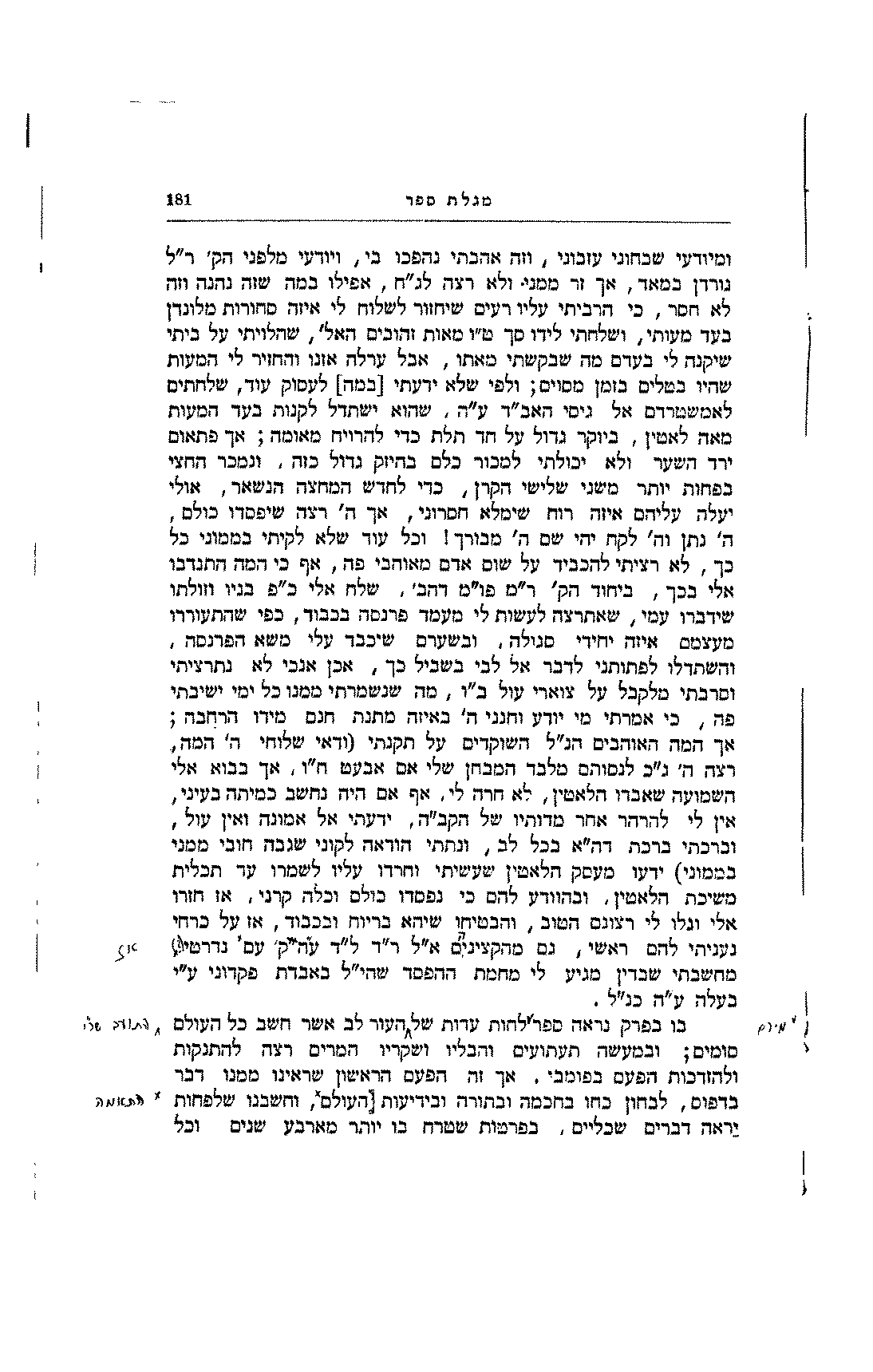
Margin readings in Scholem's copy (3)
| Printed anchor | Type (key sheet) | Mark | Reading | Certainty |
|---|---|---|---|---|
| גם מהקצינים א"ל ר"ד ל"ד עה"ק עם x נדרתי | X: substitution | x mark; one word in left margin | אז | fairly sure |
| ספר לחות עדות של ^ העור לב | V: omission | caret; 2-word note in left margin | התועב שר"י | sure |
| ובידיעות [העולם] x | X: substitution | x mark; one word in left margin | האומה(?) | uncertain |
Page 182 (scan 202)
that he devised in it from his own mind is not four sheets in a medium script. And since it was given to print, especially for the first time, and for a thing of great value too, we said in our hearts: surely it is "fine flour, sifted". But when we saw it, we were astonished at the sights of a work of chaos, and found it all refuse and falsehood, "dross overlaid on a potsherd" (Prov. 26:23). And above all, his H. Sh. T. ⟨S: "g" (correcting the abbreviation to H. G. T.)⟩ that he set out in it, all spoiled and crooked, testified about himself that he [had read and did not know] a book [a]. By my life, I have not seen such evil in print ever — even though "the old and foolish king, who came out of prison to reign" (cf. Eccl. 4:13–14), with "a basket of creeping things" behind him (cf. b. Yoma 22b), says "I am, and there is none else besides me" (Isa. 47:8), and he boasts among the kings of the Torah, saying "Who is like me?"
And behold, in truth all his words are vanity together, like one who has never in his days seen the lights of Torah and of true knowledge. The novellae on the revealed Torah that he devised in it were never said, except by one who does not know the form of a tradition, tasteless and crazed. Even all that he brought from the Gemara, the decisors and the verses — all of it turned upside down and crooked; his reasoning confused, "and his tongue stammering" (cf. Isa. 32:4). The rule of the matter: there is not enough [space] to explain the folly and stupidity in the revealed part. And from it we understand his hidden part — that there is no end to his words of a lying spirit, which he produces in forged combinations; and surely this is not hidden from him, only he thinks everyone fools who do not know, and do not feel the words of chaos and his villainy.
And behold, as soon as I looked into it, my heart rejoiced, seeing that I had not been wrong about him, that he is forged through and through. But in this I had been wrong: that I had thought that in any case he must be learned and a man of reason in the revealed Torah; and behold, I saw it all overgrown with thistles (cf. Prov. 24:31): errors, follies and strange madness. Then "my mouth was filled with laughter" (Ps. 126:2) at my words: "Is this the man who made the earth tremble" (Isa. 14:16), the A. R. Sh. (?) who "speaks with arrogant neck" (Ps. 75:6), whose ignorant pupils put out such a name for him by cunning and deceit — and he has not reached even "him that sees the morning" (?), the light of the Gemara, like one of the beginning students? For besides this, how can one imagine of a man of reason that he would be so brazen-faced as to set out before us words of vanity and folly like these, in plain matters, which any man who knows books could understand and test — unless his mind was torn and he had forgotten his learning altogether? And need one speak of the words of chaos and errors that he devised in the interpretation of his amulet, by which he thought to steal the minds of people, as if there were no man to understand his forgeries and his sorceries — of the many [b]? And in truth
Kahana's notes
- [a] See the book Hit'avkut (p. 18). "H. Sh. T.", abbreviation of: the corruptions of Torah.
- [b] And so Ya'avetz says in the book Hit'avkut (p. 14), in these words: "And how many signatures were forged etc." (he means in his book Luḥot Edut); "and so the pious R. A. of Vilna (that is the gaon R. Elijah of Vilna) cries like a crane over the forgery of his signature, and likewise he invented from his own heart several letters etc.", end of quotation. And there is proof for Ya'avetz's words: for in the letter of the gaon of Vilna, written in the year 5515 [1755], it is said of R. Y. Eybeschütz: "a Torah scroll, for our many sins, dwelling in distress"; and already in the year 5512 [1752] the judges of Prague wrote the same about him: "a Torah scroll dwelling in distress" (see Luḥot Edut, p. 8). Understand this!
מה שחדש בו מדעתו אינו ארבעה בוגין בכתב בינוני, ומה שנמסר לדפוס ביחוד פעם ראשון וגם לדבר גדול חערך, אמרנו בלבנו בודאי הוא סלת מנופה; אבל כשראינוהו תמהנו מראות מעשה תהו, ומצאנוהו כולו פסולת וכזב, סיגים על חרש מצופה, ועל כולם הש"ת שלו שהציג בו, כולן מקולקלין ומעוותים, העיד על עצמו שלא [קרא ולא ידע] ספר א. חי ראשי לא ראיתי כהנה לרוע בדפוס מעולם, אף כי לזקן וכסיל מבית הסורים יצא למלוך בקופה של שרצים, אומר אני ואפסי עוד, והוא במלכי התורה יתקלס אומר מי כמוני. והנה באמת כל דבריו מהבל יחד, כמי שלא ראה מאורות תורה וידיעה אמתית מימיו; הד"ת בנגלה שחדש בו לא נאמר, כי אם שלא ידע בצורתא דשמעתא או משועמם ומשוגע, ואפילו כל מה שהביא מן הגמרא ופוסקים ופסוקים הכל מהופך ומעוות, סברא שלו משובשת ולשונו נלעג; כללו של דבר אין די באר הסכלות והטפשות שבנגלה. וממנו נתבונן בנסתר שלו, שאין קץ לדברי רוח שקר המציא בצרופים מזוייפים, וזה ודאי לא נעלם ממנו, רק חושב הכל לסכלים בלתי יודעים, ולא מרגישים בדברי תהו ונבלה שלו. והנה מיד שעיינתי בו אז שמח לבי, בראותי שלא טעיתי בו שהוא מזויף מתוכו; אבל בזה טעיתי, שסבור הייתי עכ"פ צריך שיהיה למדן ובעל שכל בנגלה, והנה ראיתי עלה כולו קמשונים טעיות סכלות והוללות משונים, אז נמלא שחוק פי באמרי, הזה האיש מרגיש האר"ש המדבר בצואר עתק, שהוציאו תלמידיו הבורים לו שם כזה בערמה ומרמה, ולא הגיע אפילו לרואה בוקר, אור הגמרא כאחד המעיינים המתחילים, כי זולת זה איך יצוייר על בעל שכל שהוא יעיז פניו כל כך, להציג עמנו פה דברי הבל וטפשות כאלה, בדברים נגלים שכל אדם יודע ספר יוכל להבין ולהבחין בם, אם לא נטרפה דעתו ושכח תלמודו מכל וכל, ואצ"ל מדברי תהו ותעתועים שחדש בפירוש קמיע שלו, שסובר לגנוב בהם דעת הבריות, כאלו אין אדם להבין זיופיו וכשפיו הרבים ב. ובאמת
- [א] עיין בס' התאבקות (דף י"ח). הש"ת, ר"ת: השבושי תורה.
- [ב] וכן יאמר יעב"ץ בספרות התאבקות (דף י"ד)) בזה"ל: וכמה חתימות שהיו מזויפים וכו', (כונתו בספרו לוחות עדות) וכן החסיד ר"א מווילנא (הוא הגאון ר' אליהו מווילנא) צועק ככרוכיא על זיוף חתימתו, וכן בדה מלבו כמה אגרות וכו', עכ"ל; ויש ראיה לדברי יעב"ץ, כי במכתב הגאון מווילנא הנכתב בשנת תקט"ו, נאמר על מהר"י אייבשיץ; ס"ת בעו"ה שרוי בצער, וכבר בשנת תקי"ב כתבו דייני פראג כזאת עליו: ס"ת שרוי בצער (עיין לוחות עדות דף ח') והבן!
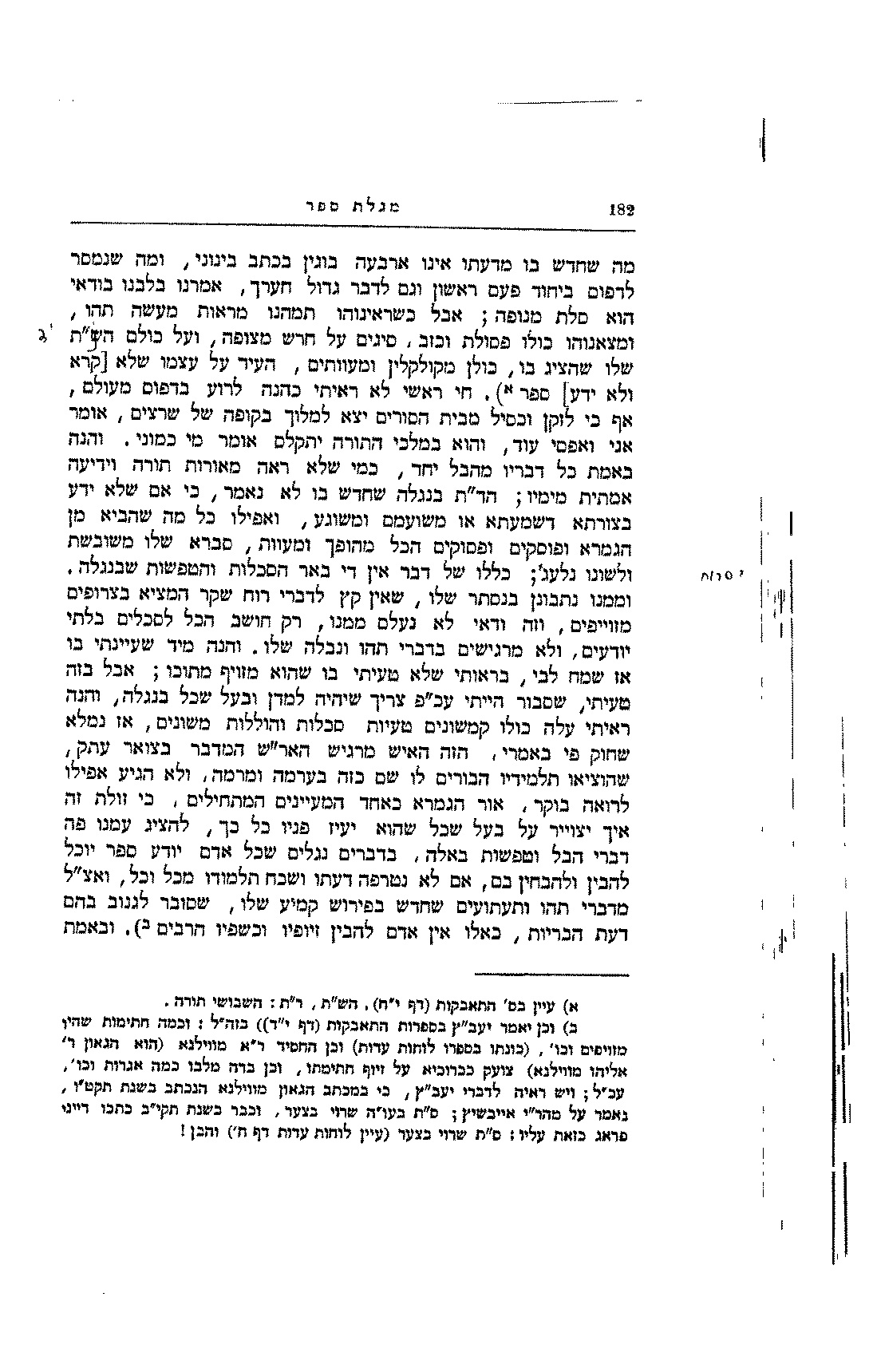
Margin readings in Scholem's copy (1)
| Printed anchor | Type (key sheet) | Mark | Reading | Certainty |
|---|---|---|---|---|
| ועל כולם הש"ת שלו | — | mark over the ש; one letter in left margin | ג (correcting הש"ת to הג"ת) | fairly sure |
Page 183 (scan 203)
it pleased me very much that for once in the world something of his had appeared in print, which he could no longer deny and contradict, as was his way; then I knew that God is with me. He added folly and evil to the report, and to what we had known of him before for evil. Therefore I hurried and took hold of "the writer's inkhorn" in my right hand, and answered him on his heels, to his shame; I did not leave him one letter, until I had shown the bareness of his brazenness, the shame of his stupidity and the lack of his knowledge, and it was revealed to the eyes of his friends. I called my answer to him there Shevirat Luḥot ha-Aven ("The Breaking of the Tablets of Iniquity"), and I laboured on it only about some weeks, until I completed it, with God's help [a], as I showed to the one who had handed his book ⟨S: "the book of heresy"⟩ to me to look into it. And after four weeks had passed, several people saw it and knew that his said book ⟨S: "of the vile heretic"⟩ is all "of one beaten piece" (Ex. 25:36), a source of corruption, and that he who fled the trap fell into the pit (cf. Isa. 24:18).
After this, in mid-Kislev [5]517 [1756], the chest was opened, with the books and writings that the empty and reckless messengers of ⟨S: "the Satan"⟩ Eybeschütz ⟨S: "may his spirit expire"⟩ had plundered from my house — which they took by force in Av of the past year, as said — and it was examined by Professor Stiched [b] before three commissioners of the council, in the presence of the party opposing me, namely Julius and Rothschild ⟨S: "may the name of the wicked rot"⟩; and nothing at all was found of what they had sought. When the said wicked men saw for themselves all that had been found in it — booklets of print; and the writings the professor alone looked into, and he gave his signed testimony under oath that he had searched and had found nothing of what they had claimed — we thought that now I had come out innocent and righteous from this judgment, in the eyes of the householders in general, and my opponents guilty, as all the members of the council had promised. But after this the said Satan stood up ⟨S: "and made"⟩ a supplication himself to the authorities, and claimed that the matter had not gone out about the A. A. alone, but also about the book T. K., which I had printed publicly under my name — and I had given some of it away and also sold it publicly, and no one "opened his mouth" (Isa. 10:14) — even so they now urged to set up war against me in this too. He claimed further that the said professor is not so expert in Jewish matters; he was also insolent enough to say that the commissary of the authorities had not done his duty. The matter of the said grumbler, joined with the bribe that he scattered, did its part, and they overturned the judgment, which had already been concluded, to return my plunder to me and pay my losses, damages and shame; and they went back and decided that the chest should be opened once more and examined by Jewish men, to look into all the writings found in it. And I had already had an expense of perhaps a hundred ducats or more on this matter, and some distinguished individuals and men of standing on my side volunteered for it; and when they saw that a crooked judgment had gone out, they made an appeal to the court
Kahana's notes
- [a] From here it appears that the gaon Ya'avetz composed this book himself, and attributed it to his pupil R. David Oz, who never was and never was created.
- [b] See the book Edut be-Ya'akov (p. 18), and there it is said in these words: "commissioners whom they chose, three of the members of the council, and the learned and honoured Stiched etc."
היטב לי מאד שנראה הפעם בעולם דבר ממנו בדפוס, מה שלא יוכל לכפור ולהכחיש עוד כדרכו; אז ידעתי כי אלהים לי. הוסיף סכלות ורוע על השמועה ועל מה שידענו ממנו מתמול שלשום לרעה; על כן מהרתי ואתפוס קסת הסופר בימיני, ואשיב אותו על עקב בשתו, לא הנחתי לו אות אחת, שלא הראיתי מערה עזותו, קלון טפשותו, העדר ידיעתו, ונגלית לעיני מאהביו, קראתי שם תשובתי עליו: „שבירת לוחות האון", ולא יגעתי בו אלא כמו איזה שבועות עד שהשלמתיו בעזה"י א, כמו שהראיתי למי שמסר ספרו לידי לעיין בו, ואחר תום ד' שבועות ראוהו כמה אנשים וידעו, כי ספרו הנ"ל, כולו מקשה אחת, מקור שחת, גם מן הפח נפל בפחת. אח"ז בחצי כסליו תקט"ז נפתח החבית עם ס' וכתבים ששללו מביתי הריקים ופוחזים שלוחי אייבשיצר, אשר לקחו בזרוע באב העבר כנ"ל, ונבדק ע"י פרופעסר שטיכט ב, בפני ג' קומיסרש של העצה, במעמד צד המתנגד לי, ה"ה יוליוס ורוטשילד, ולא נמצא מאומה ממה שחפשו. כאשר ראו הרשעים הנ"ל עצמם כל מה שהיה נמצא בתוכו מקונטריסים של דפוס, והכתבים עיין בהם הפרופעסר לבדו, ונתן כו"ח מידו בשבועה שפשפש ולא מצא שום דבר ממה שטענו הם: חשבנו כי עתה יצאתי זכאי וצדיק ממשפט זה בעש"ג ושכנגדי חייבים, וכמו שהבטיחו כל בעלי העצה; אך אחר זאת התיצב השטן הנ"ל, סופליק בעצמו אל השררה, וטען שלא ע"ד סע"ע בלבד יצא דבר, כי גם על ס' תה"ק מה שהדפסתי בפומבי על שמי, ונתתי ממנו גם מכרתי בפרהסיא, ולא היה פוצה פה, אעפ"כ עכשיו הציעו לערוך מלחמה נגדי גם בזה. עוד טען שהפרופעסר הנ"ל אינו בקי כל כך יהודית, גם החציף לומר שהקומיסריע מהשררה לא יצא י"ח. דבר נרגן הנ"ל בצרוף השוחד שפזר, עשו את שלהם וסתרו את הדין, שכבר היה נגמר להחזיר לי גזלתי ולשלם הפסדי ונזקי ובשתי, וחזרו לפסוק שתפתח החבית עוד הפעם, ותבדק ע"י אנשים יהודים לעיין בכל הכתבים הנמצאים בתוכו. והנה כבר הי"ל הוצאה על עסק זה אפשר מאה דוקאטין או יותר, והתנדבו לזה יחידי סגולה ואנשי צורה מהצד שלי, וכראותם כי יצא משפט מעוקל, עשו אפלאציאן אל המשפט
- [א] מכאן נראה שהגאון יעב"ץ חבר בעצמו את הספר הזה, ויחס אותו לתלמידו ר' דוד אוז, שלא היה ולא נברא.
- [ב] עיין בס' עדות ביעקב (דף י"ח) ושם נאמר בזה"ל: קומיסיאן שבחרו שלשה מבעלי העצה, והמלומד הנכבד שטיכט וכו'.
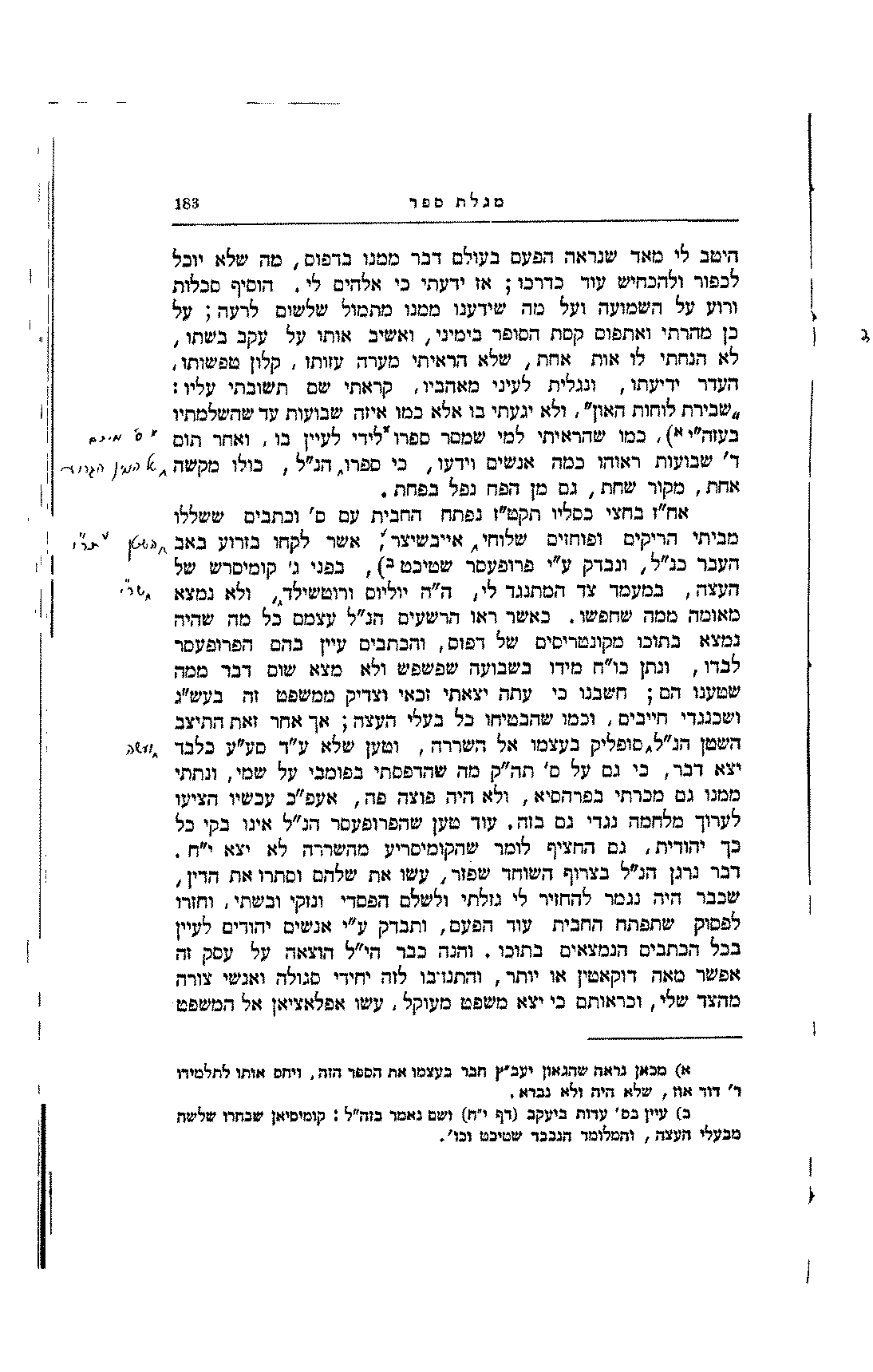
Margin readings in Scholem's copy (6)
| Printed anchor | Type (key sheet) | Mark | Reading | Certainty |
|---|---|---|---|---|
| כמו שהראיתי למי שמסר ספרו x לידי | X: substitution | x mark; 2-word note in left margin | ס' מינים | fairly sure |
| כי ספרו ^ הנ"ל, כולו מקשה אחת | V: omission | caret; 3-word note in left margin | של המין הגרוע | fairly sure |
| ופוחזים שלוחי ^ אייבשיצר | V: omission | caret; one word in left margin | השטן | sure |
| שלוחי אייבשיצר v, אשר לקחו | V: omission | v mark; one abbreviation in left margin | תר"ו | sure |
| ה"ה יוליוס ורוטשילד ^, ולא נמצא | V: omission | caret; one abbreviation in left margin | שר"י | sure |
| השטן הנ"ל ^ סופליק בעצמו | V: omission | caret; one word in left margin | ועשה | sure |
Page 184 (scan 204)
in Glückstadt, in their thought that there they would praise the righteous and abhor the wicked. But there too they helped the wicked, saying ⟨S: a three-line note, partly read: "… the heretic, for the foreigners, kings(?) of their faith, are obliged"⟩ that they were obliged to help him. Therefore they confirmed and ratified everything that had been decided by the council of Altona, and the recommendations that the leader R. Y. Hozen (?) of the community obtained did not help; and this appeal caused a further [expense of] about five hundred marks, for nothing. But, for our sins, much was lost at the beginning, because those who dealt with this matter relied securely on their wisdom, and their counsel was spoiled; laziness too caused much. In short, their counsel was made foolish, and they scattered much money to no purpose. Only, since the opposing party too sought no more, they did not rouse themselves again to press the matter of the search until now; these two years this affair has remained lying like a thing that has no claimants.
In the year [5]517 [1757] the word of the king, may his majesty be exalted, went out a second time concerning the said [man]: for the parnassim had begged and entreated the king, may his majesty be exalted, to give them permission to dismiss him, since three years had already passed from when they had first received him as rabbi; from now on they would let him go his way, and he would no longer disturb the rest of this place. And it was decided that all the individuals in the Three Communities should gather and their opinions be taken, whether to keep him or to remove him and send him away from the place, and they would follow the majority; and so it was done. The common crowd of the people too was asked, from end to end — poor and empty men who had never been counted for any holy matter. And all this the king, may his majesty be exalted, did for him. They wrote to the city of Hamburg the recommendation on behalf of Eybeschütz ⟨S: "the abomination"⟩, that they should give him back the rabbinate of Hamburg too; and they listened to him and gave him back also the rabbinate of the two [communities], which had been taken from him more than three years. And he had the majority of the votes — "a majority that is not here".
Then he made ⟨S: "the heretic"⟩ a feast in his house. He had "a mixed multitude" ⟨S: a two-line note, cut off: "…vowed … witnesses(?)"⟩ and trumpet-blowers, [riders on horses] ⟨S: a five-line note, partly read: "and the feast in public, that he makes mockery(?) … and Torah … the gentiles and those who return(?) …"⟩ in the streets and in the markets, in covered wagons and carriages, some of them riding dressed in sha'atnez, passing through the streets of Altona from end to end, to publicise his joy, the joy of a flatterer and evildoer. And one of his young men, the first and chief among them, "tall of stature" (cf. 1 Sam. 9:2), they made a rider, sitting erect, going before them at the head, in the likeness of a horseman of the Hungarian army called a Hussar. This was the chosen one among them in wisdom and in stature, and he paid the debt of the fool (?). For after a few days it happened that this young man saw one of the men of Poland reading and studying in the book T. K., and the lad began to curse him; and that scholar protested to him, but he paid no attention and went to his lodging. Suddenly he said: "My head, my head!" (2 Kgs. 4:19). And he sent for the said scholar to come to him; he regretted what he had said to him [a]; perhaps he wanted to confess before him. That scholar did not turn to him, and his soul went out. May his death be his atonement!
In the year before it "an unclean event happened" (cf. 1 Sam. 20:26) in the land of Poland, in the region of Podolia, with the sect of Sh. Tz. ⟨S: "may the name of the wicked rot"⟩, who had been there several years in secret and in hiding, and were
Kahana's notes
- [a] Abbreviation of: what he had said to him.
בגליקשטאט, בחשבם כי שם ישבחו צדק ויתעבו רשע, אך גם שם עזרו לרשע, באמרם כי מחויבים המה לסייעו; על כן קיימו ואשרו כל הנפסק מעצה דאלטונא, ולא הועילו רעקומאדאציאנש שהשיג הק' ר"י הוזן מקה', ואפליציאן זה גרם עוד כחמש מאות שו"ק לבטלה; אך בעו"ה הרבה נפסד בתחלה, שסמכו העוסקים בענין זה בבטחם על חכמתם ועצתם נתקלקלה, גם הרבה גרמו העצלה. בקצור עצתם נסכלה ופזרו ממון רב ללא תועלת, רק אחרי שהצד המתנגד גם הוא לא בקש יותר, לא התעוררו עוד לנחץ ענין החפוש עד הנה; זה שנתים נשאר עסק זה מונח כדבר שאין לו תובעים. בשנת תקי"ז יצא דבר המיר"ה שנית, על אודות הנ"ל, שפו"מ בקשו וחלו פני המיר"ה שיתן להם רשות לפטרו, אחר שכבר עברו שלש שנים שקבלוהו לרב בתחלה, מעתה יניחו לו וילך לנפשו, ולא ישבית עוד מנוחת המקום הלז, ונפסק שיקבצו כל היחידים שבג"ק ויקבלו דעותיהם, אם להניחו או להוציאו ולשלחו מן המקום, וילכו אחר הרוב וכן נעשה; ונשאלו מן המון העם מקצה, דלים וריקים אשר לא נמנו לשום דבר שבקדושה, וכל זה עשו לו המיר"ה; כתבו לעיר המבורג המלצה בעד אייבשיצר, שיחזירו לו הרבנות דהמבורג ג"כ, ושמעו לו והחזירו לו ג"כ הרבנות דהב', שנלקחה ממנו זה יותר משלש שנים, והי"ל רוב דעות רובא דליתיה כאן; אז עשה לו משתה בביתו הי"ל ערב רב, ותוקעי חצוצרות [רוכבי סוסים] ברחובות ובשווקים בצבים ובעגלות, וקצתן עשאן רוכבים לבושי שעטנז, עוברים בחוצות אלטונא מן הקצה אל הקצה, לפרסם שמחתו שמחת חנף ומרע, ואחד מבחוריו הראש וראשון ורשום בהן גבוה קומה, עשאוהו רכב זקוף לפניהם הולך בראשם בדמות רוכב הסוס של חיל אונגרין שקורין הוזאר. זה היה הנבחר מהם בחכמה ובקומה וזה פרע השט"ח; כי אחר ימים מעטים אירע שראה זה הבחור לאחד מאנשי פולין קורא ומעיין בס' תה"ק, והתחיל הנער לקלל אותו והלמדן ההוא מיחה בו ולא השגיח והלך למלונו, פתאום אמר: ראשי ראשי, ושלח אחד הלמדן הנ"ל שיבוא אליו, התחרט על מש"ל א, אפשר רצה להתודות בפניו; הלמדן ההוא לא פנה אליו, ויצאה נשמתו. תהא מיתתו כפרתו! בשנה ההיא שלפניה קרה מקרה בלתי טהור, בארץ פולין במחוז פאדאליע עם כת שב"ץ, שהיו שם כמה שנים בהסתר ובצינעא, והיו
- [א] ר"ת: מה שאמר לו.
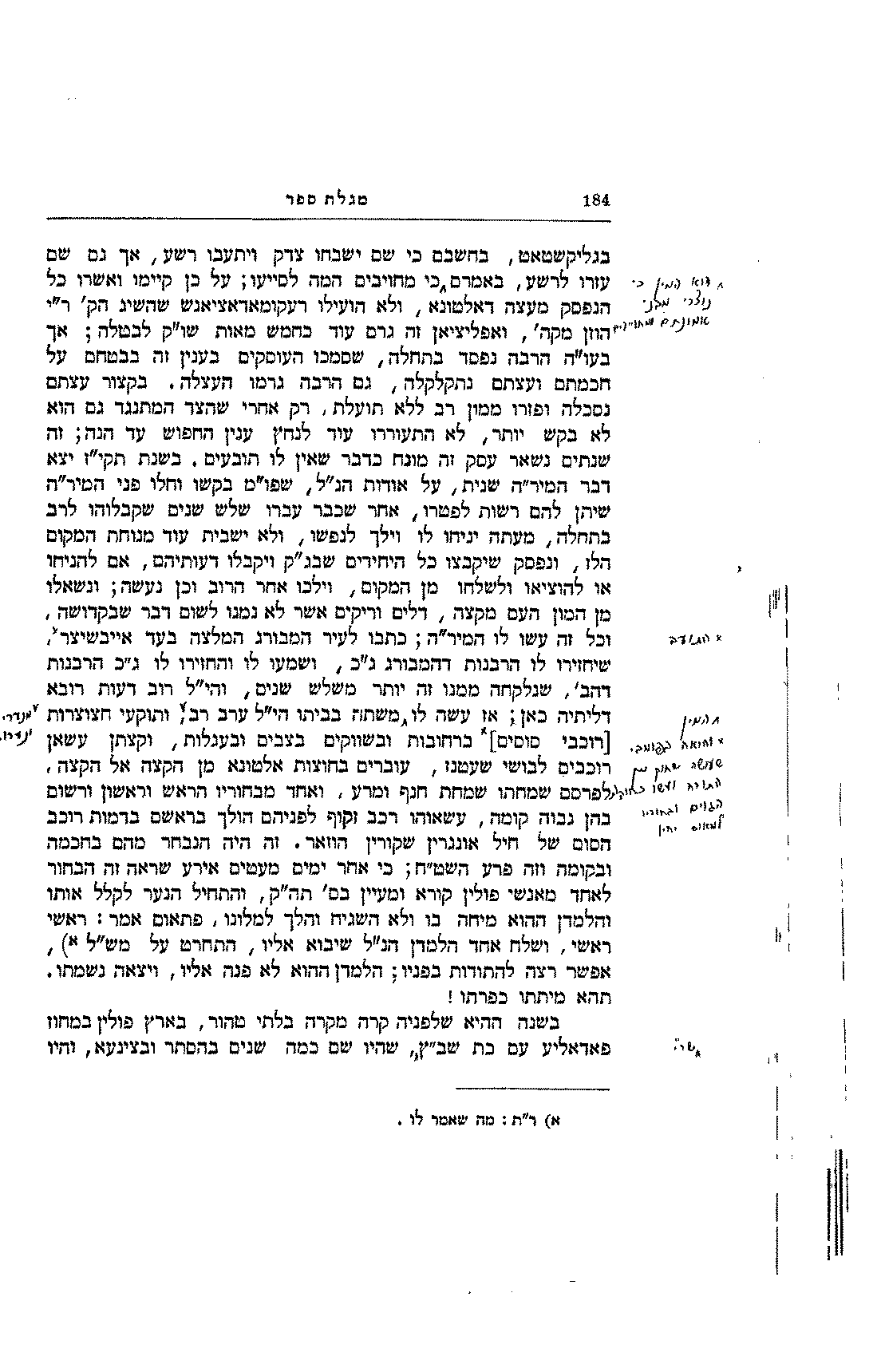
Margin readings in Scholem's copy (6)
| Printed anchor | Type (key sheet) | Mark | Reading | Certainty |
|---|---|---|---|---|
| באמרם ^ כי מחויבים המה לסייעו | V: omission | caret; 3-line note in right margin | ... המין כי / נוכרי מלכי(?) / אומנתם מחויבים (first word struck out or blotted) | partial |
| המלצה בעד אייבשיצר x, | X: substitution | x mark; one word in right margin | התועב | fairly sure |
| אז עשה לו ^ משתה בביתו | V: omission | caret; one word in right margin | המין | fairly sure |
| הי"ל ערב רב v ותוקעי חצוצרות | V: omission | v mark; 2-line note in left margin (cut off) | ...נדר / ...עדיו(?) (cut off) | partial |
| [רוכבי סוסים] x ברחובות | X: substitution | x mark; 5-line note in right margin | והמשתה בפומבי / שעושה שחוק(?) ... / ותורה ... / הגוים והחוזרין(?) / ... יתן(?) (partly read) | partial |
| עם כת שב"ץ ^, שהיו שם | V: omission | caret; one abbreviation in right margin | שר"י | sure |
Page 185 (scan 205)
mixing with the kosher children of Israel, and they were not recognised; and although there were many who were suspected, in any case they were discreet in their sin. But in the past year their stench went out abroad, for they were caught in their abominable deeds; "their hidden things were searched out" (Obad. 1:6), and the kosher sages of Poland executed judgments on them; in particular the holy community of Brody expelled them and all who joined them and dealt with them. Then these ⟨S: "abominable"⟩ men went to some bishops in Poland and said to them that they were persecuted by the Jews because of their faith, which is close to and shares in the faith of the Christians. They also scattered money and bribes among the priests of idolatry, and found for themselves "fortified cities" to escape the eye of Israel [a] (cf. 2 Sam. 20:6). In particular the bishop of Kamieniec and his party strengthened their hand, and gave them permission to hold to their new faith; and he decreed also to burn the Talmud and the holy books, in great disgrace, by the hand of the hangman (and a great miracle was done in it, as I will write, with the help of Heaven). They also wanted to compel the kosher women who had fled from their said husbands, because they could not bear their said deeds ⟨S: a three-line note, partly read: "the deeds of their detestable things and their abominations …"⟩, "the abomination of the nations that were on the face of the earth" [b].
And behold, many letters reached me from great men of Poland about this evil matter, and they asked my advice; and I advised them that one must publish the deeds of the abominations in print, and expose their shame from the very writings of the Christians — "from the forest itself comes the handle of the axe" (cf. b. Sanhedrin 39b). And I took this thing upon myself, to put a bridle in their mouth ⟨S: "in the mouth of the detestable ones"⟩, with those who hold in their hands the priests of the Christians. And the Lord put it into my heart to bring out to the light the S. O. R. [c], and to mention also the matter of the Blessing of the Sun, which fell in the said year, and to attach to it at its end a booklet on this matter. Within it I swallowed, by a hint, the matter of Eybeschütz ⟨S: "the abomination and his abominations"⟩ and his intrigues, and his helpers Karl Anton and Megril ⟨S: "may the name of the wicked rot"⟩, and the matter of the revelry that his young men made, as said, to make the Torah a dunghill with a high hand.
And behold, when the book came into his hand, and he found thorns in his eyes, and saw that he could not prevail against me, then he began to bring out an evil name about me, and wrote to other places, to the communities of Israel ("with him who is not here"), that heresy had been thrown into me, to strengthen the hands of the Christian faith. And he took care to write quickly to all the distant places, which he knew my books could not reach so quickly; and especially to Amsterdam, where the fool Samson Morna and his band of demons put out a rumour about the book before they had seen it, and by their counsel achieved that all the people there were afraid to look into it. Even so, when I sent it there afterwards, they returned it to my hand at once,
Kahana's notes
- [a] In this way he says in the book Hit'avkut (p. 68b); it is from the language of the verse (2 Sam. 20:6).
- [b] "U. H.", abbreviation of: the nations of the world who were formerly on the face of the earth, that is, the ancient peoples.
- [c] Seder Olam Rabbah, printed in Hamburg 5517 [1757].
מתערבים עם בני ישראל הכשרים, ולא היו ניכרים ואע"פ שהיו רבים שהם חשודים, מ"מ היו צניעי באיסורא; אך בשנה העברה יצאה סריותם לחוץ, כי נתפסו במעשי תועבותיהם, נחפשו נבעו מצפוניהם, ועשו בהם שפטים חכמי פולין הכשרים, ביחוד ק"ק בראד גרשו אותם ואת כל הנלוים להם ועוסקים עמהם; אז הלכו האנשים הללו אל איזה הגמונים שבפולין ואמרו להם, שהם נרדפים מן היהודים בשביל אמונתם, שהיא קרובה ומשותפת עם אמונת הנוצרים, ופזרו ג"כ ממון ושחדום לשררות ע"ז, ומצאו להם ערים בצורות להציל עיננו ישראל א; בפרטות הגמון דקאמניץ וסיעתו החזיקו בידם, ונתן להם רשות להחזיק באמונה חדשה שלהם, וגזר לשרוף ג"כ התלמוד וספרים הקדושים בבזיון גדול ע"י תליון (ונעשה בו נס גדול כמש"ל בס"ד); גם רצו לכוף הנשים הכשרות שברחו מבעליהן הנ"ל, כי לא יכלו לסבול מעשיהם הנ"ל, תועבת או"ה אשר היו ע"פ האדמה ב. והנה הגיעוני כתבים רבים שונים מגדולי פולין על הדבר הרע הזה, ובקשו ממני עצה, ויעצתים שצריך לפרסם מעשי התועבות בדפוס, ולהוכיח עליהם חרפתם מתוך כתבי נוצרים רוקא, מניה וביה אבא ליזל בהו נרגא, וקבלתי עלי דבר זה לשום רסן בפיהם, עם המחזיקים בידיהם מכומרי נוצרים; ונתן ה' בלבי להוציא לאור סע"ר ג, ולהזכיר ג"כ ענין ברכת החמה שחל בשנה הנ"ל, ולצרף אליו בסופו קונטרס מענין זה, ובתוכו הבלעתי ברמז מענין אייבשיצר ותחבולותיו, ומסייעיו קארל אנטאן ומעגריל, ומענין המרזחין שעשה ע"י בחוריו כנ"ל, לעשות תורה פלסתר ביד רמה; והנה בבוא הספר לידו, ומצא קוצים בעיניו וירא כי לא יכול לי, אז התחיל להוציא עלי שם רע, וכתב למקומות אחרים לקהלות ישראל (עם שאינ ו, שנזרקה בי מינות להחזיק ידי אמונת נוצרים, והקדים עצמו לכתוב מהר לכל המקומות הרחוקות, אשר ידע שא"א להגיע ספרי לשם כל כך מהר, וביחוד באמשטרדם, ששלח הטיפש שמשון מורנא וכת שדין דיליה, הוציאו הקול על הס' בטרם הראותו, ופעלו בעצתו שפחדו כל העם שם מלהביט בו, אף לראותו כ"ש לקנותו; ע"כ כששלחתיו אח"כ לשם, החזירוהו לידי מיד,
- [א] ע"ד זה אמר בס' התאבקות (דף ס"ח ע"ב), והוא מלשון הכתוב (ש"ב כ' ו').
- [ב] או"ה, ר"ת: אומות העולם, אשר היו לפנים על פני האדמה, והם העמים הקדמונים.
- [ג] סדר עולם רבה, נדפס בהמבורג תקי"ז.
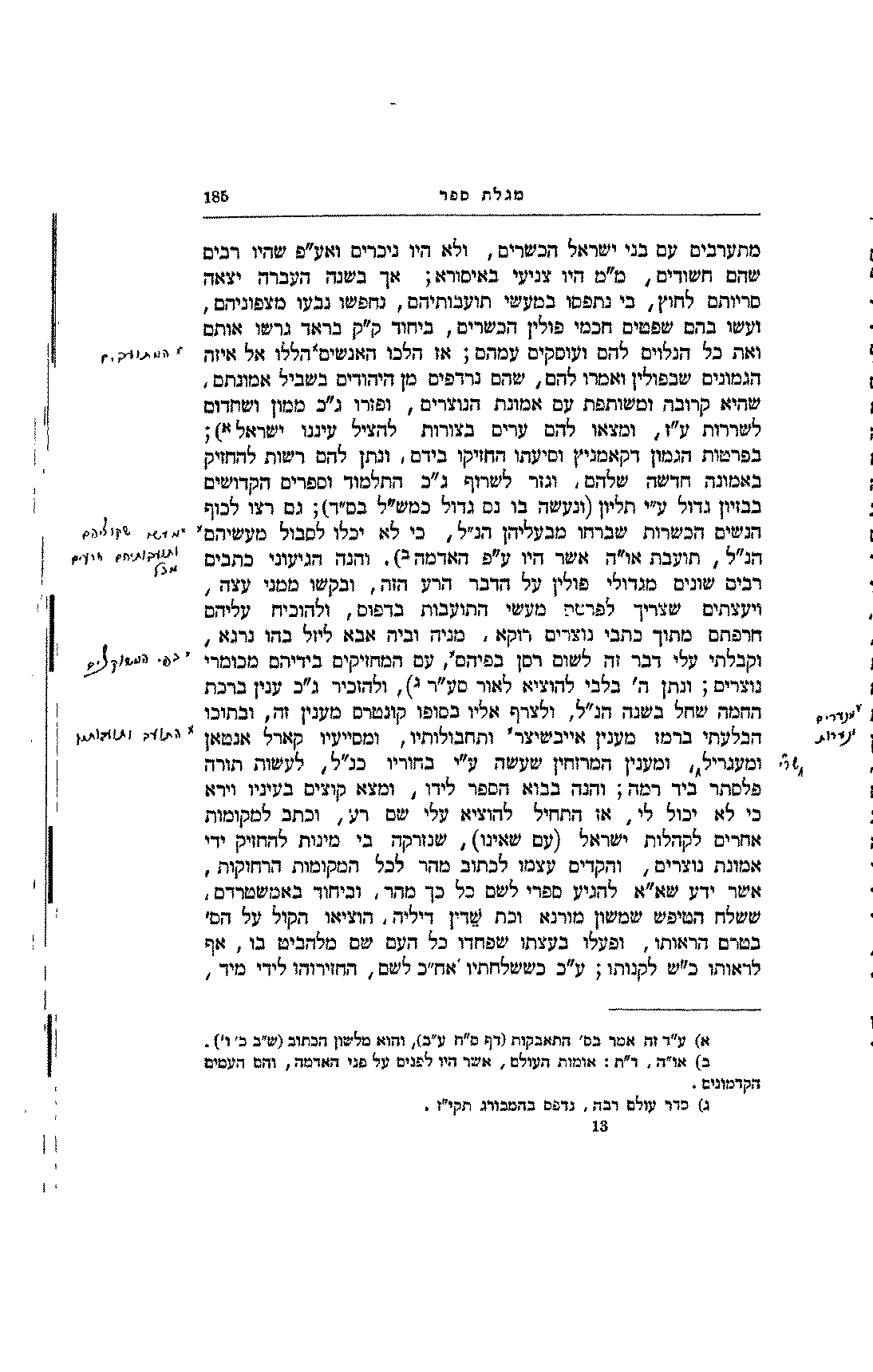
Margin readings in Scholem's copy (5)
| Printed anchor | Type (key sheet) | Mark | Reading | Certainty |
|---|---|---|---|---|
| אז הלכו האנשים x הללו | X: substitution | x mark; one word in left margin | המתועבים | sure |
| לסבול מעשיהם x הנ"ל | X: substitution | x mark; 3-line note in left margin | מעשי שקוציהם / ותועבותיהם הנו... / אבל(?) (partly read) | partial |
| לשום רסן בפיהם x | X: substitution | x mark; 2-word note in left margin | בפי המשוקצים | sure |
| ברמז מענין אייבשיצר x ותחבולותיו | X: substitution | x mark; 2-word note in left margin | התועב ותועבותיו | sure |
| קארל אנטאן ומעגריל ^, ומענין המרזחין | V: omission | caret; one abbreviation in right margin | שר"י | sure |
Page 186 (scan 206)
but the messenger stole seven copies from me on the way back, and I had a pointless expense. Only here I sold a few, at first, as soon as it came out into the air of the world. And although he ⟨S: "the heretic"⟩ opened his mouth wide against the book before his foolish friends, who believe all the words of his follies, even so they did not refrain from buying it; on the contrary, they longed to see it. But when they saw it, "shame covered their faces" (Ps. 69:8), for they saw that I had gone out to fight the wars of the Lord, and had cast my life before me (cf. Judg. 9:17) to prove from the book of the Christians themselves that the Jew is bound with strong cords to the Torah of Moses our teacher, peace be upon him, which will never be abolished, and that the nations of the world are obliged in the seven commandments only; and I made a quarrel against Megril and Karl, the forgers, and called these men those who lead Israel astray ⟨S: "mad and erring in their idols(?)"⟩. And when they saw that, on the contrary, it was more fitting to praise me and my new book, they drew back their hands from the book and were dumb. It was also put in the gazette of Altona, to make known the excellence of this new book of mine, with some of my praise. "The wicked shall see it and be vexed" (Ps. 112:10). What did he do? He bought many of these pages, to destroy them and make an end of them from the world; but in any case they spread to other places too.
In this year the Lord "showed me His marvellous kindness" (Ps. 31:22), that I merited to match two of my older daughters at one time with great and honoured men of the generation in Poland, without giving a dowry. The one is my daughter Esther, by my first wife, married for good luck to the son of the parnas and member of the Council of the Four Lands, R. A. Yaskes, who had protected me ⟨S: "the heretic"⟩ somewhat at first; and his son, my son-in-law, is called R. Zekharl Mendel, head of the court in the holy community of Tyszowce, rich and young in years, and he has children by his first wife. May the Lord build him a lasting house from my daughter! And the second, my daughter Neḥamah, may she live, by my second wife Sarah, may she rest in peace, was matched to the son of the notable R. Baruch, from the land of Yavan (?). He is the man who fought the wars of the Lord on my behalf against Ḥayyim of Lublin and his father; at that time he was not rich, but he was powerful, and his words were heard by the authorities of Poland, and he brought R. A. M. [a], now parnas of the Council of the Four Lands, to prison. Although he could have earned bribes for his pocket had he sided with the party opposing me, he would not take gain of money from them, and acted for the sake of Heaven, to fight against the said mighty men, and he even scattered some of his own [money] for the honour of His blessed name and the zeal for His Torah. And the Lord gave him his reward, made him great and exalted him: in the past year he became rich with great wealth, according to what is heard. May the Lord prosper him and raise him also to the level of the rich! And behold, my daughter's soul longed to be given as wife to his son, an important and intelligent young man, and my mind agreed with the will of the Omnipresent, for
Kahana's notes
- [a] Abbreviation of: R. Abraham of Lublin. See his book Torat ha-Kena'ot (p. 123), in these words: "the known wicked men, Abraham Ḥaimish of Lublin with his son Ḥaymel, head of the court of Lublin etc. The great lord, appointed over the treasury of the kingdom of Poland etc., who put the said worthless Abraham in custody." And see the book Shimmush (p. 2b), in these words: "the parnas of the Council, R. Abraham of the holy community of Lublin, and his son the rabbi R. Pinḥas, regret what they did before."
אך השליח גנב ממנו ז' חתיכות בחזרה, והי"ל הוצאה לריק; רק כאן מכרתי קצת בתחלה מיד בצאתו לאויר העולם, ואף כי הוא פער פיו על הספר מאד, בפני מאהביו הפתאים המאמינים לכל דברי מהתלותיו. אעפ"כ המה לא נמנעו מלקנותו, אדרבה חשקו לראותו; אכן כראותם כסתה כלימה פניהם, כי ראו שיצאתי להלחם מלחמות ה', והשלכתי נפשי מנגד להוכיח מס' נוצרים עצמן, שהיהודי קשור בעבותות חזקים בתורת משה רע"ה, שא"ל בטול עולמית, ושאו"ה חייבים בז' מצות לא זולת, ועשיתי מריבה נגד מעגריל וקארל המזויפים, וקראתי האנשים האלה המדיחים את ישראל; וכראותם כן כי יותר ראוי לשבח אותי וספרי החדש, אז משכו ידיהם מן הספר ונאלמו; גם נקבע בגאזעט שבאלטונא, להודיע טיב ספרי החדש הלז וקצת שבחי. רשע יראה וכעס; מה עשה, קנה הרבה מן הדפין הללו, לאבדם ולכלותם מן העולם, אבל מ"מ נתפשטו ג"כ למקומות אחרים. בשנה זו הפליא ה' חסדו עמדי, לזכות לשדך שתי בנותי הגדולות בבת אחת, עם גדולי נכבדי הדור בפולין בלי נתינת נדוניא: האחת היא בתי אסתר מאשתי ראשונה, נשאת למז"ט לבנו של פרנס ועד ד"א ר"א יאסקים אשר הגין קצת עליו מתחלה, ובנו חתני נקרא הרב ר' זכרל מענדל אב"ד בק' טישוויץ, עשיר ורך בשנים, וא"ל בנים מאשתו ראשונה. ה' יבנה לו בנין עדי עד מבתי! והשנית בתי נחמה תי', מאשתי השניה שרה ע"ה, נשתדכה לבנו של הנגיד ר' ברוך מארץ יון, הוא האיש נלחם מלחמות ה' בעדי, נגד חיים לובלין ואביו, ואז לא היה עשיר רק היה תקיף ודבריו נשמעים אצל שררות דפולין, והביא את רא"ם א פרנס הועד דד"א עתה לתפיסה; אף שהיה יכול להרויח שוחד לכיסו, אם היה דעתו עם צד המתנגד אלי, לא אבה מהם בצע כסף, ועשה לשם שמים להלחם נגד התקיפים הנ"ל, ופזר גם מעט שלו ע"ד כבוד שמו ית', וקנאת תורתו ונתן לו ה' שכרו גדלו ורוממו; בשנה שעברה נתעשר עשירות גדולה לפי הנשמע. ה' יצליחהו ויעלהו גם עלה אל גרם המעלות המאושרות! והנה חשקה נפשו בבתי לתתה לאשה לבנו בחור חשוב משכיל, והסכימה דעתי לדעת המקום, כי
- [א] ר"ת: ר' אברם מלובלין, עיין בספרו תורת הקנאות (צד קכ"ג) וז"ל: הרשעים הידועים אברהם חיימש מלובלין עם בנו חיימל אב"ד מלובלין וכו', האדון הגדול הממונה על אוצר מלכות דפולין וכו' ששם את הבליעל אברהם הנ"ל במשמר, ועיין בס' „שמוש" (דף ב' ע"ב) וז"ל: פרנס הועד ר' אברהם מק"ק לובלין ובנו הר' פנחס מתחרטים על הראשונות.
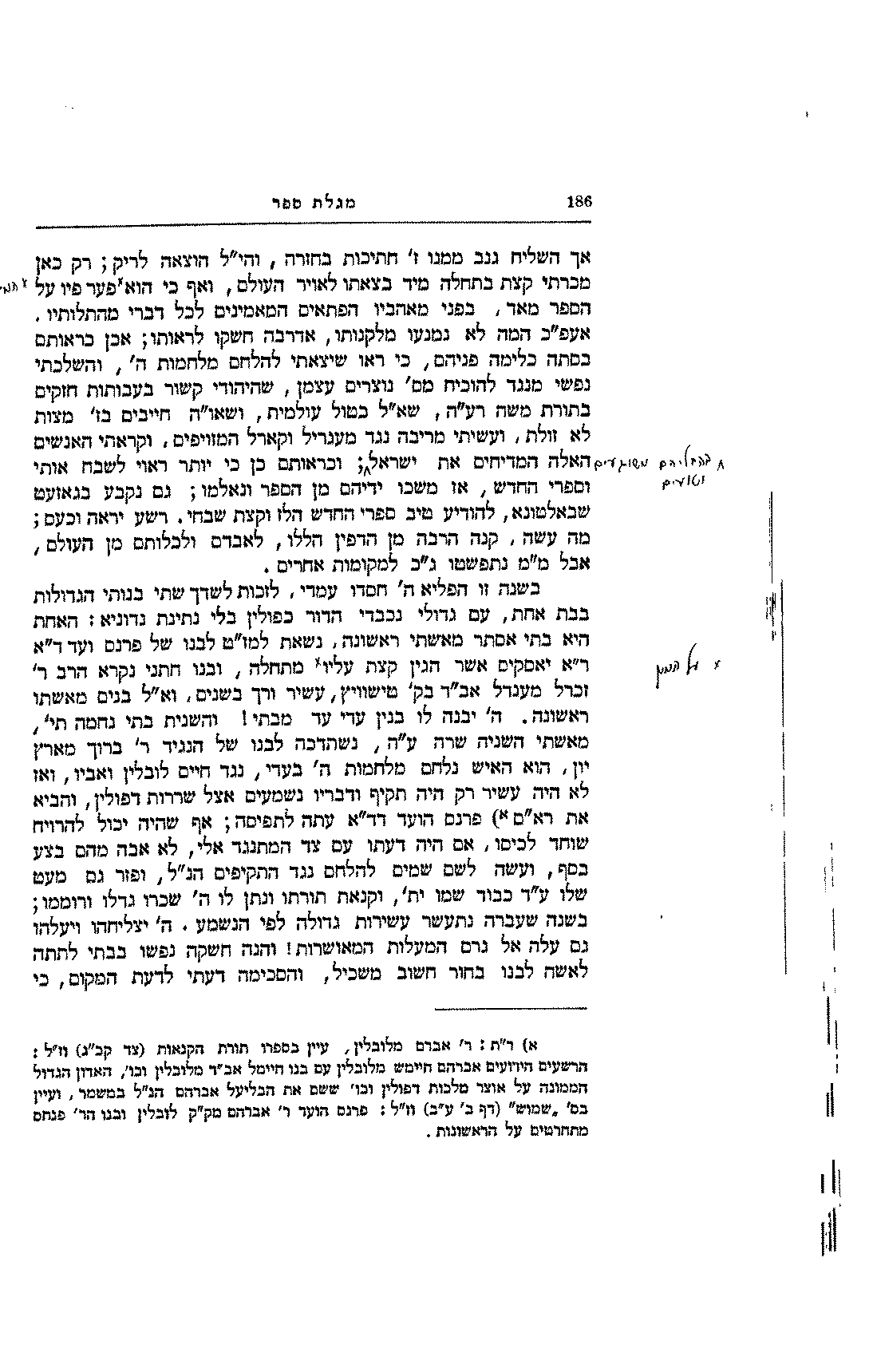
Margin readings in Scholem's copy (3)
| Printed anchor | Type (key sheet) | Mark | Reading | Certainty |
|---|---|---|---|---|
| ואף כי הוא x פער פיו | X: substitution | x mark; one word in right margin (cut off) | המין | fairly sure |
| המדיחים את ישראל ^; | V: omission | caret; 2-line note in right margin | בגלוליהם(?) משוגעים / וטועים | fairly sure |
| אשר הגין קצת עליו x מתחלה | X: substitution | x mark; 2-word note in right margin | על המין | fairly sure |
Page 187 (scan 207)
I saw that it was from Heaven and that "the thing came from the Lord" (Gen. 24:50). And I sent my two said daughters at one time, at the end of the summer of [5]517 [1757], by sea to Danzig; and I was in great worry for them, for stormy winds arose very strongly while they were still at sea. Afterwards it became known to me that they had been in very great danger: for when they were already near Danzig, the wind cast the ship many leagues away from the city, and the mast was lost, "and the ship was like to be broken" (Jon. 1:4). And blessed be the Lord, who saved and rescued them, "and brought them to their desired haven" (Ps. 107:30), for life and peace, to Danzig! My said elder daughter travelled on her way to her marriage, for life and peace, which was on the New Moon of Kislev past, and she left her younger sister in Danzig. A new worry arose for me on her account, for she was held up there for nothing half a year; she also fell ill there. And blessed be the Lord, who granted me to obtain news at this time, the end of Adar I, that she had already travelled from there two weeks before, to the joy of her wedding — may it be for good luck, for life and peace; and may He build from her too the house of Israel; and may I merit to see from her too, and from all of them, may they live, sons and sons of sons, worthy and good with the Lord and with men; so may it be His will, amen.
This winter of [5]518 [1757–58] was long and hard, heavy on me and on my household, may they live — besides the lack of the purse, which is hard, for our sins. For two of my children fell a second time into the illness of smallpox, God save us, after they had already passed through it once; and blessed be the Lord, who rescued them and healed them now too. But my son, the child of seven, Judah, may he live, lost the light of his eyes for about a quarter of a year after he had been saved from the said illness; and this great sorrow went on, for us and for the child and for all who love us (for he is my dear son, "a pleasant child" (Jer. 31:20), sweet, and knows two complete tractates almost by heart), until the end of Shevat; it was almost past despair. Now, blessed be the Lord, the Lord has given him back the sight of his eyes as at first. Praised be the Saviour, the Healer who heals freely, blessed be He! I too fell ill, to bed, for some weeks, with an illness of the bowels and a pain of catarrh; and the faithful Healer, may He be exalted in His great kindness for ever, brought me back to my strength.
On 18 Adar I my wife was delivered, and bore me a male child on the holy Sabbath; and I brought him into the covenant on the holy Sabbath of the portion Mishpatim, and called him Joseph, may he live. The sandak there was the leader R. Zekil, may he live. We rejoiced, thank God, on the day of the covenant; also on the third day after his circumcision, after we had been in worry for him on the day of the circumcision. On the night after the Sabbath he was very weak, for much blood had come out of him because of the uncovering (peri'ah), which had touched the member a little, and the women did not notice it until much blood was found in the rag and the cloth; and it was necessary to make remedies for him, for a wound had also formed at the underside of the member, and this pain went on some weeks. From this sorrow too the Blessed Name saved us in His great mercy and kindness. So may the Lord be gracious to us and to our offspring, and keep us from all hindrance and evil mishap; "may He ordain peace for us" (Isa. 26:12) on all our sides, and may we take refuge in the shelter of His wings, selah! My daughter too, the pleasant bride, Mrs. Neḥamah, may she live, met with a mishap (?): this winter she fell ill with a heavy illness in Danzig, after all the journey
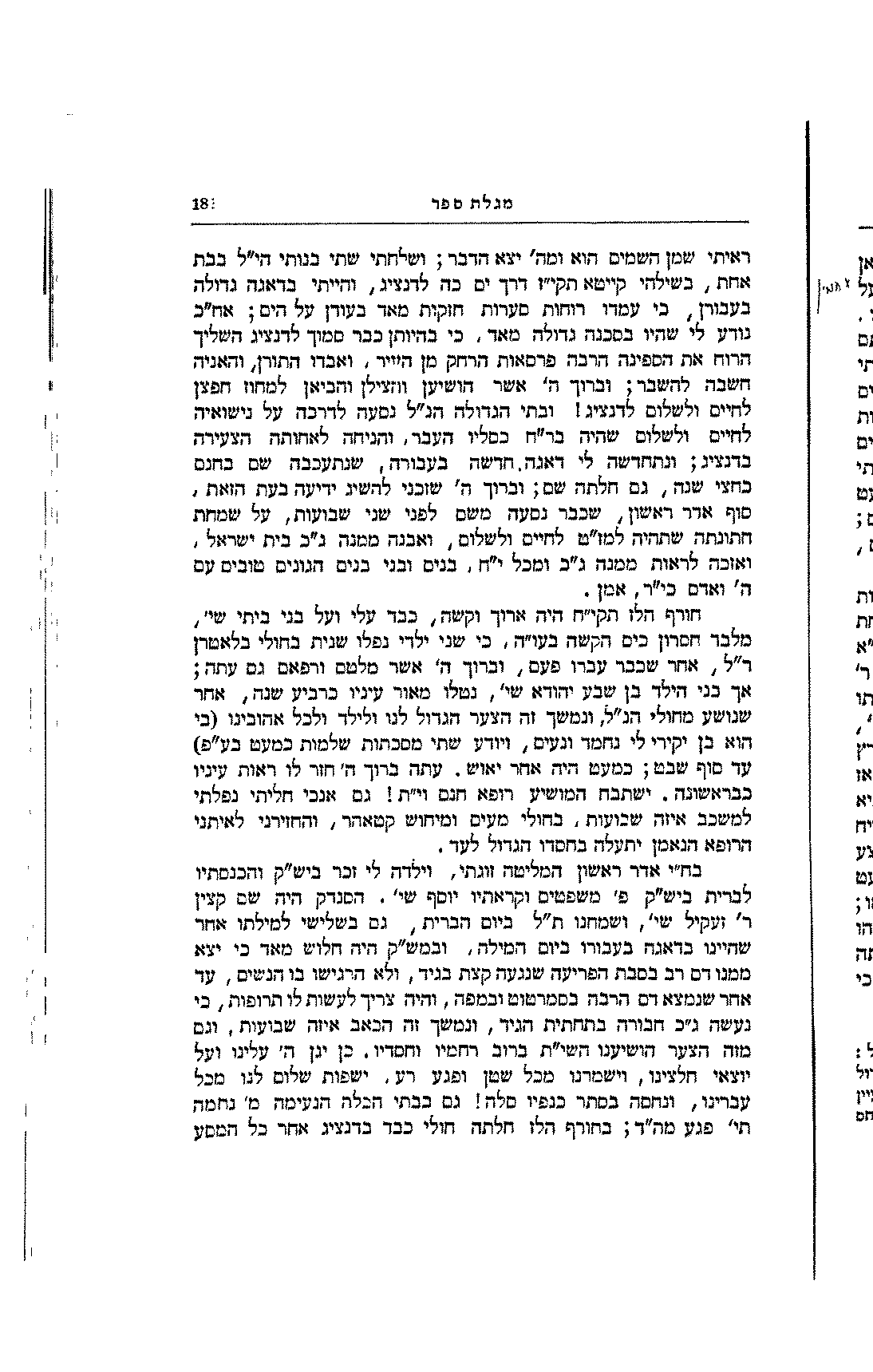
ראיתי שמן השמים הוא ומה' יצא הדבר; ושלחתי שתי בנותי הי"ל בבת אחת, בשילהי קייטא תקי"ז דרך ים כה לדנציג, והייתי בדאגה גדולה בעבורן, כי עמדו רוחות סערות חזקות מאד בעודן על הים; אח"כ נודע לי שהיו בסכנה גדולה מאד, כי בהיותן כבר סמוך לדנציג השליך הרוח את הספינה הרבה פרסאות הרחק מן העיר, ואבדו התורן, והאניה חשבה להשבר; וברוך ה' אשר הושיען והצילן והביאן למחוז חפצן לחיים ולשלום לדנציג! ובתי הגדולה הנ"ל נסעה לדרכה על נישואיה לחיים ולשלום שהיה בר"ח כסליו העבר, והניחה לאחותה הצעירה בדנציג; ונתחדשה לי דאגה חדשה בעבורה, שנתעכבה שם בחנם כחצי שנה, גם חלתה שם; וברוך ה' שזכני להשיג ידיעה בעת הזאת, סוף אדר ראשון, שכבר נסעה משם לפני שני שבועות, על שמחת חתונתה שתהיה למז"ט לחיים ולשלום, ואבנה ממנה ג"כ בית ישראל, ואזכה לראות ממנה ג"כ ומכל י"ח, בנים ובני בנים הגונים טובים עם ה' ואדם כי"ר, אמן. חורף הלז תקי"ח היה ארוך וקשה, כבד עלי ועל בני ביתי שי', מלבד חסרון כים הקשה בעו"ה, כי שני ילדי נפלו שנית בחולי בלאטרן ר"ל, אחר שכבר עברו פעם, וברוך ה' אשר מלטם ורפאם גם עתה; אך בני הילד בן שבע יהודא שי', נטלו מאור עיניו כרביע שנה, אחר שנושע מחולי הנ"ל, ונמשך זה הצער הגדול לנו ולילד ולכל אהובינו (כי הוא בן יקירי לי נחמד ונעים, ויודע שתי מסכתות שלמות כמעט בע"פ) עד סוף שבט; כמעט היה אחר יאוש. עתה ברוך ה' חזר לו ראות עיניו כבראשונה. ישתבח המושיע רופא חנם וי"ת! גם אנכי חליתי נפלתי למשכב איזה שבועות, בחולי מעים ומיחוש קטאהר, והחזירני לאיתני הרופא הנאמן יתעלה בחסדו הגדול לעד. בח"י אדר ראשון המליטה זוגתי, וילדה לי זכר ביש"ק והכנסתיו לברית ביש"ק פ' משפטים וקראתיו יוסף שי'. הסנדק היה שם קצין ר' זעקיל שי', ושמחנו ת"ל ביום הברית, גם בשלישי למילתו אחר שהיינו בדאגה בעבורו ביום המילה, ובמש"ק היה חלוש מאד כי יצא ממנו דם רב בסבת הפריעה שנגעה קצת בגיד, ולא הרגישו בו הנשים, עד אחר שנמצא דם הרבה בסמרטוט ובמפה, והיה צריך לעשות לו תרופות, כי נעשה ג"כ חבורה בתחתית הגיד, ונמשך זה הכאב איזה שבועות, וגם מזה הצער הושיענו השי"ת ברוב רחמיו וחסדיו. כן יגן ה' עלינו ועל יוצאי חלצינו, וישמרנו מכל שטן ופגע רע, ישפות שלום לנו מכל עברינו, ונחסה בסתר כנפיו סלה! גם בבתי הכלה הנעימה מ' נחמה תי' פגע מה"ד; בחורף הלז חלתה חולי כבד בדנציג אחר כל המסע
Page 188 (scan 208)
hard [illness] that passed over her, and "hope deferred" (Prov. 13:12). I hope for the kindness of the faithful Healer, who brought up healing for her (cf. Jer. 30:17). And my hope in the Lord was not put to shame in her, for, thank God, she returned to her strength and entered the canopy and the wedding with the son of the said R. Baruch — may they live long and well, amen.
This winter more strange and different letters reached me from Poland, especially from the rabbi R. A., may his light shine, trustee of the Four Lands, making known their distress with a great outcry: the great evil that these men had caused, for they had informed against Israel and spoken apostasy against the faith in general, and against the Talmud in particular at that time. Therefore wrath went out from the bishop of Kamieniec in particular, with some priests and nobles who strengthened the hand of the said sect, and he decreed burning on the holy books; and so it was done at his command, in disgrace: by the hand of the hangman the Talmud and the decisors and the other holy books were burned. And the said party made a great feast for him, and his priests and helpers reclined at their table; they gathered to rejoice greatly, and brought a cup of life, and rejoiced that he had merited to do such a thing in his days, and thanked him for having praised them and strengthened their hands and their opinion; and he took heart to promise them long life for this. Afterwards their joy was turned to mourning and their song to lamentation ⟨S: "their table before them [a tr]ap, and their peace-offerings a snare" (Ps. 69:23)⟩; and "a feast of fat things, of wines on the lees" (Isa. 25:6), and "the cup of staggering" (Isa. 51:17) this bishop ⟨S: a note cut off, partly read: "this …"⟩ drank. While they were still drinking and rejoicing, he cried out "Woe!" and shrieked with a bitter voice, that they should give the Jews permission to keep their Torah; and he fell to the ground with the falling sickness, until he died; and the faces of all those reclining, the enemies of Israel, "gathered blackness" (Joel 2:6).
And in Adar letters reached me from my son and from my brother: they told us "the praises of [the Lord], and His strength, and the wonders that He showed" (cf. Ps. 78:4) as in the days of their going out from the land of Egypt; for hard oppressors like Haman and Antiochus had stood up against them, to blot out the name of Israel and to abolish the Torah. They also told us all that was done in the burning of the holy books — to hear it is a pain to our soul — "and in the destruction the Lord saw and repented" (cf. 1 Chr. 21:15), and did awesome miracles and wonders, as in the days of Purim and Ḥanukkah. So they wrote from there in general; but my pupil R. L. of Danzig wrote to me to tell me some details of what happened: that after the event of the said foolish bishop, three more who had helped him to evil died ⟨S: "perished"⟩: the first of them died ⟨S: "perished"⟩ on the way, thus and so; the second broke his leg and died; the third fell into the falling sickness too, and afterwards his spirit went out. And when the Christians saw that the hand of the Lord was against those who held to the said sect ⟨S: "Sh. B. Tz., may the name of the wicked rot"⟩, then they joined the kosher Jews and helped them, and fell upon the other sect, which had gone out to lead Israel astray: some of them they killed, some they pursued, some they shaved off their beards, and they drove them out with no rising again. "So let all Your enemies perish, O Lord!" (Judg. 5:31) ⟨S: a caret, pointing to the typed sheet that follows⟩
My kinsman too, the notable R. Baruch, mentioned above, may he be remembered for good in this matter; for here too he did his part, and stood "like an iron pillar" (Jer. 1:18) before the king of Poland and his nobles, to seek the uprooting of the said heretics, to annul their counsel and frustrate their evil plan against the Jews, and to return their recompense on their own head (cf. Joel 4:4); and he offered his life and his means to drive them out and pursue them. May the Lord help him and prosper him in this too, for the honour of His blessed name! And the gaon R. A. Katz
הקשה שעבר עליה ותוחלת ממושכה. אקוה לחסדי רופא נאמן שעלה לה ארוכה. ובה לא נכזבה תוחלתי בה', כי ת"ל שבה לאיתנה ונכנסה לחופה וחתונה, עם בן ר' ברוך הנ"ל לאי"ט אמן; בחורף הלז הגיעוני עוד כתבים שונים ומשונים מפולין, ביחוד מן הרב מהר"א נר"ו נאמן דד"א, מודיע צערם בקובלנא רבה, הרעה הגדולה שסבבו האנשים, כי מסרו את ישראל ודברו סרה על האמונה בכלל ועל התלמוד ביחוד אז, על כן יצא הקצף מאת הגמון דקאמניץ בפרטות, עם איזה כומרים ושררות שהחזיקו ביד כת הנ"ל, וגזר על ספרי הקודש שריפה, וכן נעשה בפקודתו בבזיון; ע"י התליון נשרפו ש"ס ופוסקים ושאר ספרי הקודש, והצד הנ"ל עשה לו משתה גדול, וכומריו ועוזריו מסובים על שולחנו נקבצו לשמוח מאד, ומביאים כוס לחיים ולששון על שזכה לפעול כזאת בימיו, והודו לו שבחוהו והחזיקו ידיו ודעתו, ואמצו לבבו להבטיחו חיים ארוכים בזאת; אח"כ נהפכה שמחתם לאבל ושירתם לקינה, ומשתה שמנים שמרים וכוס התרעלה שתה ההגמון הלז; עודם שותים ושמחים צעק אוי וצוח בקול מר, שיתנו רשות ליהודים לשמור תורתם, ואך נפל לארץ בחולי הנופל עד שמת, ונהפכו פני כל המסובין צרי ישראל כשולי קדירה. ובאדר הגיעוני מכתבים מבני ומאחי: עמנו מספרים תהלות [ה'] ועזוזו אשר הראם נפלאות כימי צאתם מארץ מצרים, כי עמדו עליהם צרים קשים כהמן וכאנטיוכוס, למחות שם ישראל ולבטל תורה, והודיעונו ג"כ את כל הנעשה משריפת ספרים הקדושים, לשמע אוזן דאבה נפשינו, ובהשחית ראה ה' וינחם, ועשה נוראות נסים ונפלאות כבימי פורים וחנוכה. כך כתבו משם דרך כלל, אך תלמידי ר"ל מדנציג כתב אלי להודיע לי קצת פרטים שארעו, כי אחר מקרה הכסיל הגמון הנ"ל, מתו עוד שלשה אשר עזרו לרשעה, האחד מהם מת בדרך כה, השני שבר רגלו ומת, השלישי נפל בחולי הנופל ג"כ, אח"כ יצאה רוחו, וכראות הנוצרים כי יד ה' הויה במחזיקי הכת הנ"ל, אז נלוו אל היהודים הכשרים וסייעום, ונפלו על כת האחרת אשר יצתה להדיח את ישראל, מהם הרגו, מהם רדפו, מהם גלחו את זקנם, והדפו אותם בלי תקומה. כן יאבדו כל אויביך ה'! גם מחו' הנגיד כ"ה ברוך הנ"ל יזכר לטוב בעסק זה, כי גם פה עשה את שלו, ועמד כעמוד ברזל לפני המלך פולין ושריו, לרשת בעקירת המינים הנ"ל, ולבטל עצתם ולהפר מחשבתם הרעה על היהודים, ולהשיב גמולם בראשם, והתנדב בנפשו ובמאודו להדפם ולרדפם. ה' יעזרהו ויצליחהו גם בזאת על דבר כבוד שמו ית'! והגאון מהר"א כ"ץ
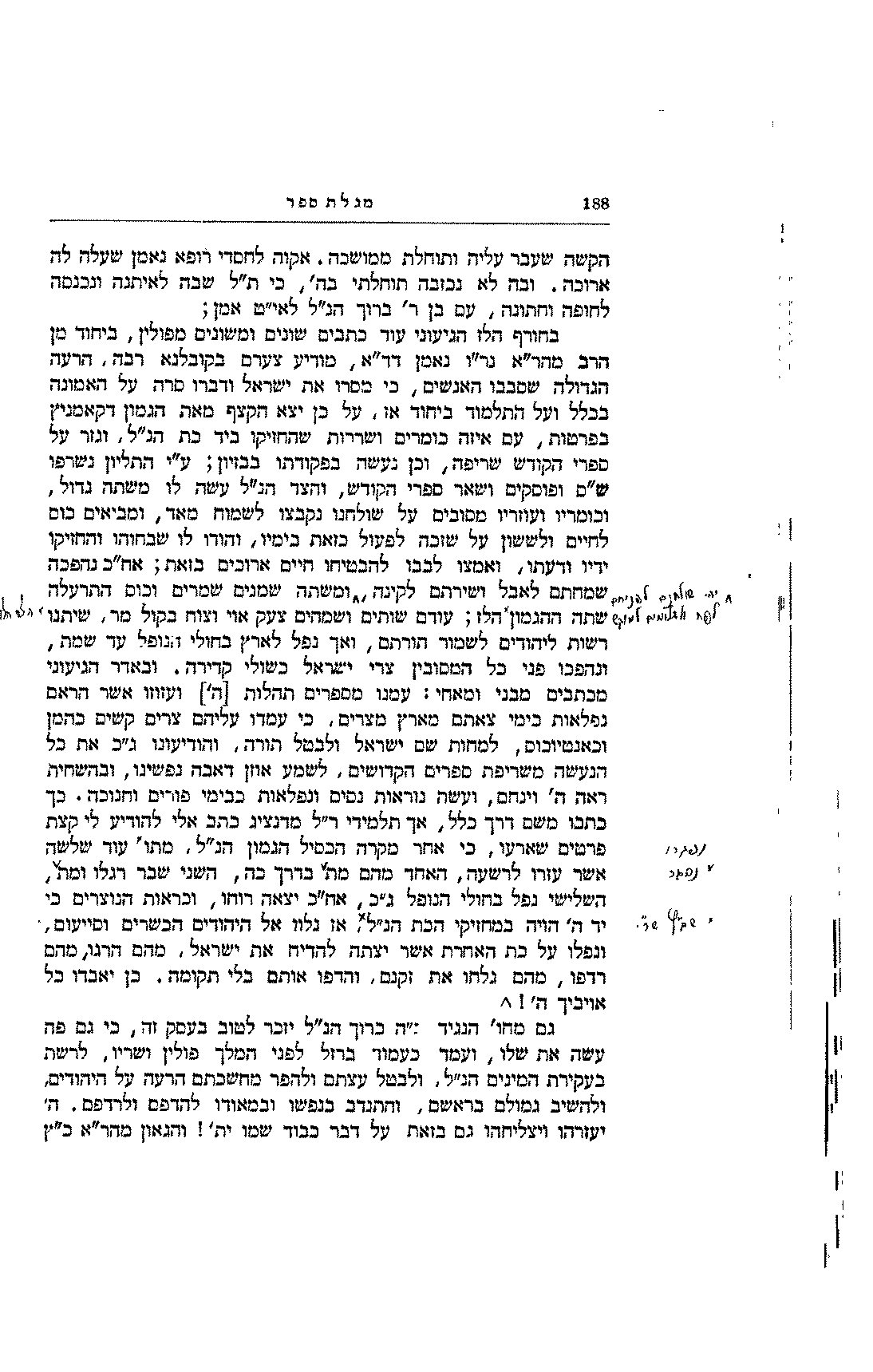
Margin readings in Scholem's copy (6)
| Printed anchor | Type (key sheet) | Mark | Reading | Certainty |
|---|---|---|---|---|
| לאבל ושירתם לקינה ^, ומשתה שמנים שמרים | V: omission | caret; 2-line note in right margin (partly cut off) | שולחנם לפניהם / [לפ]ח ולשלומים למוקש | fairly sure |
| שתה ההגמון x הלז | X: substitution | x mark; note in right margin (cut off) | הלז ה... (cut off) | partial |
| מתו v עוד שלשה | V: omission | v mark; one word in right margin | נפגרו | sure |
| האחד מהם מת v בדרך כה, השני שבר רגלו ומת v | V: omission | v marks after both words; one word in right margin | נפגר | sure |
| במחזיקי הכת הנ"ל x, אז נלוו | X: substitution | x mark; 2 abbreviations in right margin | שב"ץ שר"י | fairly sure |
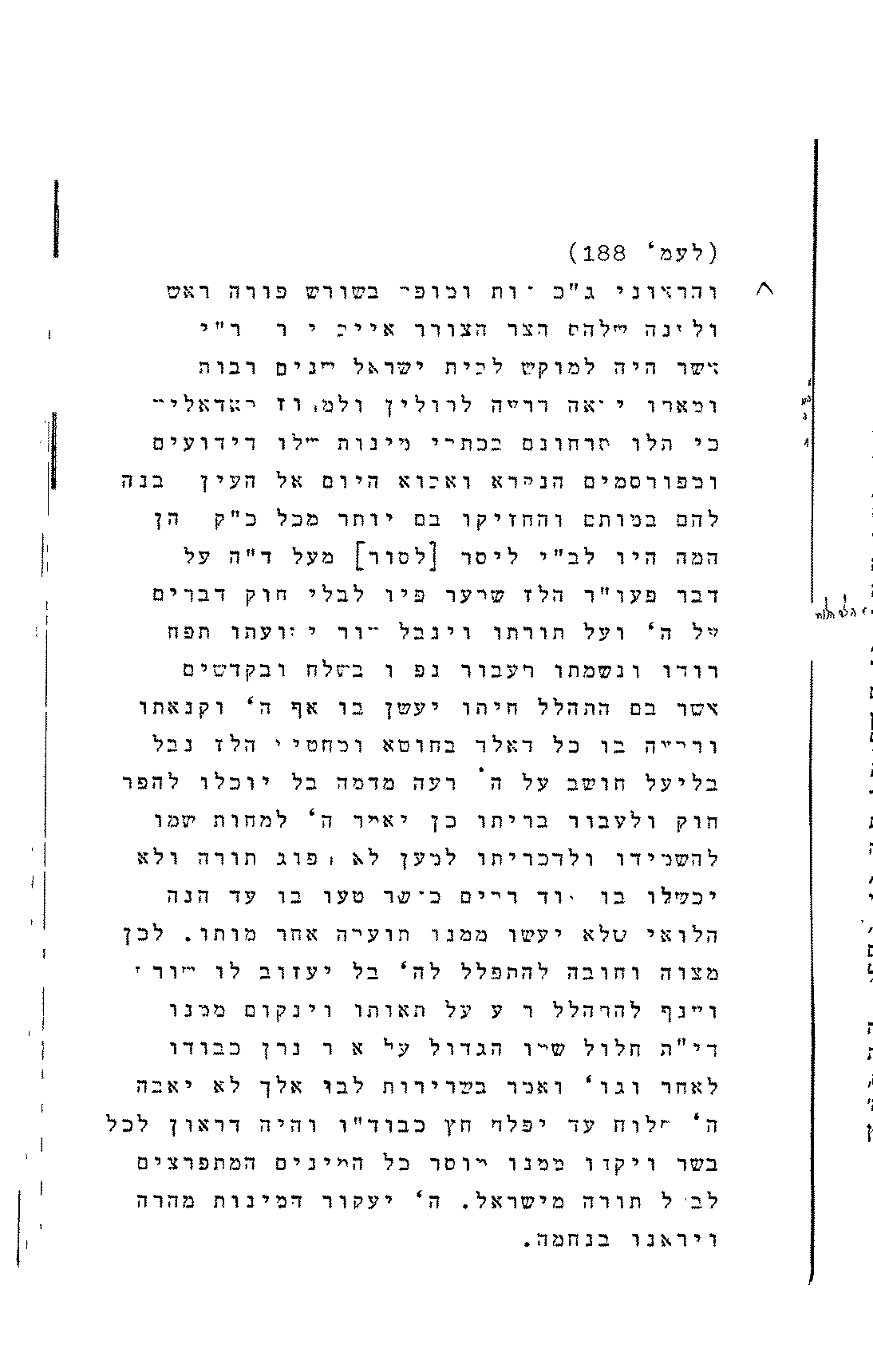
| כן יאבדו כל אויביך ה'! ^ | V: omission | caret pointing to the typed sheet "for p. 188" (scan 209) | (see typed insert, scan 209) | sure |
Typed insert for p. 188 (scan 209)
A typewritten sheet in Scholem's copy, headed "for p. 188". A caret stands before its first line; it belongs after "So let all Your enemies perish, O Lord!" on p. 188, where a caret is marked in Scholem's copy. The back of the sheet (scan 210) is blank.
And they also showed me a sign and a wonder in their "root that bears gall and wormwood" (Deut. 29:17), the oppressing foe Eybeschütz, may the name of the wicked rot, who was a snare to the house of Israel for many years; and from him the evil went out to Poland and to the region of Podolia, for they hung their offence on his known and notorious writings of heresy, called Va-Avo ha-Yom el ha-Ayin, which built them their high places; and they held to them more than to any … (?). Behold, they were to the house of Israel [a cause] to turn away from the religion of the Lord, because of this Pe'or, who "opened his mouth without measure" (Isa. 5:14) [with] words against the Lord and against His Torah, "and despised the Rock of his salvation" (Deut. 32:15). May his spirit and his soul expire; may his life "perish by the sword" (Job 33:18), and [by] the holy things in which he boasted. "The anger of the Lord and His jealousy shall smoke against him, and all the curse shall lie upon him" (Deut. 29:19) — this sinner who made others sin, a worthless villain "who devises evil against the Lord" (Nah. 1:11), imagining that they could break the law and transgress His covenant. So the Lord will say: to blot out his name, to destroy him and cut him off, "so that the Torah shall not grow slack" (cf. Hab. 1:4), and many shall stumble on him no more, as they have erred in him until now. Would that no abomination be made of him after his death!
Therefore it is a commandment and a duty to pray to the Lord that He leave him neither root nor branch (cf. Mal. 3:19), so that "the wicked boast of his heart's desire" (Ps. 10:3); and may the Blessed Name take vengeance on him for the profanation of His great name, because he gave His glory to another etc. (cf. Isa. 42:8), "and said, I will walk in the stubbornness of my heart" (Deut. 29:18). "The Lord will not be willing to pardon him" (Deut. 29:19), "till an arrow strike through his liver" (Prov. 7:23), "and he shall be an abhorrence to all flesh" (Isa. 66:24); and all the heretics who break out to abolish the Torah from Israel shall take a lesson from him. May the Lord uproot heresy quickly and show us consolation.
(לעמ' 188) ^ והראוני ג"כ אות ומופת בשורש פורה ראש ולענה שלהם הצר הצורר אייבשיצר שר"י אשר היה למוקש לבית ישראל שנים רבות ומאתו יצאה הרעה לפולין ולמחוז פאדאליע כי תלו סרחונם בכתבי מינות שלו הידועים ומפורסמים הנקרא ואבוא היום אל העין שבנה להם במותם והחזיקו בם יותר מכל כ"ק הן המה היו לב"י ליסר [לסור] מעל ד"ה על דבר פעו"ר הלז שפער פיו לבלי חוק דברים על ה' ועל תורתו וינבל צור ישועתו תפח רוחו ונשמתו תעבור נפשו בשלח ובקדשים אשר בם התהלל חיתו יעשן בו אף ה' וקנאתו ורבצה בו כל האלה בחוטא ומחטיא הלז נבל בליעל חושב על ה' רעה מדמה בל יוכלו להפר חוק ולעבור בריתו כן יאמר ה' למחות שמו להשמידו ולהכריתו למען לא תפוג תורה ולא יכשלו בו עוד רבים כאשר טעו בו עד הנה הלואי שלא יעשה ממנו תועבה אחר מותו. לכן מצוה וחובה להתפלל לה' בל יעזוב לו שורש וענף להתהלל רשע על תאותו וינקום ממנו הי"ת חלול שמו הגדול על אשר נתן כבודו לאחר וגו' ואמר בשרירות לבו אלך לא יאבה ה' סלוח עד יפלח חץ כבוד"ו והיה דראון לכל בשר ויקחו ממנו מוסר כל המינים המתפרצים לבטל תורה מישראל. ה' יעקור המינות מהרה ויראנו בנחמה.
Page 189 (scan 211)
of blessed memory, sent me the words of the claims and pretexts of the said men ⟨S: "the wicked heretics"(?)⟩ against us, the Israelites who hold fast to the stronghold of religion, which they had handed to the said bishop. In them they declared with a brazen forehead, and removed their veil, saying that they are partners in believing in a trinity and in corporeality; and they spoke apostasy for which there is no atonement (cf. Isa. 47:11) ⟨S: a two-line note, partly read: "and the telling … more(?) … anything(?)"⟩. And the said rabbi asked me to answer them for my part ⟨S: a three-line note: "the heretics, the cruel(?), the accursed(?)"⟩. And although the letters reached me while my hands were still weak and slack from the said pain, I did not delay or transgress the commandment, and I hurried and answered ⟨S: a word, cut off, perhaps "trials"(?)⟩ at once with chapter headings only, until the Lord strengthens my hands to approach the work, to do it as it needs. I prepared, with God's help, this writing, and called the composition by the name Shimmush [a]. May the Lord in His kindness "put His word in my mouth" and "make me a polished shaft" (Isa. 49:2), and "a new sharp threshing sledge having teeth" (Isa. 41:15), to thresh the mountains of heresy and the hills of apostasy like dung, "and I will glory in the Holy One of Israel" (Isa. 41:16)!
And by the way, Eybeschütz ⟨S: a two-line note, partly read: "to explain his words … against me(?)"⟩, whose mouth gapes against me, to cast a blemish on me — the blemish that is in himself — with "the fruit of lips" (Isa. 57:19) of deceit, to make my savour stink by cunning. But with God's help I trust that his recompense will return on his own head; before him he will answer, as he thought something in his soul ⟨S: a three-line note, partly read: "… my tongue in his mouth(?) … and he will argue that Jesus will come(?) … he and his seed …"⟩; "but upon us the Lord will shine" (cf. Isa. 60:2) [His sun]; and upon us will be seen "the light of Israel and his Holy One" (cf. Isa. 10:17). So may it be His will, speedily in our days, amen!
Now I will tell what happened to me with the houses that I bought in Altona. I have already recorded above what happened when I bought the first house, my dwelling, and spent very many expenses on it, double and more against the capital it had cost me at first. And behold, when I returned from Amsterdam from my flight, I found that my gentile ⟨S: "gentile"(?)⟩ neighbour had built his house and encroached on my border, and had taken some of my property into his own domain to widen his new building; and I kept silent. Again he went further, to take by force from me the place of the privy that is in our courtyards, touching our building: he pulled down the privy and took it to himself, and fenced it off from me and made it a privy for his own needs. I could bear the violence no longer, and I was forced to sue him in their courts. The lawsuit dragged on a whole year; afterwards the verdict came out that he was obliged to give me back the privy and leave it in its former state, and so he did. Even so, he still holds half of the place that he took wrongfully, and has not given it back; and the expenses he caused me in the lawsuit, about twenty Reichstaler, went to waste.
In the year [5]514 [1754] I bought some more houses, which touched my estate, for fear of a bad neighbour; and I also thought to have some support of bread from them, for I had gone round all sides to set up some station of livelihood for myself, and my hand no longer found business of trade; and what happened with R. L. of London has already been told, and the money that I borrowed on my house went to waste. And I was careful about the advice of our sages, of blessed memory: "a man should always divide his money into three" (b. Bava Metzia 42a),
ז"ל שלח לידי דברי הטענות ותואנות של האנשים הנ"ל כנגדינו הישראלים המתחזקים במעוז הדת, שמסרום להגמון הנ"ל ובתוכם הודיעו במצחם הנחושה והסירו מסוה, לומר שהם שותפים להאמין בשלוש ובגשמיות, ודברו סרה לא יוכל כפרה, ובקש ממני הרב הנ"ל שאענה אני חלקי להשיב להם, ואף אם הגיעוני כתבים הנ"ל וידי חלושות ורפות עדיין ממיחוש הנ"ל, לא אחרתי ולא עברתי על המצוה, ומהרתי ועניתי, מיד רק ראשי פרקים, עד אשר יחזק ה' ידי לקראת המלאכה לעשות אותה כל צרכה, הכינותי בעזה"י כתב זה וקראתי בשם החבור „שמוש" א. ה' בחסדו ישים דברו בפי וישימני לחץ ברור, ולמורג חרוץ חדש בעל פיפיות, תדיק הרי המינות וגבעות האפיקורסות כמאום תשים ואני בקדוש ישראל אתהלל! ואגב אורחא אייבשיצר, פיו פוער נגדי, להטיל בי מום שבו, בניב שפתי מרמה, להבאיש ריחי בערמה, ובעזה"י בטחתי להשיב גמולו בראשו, בפניו יענה כחשו כי דבר בנפשו, ועלינו יזריח ה' [שמשו], ועלינו יראה אור ישראל וקדשו, כן יהי רצון במהרה בימינו אמן! עתה אספר מה שקרה לי עם הבתים שקניתי באלטונא, וכבר זכרתי למעלה מ"ש כשקניתי הבית הראשון בית דירתי, ועשיתי עליו הוצאות רבות מאד, כפלי כפלים כנגד הקרן שעמד לי בתחלה; והנה בשובי מאמשטרדם מבריחתי, מצאתי שבנה שכן נכרי ביתו והשיג גבולי, וכנס קצת מרשותי לרשותו להרחיב בנינו החדש ושתקתי; שוב הוסיף עוד לקחת בחזקה בפני, מקום בית הכסא שבחצרי הנוגע בבנינו, וסתר הב"כ ולקחו אליו, וגדר אותו בפני ועשאו ב"כ לצרכו, לא יכולתי לסבול החמס יותר, והוכרחתי לתבעו בדין בערכאותיהם, ונמשך עסק המשפט שנה שלמה, אח"כ יצא הפס"ד שמחוייב להחזיר לי הב"כ ולהניחו על חזקתו הראשונה וכן עשה, עכ"ז עדיין עכב חצי המקום שלקח בעול ולא החזירו, והוצאות שגרם בדין כעשרים ר"ט הלכו לאבוד. בשנת תקי"ד קניתי עוד איזה בתים, שהיו נוגעים בנחלה שלי ליראתי משכן רע, וגם חשבתי להיות לי קצת משען לחם, באשר חזרתי על כל הצדדין להעמיד לי איזה מעמד של פרנסה, ולא מצאה ידי בעסק מו"מ עוד, וכבר נ"ל מ"ש עם ר"ל מלונדון, והמעות שלויתי על ביתי והלכו לטמיון. ונזהרתי בעצת רז"ל לעולם ישליש אדם מעותיו,
- [א] על שער הספר נאמר שנדפס באמשטרדם תקח"י, ועיין בספרו מטפחת ספרים (צד קי"ז), אך כפי שנראה מדברי הגאון יעב"ץ פה להלן (צד 202) נדפס הספר „שמוש" באלטונא.
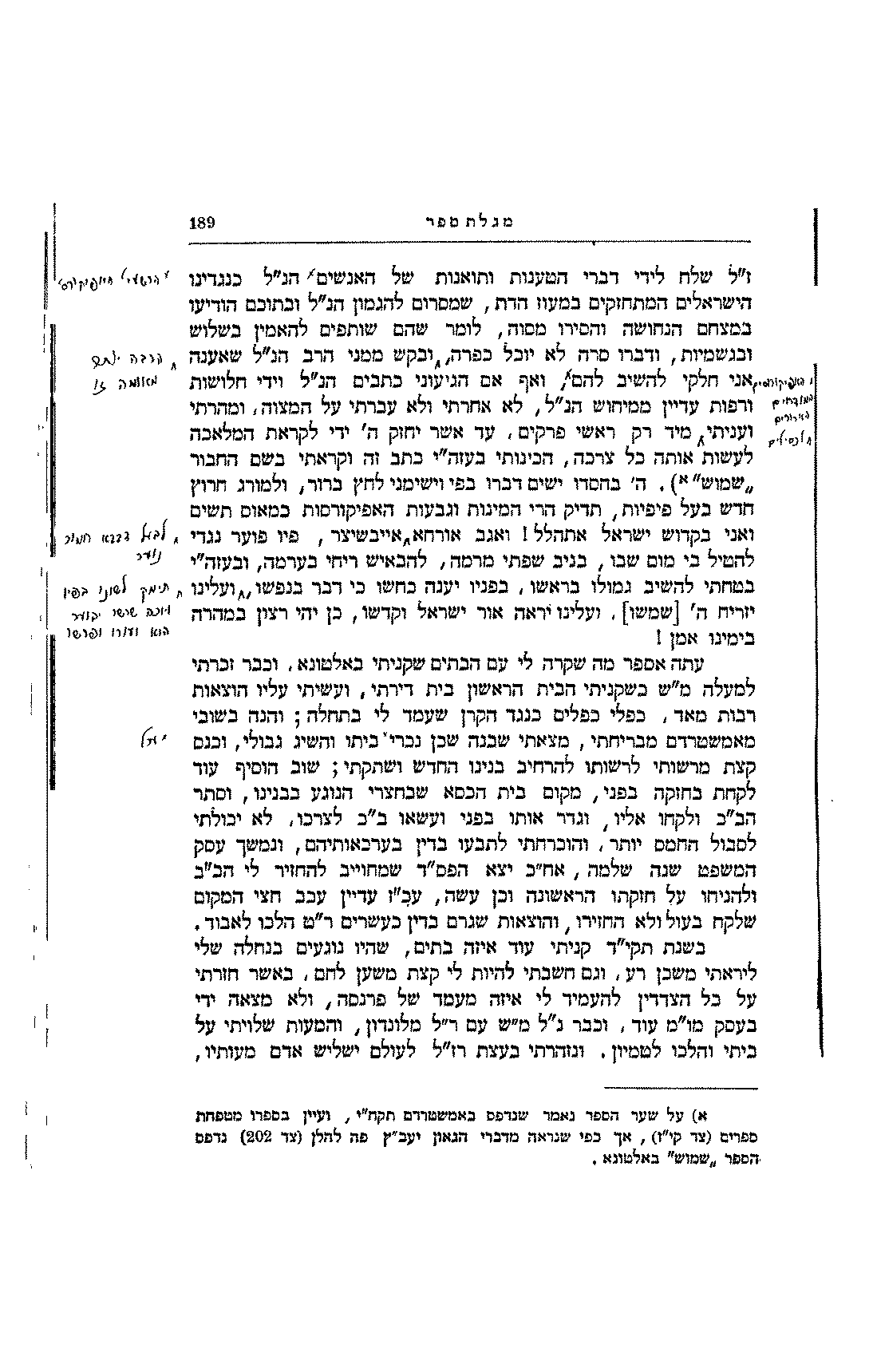
Margin readings in Scholem's copy (7)
| Printed anchor | Type (key sheet) | Mark | Reading | Certainty |
|---|---|---|---|---|
| ותואנות של האנשים x הנ"ל כנגדינו | X: substitution | x mark; 2-word note in left margin (cut off) | הרשעי'(?) האפיקורסים(?) | uncertain |
| ודברו סרה לא יוכל כפרה ^, ובקש | V: omission | caret; 2-line note in left margin (cut off) | והגדה יותר(?) / מאומה(?) לו(?) (partly read) | partial |
| שאענה אני חלקי להשיב להם x | X: substitution | x mark; 3-line note in right margin | האפיקורסים / האכזרים(?) / הארורים(?) | partial |
| ועניתי ^ מיד רק ראשי פרקים | V: omission | caret; one word in right margin (cut off) | נסיונים(?) | uncertain |
| ואגב אורחא ^ אייבשיצר | V: omission | caret; 2-line note in left margin (cut off) | לבאר דבריו ... / נגדי(?) (partly read) | partial |
| כחשו כי דבר בנפשו ^, ועלינו | V: omission | caret; 3-line note in left margin (cut off) | תימן(?) לשוני בפיו(?) / ויוכח שישו יבוא(?) / הוא וזרעו ופרשו(?) (partly read) | partial |
| מצאתי שבנה שכן נכרי x ביתו | X: substitution | x mark; one word in left margin | גוי(?) | uncertain |