Chapter 4 Settling in Altona
Jacob Emden, Megillat Sefer · Hebrew (Kahana, Warsaw 1896/97) with an English draft translation · work in progress
Pages in this chapter
Chapter 4 Settling in Altona · from p. 114
p. 115 · p. 116 · p. 117 · p. 118 · p. 119 · p. 120 · p. 121 · p. 122 · p. 123 · p. 124 · p. 125 · p. 126 · p. 127 · p. 128 · insert · p. 129 · p. 130 · p. 131 · p. 132 · p. 133 · p. 134 · p. 135 · p. 136 · p. 137 · p. 138 · p. 139 · p. 140 · p. 141 · p. 142 · p. 143 · p. 144 · insert · p. 145 · p. 146 · p. 147 · p. 148 · p. 149 · p. 150
Page 115 (scan 131)
(cf. Ps. 55:23), to give me my livelihood. And you, do me the kindness of permitting me to gather in my house a minyan of ten from Israel, to set up a house of prayer in my house evening and morning; for it is hard for me to go to the great synagogue because of my ailment, on account of which I left my place of honour, and to pray alone is not proper. So may I find favour in your eyes, that you permit me only this thing, which is a need of my soul; apart from this I will not trouble you at all for the needs of my body." They answered me with joy: "Obviously this need not be said, for even strangers were not prevented from it; I was entitled to do so, just as they allowed Ḥakham Ḥagiz to do such a thing, even though he was not an Ashkenazi. Indeed, they were ready for greater things than this: if I asked of them any favour, they were ready and prepared to do my will." Such and such were their words to me, words of conciliation and goodwill, that I should ask something of them and test their heart, faithful to me. But I asked nothing of them, only that my life be given me at my petition (cf. Esth. 7:3), as mentioned.
And when they had agreed to this, as said, so that I had permission from the people of the community to set up a place of prayer in my house, I spoke first with Ḥakham Ḥagiz, peace be upon him, since my house was near his, and I had been with him in great love since the time in Emden. A special affection from him was known to me, and his covenant with me was faithful, as is seen also from the writings and letters he exchanged with me on Torah matters, some of which are presented in my book She'ilat Ya'avetz and in his book Shetei ha-Leḥem. He, peace be upon him, had rented the dwelling house here in Altona for me before I came here, at a high price, for he, of blessed memory, was not experienced in such things. So at the beginning of my stay here, before Rosh Hashanah [5]493 [1732], I went for all the festival days to the synagogue he had in his house (also of Ashkenazim and following their rite), and I entreated him to keep up a minyan, to pray with ten morning and evening regularly, on all the weekdays too. For if he did so, I would regularly go to his synagogue, for it was good for me with him, and we would be as one all the days; although I had permission from the parnassim and leaders to make a separate place of prayer in my house. And if he would not do so, I would have to make a special place of prayer in my house against my will, for it could not be otherwise: I could not go to the great synagogue, for it was very much trouble for me, and to forgo prayer with the congregation all the days of the week is not fitting at all; it was not acceptable to me. Others of our friends who went to his minyan on Sabbath and festivals had already urged him and asked him to agree to allow prayer with ten in his house regularly on all weekdays as well, so that they would not have to wander hither and thither for prayer all the days of the week; but they did not succeed. And so he sent me away disappointed and made my words of no account (cf. Job 24:25). So I had to make a special place of prayer in my house.
This matter caused some estrangement between us, for this thing was like a thorn in the eyes of the sage, peace be upon him, and he began to hate me for it, as I was told. But ⟨S: "I"⟩ there was no reason or cause to cool and chill the fire of love, if it was because of the proper thing
השלכתי לתת לי פרנסתי, ואתם תעשו לי החסד להרשות אותי לקבץ בביתי מנין עשרה מישראל לקבוע בביתי בית תפלה ערב ובקר, באשר כבד ממני הדבר לילך לבהכ"נ הגדולה, מחמת מיחוש שלי שבשבילו עזבתי מקום כבודי, ולהתפלל ביחיד לא כשר הדבר; בכן אמצא חן בעיניכם להתיר לי רק הדבר הזה שהוא צרכי נשמתי, זולת זאת לא אטריח עליכם בצרכי גופי כלל. ויענו אותי בשמחה: פשיטא דבר זה אין צריך לאמרו, שאפילו לזרים לא מיחו בזה, ורשאי אני לעשות כן כמו שהניחו לחכם חגיז לעשות כזאת, ואפילו שלא היה אשכנזי. אמנם לגדולה מזו אני מתוקן, אם אבקש מהם איזה טובה הם מוכנים ומזומנים לעשות רצוני. כזה וכזה היו דבריהם אלי דברי פיוס ורצוי, לבקש מהם מאומה ולנסות לבבם הנאמן אתי. אך לא בקשתי מהם דבר, רק לתת לי נפשי בשאלתי כנזכר. ועם שהתרצו אלי בכך כאמור, שהיה לי הרשות מאנשי הקהל, לקבוע לי מקום לתפלה בביתי, דברתי תחלה עם חכם חאגיז ע"ה, מאחר שביתי היה קרוב אל ביתו, והייתי עמו באהבה רבה מאז בעמדן. חבה יתירה נודעת לי ממנו ובריתו נאמנת לי, כמו שנראה ג"כ מהכתבים והאגרות שהחליף עמי בד"ת, ביחוד אשר קצתן הוצגו בספרי שי"ע ובס' שתי הלחם שלו. והוא ע"ה שכר לי הבית דירה פה אלטונא בטרם בואי הנה ביוקר גדול, שלא היה ז"ל בקי בדברים כאלו. לכן בתחלת שבתי כאן לפני ר"ה תצ"ג, הלכתי בבהכ"נ שהי"ל בביתו (ג"כ מאשכנזים וכמנהגם) כל היו"ט, וחליתי פניו שיתמיד לעשות מנין, להתפלל בעשרה בשחר ובערב תדיר, גם כל ימות החול, כי אם ככה יעשה אז אתמיד הליכתי לבהכ"נ שלו, כי טוב לי עמו ונהיה לאחדים כל הימים, אע"פ שיש לי רשות מפו"מ לעשות לי מקום מיוחד לתפלה בביתי בפ"ע, ואם לא יעשה כך הוצרכתי לעשות מקום מיוחד לתפלה בביתי על כרחי, דלא סגי בלא"ה, מאחר שלא אוכל ללכת לבהכ"נ הגדולה, דטריחא לי מילתא טובא, ולבטל תפלה עם הצבור כל ימי השבוע, הוא דבר שאינו הגון כלל, לא יתכן אצלי. ואע"פ שכבר הפצירו בו גם אחרים מאוהבינו שהיו הולכים למנין שלו בשבת ויו"ט, ובקשוהו על זאת שיסכים להניח להתפלל בביתו בעשרה בקביעות גם כל ימי החול, למען לא יצטרכו לנוע אנה ואנה לתפלה כל ימי השבוע, אבל לא עלתה בידם; וככה הוציאני בפ"נ ושם לאל מלתי. בכן הוצרכתי לעשות לי מקום מיוחד לתפלה בביתי. וזה הענין גרם קצת פירוד לבבות בינינו, כי היה הדבר הלז כקוץ בעיני החכם ע"ה, והתחיל לשטום אותי על ככה כאשר הוגד לי, ואמנם לא היה טעם וסבה לקרר ולצנן אש האהבה, אם מחמת הדבר הגון
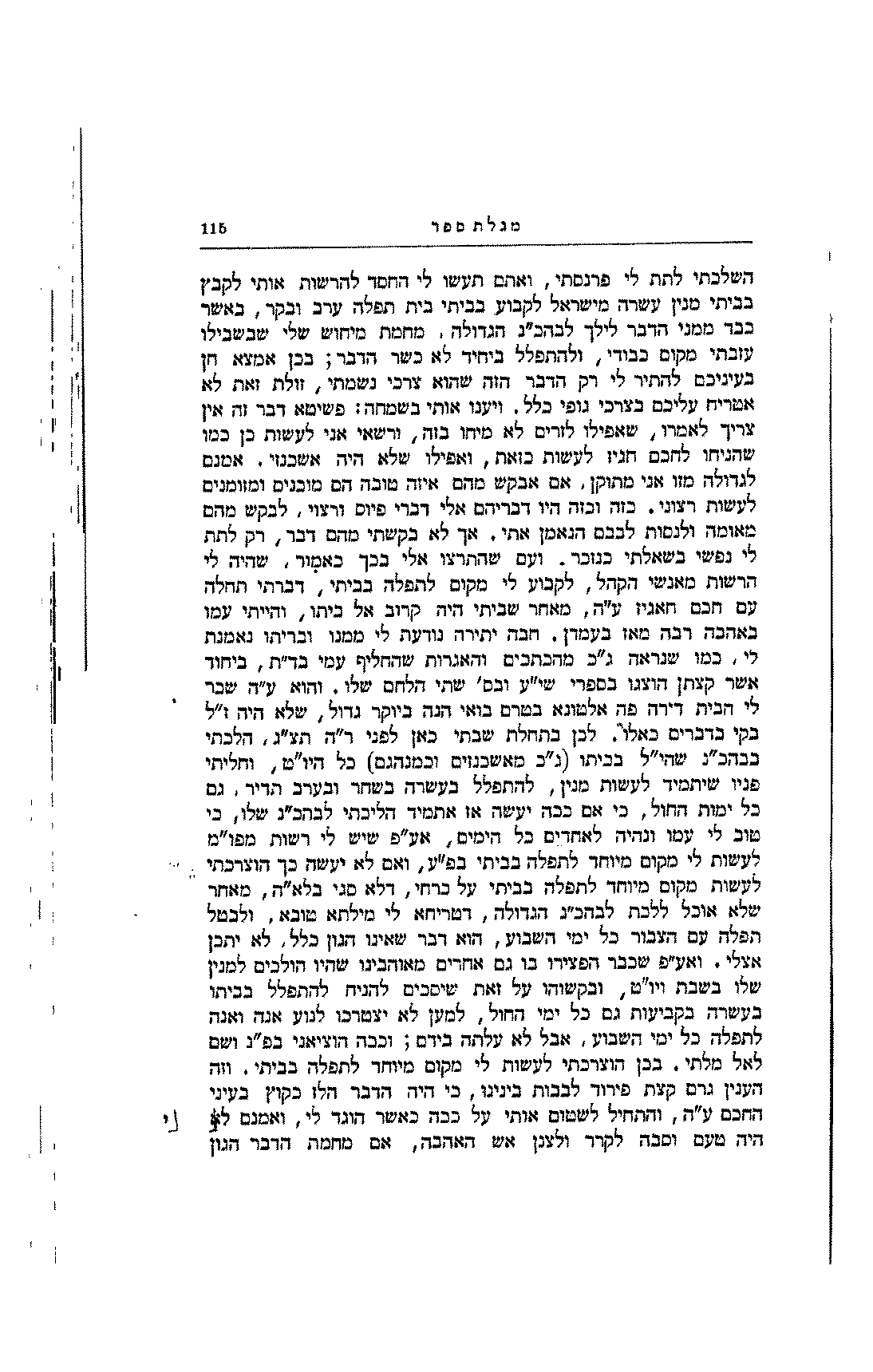
Margin readings in Scholem's copy (1)
| Printed anchor | Type (key sheet) | Mark | Reading | Certainty |
|---|---|---|---|---|
| ואמנם לא x היה טעם וסבה לקרר | X: substitution | x mark on the word; one word in left margin | לי | fairly sure |
Page 116 (scan 132)
that I asked of him, which he was obliged to do in any case, for it was a profanation of the Name [a] before the populace. In addition, when I went to his synagogue my eyes saw ⟨S: "every Sabbath"⟩ a fire burning on the stove, which was surely made on the Sabbath for some cooking and hot food, Sabbath after Sabbath all the year. Already when I was in Emden they had told this about him, and I did not believe the report until I came "and my eyes had seen it" (1 Kgs. 10:7). Even so "I laid my hand upon my mouth" (Job 40:4), and no word came out of my mouth. Besides this I saw things from him that were not right in my eyes for an important man. "These things he did, and I kept silence" (Ps. 50:21), for he was a very hot-tempered man, peace be upon him, and a man of anger; and I said, this too is for the good. Even so my love did not move a hair's breadth, in deed or in word; but he counted against me the said sin, of which I am innocent, and sealed evil [b] against the one who "dwelt securely" with him.
Added to this: it happened when I printed my book Leḥem Shamayim that I did not take an approbation from him. I avoided this because I did not want an abundance of praise and exaggeration in titles and virtues, which he would without doubt have drawn out at great length, as was his way, had he written me an approbation as I wished. This is no novelty, for even about a man whom he did not esteem at all — truly not at all — he would write and print praise amounting to lies. And what was hardest for me about him was that he was "one thing in the mouth and another in the heart" (cf. b. Pesaḥim 113b), as became known to me with full clarity while I was in Emden. Through his letters to me he was as one mocking the old head of the court of the Three Communities, R. Y[eḥezkel], mentioned above, and he spoke of him with scorn and contempt even in my ears when I was here with him face to face; he did not cease to speak evil of him and to mock him and his learning, his interpretations, his decisions and his rulings — [and there was made of him] "enough contempt and wrath" (cf. Esth. 1:18) — while to his face he showed him great affection, and presented Torah novellae in his name in books he brought to press, to find favour in the eyes of the head of the court, quoting and mentioning him with such excessive praise that it left nothing for those who truly have the holy spirit. Such things were loathsome to me and like a mockery in my eyes.
But his love was whole at first, as my ears heard that he spoke of me and praised me greatly behind my back — needless to say in writing, as I wrote some of his letters to me in the book She'ilat Ya'avetz — magnifying my praise in great abundance, until time separated us a little, from its said beginning, as written above. But even so it was not known to me that he said anything ⟨S: "evil"⟩ against me; only, as one complaining and murmuring, that I had betrayed him, in his opinion, which never entered my mind. And when he travelled from here to the Holy Land, I think he parted from me in great love, as his speech was then, with a full mouth, before the many people who went with him to accompany him; and as I also saw that when he printed the book Shetei ha-Leḥem he included in it my responsum to him on the case of an important Sephardi Kohen under a ban, that he should not raise his hands [in the priestly blessing]; and he showed me beforehand the printed sheet with titles
Kahana's notes
- [a] Ḥ. H., initials of ḥillul ha-Shem (profanation of the Name).
- [b] By the word "sealed" he means that R. M. Ḥ. printed bad things against him, as written below (p. 120).
ששאלתי מאתו, שהיה מחוייב לעשותו בלא"ה, כי היה ח"ה א בפני המון העם. נוסף לזה כשהלכתי לבהכ"נ שלו ראו עיני אש דולקת על הכירה, שנעשה בשבת לצורך איזה בשול וחמים בודאי, מדי שבת בשבתו כל השנה. וכבר בהיותי בעמדן ספרו זאת עליו, ולא האמנתי לשמועה עד אשר באתי ותראינה עיני, מ"מ שמתי יד לפי ולא יצא מפי דבר; וזולת זאת ראיתי ממנו דברים אשר לא ישרו בעיני על אדם חשוב. אלה עשה והחרשתי, כי היה קפדן גדול ע"ה ובעל אף, ואמרתי גם זו לטובה, מ"מ לא זזה אהבתי במעשה ובדבור כמלא נימא, אך הוא חשב לי עון הנ"ל שאני נקי ממנו, וחתם רעה ב על היושב לבטח עמו . מצורף לזה קרה כשהדפסתי ספר לח"ש שלי, ולא לקחתי ממנו הסכמה, ואני ברחתי מזה מחמת שלא בחרתי ברבוי שבח והפלגה בתוארים ומעלות, אשר בלי ספק היה מאריך הרבה בהן כדרכו, אם היה כותב לי הסכמה לחפצי, ואין זה חדוש שאפילו על אדם שלא מחשיבו כלל, באמת כלל וכלל, היה כותב ומדפיס שבח המגיע לכזבים, וזה היתה קשה אצלי עליו ביותר, שהיה אחד בפה ואחד בלב, כמו שנודע לי בבירור גמור מאד בהיותי בעמדן. ע"י אגרותיו אלי היה כמצחק על האב"ד הזקן דג"ק רי"ח הנ"ל, ודבר ממנו בלעג וקלון גם לאזני בהמצאי כאן עמו פא"פ, לא חדל לדבר ממנו רע ולהתל בו ובלמודיו ופשטיו ופסקיו והוראותיו, [ונעשה ממנו] די בזיון וקלס, ולפנים היה מראה לו חבה יתירה, והציג חדושי תורה משמו בתוך ספרים שהביא לדפוס, כדי למצוא חן בעיניו של האב"ד, מביאו ומזכירו בהפלגת השבח שלא הניח מאומה לבעלי רוה"ק באמת. דברים כאלו היו לזרא וכמתעתע בעיני, אך אהבתו היתה שלמה מתחלה, כאשר שמעו אזני שדבר והפליג ממני שלא בפני, אצ"ל בכתב כמ"ש בס' שי"ע קצת מכתביו אלי, בהגדלת שבחו בשפע גדול, עד שהזמן הפריד בינינו מעט מהתחלתו הנז' וכמש"ל. אך מ"מ לא נודע לי שדבר מאומה עלי, רק כמתלונן וכמתאונן בבגדי בו לפ"ד, מה שלא עלה על דעתי. וכאשר נסע מזה לארץ הקדושה, כמדומני שנפטר באהבה רבה מאתי, כפי שהיה דבורו אז בפה מלא בפני אנשים רבים ההולכים אתו ללותו, וכאשר ראיתי ג"כ בהדפיסו ס' שתי הלחם קבע בו תשובתי אליו בנדון כהן ספרדי חשוב בר נידוי שלא ישא כפיו, והראה לי מקודם הדף המודפס עם תוארים
- [א] ח"ה, ר"ת : חלול השם.
- [ב] כונתו במלת "חתם" כי רמ"ח הדפיס דברים רעים נגדו, כמ"ש להלן (צד 120).
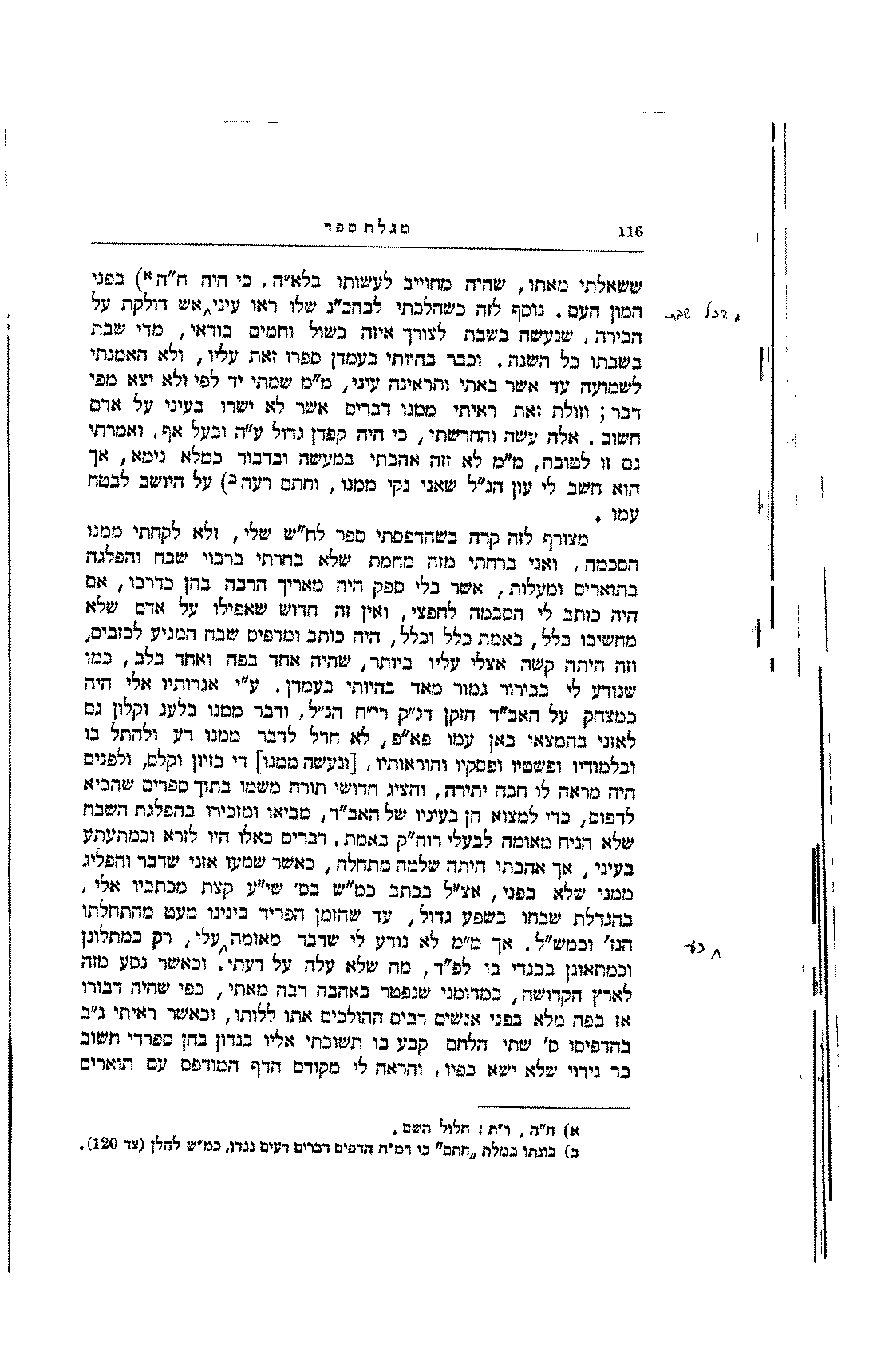
Margin readings in Scholem's copy (2)
| Printed anchor | Type (key sheet) | Mark | Reading | Certainty |
|---|---|---|---|---|
| ראו עיני ^ אש דולקת על הכירה | V: omission | caret; 2-word note in right margin | בכל שבת | sure |
| לא נודע לי שדבר מאומה ^ עלי | V: omission | caret; one word in right margin | רע | sure |
Page 117 (scan 133)
that I did not like, and I made him swear not to call me by the title gaon, for "pride and arrogance and the froward mouth" [a] I hate (cf. Prov. 8:13). Therefore I avoided taking an approbation from him for my said book; and this too helped to cool the flames of the strong love that had been between us while I was in Emden, when he exchanged letters with me by almost every post and cherished me greatly in writing and by word of mouth.
At the beginning of my stay in Emden, after he had first visited me by letter to greet me and bless me, I informed him of the complaint and the slander that the country spread about him: that he allowed himself to give free rein to his pen, and printed bitter things about great authors in Israel too — besides that it was a light thing for him to despise and shame the great and old sages of the generation, whose ankles he did not reach, "with talk that does not profit" (cf. Job 15:3), which he slipped into his book of collectanea: "he mocks and none puts him to shame" (cf. Job 11:3), out of his lack of knowledge and want of erudition — as I rebuked him to his face in a long responsum, with "open rebuke" (Prov. 27:5); it is written in the book She'ilat Ya'avetz (no. 33). He admitted it and was not ashamed, and accepted "the wounds of a friend" (Prov. 27:6) with a pleasant countenance, and did not take offence then, as was his manner otherwise. So from then on the covenant of my love with him was doubled and bound with the cord of longing — although I had known him before, since the time he lived in Amsterdam, young as I was, and I knew "all the travail that had befallen him" (Num. 20:14) in the war of the serpent Ḥayon ⟨S: "may the name of the wicked rot"⟩, when he fought the war of the Lord with all his heart and suffered much over this matter. So I remembered for him "the covenant of the first ones" (Lev. 26:45) between him and my father, of blessed memory; especially when I saw that he submitted to accept from me words against him and said ⟨S: "yasher kalos"⟩ "asher kales"(?). He also praised me excessively before the people of the Three Communities behind my back; and he was a faithful friend to me in his person, for he did all I wished, whatever was in his power, to give me satisfaction, although I was a child compared with him and he an old man advanced in years. But the two said causes were what "separated close friends" (cf. Prov. 16:28) during my stay here in Altona.
In addition, worthless men, fools, came to him bringing an evil report about me, as if I boasted over him, to gain honour by his shame and to speak of his disgrace — and not only in mere words, but, according to them, I had alluded to him and engraved his disgrace in a book I had put into print. I knew nothing of all this, for I am sure that no evil word about him ever came out of my mouth before any person — far be it from me; it never came into my thought nor entered my heart; although in truth many things in his books were not pleasing, where he let his tongue run on and used excessive language several times, which was not fitting for him at all. More than that, when I came to Altona I saw in his house things "that ought not to be done in Israel" (cf. Gen. 34:7): on the holy Sabbath the fire was always burning on the stoves, to prepare
Kahana's notes
- [a] Initials of u-feh ḥanaf ("and a hypocritical mouth").
Translator's note. Emden's "R. Y." on p. 116 is Ezekiel (Yeḥezkel) Katzenellenbogen, head of the court of the Three Communities. The words "asher kales" (p. 117) are unclear; the margin reading suggests a Hebrew-Greek "well said".
אשר לא אהבתי, והשבעתיו שלא יקרא לי בשם תואר גאון, כי גאה וגאון ופ"ח שנאתי א. ולכן נשמטתי מלקחת מעמו הסכמה על ספרי הנ"ל, וזה סייע ג"כ לקרר רשפי אהבה עזה, שהיתה בינינו מאד בהיותי בעמדן, שהיה מחליף עמי כתבים כמעט בכל פאשט, והיה מחבב אותי מאד בכתב ובע"פ. ואע"פ שבראשית ישיבתי בעמדן, אחר שביקר אותי בכתב תחלה לשאול לי לשלום ולברכני, הודעתי לו התלונה והלעז שלעזה עליו מדינה על שהתיר לעצמו לשלוח רסן מפי קולמוסו, ובהדפיסו דברים מרים על גדולי ישראל המחברים ג"כ, מלבד שהיה דבר קל אצלו לבזות ולהכלים חכמי הדור הגדולים והזקנים שלא הגיע לקרסולם, ברוב דברים ומלים לא יועיל בם, אשר הבליע בתוך ס' לקוטיו, ילעג ואין מכלים, מחסרון ידיעתו והעדר בקיאותו, כמו שהוכחתי על פניו בתשובה ארוכה בתוכחת מגולה, הלא היא כתובה על ס' שאילת יעב"ץ (סל"ג), והודה ולא בוש וקבל פצעי אוהב בסבר פנים יפות, ולא הקפיד אז כמנהגו בזולת זה. לכן מאז נכפלה ברית אהבתי עמו, ונקשרה בחבל הכוסף, אף כי מכירו הייתי לשעבר, מן אז בהיותו דר באמשטרדם, אף אם קטן הייתי, וידעתי את כל התלאה אשר מצאתהו, במלחמת הנחש חיון שנלחם מלחמת ה' בכל לבבו וסבל הרבה על דבר זה, ולכן זכרתי לו ברית ראשונים שבינו לבין אמ"ה ז"ל, מה גם בראותי שנכנע לקבל ממני דברים נגדיים אליו ואמר אשר קלס; גם היה מפליג בשבחי יותר מדאי בפני אנשי ג"ק שלא בפני, וכן היה לי אוהב נאמן בגופו, כי עשה כל חפצי מה שהיה ביכלתו כדי לעשות נחת רוח לפני, עם כי הייתי תינוק בערכו, והוא היה זקן בא בימים, אך שתי הסבות הנ"ל הן הנה היו סבה להפריד בין הדבקים מדי שבתי פה באלטונא. נוסף לזה באו אליו אנשי בליעל כסילים מוציאי דבה רעה עלי, כאלו הייתי מתפאר עליו להתכבד בקלונו ולדבר בגנותו, ולא לבד בדבור בעלמא, אלא שלפי דבריהם רמזתי אותו וחקקתי גנותו על ספר שקבעתי בדפוס, ואנכי לא ידעתי בכל אלה, כי ברור לי לא יצא מפי דבור רע עליו בפני שום אדם חלילה לי, ולא בא במחשבתי ולא עלה על לבי מעולם, כי אע"פ שבאמת כמה דברים לא ערבו בספריו, מה שהאריך פה הרחיב לשון, ושפת יתר כמה פעמים, מה שלא היה מהראוי לו כלל. ויותר מזה כשבאתי לאלטונא ראיתי בביתו דברים לא יעשו בישראל, בש"ק היתה האש מבערת תמיד על הכירים, לתקן
- [א] ר״ת : ופה חנף.
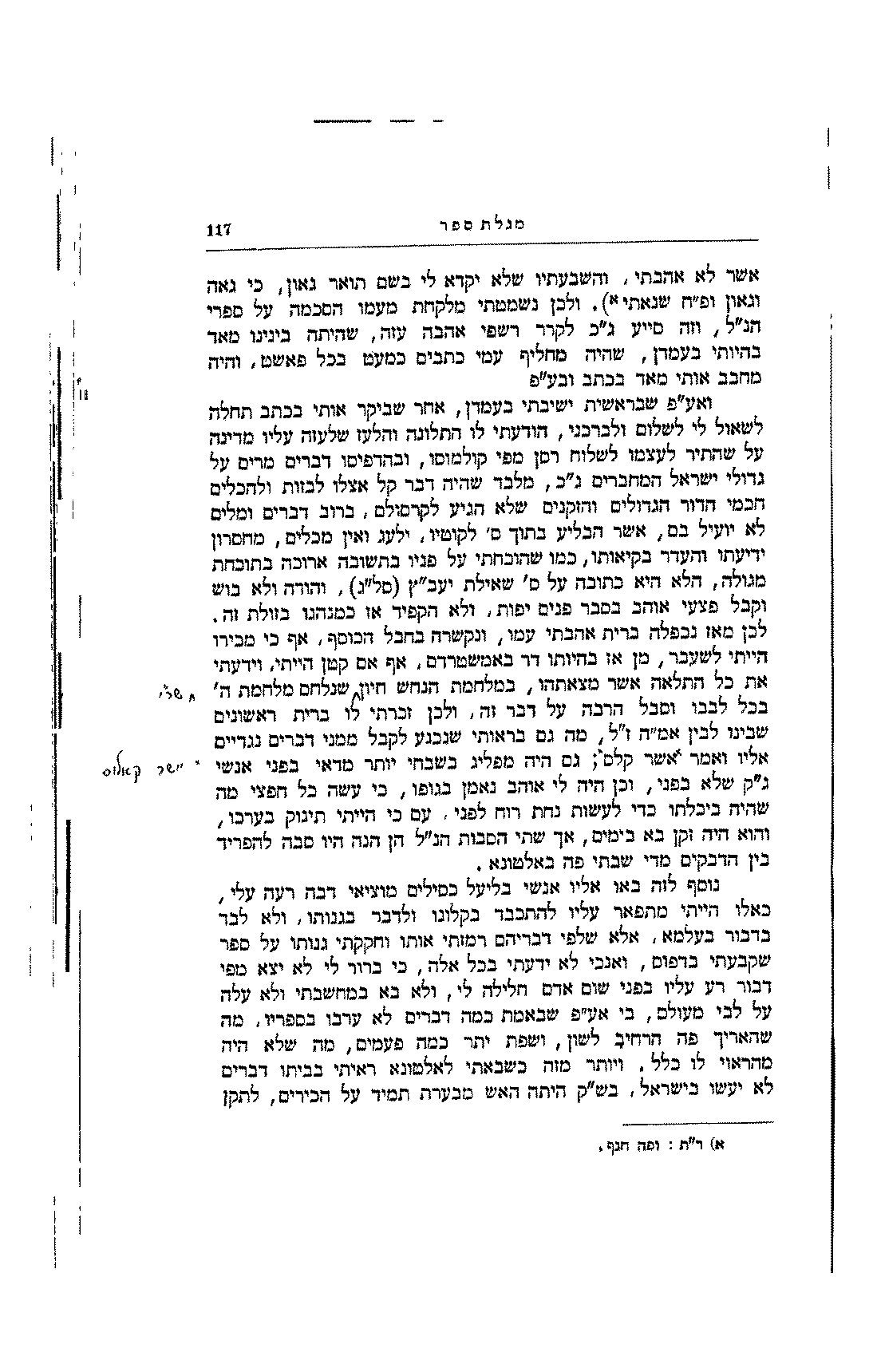
Margin readings in Scholem's copy (2)
| Printed anchor | Type (key sheet) | Mark | Reading | Certainty |
|---|---|---|---|---|
| במלחמת הנחש חיון ^ שנלחם מלחמת ה' | V: omission | caret; one word in left margin | שר"י | sure |
| ואמר x אשר קלס; גם היה | X: substitution | x mark; 2-word note in left margin (its end may be cut off at the edge) | יישר קאלוס | fairly sure |
Page 118 (scan 134)
for himself the drink of coffee, though he was healthy. Also his habit of excessive idle talk in the synagogue: I was not pleased with this, for it is a profanation of the Name before the common people. And greater than that, the neglect of prayer with ten on all the weekdays, although those who gathered for the minyan on Sabbath and festivals urged him to keep up the gathering of the minyan on weekdays too, which was easy and available for him, if only he would agree and let them come; and he would not, and with all their urging they could not prevail on him to permit them this. Above all, his falseness towards the head of the court of the Three Communities, R. Y[eḥezkel], which was of a very high degree, one thing in the mouth and another in the heart: so he used to mention him with praise in his book of collectanea, which he printed here, with vain titles, while behind his back he laughed and mocked at him. He also sometimes slipped sharp words against him even into his said books, only he took care to write about him in a way not noticeable to all. And besides this, other things that were not right in my eyes at all. But I do not wish to dwell on his disgrace, for "his love and his hatred and his envy are long since perished" (Eccl. 9:6); only what is necessary for my defence I will not hide, to teach my sons and to do my duty, to remove complaint from myself.
Indeed, I saw many strange things from him in public; my mind could not reach the depth of his intention, what he saw in this, to give people cause for talk. For all that, far be it from me to speak against such an old man, who truly brought merit to the many in several matters, in which he sometimes rebuked them rightly — especially in the affair of ⟨S: "the heretic"⟩ Ḥayon ⟨S: "may the name of the wicked rot"⟩, when he gave his life for our faith. Nor did he hold back from showing a man "his uprightness" (Job 33:23) in his book of collectanea, in his rebukes of the leaders of the time, to whom he showed no favour, and he filled his hand with the inkhorn to remind the wicked man of his blemish. Therefore I loved him; and if I saw in him something not proper in my eyes, I shut my eyes to it, covered for him, and argued in his favour, truly or not truly, as far as I could, only to quiet the slander and remove the people's complaint from him in every way, as anyone can see from the words of my responsum to him, in language of honour and affection. I said in my heart: "love covers all transgressions" (Prov. 10:12) — the love of God, for he was held to fear the Lord more than many; and even if he sometimes erred, "his error remains with himself" (Job 19:4); "who can discern errors?" (Ps. 19:13). So I covered his transgressions "as Adam" (cf. Job 31:33), and also treated him kindly as far as I could, since the time I was in Emden.
But he did not deal so with me. While I was here he broke the covenant of his love with me for nothing — not for any deed of my hands, but only because of the slander about me that he accepted from talebearers, "hypocritical mockers for a cake". He snapped the cord of longing and desire that was between us, as is known to all, and visited upon me a sin I did not know, and hated me — as I learned clearly — although he hid from me and concealed what was in his heart against me. But even so he could not conceal it so well that I would not sense that his love was not whole as before, when there was a strong love between us and a fond affection. He also spoke against me before people who came to me, and they told me that he had a grievance against me, without telling me what the wrong was, what this was. Not so I: in my innocence I went
לו משקה הקאפע אע"פ שהיה בריא, גם מנהגו בבהכ"נ בשיחה בטלה יתרה, לא היתה דעתי נוחה מזה כי הוא ח"ה בפני ע"ה, וגדולה מזו בטול התפלה בעשרה כל ימי החול, עם שהיו מפצירים בו המתקבצים למנין בשבת ויו"ט, להתמיד קבוץ המנין גם בחול, שהיה נקל ומצוי לו רק שיסכים לכך ויניחם לבא, ולא אבה בכל ההפצרה לא יכלו להכריעו להרשות אותם על כך, ועל כולם זיופו עם האב"ד בג"ק רי"ח, שהיה במדרגה גדולה למאד, אחד בפה ואחד בלב, וכן נהג לזכרו לשבח בתוך ס' לקוטיו שהדפיס כאן עם תוארי השוא, ומאחוריו היה משחק ומלעיג בו, גם הבליע לפעמים אפילו בתוך ספריו הנ"ל דברים מחודדים עליו, רק נשמר לכתוב עליו באופן בלתי נרגש לכל, וזולת זה שאר דברים שלא ישרו בעיני כלל וכלל, אלא שאין רצוני להאריך בגנותו, כי גם אהבתו גם שנאתו וקנאתו כבר אבדה, רק מה שהוא מההכרח להתנצלותי, לא אעלים ללמד לבני וי"ח לסלק תלונה מעלי. ובאמת הרבה דברים זרים ראיתי ממנו בפומבי, לא יכול שכלי שאת לירד לסוף דעתו, מה ראה על ככה לתת אצבע בפי הבריות, עם כל זה חלילה לי לדבר באיש זקן כזה, שבאמת זכה הרבים בכמה דברים שהוכיחם לפעמים על יושר, ביחוד בעסק חיון שמסר נפשו על אמונתנו, וגם לא מנע עצמו מלהגיד לאדם ישרו בספר לקוטו בתוכחותיו לקציני הזמן שלא נשא להם פנים, ומלא ידו בקסת להזכיר לרשע מומו, על כן אהבתיו, ואם ראיתי ממנו דבר בלתי הגון אצלי, העלמתי עיני בו חפיתי עליו ולמדתי עליו זכות בין אמתי ובין בלתי אמתי, כפי היכולת רק להשקיט הלעז, ולסלק תלונת העם מעליו בכל אופן, כאשר נראה לעין כל, מתוך דברי תשובתי אליו בלשון כבוד וחבה, ואמרתי בלבי על כל פשעים תכסה אהבת המקום, כי היה מוחזק לירא את ה' מרבים וגם לפעמים משוגתו אתו תלין, שגיאות מי יבין, לכן כסיתי כאדם פשעיו, גם עשיתי עמו בטובה כפי שהיה ביכלתי, מאז בהיותי בעמדן. אבל הוא לא נהג עמי ככה, מדי היותי כאן הפר ברית אהבתו עמדי על לא דבר, ולא בפועל די רק מפני לה"ר שקבל עלי, מאנשי רכיל בחנפי לעגי מעוג, נתק חבל הכוסף והחשק שהיה בעינינו כידוע לכל, ופקד עלי עון שלא ידעתי וישטם אותי, כאשר נודע לי בבירור, אע"פ שהיה מסתיר ממני ומעלים מה שבלבו עלי, אבל מ"מ לא יכול הצפינו כל כך שלא אהיה מרגיש בדבר שאין אהבתו שלמה כמלפנים שהיתה בינינו אהבה עזה ורחימתן עזיזא; גם דבר בי בפני אנשים הבאים אלי, והגידו לי שיש לו תרעומת עלי, על בלי הגיד לי מה העול, מה זה. לא כן אנכי בתומי הלכתי
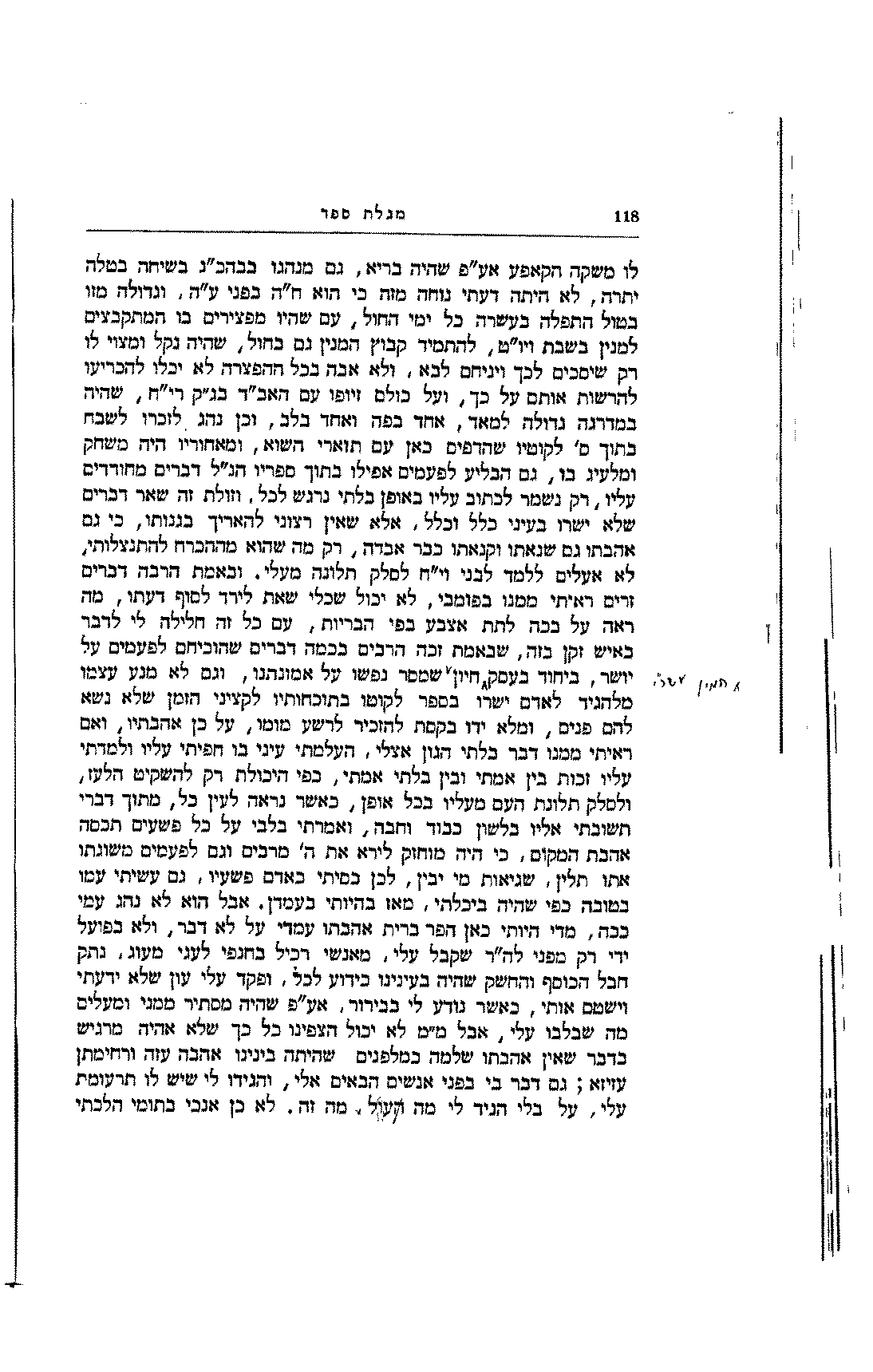
Margin readings in Scholem's copy (3)
| Printed anchor | Type (key sheet) | Mark | Reading | Certainty |
|---|---|---|---|---|
| ביחוד בעסק ^ חיון שמסר נפשו | V: omission | caret; one word in right margin | המין | fairly sure |
| בעסק חיון v שמסר נפשו על אמונתנו | V: omission | v mark; abbreviation in right margin | שר"י | sure |
| על בלי הגיד לי מה העול, מה זה | — | handwritten correction written over the printed word העול; no margin text | - | uncertain |
Page 119 (scan 135)
with him as was my custom; my heart did not reproach me (cf. Job 27:6), and I did not want to be one thing in the mouth and another in the heart — far be it from my father's seed! This time too I did not change my manner.
For behold, when he happened to be with me at the same inn, at the commandment of bringing in a bride, and spoke with me as usual, I could not restrain myself and speak with him also one thing in the mouth etc., which is not my nature; but I spoke to him in these words: "I need to ask something of Your Honour, and I ask that you not hide from me the thing I ask. For I have heard people say that you have some complaint against me, and I do not know 'what is my trespass, what is my sin' (Gen. 31:36) against you; and so I sensed that it is true that your heart is not whole with me as before. Therefore I wonder why my lord speaks with me one thing in the mouth etc., for it is surely known that your mouth and your heart are not the same towards me for good. Why should such a thing be between us, 'a grief and an offence' (1 Sam. 25:31) of sin, and why should you show me a fair face while 'in your heart you lay your ambush' (Jer. 9:7)? If there is iniquity in me, why do you not rebuke me to my face, as a man like you is obliged? 'Make me know my transgression and my sin' (Job 13:23); if you have found wrong in me, 'show me wherefore you contend with me' (Job 10:2), and do not hold me guiltless of my sin. If perhaps I have stumbled in something against you, which in truth is hidden from me, perhaps it is an error — 'who can discern errors?' — and I will repair what I can, to turn back from the wrong of my hands: 'if I have done iniquity, I will do it no more' (Job 34:32)."
In this way I pressed him to the wall, the walls of his heart, until he revealed all his heart and answered me: "So they told me: that you want to glorify yourself through my disgrace, and you have already done so in your book that you wrote and printed." When I heard this I stood trembling at the evil report: that he should suspect me of what is not in me, and accept slander about me from talebearers who invent things that are not so, to break the brotherhood between him and me. I defended myself against this before him, to get the words out of his heart: for scoffers and informers had spoken lies about me, who find the desire of their evil soul in casting envy and strife between friends, and sow discord among brothers; "a whisperer separates chief friends" (Prov. 16:28), and "with his mouth the hypocrite destroys his neighbour" (Prov. 11:9). "Why does my lord speak such words (Gen. 44:7), which 'will not be believed though it be told' (Hab. 1:5) of me? Would I intend to harm you, God forbid, to increase benefits and gain [for myself]? Far be it from my father's seed! It is known to all that I have not laid on any man in all the Three Communities any matter of benefit for myself; on the contrary, thank God, many have benefited through me — would that they do not repay me evil for good. And why would it be pleasing in my eyes not to leave your honour in its place, and to diminish the measure of your standing in the eyes of the people, to cause you, God forbid, the said harm, to keep from you their favour, which you need — and I, blessed be the Name, do not? And why should I change my measure and my good conduct with every man, and with you especially, of old — much less now, to provoke you to your face, when we are close neighbours? How and why should such a thing come from me without cause? Therefore you should have rebuked the slanderers. It is not so with me: for though such men did not fail to make me hear about my lord that he speaks in my disgrace, I did not believe their words, until they multiplied
עמו ג"כ כמנהגי, לא יחר לבבי ולא רציתי להיות אחד בפה ואחד בלב, חס לזרעא דאבא, גם הפעם לא שניתי טעמי. כי הנה בהזדמנו עמי לפונדק אחד על מצות הכנסת כלה, ודבר עמי כפעם בפעם, לא יכולתי להתאפק ולדבר עמו ג"כ אחד בפה כו', מה שאינו מטבעי, אך דברתי אליו כלשון הזה: אני צריך לשאול דברי מעלת כבודו, ובקשתי ממנו שלא יכחד ממני הדבר שאני שואל. מאחר ששמעתי אומרים שיש לו עלי איזה תלונה, ואנכי לא ידעתי מה פשעי מה חטאתי נגדו, וככה הרגשתי שאמת הדבר שאין לבבו שלם עמי כמאז, לכן אני תמה מדוע ידבר אדוני עמי אחד בפה וכו', כי נודע ודאי שאין פיו ולבו שוין עמי לטובה, ולמה תהיה כזאת בינינו לפוקה ולמכשול עון, ועל מה זה יראה לי פנים יפות ובקרבו ישים ארבו, ואם יש בי עון מדוע לא יוכיחני על פני כמחוייב לאדם כמותו. פשעי וחטאתי הודיעני, אם עול מצאת בי, הודיעני על מה תריבני ומחטאתי לא תנקני, אם אולי נכשלתי במאומה נגדו, מה שבאמת נעלם ממני, אולי משגה הוא שגיאות מי יבין, ואתקן מה שאוכל להשיב מעול ידי, אם און פעלתי לא אוסיף. ובזה האופן לחצתיו אל הקיר קירות לבו, עד שגלה כל לבבו וענה אותי: כך אמרו לי, מתוך שתרצה להתפאר בקלוני, וכבר עשית בספרך אשר כתבת והדפסת. וכשמעי עמדתי מרעיד על השמועה לא טובה, לחשוד אותי במה שאין בי, ולקבל לה"ר עלי מהולכי רכיל, הבודים דברים אשר לא כן, להפר את האחוה בינו לביני, והתנצלתי על זאת נגדו להוציא הדברים מלבו, כי דברו עלי כזבים אנשי לצון ודלטוריא, המוצאים תאות נפשם הרעה בהטיל קנאה ותחרות בין אוהבים, ומשלחים מדנים בין אחים, נרגן מפריד אלוף ובפה חנף ישחית רעהו, ולמה ידבר אדוני כדברים האלה, אשר לא יאומן כי יסופר עלי, וכי כונתי להזיק לו ח"ו, להרבות [לי] הנאות ותועלת, חס לזרעא דאבא, וידוע לכל שלא העמסתי על אדם מכל הג"ק שום דבר הנאה לעצמי, אדרבה ת"ל רבו הנהנים על ידי, הלואי שלא ישיבו לי רעה תחת טובה, ועל מה זה ירע בעיני שלא להניח כבודו במקומו, ולהקטין איפת מעלתו בעיני העם, לגרום לו ח"ו היזק הנזכר, למנוע ממנו הטבתם שהוא צריך אליה, ולא אני ב"ה, ומדוע אשנה מדתי ומנהגי הטוב עם כל אדם ועמו ביחוד מאז, אף כי עתה להכעיסו על פניו, בהיותינו שכנים קרובים, איך ולמה תצא כזאת מלפני בלי סבה, על כן היה לו לגעור במספרי לה"ר ואנכי לא כן עמדי, כי אף אם לא חסרו אנשים כאלה משמיעים באזני על אדוני שמספר בגנותי, ולא האמנתי לדבריהם, עד אשר הרבו
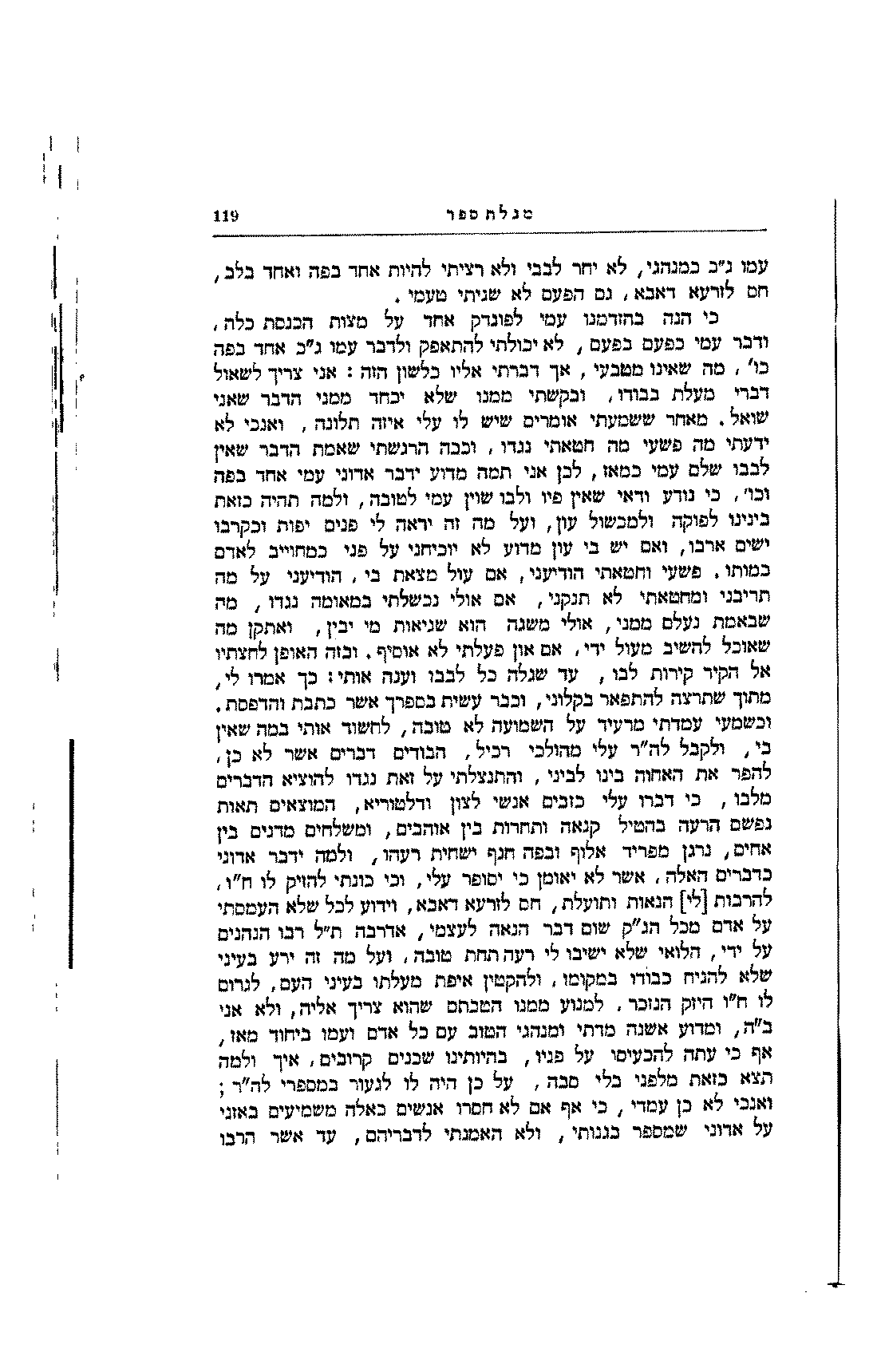
Page 120 (scan 136)
to strengthen their words, and I also sensed that there was ground for the matter. Therefore I have now opened your ear, and did not want to keep a grudge in my heart, so as to show my whole and faithful heart towards you." And I swore to him that these things had never been, and asked him not to believe those who spread evil reports, for "this their way is their folly" (Ps. 49:14): idle men, a sect of slanderers, hypocrites and liars, have acquired a bad acquisition and a bad bargain for themselves. I also asked him to tell me who those men were who brought the report and laid guilt on me, so that we might know them and recognise the cheats; let us hear whether they dare to say this to my face, and let their words be proved, "whether there be truth in you or not" (Gen. 42:16); let him know that they are spies, come "to see the nakedness of the land" (Gen. 42:9), the venom that is within them. But though I entreated him to tell me what he had found in my book Leḥem Shamayim against his honour, at which he could justly take offence with me, he would not speak or reveal either this or that.
In sum, I did all in my power to defend myself before him and clear myself of this sin and the like, and to appease him, to remove from his mind every evil thought about me, and to make clear to him that he was laying groundless hatred on me because of the slanderers, of whom David wrote by the holy spirit [a] — something unfitting for a man like him, to accept slander, especially about a faithful and tried friend who "dwelt securely" with him; and what harm had he done me, that I should envy him? I urged him not to give room for dividing close hearts, and to put away all anger from his heart. And he promised me on this that he would not mention this matter again, as if it had never been said, and that his love for me was faithful and whole as at first. I in my innocence trusted these words of his, and thought that the bitterness of his heart towards me had been sweetened; it did not enter my mind that he would be so false with his tongue.
But experience proved the opposite, by a shameful deed "before the sun" (2 Sam. 12:12). For after some years "he uttered all his mind" (Prov. 29:11) in things he put in print within a commentary on the Mishnah, Order Zera'im, printed here through Elisha of Horodna. And it was from Heaven that this man, who brought the book to press, came to me with great urging that I give him an approbation on the said book. Although I refused this strongly, as I had never until then been found [willing] for those who asked me for such a thing, I could not stand against the urging of this old man, and against my will I gave in to him, and took the book from his hand to look into it, for it was already finished in print. And when I searched its pages here and there, "there seemed to me as it were a plague" (Lev. 14:35) that touched me: for I found in it what I had not expected nor had come into my mind. I saw that R. M. Ḥ. had printed in it things that stung me, on tractate Bikkurim, and thought to strike me in secret with "the scourge of the tongue" (Job 5:21). Then I knew why his anger had burned against me of old, and he had hidden the matters and concealed them from me, as said above. But
Kahana's notes
- [a] Initials of be-ruaḥ ha-kodesh ("by the holy spirit").
לחזק דבריהם, וגם הרגשתי שיש רגלים לדבר, לכן עתה גליתי את אזנו, ולא רציתי לנטור בלבי, למען הראות לבבי השלם והנאמן עמו; ונשבעתי לו כי לא היו דברים מעולם, ובקשתיו שלא יאמין למוציאי דבה, כי כן דרכם כסל למו, קנין רע ומקח רע לקחו לעצמן אנשים בטלנים, כת מספרי לה"ר וחנפים ושקרנים; גם בקשתי ממנו שיודיעני מי הם האנשים ההם, המביאים השמועה ומטילים עלי אשמה, ונדעה אותם ונכיר הרמאים, נשמע נא אם יעיזו פניהם להגיד זאת בפני, ויבחנו דבריהם האמת אתם ואם לא, ידע כי מרגלים הם לראות את ערות האר"ש הארס שבקרבם הם באים; אכן התחננתי אליו להודיעני מה הדבר, שמצא בספרי לחם שמים נגד כבודו שיוכל להקפיד עלי כדין; ולא אבה לדבר ולגלות לא זה ולא זה. ותכלית הענין עשיתי כל מה שביכלתי להתנצל לפניו ולנקותי מעון הלז וכיוצא, ולפייסו להוציא מדעתו כל מחשבת און עלי, ולברר לו שמטיל עלי שנאת חנם, בסבת בעלי לשון שכתבם דוד ברוה"ק א, מה שלא יתכן לאדם כמוהו לקבל לה"ר, מה גם על אוהב נאמן בחון היושב לבטח עמו, וכי מה הזיק עשה לי שאקנא בו, והפצרתי בו שלא יתן מקום להפריד הלבבות הקרובות, ולהסיר כל כעס מלבו, והבטיחני על זאת שלא יזכור עוד דבר זה, כאלו לא נאמר מעולם, ושאהבתו אלי נאמנה ושלמה כמבראשונה, ואני בתומי בטחתי בדבריו הללו, חשבתי שנמתק מרירות לבו עלי, ולא עלתה על דעתי שיהא כל כך נהפך בלשונו. אכן הנסיון הוכיח ההפך בפועל מגונה לעין השמש: כי אחר איזה שנים הוציא כל רוחו, בדברים שקבעם בדפוס בתוך פירוש על משניות סדר זרעים שנדפס פה, ע"י אלישע מהורדני; ומן השמים היה כי האיש הלז, המביא הס' לדפוס, בא אלי בהפצרה גדולה לתת לו הסכמה על הספר הנ"ל, ועם שסרבתי הרבה לדבר הזה, כמו שלא נמצאתי לאשר בקשוני לדבר כזה עד כה, אך לא יכולתי לעמוד נגד הפצרת האיש הזקן הלז, ועל כרחי נעתרתי לו, ולקחתי הספר מידו לעיין בו, שכבר היה נגמר בדפוס, וכאשר פשפשתיו דפיו אחת הנה ואחת הנה כנגע נראה לי הנוגע אלי, כי מצאתי בתוכו מה שלא קויתי ולא עלה על דעתי, כי ראיתי לרמ"ח הדפיס בו דברים העוקצים אותי במסכת בכורים, וחשב להכות אותי בשוט לשון בסתר, אז ידעתי על מה חרה אפו בי מאז, וצפן הדברים והעלימן ממנו כנ"ל, אך
- [א] ר"ת: ברוח הקודש.
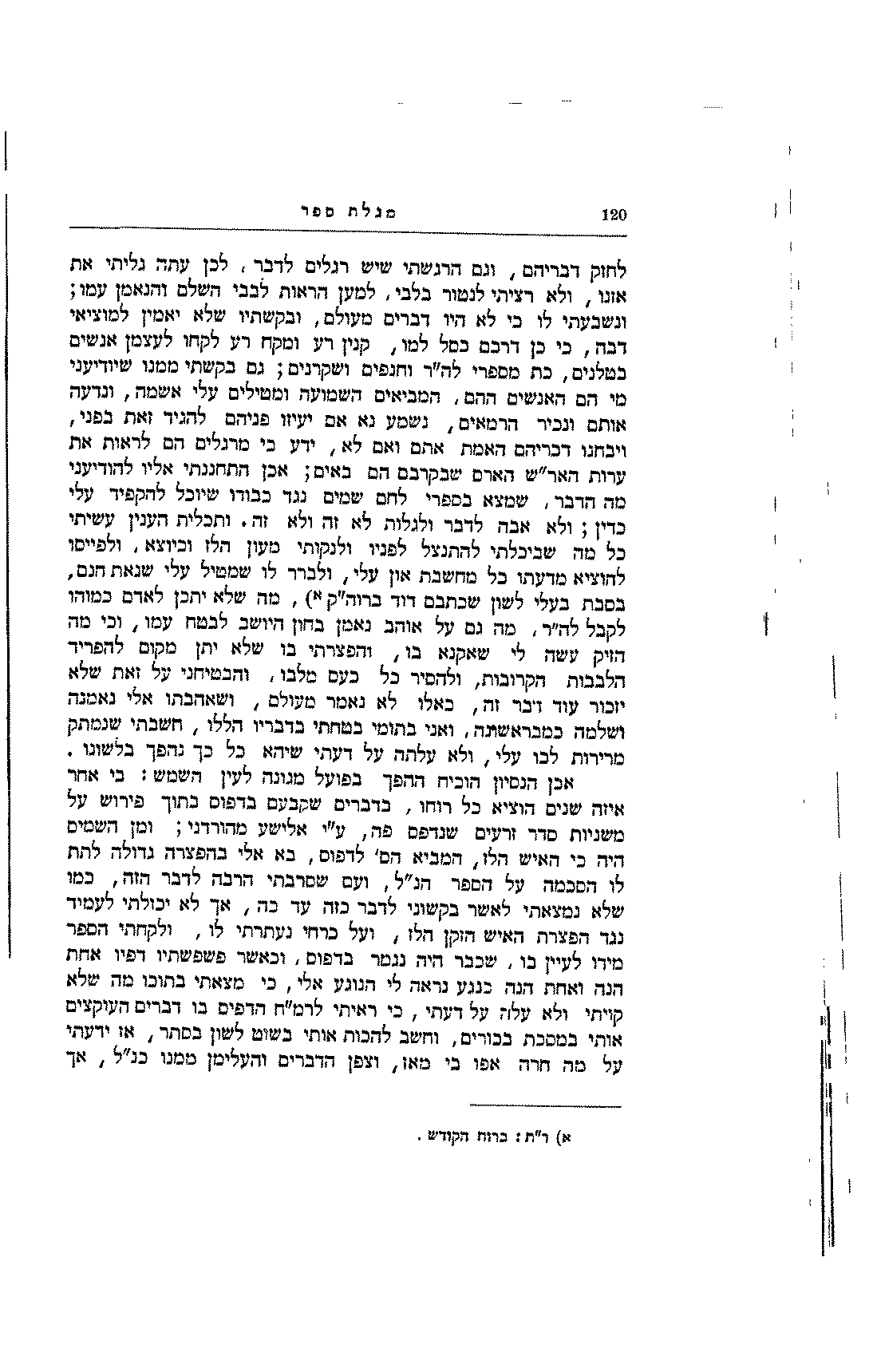
Page 121 (scan 137)
now he "let loose the bridle before" him (Job 30:11), uncovered the face of his garment and removed, like Moses, the veil (Ex. 34:33). Then I "put forth the finger" against "speaking iniquity" (Isa. 58:9), to measure him with his own measure, and slipped words of my defence into the language of my approbation by allusion. I covered his transgression, the evil he had devised against his neighbour who "dwelt securely" with him, and did not want to dwell there on explaining his error in the substance of the objection that he found against me in his hasty opinion. He made pretexts against my book, almost "throwing the spear casually" (cf. b. Sanhedrin 82a), after having praised it at length. But in "Asarah ha-Leḥem" that I placed at the end of the book She'ilat Ya'avetz, there I reasoned with him and answered all his dreams, the chatter of his words with which he thought to overtake me "within the straits" (Lam. 1:3), without going down to the depth of the matters — as was his way in many places of his works, in which he objected to great men "whose little finger was thicker than his loins" (cf. 1 Kgs. 12:10), and "gathered the wind in his fists" (Prov. 30:4), as I showed some of them in my book She'ilat Ya'avetz, besides what is "laid up in store with me" (Deut. 32:34). And there I turned his complaint away from myself, to save myself "from the strife of tongues" (Ps. 31:21), for he visited upon me a sin that I had never known. Be that as it may, it is already forgiven.
Especially when he parted from us and travelled from here to go to the Holy Land, he came to me at my house to take leave of me and receive permission; and among the things he spoke with me face to face, he complained against me that I had written against him and against R. Samson Ḥasid [a] on the question of [one from whom the doctors removed the testicle] [b], on which I composed the book Iggeret Bikkoret, saying to me: "How is it that I hear that you oppose me in this ruling too, though we are old men and you are a child compared with us?" I answered him that the matter does not depend on old age, but on reasoning and on the reason of elders; and since he showed in this no taste or smell of reasoning, proof or source, but only words of mockery and derision, "containing much" (Ezek. 23:32), it was loathsome in my eyes to present them in my said book; only by a mere hint did I push them aside casually, since they are idle words, rejected from the root and falling of themselves.
But this time I saw that he wrote against the head of the court, R. Y[eḥezkel], for the reason that I do not want to put into writing; for apart from this he was in every matter obedient to him, for he flattered this man ⟨S: a five-line note, partly read: "to that old man, even if he was … to Samuel, the right hand(?) … which was hard for him … very much(?)"⟩ to his face and also in his writings. Several times when he printed some small work of collectanea, he put him at the head of his support with titles and praises, with excessive exaggeration, as if there were truly in him even a part of them, by way of compromise; but behind his back he mocked and laughed at him, and jeered at his learning, his novellae and his conduct, as I know and am witness, and others know as well as I. For such a thing I know no excuse for him, except that he was a poor man in a foreign land, among Ashkenazim whose language he did not know, and he
Kahana's notes
- [a] R. Samson Ḥasid; see the book Toledot Ya'avetz by Wagenaar (p. 63, no. 286).
- [b] See the book Hit'avkut (fol. 9).
עתה שלח רסן מפניו, גלה פני לבושו והסיר משה המסוה. אז שלחתי אצבע נגד דבור און למדוד לו במדתו, והבלעתי דברי התנצלותי תוך לשון הסכמתי ברמז, כסיתי פשעו אשר חרש על רעהו היושב לבטח עמו רעה, ולא רציתי להאריך שם, בביאור טעותו בגוף ההשגה, אשר מצא עלי לפי דעתו הנמהרה. ושם עלילות דברים לספרי, כמעט שדי תיכלא בכלא כלאחר יד, אחר שהרבה לספר בשבחו; אך ב"עשרה הלחם" שהצגתי בסוף ס' "שאילת יעב"ץ". שם דברתי אתו משפטים והשיבותי על כל חלומותיו, על פטפוטי דבריו שחשב להשיג אותי בין המצרים, בלי שירד לעומק הדברים, כמנהגו בהרבה מקומות מחבוריו שהשיג על גדולים, שקטנם היתה עבה ממתניו, ואסף רוח בחפניו, כאשר הראיתי מקצתן בספרי שי"ע, מלבד הכמום עמדי, ושם השיבותי תלונתו מעלי להצילני מריב לשונות, כי פקד עלי עון שלא הכרתי בו מעולם, ויהי מה כבר נמחל. ביחוד בהפרדו מאתנו ונסע מזה ללכת לארץ הקדושה, בא אלי לביתי להפטר ממני וליטול רשות, ובתוך הדברים שדבר עמי פא"פ, אז נתרעם עלי על שכתבתי נגדו ונגד רש"ח א, בשאלת [מי שהסירו הרופאים ממנו הביצה] ב, אשר עליה חברתי הספר „אגרת בקורת", באמרו אלי איך ששמע שאני מתנגד אליו גם בזו ההוראה, עם היותם זקנים ואני ילד בערכם. ועניתי לו מידי בקשישותא תליא מילתא, בסברא ובטעם זקנים, וכמו לא הראה בזה שום טעם וריח סברא ראיה ומנין, רק דברי לעג וקלס מרבה להכיל, על כן היה לזרא בעיני להציגם בספרי הנ"ל, רק ברמז בעלמא דחיתי אותם כלאחר יד, כאשר הם דברים בטלים דחוים מעיקרן ומאליהם נופלים, ואך זה הפעם ראיתי שכתב נגד האב"ד רי"ח, מטעם שאיני רוצה להעלותו ע"ס, כי בזולת זה בכל ענין היה סר למשמעתו, שהחניף לזה האיש בפניו גם בכתביו, ובכ"פ שהדפיס איזה חבור קטן מלקוטים, העלה אותו על ראש סמיכתו בתוארים ושבחים בהפלגה וגוזמא יתירה, כאלו באמת היה בו אפילו מקצתן דרך פשרה, אך שלא בפניו היה מלעיג ומשחק עליו, ועל למודו וחדושיו והנהגותיו מתלוצץ בו, כאשר אנכי היודע ועד ואחרים יודעים כמוני, וכזה לא ידעתי לו התנצלות, כי אם מחמת שהיה איש עני בארץ נכריה, בין אשכנזים אשר לא ידע לשונם, והיה
- [א] ר' שמשון חסיד, עיין בס' תולדות יעב"ץ לוואגנה (צד ס"ג סי' רפ"ו).
- [ב] עיין בס' התאבקות (דף ט').
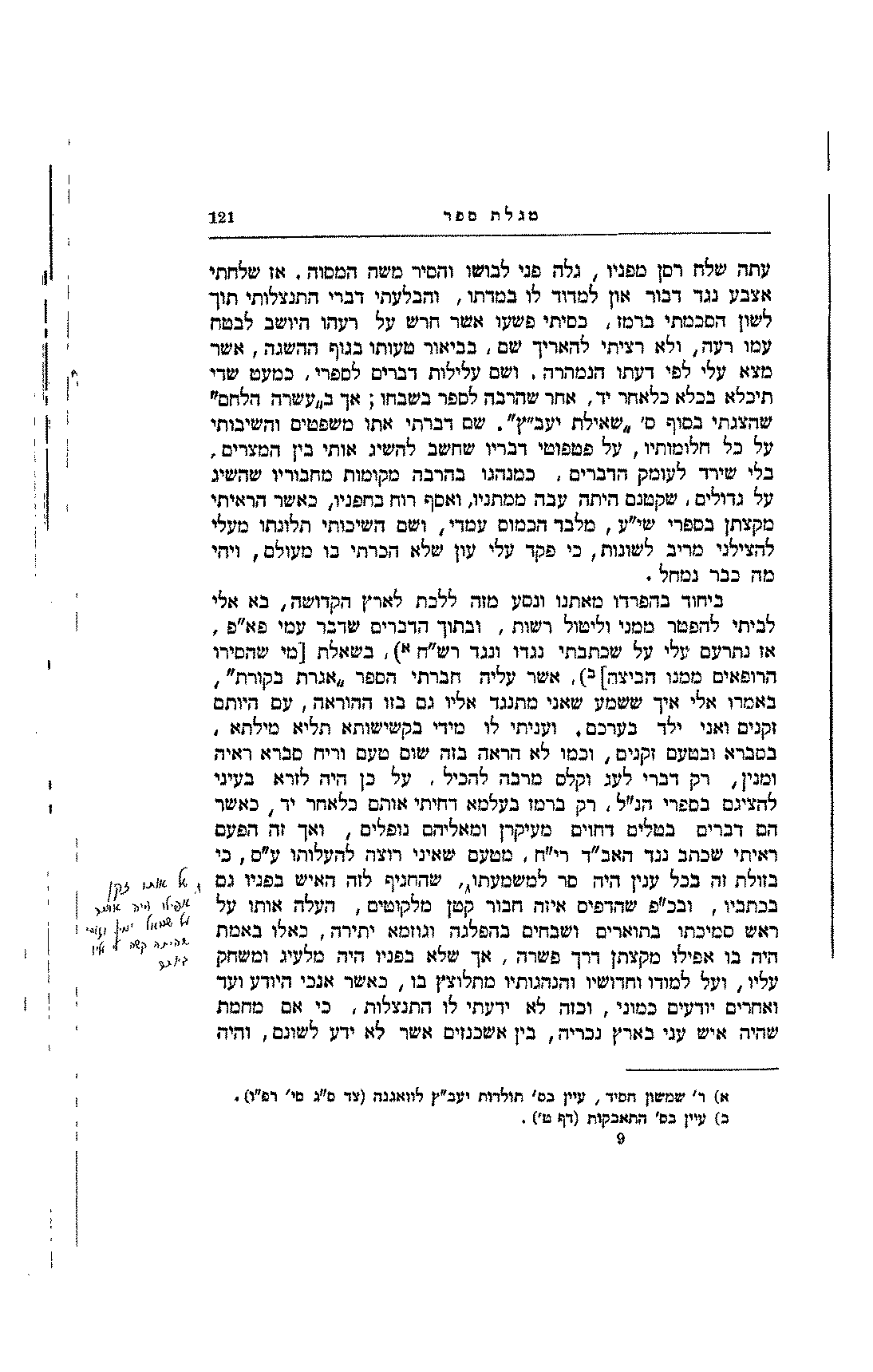
Margin readings in Scholem's copy (1)
| Printed anchor | Type (key sheet) | Mark | Reading | Certainty |
|---|---|---|---|---|
| שהחניף לזה האיש ^ בפניו גם בכתביו | V: omission | caret; 5-line note in left margin, left edge cut off | אל אותו זקן / אפילו היה אות[ו] ... / אל שמואל ימי[ן] ... / שהיתה קשה לו ... / ביותר(?) | partial |
Page 122 (scan 138)
had to be submissive to this man, whose luck helped him beyond nature — a thing that has neither form nor grace. Even so he was not compelled to go so far with him in false speech. For all that, the Ashkenazim treated him with honour and sent him gifts and presents; and although he did improper things to them — as especially he once did an ugly thing to R. Z., the printer — they bore with him, and he had much money from them all the days he was here. Especially when he travelled from here to the Holy Land, they met him with offerings, presents and gifts; small and great, the people brought much, and he parted from them with great honour. He also parted from me in love and peace, for so he promised with a full mouth before the eyes of all the people.
Now I will return to the place where I was in this story. At the beginning of my settling in Altona — I have already mentioned that all the elders and leading men of the town came trembling to meet me (cf. 1 Sam. 16:4) and said to me: "Peace be your coming!", and received me with honour and a pleasant countenance and with joy, "as one that finds great spoil" (Ps. 119:162); and I was beloved by all this people. But the old head of the court, R. Y[eḥezkel], his face turned pale when he heard the report of Jacob, that I had fixed my dwelling here; but it was not in his power to prevent it. Had he been able, he would surely have done to me as he did to my father the gaon, of blessed memory, when he heard that distinguished householders sought to fix a livelihood for him so that he would return here to live among them: he acted by the strong arm of R. B[er] K[ohen] to annul the matter — and what came of it was that he was destined for greatness, to sit on the throne of the rabbinate of Lemberg, as said above. So too I heard that R. Y[eḥezkel] was much alarmed at the report that I had fixed my dwelling in the community of Altona.
For all that, I paid him the honour of going to his house to greet him and to be first to ask after his welfare, although most of the people complained that he had not come to me first to ask after my welfare, as is due to a guest who comes to the town. Though he was already advanced in years, and the star of his luck had stood by him to become head of so great a community, in which there were then several scholars greater and better than he — perhaps he did not reach their ankles — only the position of his constellation smiled on him beyond the course of nature, for they did not even understand his language. His intelligence and knowledge in Torah are revealed in his book; his conduct and his qualities were devoted to his own benefit and pleasure; his eyes were only on his gain (cf. Jer. 22:17); and by the word of R. B[er] K[ohen] he conducted himself in every matter, asking his counsel, or saying to others, "what is the old man's opinion in this matter?" If I were to explain all the affairs of this man, it would need a large book of its own. Especially as I am, thank God, a son of great men, and my fathers, of blessed memory, founded the communities and led the public many years for the sake of Heaven and did them many kindnesses; and my name too, thank God, was not less than his, though I was then young in years. And "it is not the place that honours the man" (cf. b. Ta'anit 21b), especially such a man, who did not care for his own honour and the honour of his community, and used to go to greet leaders, even young ones and not famous — as he did for R. A. of Emden, as written above, going to him at once
צריך להיות מוכנע לאיש הזה, שמזלו סייע אותו חוץ לטבע, דבר שאין לו ציור ולא חבה, מ"מ לא היה מוכרח עמו כל כך בשפת שקר, אעפ"כ היו האשכנזים נוהגים בו כבוד, ושולחים לו מתנות ודורונות, ואע"פ שהיה עושה להם דברים בלתי מהוגנים — כאשר עשה ביחוד פ"א דבר מכוער לר"ז מדפיס — היו סובלים ממנו, וממונן רב נהנה מהם כל ימי היותו פה, ובפרט בעת נסעו מזה אל ארץ הקדושה, קדמו פניו בתשורות ודורונות ומתנות, מקטון ועד גדול מרבים העם להביא, ופרש מהם בכבוד גדול, גם נפרד ממני באהבה ושלום, כי ככה הבטיח בפה מלא לעיני כל העם. עתה אשוב למקום שהייתי בו בזה הספור. בתחלת ישובי באלטונא הנה כבר זכרתי, שכל זקני ופני העיר חרדו לקראתי, ויאמרו לי: שלום בואך! וקבלוני בכבוד בסבר פנים יפות, ובשמחה כמוצא שלל רב, והייתי חביב לכל העם הזה. אכן האב"ד הזקן רי"ח היו פניו מתכרכמות, בשמעו על שמע יעקב ושקבעתי דירתי פה, אך לא היה בידו לעכב; אלמלא היה יכול בודאי היה עושה לי, כאשר עשה לאבי הגאון ז"ל, כשמעו שבקשו יחידי סגולה לקבוע לו מעמד פרנסה שישוב לכאן לשבת אצלם, ועשה בכח הזרוע של רב"ך לבטל הענין, ומה היה כי לגדולה היה מתוקן, לשבת על כסא הרבנות דלבוב כנ"ל. וכך שמעתי ג"כ שרי"ח נבהל מאד לשמועת קביעת דירתי בק' אלטונא, ועכ"ז עשיתי לו הכבוד והלכתי לביתו לקבל פניו, ולהקדים לשאול בשלומו, עם שרוב העם היו מתרעמים על שלא בא אלי תחלה לשאול בשלומי, כדין אורח שבא לעיר. אף אם היה כבר בא בימים, וכוכב מזלו עמד לו להיות לראש בקהל גדול כזה, שנמצאו בו אז כמה לומדים גדולים וטובים ממנו, אפשר לא הגיע לקרסולם, רק מצב מערכתו שחק לו שלא כדרך הטבע, שאפילו לשונו לא היו מבינים, ושכלו וידיעתו בתורה גלוי בספרו, והנהגתו ומדותיו היו מיוחדים לתועלתו ולהנאתו, לא היו עיניו כ"א על בצעו, ועל פיו של רב"ד היה מתנהג בכל ענין, והיה שואל אותו בעצתו או אומר לאחרים מה דעתו של זקן בדבר הזה, ואם אבאר כל עניני זה האיש, יצטרך לספר גדול בפ"ע, וביחוד שבן גדולים אנכי ת"ל, ואבותי ז"ל יסדו הקהלות והנהיגו הצבור שנים רבות לשם שמים, ועשו להם כמה טובות, וגם שמי ת"ל לא היה פחות ממנו, אף אם הייתי אז רך בשנים, ולא המקום מכבד את האדם, בפרטות לאדם כזה שלא היה מקפיד על כבודו וכבוד קהלתו, והיה הולך לקבל פני קצינים, אפילו לבחורים בשנים ולא מפורסמים; כאשר עשה לר"א עמדן כמש"ל, שמיד הלך אליו
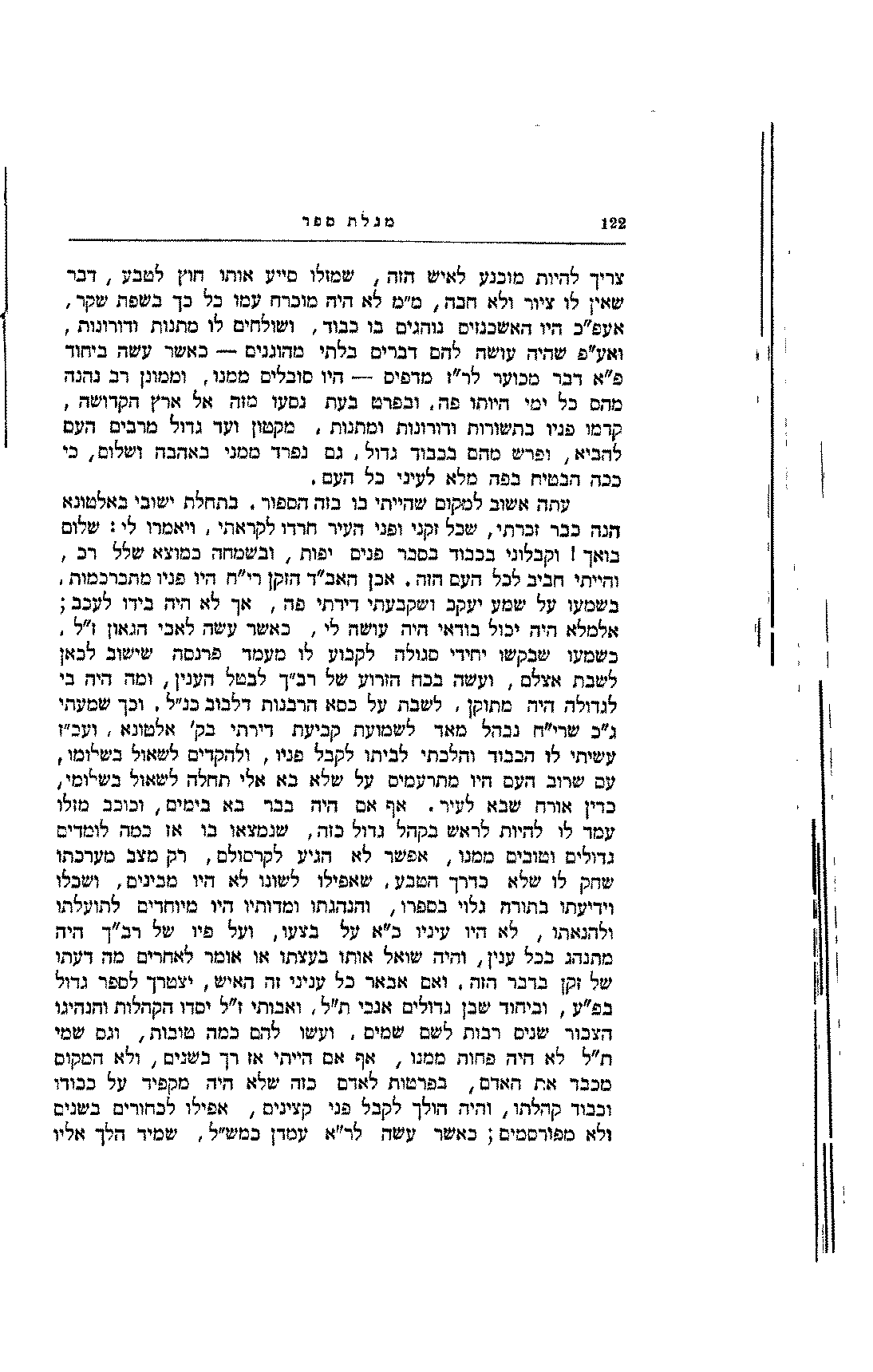
Page 123 (scan 139)
to give him greeting, which was truly a disgrace for the rabbi of the Three Communities; and he did it only to receive a fitting gift. How much more was he obliged to honour me, for the honour of the Torah and for the dignity of the living and the dead! So people made a case in his favour ⟨S: a six-line note, partly read: "much … flesh and blood here … I was hidden in … like a leader … that he. But I … to him"⟩, saying that it was not fitting for an old man and rabbi of the Three Communities to come to me first, and I hastened to go to him, as said. People thought that at any rate he would do me the honour afterwards of coming to visit me in my house. But when I came to him he did not receive me with a pleasant countenance; he really "could not speak peaceably" to me (Gen. 37:4), and I did not even hear him return my greeting, and he set before me nothing by way of hospitality, to enjoy and taste something, as is the custom of civility, and showed me no affection or honour at all. Then I sensed at once that I was like a thorn in his eyes; and much more, it never entered his thought to do me the honour of a visit in my house, as is the custom, for he knew that he would receive no gift from me, as the leaders give him when he greets them, out of good breeding and manners. He was also worried that I would cut off something of his gifts, in that the householders would now give to me, or at least that the house and his sons and household would have less benefit from the householders than before, because of me. Until he saw that not only did I take no benefit at all from the householders here, but on the contrary, thank God, my benefit was available to the needy; and moreover even he and his household benefited from what was mine, as written above. Then he drew near to me, as written above, and praised me with a full mouth behind my back. But at the beginning of my settling here he was in great worry that I would cause him harm; and so when I came to him his face began to change, and he was dumb and could not return my greeting when I asked after his welfare in his house, as said above.
Before I continue my story I will also make known a little of the qualities of this man — for to let him go with nothing is impossible, even though I "cannot bear iniquity and the solemn meeting" (Isa. 1:13), to explain even a part — who sat on the throne of the rabbinate of the Three Communities for thirty-five years without anyone to disturb or make afraid, and whose name is mentioned on the approbations of the books printed in his days with extravagant titles and praises, and likewise in his book; so that one who sees it will think, if it is not all true, at least he will believe half of it or part of it, by way of compromise. Therefore I will not hide the truth, in my way, nor abandon my measure; I will make known "the certainty of the words of truth" (Prov. 22:21), his good and his disgrace. "My integrity I hold fast and will not let it go" (Job 27:6), so that the coming generations may know that in such a case [a] the matter does not depend on merit and excellence (even if he certainly had some merit of his own and of his fathers, though they had no name at all, for he was the son of a poor teacher; still, "sometimes a pearl is found in a poor man's cloak", and they said, "Take heed of the sons of the poor [b], for from them Torah goes forth" (b. Nedarim 81a); or perhaps from his mother and his other ancestors
Kahana's notes
- [a] Initials of ke-hai gavna ("in such a case").
- [b] Initials of bi-vnei aniyyim ("of the sons of the poor").
נתן לו שלום, מה שהיה באמת גנאי לרב של ג"ק, ולא עשה רק לקבל מתנה הגונה, עאכ"ו שהיה מחויב לכבדני לכבוד התורה וליקרא דחיי ודשכבי, ולכן היו מלעיזים עליו זכות, באמרם שאינו מהראוי שזקן ורב בג"ק יבוא אלי תחלה, ומהרתי לילך אליו כאמור, והיו חושבים העולם שעכ"פ יעשה לי הכבוד אחר זה, לבוא לבקרני בביתי, אבל בבואי אליו לא קבלני בסבר פנים יפות, ממש לא יכול דברי לשלום, ולא שמעתי אפילו שהחזיר לי שלום, ולא נתן לפני שום דבר של כיבוד, ליהנות ולטעום מאומה כמנהג ד"א, ולא הראה לי שום חבה וכבוד כלל; אז הרגשתי מיד כי אני כקוץ בעיניו, ומכ"ש שלא בא במחשבתו כלל, לעשות לי כבוד הבקור בביתי כמנהג, כי ידע שלא יקבל ממני מתנה, כמו שעושין לו הקצינים בהקבלת פניהם מדרך התרבות ומוסר, גם היה עומד בדאגה שלא אקפח לו מאומה ממתנותיו, מה שיהנו אותי ב"ב מעתה, ולפחות ימעט הבית ובניו ובני ביתו מלהנות מהב"ב כמלפנים בסבתי. עד שראה כי לא די שלא נהניתי מב"ב שבכאן כלום, אדרבה ת"ל היתה הנאתי מצויה לנצרכים, ולא עוד אלא אפילו הוא וב"ב נהנו משלי כמש"ל, אז התקרב את עצמו אלי כמש"ל, והיה משבח אותי בפה מלא שלא בפני; אבל בתחלת שובי פה היה בדאגה גדולה, שלא אגרום לו היזק, ולכן כשבאתי אליו התחילו פניו משתנים ונאלם, ולא יכול להשיב לי שלום על שאלתי בשלומו בביתו כנ"ל. וקודם שאמשוך ספורי אודיע ג"כ קצת ממדות האיש הזה (כי לפטרו בלא כלום אי אפשר, אף אם לא אוכל און ועצרה לבאר אפילו מקצת), אשר ישב על כסא הרבנות דג"ק בשלשים וחמש שנים בלי מטריד ומחריד, ושמו נזכר על הסכמות הספרים הנדפסים בימיו בתוארים ושבחים מופלגים, וכן בספרו אשר הרואה יחשוב, אם לא היה כולו אמת, עכ"פ יאמין לפחות חציו או מקצתו דרך פשרה, לכן לא אעלים האמת בדרכי ולא אעזוב מדתי, ואודיע קושט אמרי אמת טובתו וגנותו, בתומתי החזקתי לא ארפנה, למען ידעו דורות הבאים, דכל כה"ג א לאו בזכותא ובמעליותא תליא מילתא (אף אם בודאי הי"ל ג"כ איזה זכות משלו ומשל אבותיו, אשר לא יצא להם שם כלל, כי בן עני מלמד היה, מ"מ זימנין באפקרסותא דעניא משתכחא מרגניתא, ואמרו הזהרו בב"ע ב שמהם תצא תורה, או אפשר מאמו ושאר אבותיו
- [א] ר״ת: כהאי גוונא.
- [ב] ר"ת: בבני עניים.
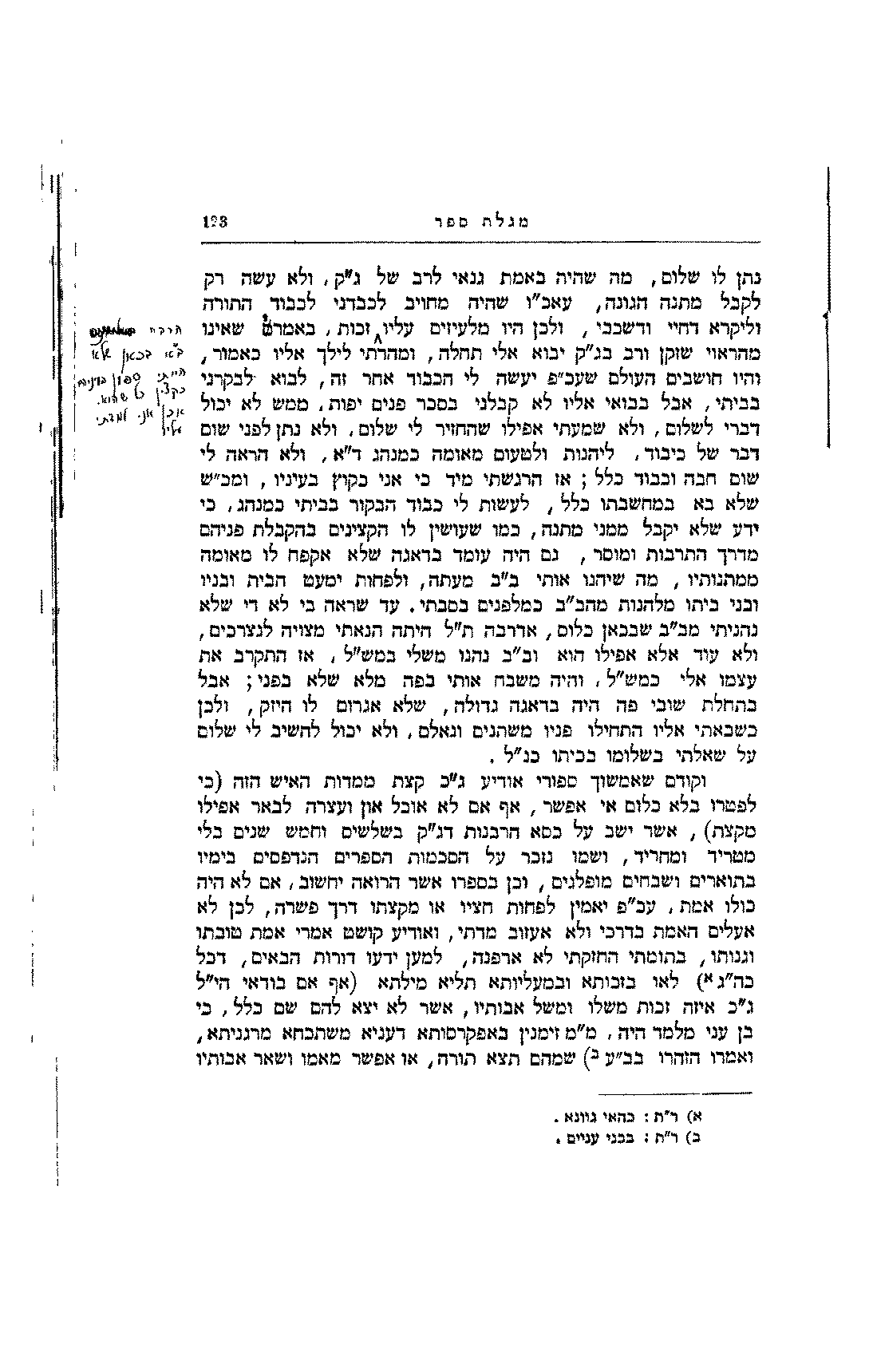
Margin readings in Scholem's copy (1)
| Printed anchor | Type (key sheet) | Mark | Reading | Certainty |
|---|---|---|---|---|
| ולכן היו מלעיזים עליו ^ זכות, באמרם | V: omission | caret; 6-line note in left margin, first word struck through, left edge cut off | הרבה ... / ב"ו בכאן של ... / הייתי ספון בד... / כקצין ... שהוא. / אכן אני ... / אליו | partial |
Page 124 (scan 140)
who they were who merited it, and paid him all this honour) but by luck; "and He sets up over it the lowest of men" (Dan. 4:14). Truly, at this my heart trembles and leaps out of its place (Job 37:1), when I remember the pious and holy ones of the Most High, who acquired Torah and true wisdom and attained lovely virtues and qualities, and were fathers of Israel, and did not merit, for our many sins, a single hour of contentment, nor one day of living in quiet and rest, in safety and untroubled repose — which this man had for many years, some thirty-five years, in this place, the Three Communities. It would have been a wonder had they borne with him in a place with only a minyan of the ten lowest in Israel.
But this is what I have reckoned: he was a strap of punishment for the Three Communities, because they did not acknowledge the bodily and spiritual good that shone upon them all the days that my father, of blessed memory, served in the Three Communities, when the destroyers of the city kicked against him, as said above. Therefore there was fulfilled in them this saying: "Forasmuch as this people has refused" etc. [a], and as is written in Sefer Ḥasidim, no. 694; and "when the shepherd is angry with the flock" etc. [b]. And so it was plainly seen at the time of my father's move from here to Amsterdam: in that year the "four evil judgments" (Ezek. 14:21) passed over them, as said above, and they themselves admitted that "their glory has departed, their splendour has departed" etc.
But the acceptance of this man, R. Y[eḥezkel], as rabbi in the Three Communities, from a distant land — from the country of Lithuania, "with stammering lips" (Isa. 28:11), whose language the people of Germany do not understand; besides which this man was "of a deep speech and a heavy tongue" (cf. Ezek. 3:5), very much stammering, and was not known to any one of the people of the community at all, except Issachar Kohen, who had business dealings there [c] — was brought about by great scheming and enormous cunning. First there was a deal and an exchange with the rabbinate. For the leader Issachar Kohen, who was a man of a great purse, had an ugly daughter whom he could not marry to a rich man, nor even to one not rich, in this country; so he chose to match her with an honoured and pleasant scholar from the land of Poland. So he did and obtained his desire, but also by great deceit. He found a matchmaker who dealt with him for a fixed fee, to match her with the rabbi R. Heschel, peace be upon him, son of the rabbi, of blessed memory, head of the court of Brod [d] ⟨S: a mark, not read⟩, who was of good lineage, a near relative of ours, and handsome, and was already rabbi of some small community in Lithuania and had been widowed. The matchmakers proposed to him the daughter of the said R. Issachar Kohen with much money, and promised to help him and bring him to a great rabbinate; but they hid from him that she was exceedingly ugly. And when the match had already been made and concluded, and he came for the festival [e] ⟨S: "b" (correcting to "to Hamburg")⟩ for the wedding and saw
Kahana's notes
- [a] Isaiah (8:6).
- [b] B[ava] K[amma] (fol. 52). S. Ḥ., initials of Sefer Ḥasidim; see there in the said section.
- [c] On him see the book Memoirs of Mrs. Glückel of Hameln (pp. 76, 119, 121 and more).
- [d] He is the rabbi R. G.(?) mentioned before (p. 92).
- [e] Initials of le-yom ha-mo'ed ("for the festival").
מי ומי שזכו, ועשו לו כל הכבוד הזה) אלא במזלא, ושפל אנשים יקום יעלה. ובאמת לזאת יחרד לבי ויתר ממקומי, בזכרי חסידי קדושי עליון שקנו תורה וחכמה אמתית, וזכו למעלות ומדות חמודות, והיו אבותיהן של ישראל, לא זכו לשעה אחת של קורת רוח בעוה"ר, ולא יום אחד לישב בשלוה והשקט ובבטחה ובמנוחות שאננות, מה שהיה לאיש הזה שנים רבות, כשלשים וחמש שנים במקום הלז בג"ק, אשר היה דבר נפלא, אם היו סובלים אותו במקום שיש רק מנין עשרה פחותים שבישראל; אמנם מה ששערתי: הוא היה רצועה מרדות לג"ק, בעבור שלא הכירו הטוב הגופני והרוחני, שהופיע להם בכל ימי עמידת אמ"ה ז"ל בג"ק, שבעטו בו חרובי קרתא כנ"ל, ולכן נתקיים בהם מאמר זה: יען אשר מאס העם הזה וגו' א, וכמ"ש בס"ח סי' תרצ"ד, וכדרגיז רעיא על ענא כו' ב. וכן היה נראה בחוש בעת העתקת אמ"ה מכאן לאמשטרדאם, כי באותה שנה עברו עליהם ארבעת שפטים הרעים וכנ"ל, והודו בעצמן כי פנה הודם פנה זיום כו'. אך קבלת זה האיש רי"ח לרב בג"ק מארץ רחוקה, אף כי ממדינת ליטא, עם לעגי שפה אשר לא יכירו בני אשכנז לשונם, אף כי האיש הלז היה עמוק שפה ולשון מגומגם מאד, ולא היה ניכר לשום אחד מבני הקהלה בכלל, חוץ מישכר כהן שהיה לו עסק מו"מ לשם ג, אבל נעשה בתחבולה גדולה ובערמה עצומה. ראשונה נעשה מו"מ וחליפין עם הרבנות, כי הק' ישכר כהן שהיה בעל כיס גדול, היתה בתו מכוערת שלא היה יכול להשיאה לאיש עשיר, ואפילו לבלתי עשיר, במדינה זו לא היה אפשר לו, על כן בחר לזווגה ללמדן נכבד ונחמד מארץ פולין, וכן עשה והשיג חפצו, אבל ג"כ ברמאות גדול, כי מצא שדכן שעסק עמו בשכר מסוים, לשדכה אל הרב ר' העשיל ע"ה, בן הרב ז"ל אב"ד דברודא ד, שהיה מיוחס קרוב לנו ויפה תואר, גם כבר היה רב באיזה קהל קטן בליטא ונתאלמן, ודברו לו השדכנים את בתו של ריש"ך הנ"ל עם ממון רב, והבטיחו לסייעו ולהביאו אל רבנות גדול, אך העלימו ממנו שהיא מכוערת ביותר, וכאשר כבר נעשה ונגמר השידוך, ובא לה"ם ה על החתונה וראה
- [א] ישעיה (ח', ו').
- [ב] ב"ק (דף נ"ב) בס"ח, ר״ת: בספר חסידים, ועיין שם בסי' הנזכר.
- [ג] עיין אודותיו בס' זכרונות מרת גליקל האמיל (צד ע"ו קי"ט קב"א ועוד).
- [ד] הוא הרב ר"ג הנזכר מקודם (צד 92).
- [ה] ר״ת: ליום המועד.
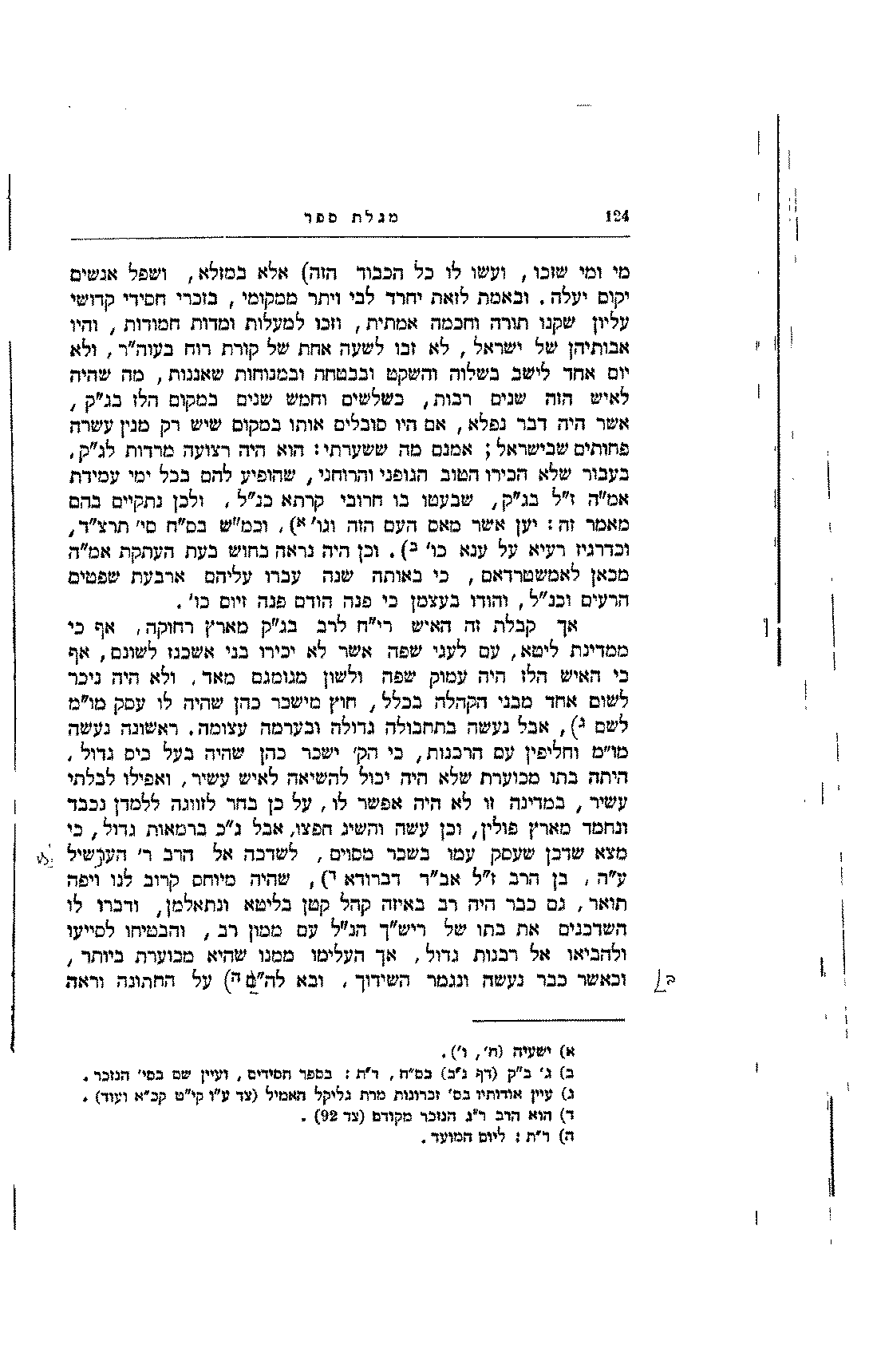
Margin readings in Scholem's copy (2)
| Printed anchor | Type (key sheet) | Mark | Reading | Certainty |
|---|---|---|---|---|
| לשדכה אל הרב ר' העשיל x ע"ה | X: substitution | x mark (a letter written over the print in the name); short mark in outer margin, partly cut off | not read | not read |
| וכאשר כבר נעשה ונגמר השידוך, ובא לה"מ x ה) על החתונה | X: substitution | x mark; the last letter of the abbreviation altered by hand; one letter in outer margin | ב (correcting to לה"ב, to Hamburg) | fairly sure |
Page 125 (scan 141)
her, he did not want to take her, "and his soul chose strangling" (Job 7:15) rather than come near her. For all that, they married him off; "his friends prevailed against him" (cf. Obad. 1:7), for they told him that after the deed nothing can be done, and if he did not take her willingly he would in the end take her by force and compulsion, or give all the wealth of his house for the shame of a daughter of Israel who had not sinned against him; he should have inquired first — "he has lost, and his field is diminished" (cf. b. Ketubot 76b); so it is better that he not bring himself to the disgrace of the court for nothing, for he would not win at law, and so he should be content with his bargain. They persuaded him, and he was persuaded, to carry out the match; and "a bag of dinars was brought in to him" to set him up in the rabbinate of the community of Keidan.
That is: Issachar made an exchange with R. Y[eḥezkel], who was then head of the court in Keidan. He stipulated with him that he would do all that was possible on his side to work for his acceptance, R. Y[eḥezkel], as head of the court of the Three Communities; in return R. Y[eḥezkel] would hand over to him the rabbinate of Keidan, which had also cost R. Y[eḥezkel] full money; and Issachar Kohen undertook to pay the sum of money that the community of Keidan owed R. Y[eḥezkel], and R. Y[eḥezkel] would do him the favour of obtaining the rabbinate for Issachar's son-in-law, so that the people of Keidan would not have to pay the money to R. Y[eḥezkel]; and then Issachar would add for them some further sum as a loan. In this way and this manner the exchange was concluded — together with some support for the matter that Issachar Kohen made on one side, testifying that R. Y[eḥezkel] had a name in all the country of Lithuania as a great man, "greater than a rabban"; for Issachar was a merchant to the country of Lithuania and knew some people there. In the Three Communities the exchange of the rabbinate was not known; and since Issachar was a simple man held to be trustworthy, the people of the Three Communities thought that the thing was true and established in his mouth, that R. Y[eḥezkel] was a great and famous man in that country, and believed that it was as R. Issachar magnified his name. They suspected him of nothing, and it entered no one's mind otherwise than that he was acting for the sake of Heaven, for the good of the Three Communities, to grant them so great a man, "who upon earth has not his like" (cf. Job 41:25), according to his words, in every excellent matter — when in fact he sought the good of his daughter for his own benefit.
And R. Y[eḥezkel] made his own contrivance on another side, to make his name known in the Three Communities, which knew nothing of him. So those who know the truth told: he sent a special envoy, a scholar or teacher from the country of Lithuania, one of his friends and acquaintances — who knows what fee he fixed for him — and put "the bundle of money" in his hand, to scatter among the scholars in the Three Communities, and especially among the teachers who are found here, people from Poland and Lithuania; for "by their word shall every controversy and every stroke be" (Deut. 21:5) in the communities of Germany. For whenever the Ashkenazim are busy accepting a new rabbi, they long precisely for distant ones whom they have never known or recognised, since for the most part those near them are not esteemed in their eyes; especially since those appointed to accept a new rabbi are not learned and are not expert in rabbis, and have no knowledge or discrimination between good and evil; they must ask the mouth of others, strangers from a distant land, Poland and Lithuania, and take counsel with their teachers, who are frequent among them, thinking that they can rely on them, since
אותה, לא רצה לקחתה, ותבחר מחנק נפשו מקרוב אליה; עכ"ז השיאוהו ויכלו לו אנשי שלומו כי אמרו לו אין אחר מעשה כלום, ואם לא יקחנה ברצון סופו ליקח באונס ובכפיה, או כל הון ביתו יתן בעד הבושה לבת ישראל שלא חטאה לו, והי"ל לחקור תחלה, איהו דאפסיד אנפשיה ונסתפחה שדהו, ע"כ מוטב שלא יכניס עצמו בזילותא דב"ד בחנם, כי לא יזכה בדין ולכן יזכה במקחו; פתוהו ויפת לקיים השידוך, ועיילא ליה תרקבא דדינרי לאוקמיה ברבנות דק' קידאן, דהיינו ישכר עשה חילוף עם רי"ח, שהיה אז אב"ד בקידאן, והתנה עמו שיעשה הוא לו כל האפשרות מצדו, להשתדל בעבורו לקבלו לרי"ח לאב"ד דג"ק, נגד זה ימסור לו רי"ח הרבנות דקידאן, שעמד לרי"ח ג"כ בכסף מלא, וקבל עליו ישכר כהן לשלם אותו סך ממון שהיו חייבים ק' קידאן לרי"ח, ושיעשה הוא עמו בטובה להשיג הרבנות לפני חתנו של ישכר, כדי שלא יצטרכו בני קידאן לשלם המעות לרי"ח, אך אז יוסיף להם ישכר עוד איזה סך הלואה. על דרך זה ובאופן הלז נגמר דבר החליפין; בצירוף איזה חיזוק לדבר שעשו ישכר כהן מצד אחד, להעיד על רי"ח שיצא לו שם בכל מדינת ליטא שהוא גדול מרבן; באשר ישכר היה סוחר למדינת ליטא ומכיר קצת אנשים שם, ובג"ק לא נודע דבר החליפין של הרבנות הנ"ל, ובהיות ישכר פשוט מוחזק לנאמן, חשבו אנשי הג"ק שאמת הדבר נכון בפיו, שרי"ח אדם גדול מפורסם באותה מדינה, והאמינו שכך הוא כמו שהגדיל שמו כ' ישכר, שלא חשדוהו במאומה ולא עלה ע"ד אדם דבר אחר, רק לשם שמים הוא עושה, לטובת הג"ק לזכותם באדם גדול כזה, שאין על עפר משלו לפי דבריו בכל מילי מעליותא, א"כ להנאת עצמו דרש טובת בתו. ורי"ח עשה המצאה שלו מצד אחר, לפרסם שמו בג"ק אשר לא ידעו ממנו מאומה. ככה ספרו היודעים האמת, כד שלח ציר מיוחד למדן או מלמד ממדינת ליטא מאוהביו ומיודעיו, מי יודע כמה שכר פסק לו, וצרור הכסף נתן בידו, לפזר אל הלומדים שבג"ק, וביחוד אל המלמדים המצוים כאן מאנשי פולין ומליטא, כי על פיהם יהיה כל ריב וכל נגע בקהלות אשכנז, כי בכל פעם שעוסקים אשכנזים בקבלת רב חדש, מתאוים דווקא לרחוקים אשר לא ידעו ולא הכירו מעולם, באשר ע"פ הרוב הקרובים אליהם אינם חשובים בעיניהם; ביחוד מאחר שהממונים לקבל רב חדש, אינם לומדים ואינן בקיאים ברבנים, ולא הכרה והבחנה בין טוב לרע, מוכרחים לשאול את פי אחרים, אנשים נכרים מארץ רחוקה בפולין וליטא, ונמלכים במלמדים שלהם השכיחים אצלם, כסבורים שיכולין לסמוך עליהן כי
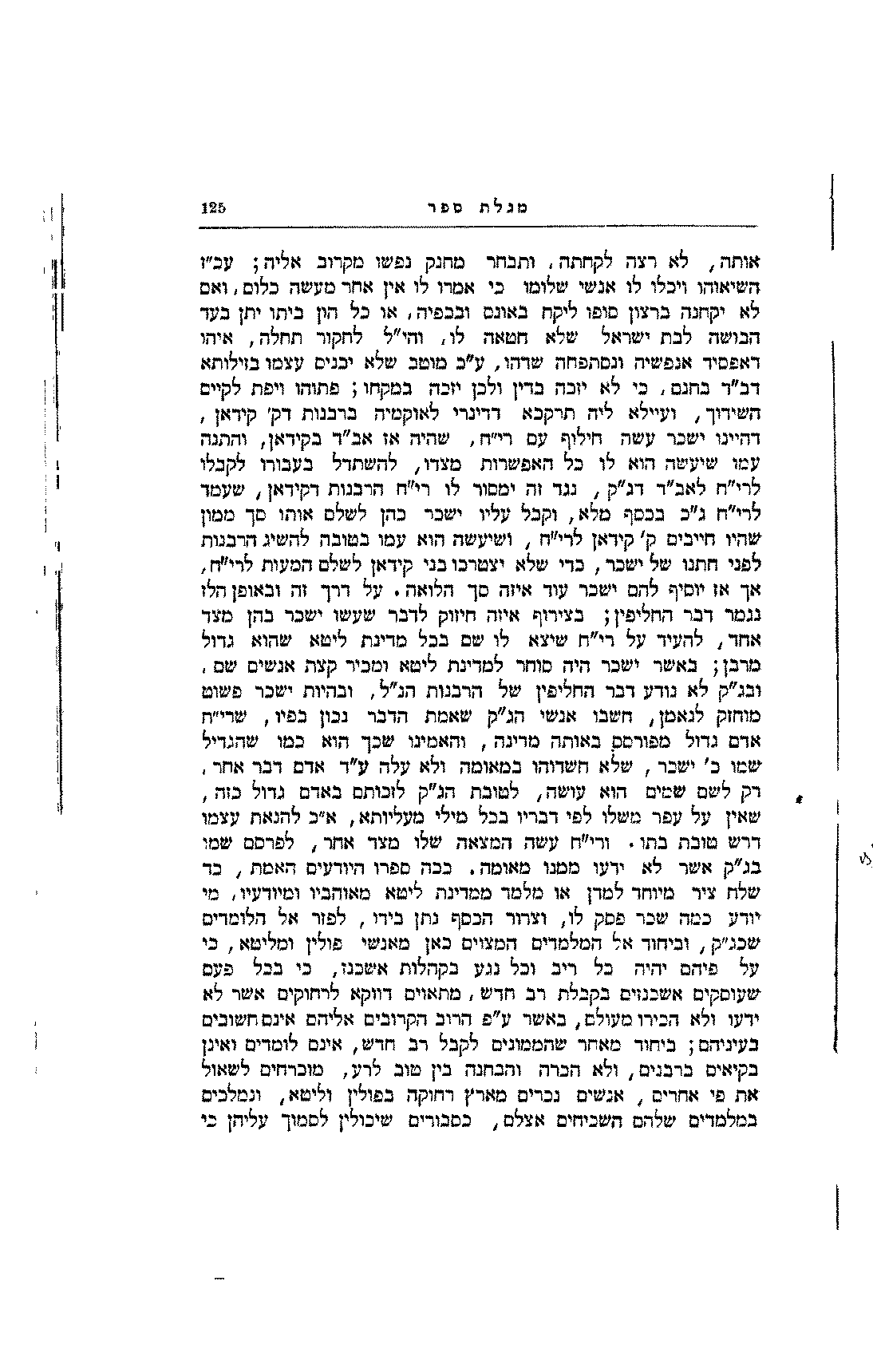
Page 126 (scan 142)
they eat their bread. But most of the teachers in the land of Germany, for their own good and benefit, preach the praise of that rabbi who has "prepared their heart" and their mouth to tell his praise, by having "filled their hand to minister to him as priests" (cf. Ex. 28:41); and they advise, after their manner, the householders who ask them about the rabbis famous for praise in their country, and those charged with accepting the rabbi set their minds on those whom the teachers advised.
When the turn came for accepting the rabbi in the Three Communities, the said "fit man" (Lev. 16:21) went and came here in advance, to buy friends for R. Y[eḥezkel] with gold pieces; for full money he bought them, especially the teachers who had not known him before. He worked with them that they should repeat in his name pleasant Torah novellae, as they knew, and agreeable interpretations they had in hand in the name of the great men of the land; and that they should study with their pupils, in all the matters ⟨S: a letter, "m"(?)⟩, what they would say on the Sabbath, an interpretation at their fathers' table — to speak words of Torah, as is the custom of Israel in Germany. And the teacher, "for pieces of silver" (Ps. 68:31), selling lies, "selling words for dinars", would teach his boys some fine interpretation that he knew and had received in the name of the great men of the generation of old in Israel, and he put it in their mouths in the name of R. Y[eḥezkel], with title and splendour, as if it had come from him — "garments, such as Hillel's are his garments". And when the boy came to speak at his father's table, to make him hear a novella he had learned that week, he would lift up his voice with force, with great fervour, in these words: "This thing our master the rabbi R. Yeḥezkel Katzenellenbogen, rabbi of Keidan, said." And so did many of the teachers whom he had bribed, "and money answers the voice" (cf. Eccl. 10:19), until they put out [a great report about R. Y[eḥezkel]] in the Three Communities, for they repeated in his name sweet and sharp things, with enormous and excessive praise. In this way they stole the people's minds. [And if they asked] the teachers whether they knew the man and his talk (2 Kgs. 9:11), whether he was fit for the rabbinate of the Three Communities, they would answer: "Obviously, unique in his generation! He has not left his like in Torah, in wisdom and piety, in elegant language and in all the virtues and qualities the sages listed; he has no companion in the world; [his intelligence no] man can grasp, unless R. Y[eḥezkel] first fasts from Sabbath to Sabbath to weaken the power of his intelligence, so that they need not go so deep into his inventions; [and the hearer should fast to weaken the strength of his body] and lessen his fat and blood, to refine his matter, so that his intellect may be fine and fit to receive, and to reach the depth of R. Y[eḥezkel]'s mind." So much — and perhaps!
"These are but the outskirts of the ways" (Job 26:14) of teachers, in their answers to those who ask them and "go in their simplicity" (2 Sam. 15:11), and rely on them, drawn after them like the blind; and they had not seen nor known the man R. Y[eḥezkel] — only "money answers the voice". In the end sin caused this man to come and sit at the head of the Three Communities: "when the shepherd is angry with the flock", a parnas according to the generation (cf. b. Arakhin 17a). He found [Altona] "as the garden of Eden before him, and behind him a desolate wilderness" (Joel 2:3), as written above. And when the leading men of the town went out to meet him and greet him with joy, to see the face of their new lord, from whose light they hoped to benefit, "a new light", as the teachers who testified said,
אוכלי לחמם הם; אך רובן של מלמדים בארץ אשכנז, לטובתן ולהנאתן, דורשים לשבח הרב ההוא אשר הכין לבבם ופיהם לספר בשבחו, ע"י שמלא ידם לכהן לו, והם יועצים לפי דרכם לבעלי בתים השואלים אותם, ע"ד הרבנים המפורסמים לשבח בארצם, והללו המסודרים לקבלת הרב, נותנים דעתם לאותם שיעצום המלמדים; ויהי בהגיע תור קבלת הרב בג"ק, הלך איש עתי הנ"ל והקדים עצמו לבוא לכאן, לקנות אוהבים לרי"ח בזהובים, בכסף מלא קנה אותם, בפרט המלמדים אשר לא ידעוהו מלפנים, השתדל עמהם שיאמרו בשמו דברי חידושי תורה ערבים כפי שיודעים, ופשטים נעימים שבידיהם משם גדולי ארץ, ושילמדו עם תלמידיהם בכל הענינים שיאמרו בשבת פשט על שלחן אביהם לומר ד"ת במנהג ישראל באשכנז, והיה המלמד ברצי כסף מוכר הכזב, מזבין מילי בדינרי, ולומד עם נעריו איזה פשט נאה, שיודע ושקבל בשם גדולי הדור אשר מלפנים בישראל, והוא משגירו בפיהם על שם רי"ח, בתואר והדר לו כאלו ממנו יצא, כלבושים הלל לבושו, וכאשר בא הנער לדבר על שולחנו של אביו, להשמיע באזניו חדוש שלמד בשבוע זו, היה מרים בכח קולו בהתלהבות גדולה בלשון הזה: דבר זה אמר רבינו ה' ר' יחזקאל קצינלנבוגן רב דקידאן, וכך היו עושין רבים מהמלמדים אשר התרפס להם, והכסף יענה את הקול, עד שהוציאו [על רי"ח קול] גדול בג"ק, כי היו אומרים משמו דברים מתוקים וחריפים, ובשבח עצום בהפלגה גדולה, באופן זה גנבו דעת האנשים, [ואם שאלו את פי] המלמדים, אם ידעו את האיש אם שיחו נאה אם הגון הוא לרבנות דג"ק, היו משיבים פשיטא יחיד בדורו, לא הניח כמותו בתורה בחכמה וחסידות, בלשון צח ובכל המעלות ומדות שמנו חכמים אין לו חבר בעולם, [שכלו אין] לאדם לעמוד עליו, אם לא יתענה רי"ח תחלה משבת לשבת להחליש כח שכלו כדי שלא יעמיקו כל כך בהמצאותיו, [והשומע יתענה להחליש כח גופו] ולמעט חלבו ודמו לזכך החומר שלו, למען יהא שכלו דק ומוכשר לקבל, ולירד לסוף דעתו של רי"ח. כולי האי ואולי. אלה קצות דרכי מלמדים, בתשובות לשואליהם ההולכים לתומם, וסמכו עליהם כעורים נמשכים אחריהם, והמה לא ראו ולא ידעו את האיש רי"ח, רק הכסף יענה את הקול. סוף דבר גרם העון שבא זה האיש לישב בראש דג"ק. כד רגיז רעיא על ענא, פרנס לפי הדור. מצא [אלטונא] כג"ע לפניו ואחריו מדבר שממה כמש"ל. וכשהלכו פני העיר לקראתו להקביל פניו בשמחה, לראות פני אדוניהם החדש, אשר היו מצפים להנות מאורו, אור חדש כמו שאמרו המלמדים המעידים
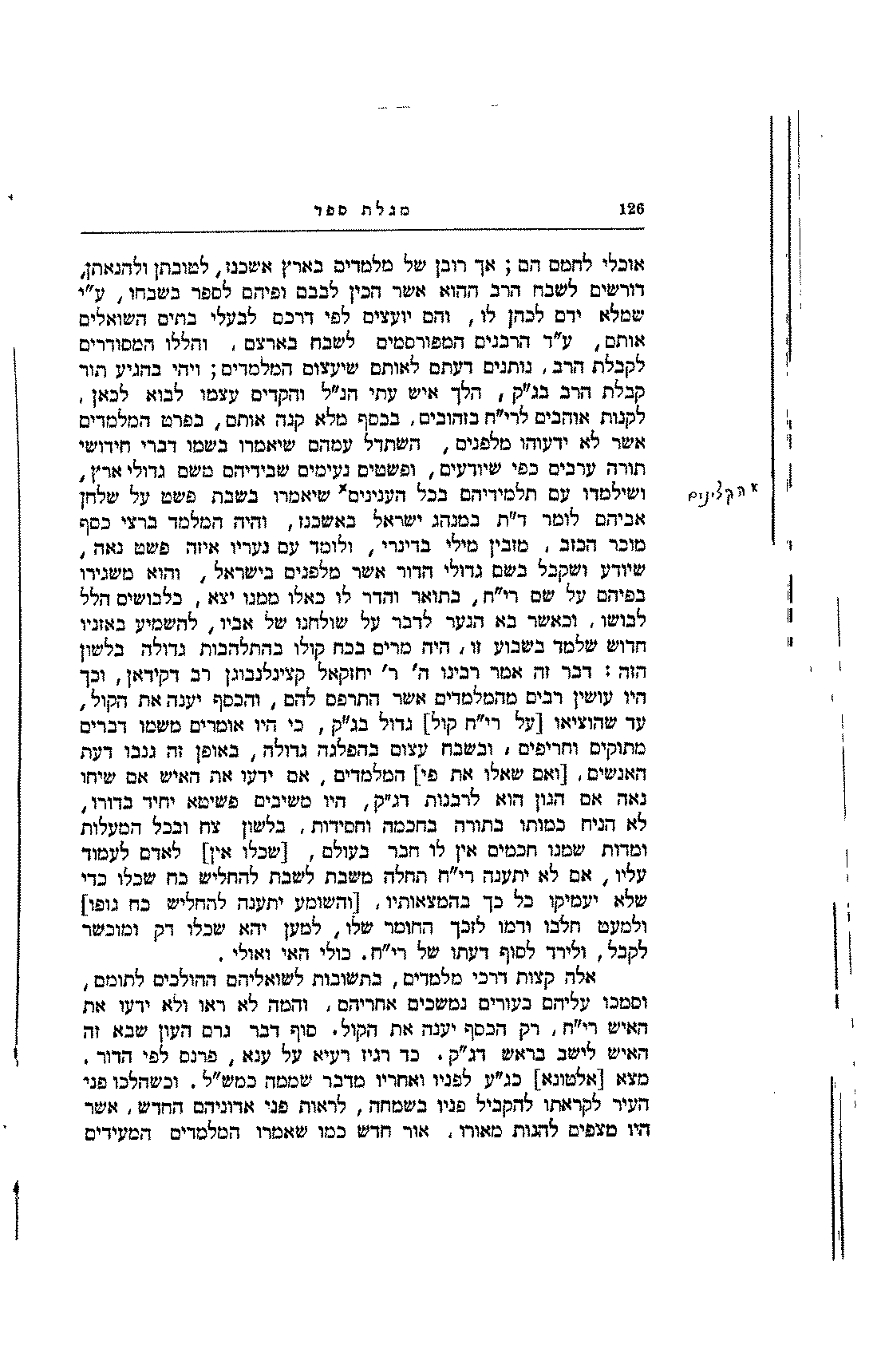
Margin readings in Scholem's copy (1)
| Printed anchor | Type (key sheet) | Mark | Reading | Certainty |
|---|---|---|---|---|
| ושילמדו עם תלמידיהם בכל הענינים x שיאמרו | X: substitution | x mark; one letter in outer margin | ם(?) | uncertain |
Page 127 (scan 143)
for their reward, he said some words of Torah to them, and they did not understand his speech at all, for "with stammering lips and another tongue" (Isa. 28:11) he spoke, "of a stammering tongue that you cannot understand" (Isa. 33:19), truly without exaggeration. I know and am witness: he spoke with me many times, and he had already lived here much more than thirty years, and I did not understand his speech and language completely — how much more at the beginning of his coming here from a people "of deep speech" (Isa. 33:19) from the land of Lithuania. So they entreated him to write for them the novella he had told them; perhaps they would understand it from the writing. But they could not, for it was in their eyes "as the words of a book that is sealed" (Isa. 29:11) — both because of the black handwriting, whose like for badness has not been seen, and which no man could read, like his speech, unintelligible as chirping; and because of the language too it could not be read, even by men of understanding. In these three things, that is: writing, speech, language, he was unique in his generation without doubt — apart from the moral virtues, as written above.
So when they saw that even from the writing they could not grasp the novella of Torah that they longed to gain, and to know and understand a whiff of anything of all the great exaggeration with which the teachers had praised and extolled him, who "brought their witnesses, that they might be justified" (Isa. 43:9), they asked the teachers who attended him, who were somewhat more fluent of tongue than he, whose speech was intelligible and who knew books and recognised his handwriting and language, to read before them and translate for them what their new rabbi had written. They read it, but the readers found no vision (cf. Hos. 12:11), and the hearers did not merit to understand anything. So something of the said promise was fulfilled: perhaps because he had not fasted, or had fasted too much, or because the hearers and readers of his words had not fasted first, they did not merit it. In truth, even if they had beaten their heads, they could not have understood it, for "there is no understanding in him" (Deut. 32:28); and in substance too, no man's mind can understand and bear it.
But what is done is done. "The word of the king" — who does not judge without justice — cannot be answered, for so it was decreed upon them, as written above, "forasmuch as they refused the waters of Shiloah" (Isa. 8:6). Their sins did this: that the Lord set up over them a shepherd who "feeds himself" (Ezek. 34:2), and "the flock he did not feed" (cf. Ezek. 34:3) with knowledge and understanding, but only with mockery of the words of Torah and scorn of those who study it. From then on lawlessness prevailed, for our many sins: "without, the sword shall bereave" (Deut. 32:25). And the said great and powerful leader, R. B[er] K[ohen], was very pleased with such a rabbi, for he obeyed him in everything; for R. Y[eḥezkel] understood and knew between the lashes of R. B[er] K[ohen]'s eyes, and called him "zeide", that is, my grandfather — for so they call a grandfather in the Polish language: zeide. And when they asked him something in the affairs of the community or of individuals, he would first investigate and inquire and ask: "What does zeide say in this matter?" And according to what he was told, he did the mind, desire and will of R. B[er] K[ohen], and paid no attention at all to others, whether it went well or ill with them — it did not matter to him — so long as his deeds were right in the eyes of the said rich old man, the man of violence. In this he was careful with all his ability, so as to find favour in his eyes and in the eyes of his sons, his sons-in-law, his friends and his acquaintances, who were all at the height of standing
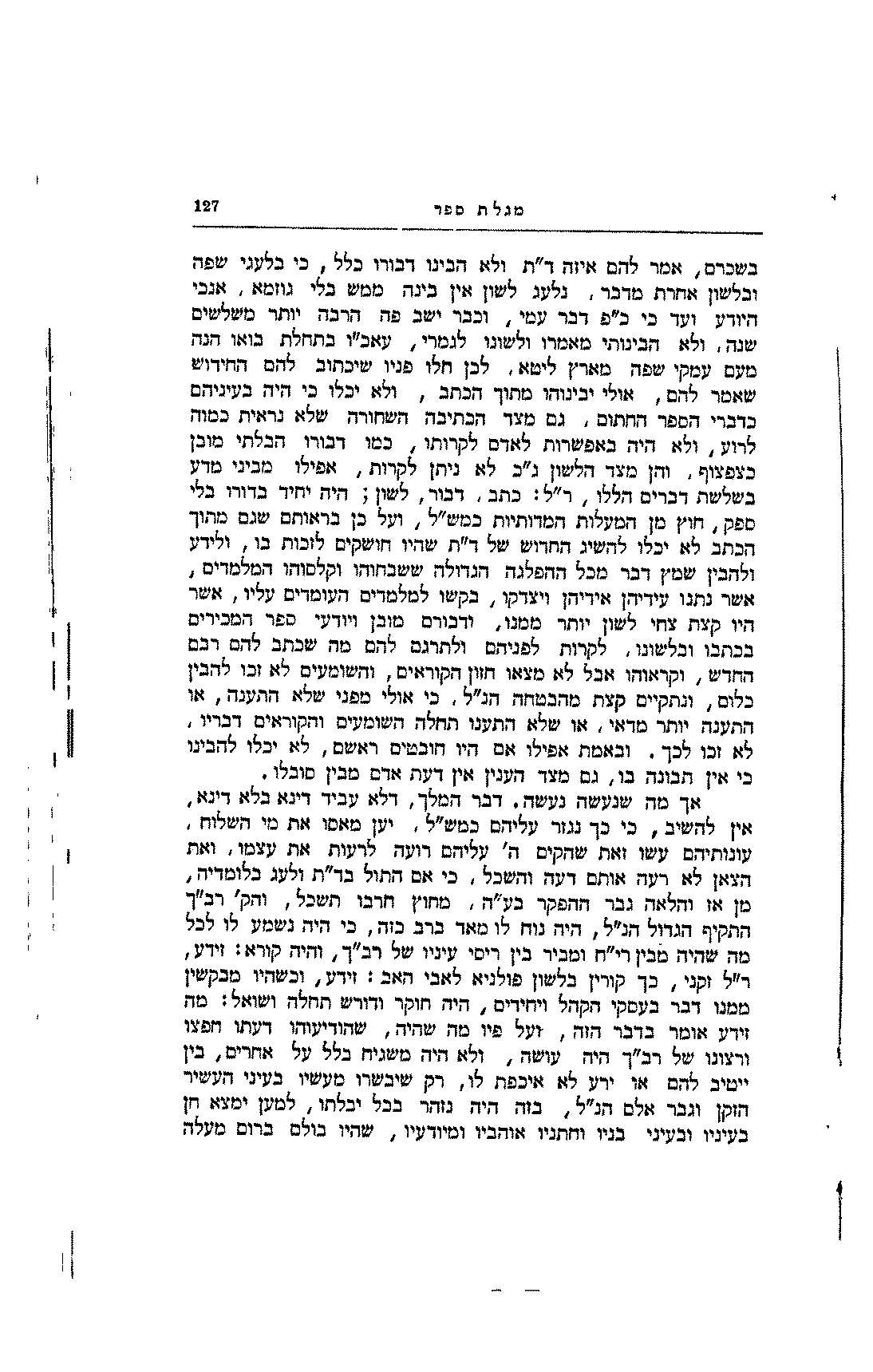
בשכרם, אמר להם איזה ד"ת ולא הבינו דבורו כלל, כי בלעגי שפה ובלשון אחרת מדבר, נלעג לשון אין בינה ממש בלי גוזמא, אנכי היודע ועד כי כ"פ דבר עמי, וכבר ישב פה הרבה יותר משלשים שנה, ולא הבינותי מאמרו ולשונו לגמרי, עאכ"ו בתחלת בואו הנה מעם עמקי שפה מארץ ליטא, לכן חלו פניו שיכתוב להם החידוש שאמר להם, אולי יבינוהו מתוך הכתב, ולא יכלו כי היה בעיניהם כדברי הספר החתום, גם מצד הכתיבה השחורה שלא נראית כמוה לרוע, ולא היה באפשרות לאדם לקרותו, כמו דבורו הבלתי מובן כצפצוף, והן מצד הלשון ג"כ לא ניתן לקרות, אפילו מביני מדע בשלשת דברים הללו, ר"ל: כתב, דבור, לשון; היה יחיד בדורו בלי ספק, חוץ מן המעלות המדותיות כמש"ל, ועל כן בראותם שגם מתוך הכתב לא יכלו להשיג החדוש של ד"ת שהיו חושקים לזכות בו, ולידע ולהבין שמץ דבר מכל ההפלגה הגדולה ששבחוהו וקלסוהו המלמדים, אשר נתנו עידיהן אידיהן ויצדקו, בקשו למלמדים העומדים עליו, אשר היו קצת צחי לשון יותר ממנו, ודבורם מובן ויודעי ספר המכירים בכתבו ובלשונו, לקרות לפניהם ולתרגם להם מה שכתב להם רבם החדש, וקראוהו אבל לא מצאו חזון הקוראים, והשומעים לא זכו להבין כלום, ונתקיים קצת מהבטחה הנ"ל, כי אולי מפני שלא התענה, או התענה יותר מדאי, או שלא התענו תחלה השומעים והקוראים דבריו, לא זכו לכך. ובאמת אפילו אם היו חובטים ראשם, לא יכלו להבינו כי אין תבונה בו, גם מצד הענין אין דעת אדם מבין סובלו. אך מה שנעשה נעשה. דבר המלך, דלא עביד דינא בלא דינא, אין להשיב, כי כך נגזר עליהם כמש"ל, יען מאסו את מי השלוח, עונותיהם עשו זאת שהקים ה' עליהם רועה לרעות את עצמו, ואת הצאן לא רעה אותם דעה והשכל, כי אם התול בד"ת ולעג בלומדיה, מן אז והלאה גבר ההפקר בע"ה, מחוץ חרבו תשכל, והק' רב"ך התקיף הגדול הנ"ל, היה נוח לו מאד ברב כזה, כי היה נשמע לו לכל מה שהיה מבין רי"ח ומכיר בין ריסי עיניו של רב"ך, והיה קורא: זידע, ר"ל זקני, כך קורין בלשון פולניא לאבי האב: זידע, וכשהיו מבקשין ממנו דבר בעסקי הקהל ויחידים, היה חוקר ודורש תחלה ושואל: מה זידע אומר בדבר הזה, ועל פיו מה שהיה, שהודיעוהו דעתו חפצו ורצונו של רב"ך היה עושה, ולא היה משגיח כלל על אחרים, בין ייטיב להם או ירע לא איכפת לו, רק שיכשרו מעשיו בעיני העשיר הזקן וגבר אלם הנ"ל, בזה היה נזהר בכל יכלתו, למען ימצא חן בעיניו ובעיני בניו וחתניו אוהביו ומיודעיו, שהיו כולם ברום מעלה
Page 128 (scan 144)
and importance at that time. Therefore he was very afraid of them, and also showed them great affection, since his benefit from them was near and in large measure, according to the great wealth of R. B[er] K[ohen], his sons and his friends. With this he lost nothing with other rich men; on the contrary, all the more did they add gifts and presents to him and his sons, they too, so as to find favour in his eyes when they needed him. For the rabbi in the Three Communities had great power over the householders, both in the affairs of the community and appointments and in judgments and money cases — everything was in his hand with absolute power — and they were very afraid of him, for he could literally cut off their livelihood. So he did to several people among the important men of the community, and because of him they came down from their property; they brought them down to the dust, through the torment and perversion of justice he did them. Especially he caused great evil to great, precious and important families in all the Three Communities: namely the family of R. Moses R. Leibush's, the outstanding learned leader mentioned above, and the family of my relative(?), the great leader R. M. R. Nathan's, who founded the community in Altona. They were great men, mightily rich, wise, learned and God-fearing; and because of him they were uprooted and torn out, God save us. When I remember this my bowels are troubled. The thing touches us too, for through this we lost a certain sum of money, as said above. But the two said families were utterly ruined, for our many sins, and the few who remain of them are counted as dead, God save us.
Even if R. Y[eḥezkel] had done nothing during the time of his rabbinate but this evil alone, it would be fitting to publish it, to take an example from it for the generations, to pray to the Blessed One to save them from such leadership of the public — "may the Merciful save us, may the Merciful deliver us." But in truth he caused the Three Communities far more evil than this; he almost razed the whole citadel, and wiped and turned it "as one wipes a dish" (2 Kgs. 21:13) ⟨S: a caret, pointing to the first passage of the typed insert that follows⟩. What shall I say and speak and tell — how many of the evils that R. Y[eḥezkel] brought about! ⟨S: a mark Y, pointing to the second passage of the typed insert that follows⟩ "Lo, these are but the outskirts of the ways" (Job 26:14) of his household and his great ones; and who can tell even one part of them?
From now on it is no novelty and no wonder if improper things were done in the houses of leaders, who had someone to learn from and to argue a fortiori [a]. There is no need to dwell on this ⟨S: a six-line note: "in any case nothing was heard of a prohibition of a married woman in all the Three Communities, God forbid, but only the haughtiness of the feeling(?) that they had in their heart"⟩, except that one woman was loose, about whom ugly things were heard on the testimony of one witness, and R. Y[eḥezkel] wanted to compel her to leave her husband — not according to the law at all, in my opinion. Although I did not want to deal with it at all, and did not undertake to look into her case, but only according to what R. M. Ḥ., peace be upon him, sent me — for he too was involved with R. Y[eḥezkel] in this matter, to take a woman from her husband by compulsion, not according to the law — from those words and the collected testimony they had received, I did not find what would suffice to forbid the woman to her husband and to compel a divorce, God forbid; "my son did not go down with them" (cf. Gen. 42:38). As I made known my opinion to R. M. Ḥ. while I was still in Emden, when he sent the case to me to examine; and so too I said to the judges of
Kahana's notes
- [a] Initials of kal va-ḥomer (a fortiori).
והחשיבות באותו זמן, על כן היה ירא מהם מאד, גם הראה להם חבה יתירה, לאשר היתה הנאתו קרובה מהם במדה מרובה לפי עשירותו הגדולה של רב"ך ובניו ואוהביו, ועם זה לא הפסיד כלום אצל עשירים אחרים, אדרבה כל שכן שהיו מוסיפים לו ולבניו מתנותיהם ודורונותיהם גם הם, למען ימצאו חן בעיניו כשיצטרכו אליו, כי הרב בג"ק הי"ל ממשלה גדולה על היחידים הן בעסקי הקהל והתמניות ומשפטים ודיני ממונות, הכל בידו בכח מוחלט, והיו מפחדים ממנו מאד, כי יוכל לפסוק חיותם ממש, וכאשר כה עשה לכמה בני אדם מחשובי הקהלה, ובסבתו ירדו מנכסיהם הורידום עד עפר, ע"י עינוי ועיוות הדין שעשה להם. ביחוד גרם רעה רבה למשפחות גדולות יקרות וחשובות שבכל הג"ק, ה"ה משפחת ר' משה ר' ליבש, הק' התורני המופלג הנ"ל, ומשפחת מחו' הק' הגדול ר"מ ר' נתן שיסדו הקהלה באלטונא, והיו אנשים גדולים עשירים כבירים, חכמים לומדים ויראי שמים, ובסבתו נעקרו ונשרשו ר"ל; בזכרי זאת מעי מתחחכין. גם הדבר מגיע אלינו, שהפסדנו ע"י כך סך ממון מסוים כנ"ל; אך שתי המשפחות הנ"ל כלו בענים בעו"ה, והמעט שנשאר מהם כמתים חשובים ר"ל. ואם לא היה פועל רי"ח במשך זמן רבנות שלו, רק זה הרע לבד ראוי לפרסמו, לקחת ממנו דוגמא לדורות, להתפלל להי"ת שיצילם ממנהג צבור כזה, רחמנא לצלן, רחמנא לשזבן, אבל באמת הרבה יותר מזה גרם רעה להג"ק, כמעט קעקע כל הבירה ומחה והפך אותן כקערה. מה אומר ואדבר ואספרה, כמה מהרעות שסבב רי"ח! הן אלה קצות דרכי בני ביתו וגדוליו, ומי יוכל לספר אפילו חלק אחד מהן. מעתה אין חידוש ולא תימה אם נעשה בבתי קצינים דברים בלתי הגונים, שהיה להם ממי ללמוד ולדון קל"ו א, אין להאריך מזה. רק אחת היתה פרוצה שנשמעו עליה דברים מכוערים ע"פ עד אחד, ורצה רי"ח לכוף אותה להוציאה מבעלה, שלא כהלכה לגמרי לפי דעתי, אע"פ שלא רציתי לטפל בה כלל לא נזדקקתי לעין בדינה, רק ע"פ מה ששלח לידי רמ"ח ע"ה, שנטפל ג"כ עם רי"ח בדבר זה, להוציא אשה מבעלה בכפיה שלא כדין. מתוך אותן הדברים והגביות עדות שקבלו, לא מצאתי מה שיספיק לאסור האשה על בעלה, ולכוף על הגט חלילה, לא ירד בני עמהם, וכמו שהודעתי לרמ"ח דעתי עודני בעמדן, כששלח הדין אלי לעיין בו, וגם ככה אמרתי לדייני
- [א] ר"ת: קל וחומר.
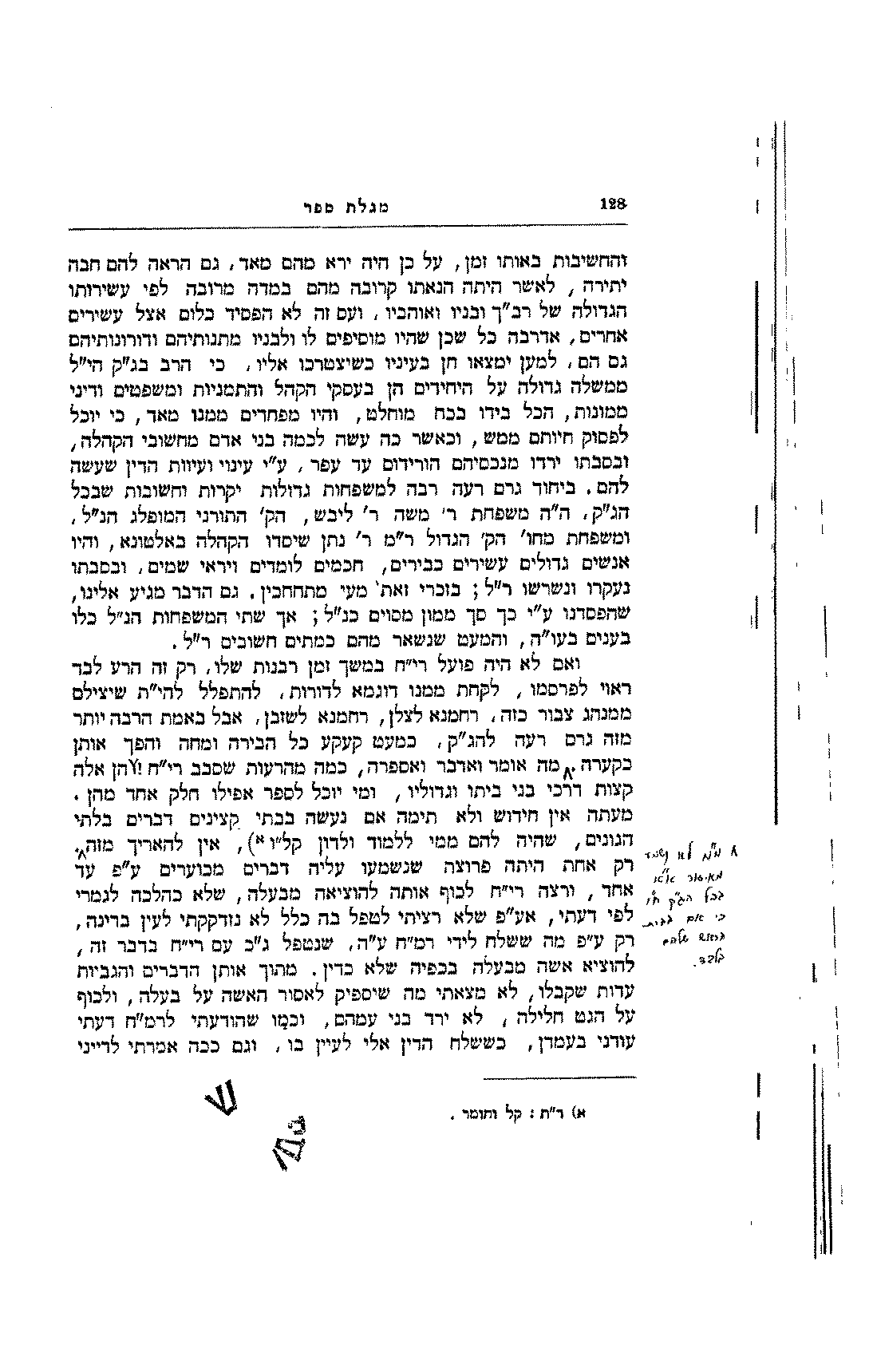
Margin readings in Scholem's copy (3)
| Printed anchor | Type (key sheet) | Mark | Reading | Certainty |
|---|---|---|---|---|
| כמעט קעקע כל הבירה ומחה והפך אותן כקערה ^ מה אומר | V: omission | caret; points to the typed insert (scan 145), first passage | (see scan 145) | sure |
| כמה מהרעות שסבב רי"ח! Y הן אלה | — | Y mark; points to the typed insert (scan 145), second passage | (see scan 145) | sure |
| ממי ללמוד ולדון קל"ו א), אין להאריך מזה ^ | V: omission | caret; 6-line note in right margin | מ"מ לא נשמע / מאיסור א"א / בכל הג"ק ח"ו / כי אם גבות / הרגש(?) שלהם / בלבם. | fairly sure |
Typed insert for p. 128 (scan 145)
A typed sheet bound into Scholem's copy, headed "(for p. 128)", not part of Kahana's print. It gives two passages from the manuscript: the first is marked with a caret, matching the caret after "as one wipes a dish" on p. 128; the second is marked Y, matching the Y after "that R. Y[eḥezkel] brought about!".
[^] until Eybeschütz, may the name of the wicked rot, came after him, and the trouble was doubled; he added sorrow and sighing, "wasting and destruction are in their paths" (Isa. 59:7); for our many sins the outcry grew great. (And this oppressor too came because of R. Y[eḥezkel], and the thing came about through him, since he showed him favour to cover up for him for the sake of Mordecai Kohen, the grandfather of the wife of the oppressor, may the name of the wicked rot. Had R. Y[eḥezkel] been worthy, he could have uprooted him, for he had in his hand rod and strap, and the hour smiled on him.)
[Y] In his days there was fulfilled in his house: "the meeting-place shall be for harlotry" (m. Sotah 9:15). For his married daughter and his daughter-in-law were both caught having been defiled under their husbands, and therefore they divorced them. But the son-in-law of R. Y[eḥezkel], an outstanding scholar, was sitting in the house of study, and suddenly came home at night and found his wife lying with a young man in his bed, in the husband's upper room. From then on her husband separated from her, for he feared the Lord; and although they wanted to give him a large dowry and gift to keep silent, the man would not, and he came out stripped of his property and short of bread, for he was forced to leave her everything he had for her ketubah. On top of this R. Y[eḥezkel], by the power of his violence, had it proclaimed against him that he had slandered his daughter and made false charges against her, and they excommunicated him in Altona. That man was an outstanding scholar, of the noble families of the land of Poland, and feared the Lord more than many; that is why he did this and despised the wife of his youth with all her property and sent her away with a bill of divorce, and he went out from there naked and in want of all things, wandering for bread.
(לעמ' 128) ^ עד שבא אחריו אייבשיצר שר"י ונכפלה הצרה הוסיף יגון ואנחה שוד ושבר במסלותם בעוה"ה גדלה הצווחה (ואף זה הצר בסבתו של רי"ח בא ונתגלגל הדבר על ידו באשר נשא לו פנים לחפות עליו בשביל מרדכי כהן זקן של האשת הצורר שר"י ואלמלא היה רי"ח כדאי היה יכול לעקרו כי היה בידו מקל ורצועה שהיתה משחקת לו השעה. Y בימיו נתקיים בביתוו בית הועד יהיה לזנות כי בתו נשואה וכלתו שתיהן נתפסו שנטמאו תחת בעליהן ולכן גרשום. אבל חתנו של רי"ח ת"ח מופלג היה יושב בבית המדרש ופתאום בא בלילה לביתו ומצא אשתו שוכבת עם בחור במטתו בעליתו של בעל ומן אז פירש ממנה בעלה כי היה ירא ה' ואף כי רצו להרבות לו מוהר ומתן שישתוק לא אבה האיש ויצא נקי מנכסיו ונחסר לחמו כי הוכרח להניח לה כל אשר לו בכתובתה. נוסף על זאת עשה רי"ח בכח אלמותו להכריז עליו שהוציא לעז על בתו ושם לה עלילות דברים והחרימוהו באלטונה. והאיש ההוא למדן מופלג מיחוסי ארץ פולין וירא ה' מרבים כי על כן עשה זאת ומאס באשת נעוריו עם כל קנינו ושלחה בגט פטורין והוא יצא משם בעירום ובחוסר כל נודד ללחם.
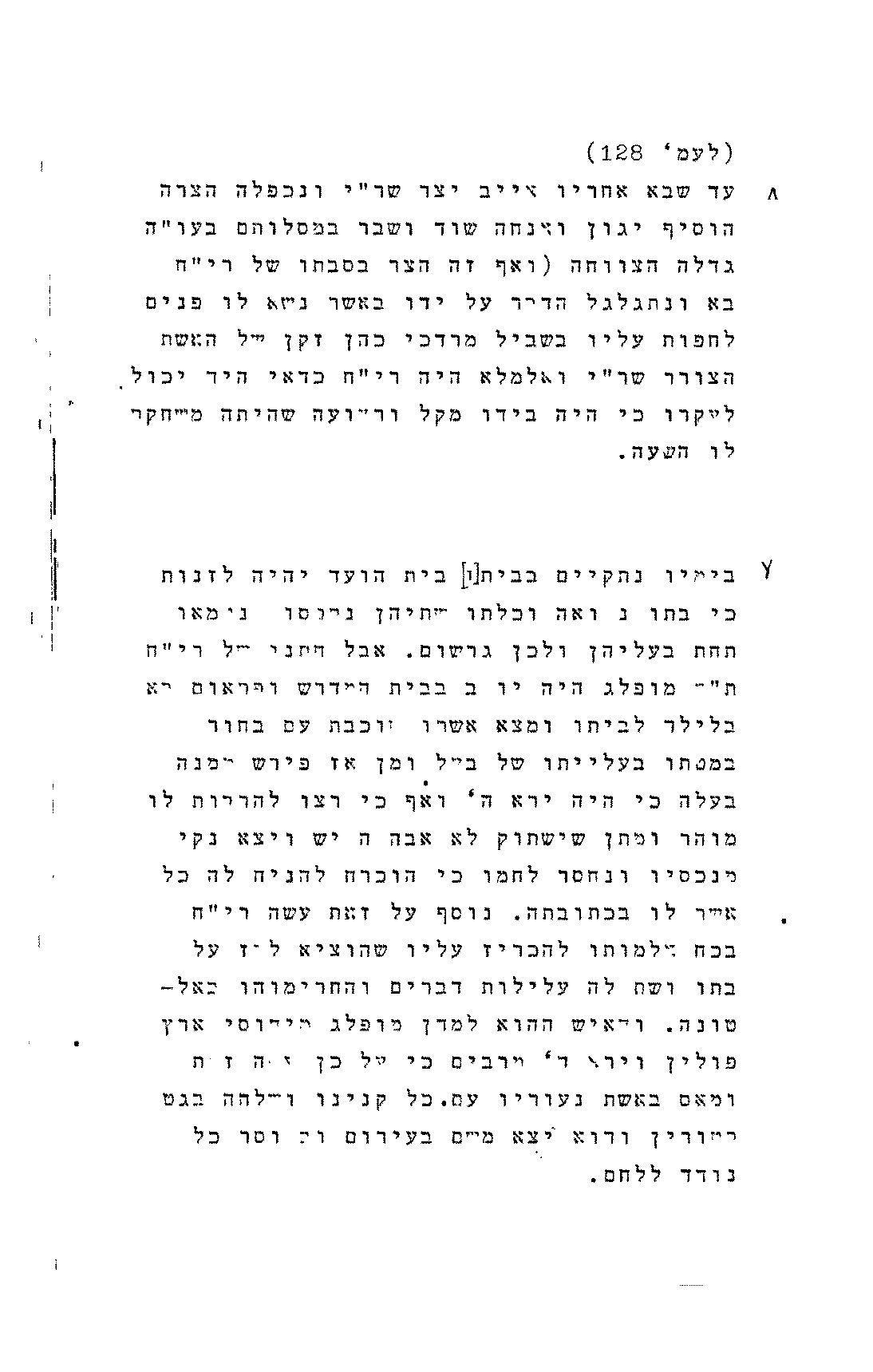
Page 129 (scan 147)
the holy community of Altona ⟨S: a five-line note: "R. N. D. and R. B. A., when they came to greet me, also asked me about this matter, and I answered them"⟩, a thing according to my heart: that I did not know on what they relied in this ruling, and that greater than this is found in the Talmud and decisors in plenty — that they did not forbid a woman to her husband in such a case and the like. Then, when R. N. D. heard this from my mouth, he said to his companion R. B. A.: "Did I not tell you too that the thing is not right?" Even so the woman and her husband remained under the prohibition of R. Y[eḥezkel] more than twenty years. But [the rabbi R. Y[eḥezkel]] did not execute judgments as he should, no more; on the woman [and her husband], for she had a brother and a father-in-law who were leaders. Therefore, for the sake of the law and the corruption of the order, he deserved to be fined; but it was not fitting to forbid [this woman] to her husband, for the one who deserved punishment was let off entirely. [Since she was separated] from her husband, he decreed a harsh decree as with death; and several times afterwards the woman sent to me to speak to me, to look into her case. Even so I did not want to involve myself with her, neither to release her nor to forbid her, until the said H. came ⟨S: "the troubler of Israel"⟩, and she was permitted for a sum of money that he received from her as his fee ⟨S: a two-line note, partly read: "accordingly it is possible; but R. T.(?)"⟩.
Another, on her own word against(?) her husband [a] — namely the daughter of Gumprecht, wife of R. Z. Danzig, who had several children — once came to him and declared that she had committed adultery. On her word R. Y[eḥezkel] went and proclaimed against her ⟨S: "in the great synagogue"⟩ that she was a harlot and forbidden to her husband [b] ⟨S: a ten-line note, partly read: "and excommunicated her; and her father … came to me and informed … my rulings to expound(?) … to him that … in his name … they taught him, the fool, the law that a woman is not believed to forbid herself to her husband; and so this man did, and made the matter known"⟩; and afterwards he was forced to release her from the prohibition and annul his decree.
For all that, I covered up for him, and did not want to speak of his disgrace and provoke him for many years, for he too showed me great affection, after he saw that I did him and his house no harm at all; on the contrary, he had relief through me. Therefore he [told] my praise before everyone, and came to my house at every festival. I too left him his honour; I said, "there is old age here" (cf. b. Shabbat 152a), and he had attained greatness. Although the sins [of the generation caused that the rabbis could not] agree on the law, I therefore fought for him with all my strength, though he was not worthy; and he also showed that [R. S. Ḥ. and R. M. Ḥ.] were mistaken in the whole matter [c]. In any case, in the essence of the matter his ruling was right this time; therefore I went out to the help of the truth and spent a great deal of my money on it, and had no benefit from my labour and toil at all.
Again a case arose of a widow bound to a levir, and he included me too, and sent me his messenger with a responsum, to examine it at his urging and request. I sent him my responsum too, in writing and with acceptance, and he and his court examined it and said with a full mouth [that my words were right, and that there was no] witness and proof sufficient to permit her. That woman, called Ḥayyah, remained in the chains of the prohibition some weeks. But the betrothed was of the relatives of her husband ⟨S: a note at the foot of the margin, continuing off the page: "the one standing(?) …"⟩, and they preferred death to life for their kinsman, so that his name would be forgotten from Israel,
Kahana's notes
- [a] 'Al-pi: initials of al penei ba'alah ("in her husband's face"), for she was angry with him.
- [b] See below (p. 133).
- [c] See Hit'avkut (fol. 9). R. S. Ḥ. is R. Samson Ḥasid, mentioned before, and R. M. Ḥ. is R. Moses Ḥagiz.
Translator's note. Scan 146 is the blank back of the typed insert. The sense of the end of the levirate case is unclear in Kahana's print.
ק"ק אלטונא. דבר כאשר עם לבבי שלא ידעתי על מה סמכו בהוראתם זאת, ושגדולה מזו מצאו בש"ס ופוסקים לרוב, שלא אסרו אשה על בעלה באופן זה וכיוצא בו; אז כשמוע רנ"ד כך מפי, אמר לחבירו רב"ע הן אמרתי אליך ג"כ שלא נכון הדבר, ואעפ"כ נשארו האשה ואישה עומדים באיסורו של רי"ח יותר מעשרים שנה, אבל [הרב רי"ח] לא עשה שפטים כראוי לא יותר, להאשה [ובעלה] כי הי"ל אח וחותן קצינים, על כן מצד הדין וקלקול השורה ראוי לקנסו, אבל לא היה כדאי לאסור על בעלה [האשה הזאת], כי הראוי לעונש נפטרה מכל וכל, [ע"י שנגזרה] מבעלה גזר גזירה קשה במיתה, וכמה פעמים אח"כ שלחה אלי האשה לדבר אלי לעיין בדינה, אעפ"כ לא רציתי להזדקק לה, לא לפטרה ולא לאסרה, עד שבא ה' הנ"ל, והותרה בעד סך מעות שקבל ממנה בשכרו; עוד אחרת עפ"י בעלה א, ה"ה בת גומפריכט אשת ר"ז דנציג והי"ל כמה בנים, ופ"א באה אליו והודיע שזינתה: על פי דבורה הלך רי"ח להכריז עליה, שהיא זונה ושאסורה לבעלה ב, והוכרח אחרי כן להוציאה מן האיסור ולבטל גזרתו. עם כל זה חפיתי עליו, ולא רציתי לדבר בגנותו ולהתגרות בו כמה שנים, כי גם היה מראה לי חבה יתירה, אחר שראה שאינני מזיק לו ולביתו כל מאומה, אדרבה הי"ל רוח על ידי, על כן [סיפר] בשבחי בפני כל אדם, והיה בא לביתי בכל רגל, גם אנכי הנחתי לו כבודו, אמרתי זקנה יש כאן וזכה לגדולה, אע"פ שעונות [הדור גרמו שלא יכלו הרבנים] להסכים להלכה, לכן נלחמתי בעדו בכל עוז אע"פ שלא היה כדאי, גם הראה שבושים [רש"ח ורמ"ח] בכל הענין ג, מ"מ בעקר הדבר צדקה הוראתו הפעם, על כן יצאתי לישע האמת ופזרתי על זה גודל ממוני, ולא נהניתי מיגיעי ועמלי דבר. ושוב אירע נדון זקוקה ליבם, וצרפני ג"כ ושלח אלי שלוחו עם תשובה, לעיין עליו ע"פ הפצרתו ובקשתו, ושלחתי אליו תשובתי ג"כ בכתב וקבלה, ועיינו בה הוא והב"ד שלו, ואמרו בפה מלא [כי צדקו דברי ואין] עד וראיה מספקת להתירה, והיתה האשה ההיא הנקראת חיה, נשארת בכבלי האיסור איזה שבועות, אבל המשודך היה מקרובי בעלה, והיו בוחרים מות מחיים לדודם, כדי שישתכח שמו מישראל,
- [א] ע"פ, ר"ת: על פני בעלה שהיתה בכעס עליו.
- [ב] עיין להלן (צד 133).
- [ג] עיין התאבקות (דף ט'), ורש"ח הוא ר' שמשון חסיד הנזכר מקודם, ורמ"ח הוא ר' משה האגיז.
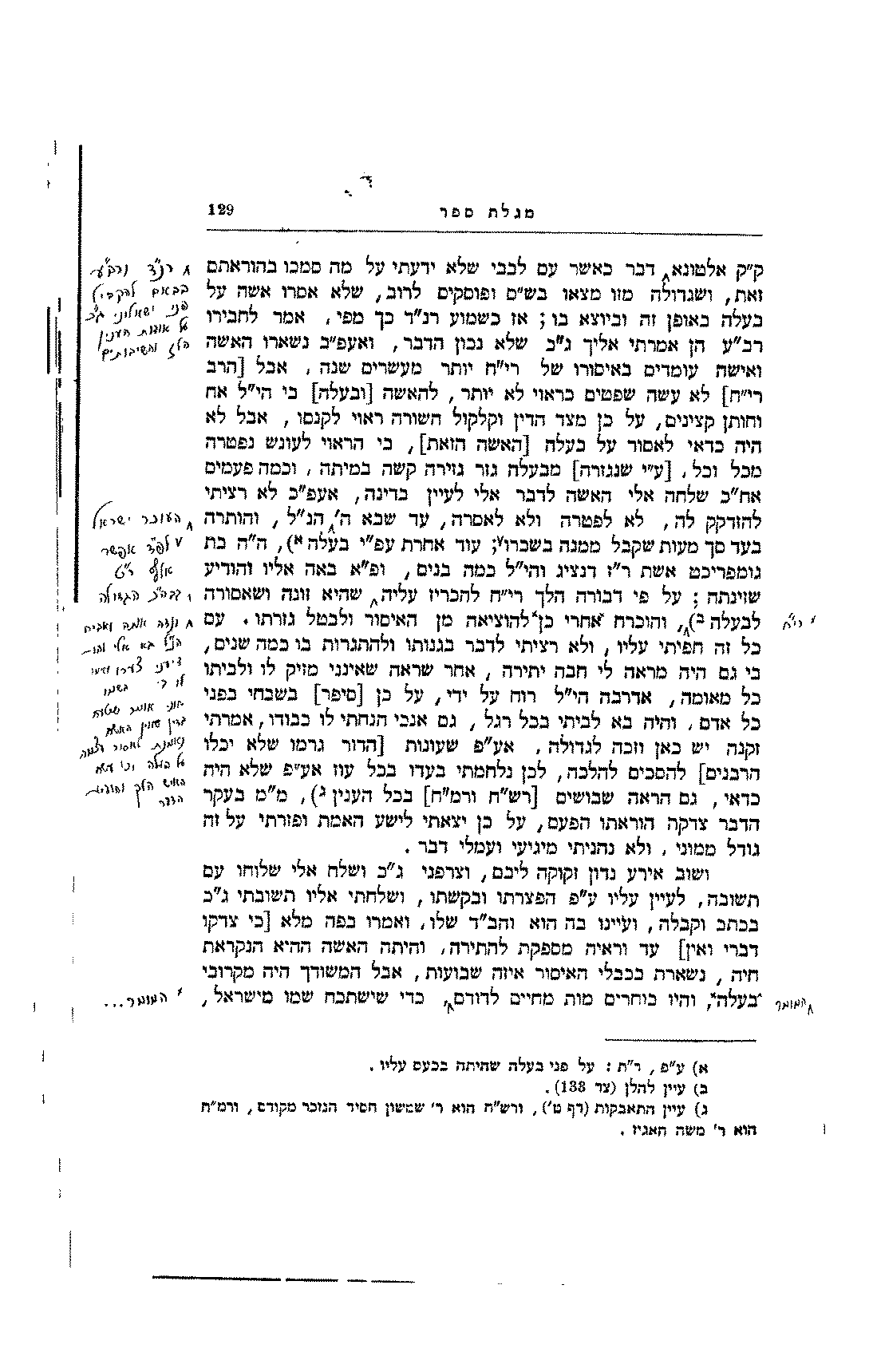
Margin readings in Scholem's copy (7)
| Printed anchor | Type (key sheet) | Mark | Reading | Certainty |
|---|---|---|---|---|
| ק"ק אלטונא ^. דבר כאשר עם לבבי | V: omission | caret; 6-line note in left margin | רנ"ד ורב"ע / בבואם להקביל / פני ושאלוני ג"כ / על אודות הענין / הלז והשיבותים | fairly sure |
| עד שבא ה' ^ הנ"ל, והותרה | V: omission | caret; 2-word note in left margin | העוכר ישראל | sure |
| שקבל ממנה בשכרו v ?; | V: omission | v mark (and a handwritten question mark in the line); 2-line note in left margin | לפ"ז אפשר / אולם ר"ט(?) | partial |
| להכריז עליה ^, שהיא זונה | V: omission | caret; 2-word note in left margin | בבה"כ הגדולה | sure |
| לבעלה ב) ^, והוכרח | V: omission | caret; 12-line note in left margin, left edge partly cut off | ונדה אותה ואבי[ה] / הנ"ל בא אלי והו[דיע] / דיני לדרוש ואמ... / לו כי ... בשמו / שוני אותו שוטה / בדין שאין האשה / נאמנת לאסור עצ[מה] / על בעלה וכן עשה / האיש הלז והודי[ע] / הדבר | partial |
| מקרובי בעלה x, והיו בוחרים | X: substitution | x mark after בעלה; note at the foot of the left margin, continues off the page | העומד(?) ... | partial |
| מות מחיים לדודם ^, כדי | V: omission | caret; no margin text seen | - | uncertain |
Page 130 (scan 148)
rose early to R. Y. Ḥ.'s door day after day, enticed him and prevailed over him (cf. Judg. 16:5). And on the word heard through the great broker [R. Z. permitted the woman], they suddenly did the whole thing at once for the bound woman [a], without telling anyone — by what law? out of impudence — to marry off "abroad" (Deut. 25:5) a levirate widow who stood under a presumption of prohibition. Me, the young one, he did not even call to be counted among those who permit; yet since I had been in that quorum to forbid, and my opinion had been accepted, he ought at least to have uncovered my ear and let me know the reason of the thing. At that time I was busy printing the book She'ilat Ya'avetz, and was just at that subject; as it seems to me, it had been written down with me since then, and I had also sent the copy of it to R. Y. Ḥ. with my responsum mentioned above. So I set this case too in my book. And since (?) the craftsman who set the type, my printer, was a young man [devoted] to R. Y. Ḥ., he revealed the matter to R. Y. Ḥ. [b], who went and complained of me over it to the parnassim and leaders. They did all his will, as he was accustomed to show favour in all the affairs of the community with private persons: for although he had great and mighty power and ability from His Majesty, and by the ordinance of the communities "without him no man shall lift up his hand" (Gen. 41:44) to judge any private person, he let the men of the community have all their desire, to lay a heavy yoke on private persons as they pleased and to cast excessive dread on them, as was right in their eyes and by the bent of their bare opinion alone. Over this the outcry grew very great, and there was no one to save, as I wrote above. Therefore they were at once ready for him in all he asked of them; they did not look closely into it, and they cast the guilt on their own heads. They acted forthwith to have a proclamation passed in the Great Synagogue against my printer, Aaron Setzer, and forbade his press. This poor man had his livelihood through me, with God's help, for I paid him the wage of his work generously and did him kindness: not only did I pay his wage in advance, but I also lent him a certain sum free, without even a pledge or a [bond]. Through this event they cut off this poor man's livelihood; his loan too, about a hundred Reichstaler, which I had trusted him with, was lost, and remained with him as a loan of favour and kindness. He cried out and was not answered; R. Y. Ḥ. "stopped his ear at the cry of the poor" (Prov. 21:13). I too "cried out like a crane, and no one answered". I went to the council of the community with the book Iggeret Bikoret in my hand. All the parnassim and leaders were gathered, and R. Y. Ḥ. sat with them at that time. I set out my claims before them, and my double complaint over the violence they were doing to the poor man, whose life hung on me at that time, and the wrong they were doing me by this strange deed, which they did without inquiry and investigation, only at R. Y. Ḥ.'s request. I said to them, "Hear now my words" (cf. Job 34:2): Behold, your head of the court sits here opposite me; let trustworthy men tell [whether] it was
Kahana's notes
- [a] Ha-zokukah: he means the woman bound to levirate marriage, as Ya'avetz says below (p. 132).
- [b] The pamphlet was called Ḥayyeta de-Kitra; see the book Hit'avkut (fol. 9).
השכימו לפתחו של רי"ח יום יום ופתוהו ויכלו לו, ועל פי הנשמע ע"י הסרסור הגדול ]ר"ז התיר האשה[, ואת הכל פתאום לפתע עשו להזוקוקה א, בלי הגיד לשום אדם, על מה דתא מהחצפא להשיא לשוק יבמה העומדת בחזקת איסור, אף כי אותי הצעיר לא קרא להיות נמנה להתיר; אחר שהייתי באותו מנין לאסור ונתקבלה דעתי, היה מהראוי עכ"פ לגלות אזני ולהודיעני טעמו של דבר. ובעת ההיא הייתי עסוק בהדפסת ספר שאילת יעב"ץ ועומד באותו ענין, כדומה לי שהיה כתוב אצלי מאז, וההעתק ממנו שלחתיו ג"כ לרי"ח עם תשובתי הנ"ל, על כן קבעתי גם נדון הלז אצלי תוך ספרי, ובי תולה אומן המסדר, ומדפיס שלי היה בחור ]אוהב[ לרי"ח, הוא גילה הדבר לרי"ח ב והלך וקבל עלי על זה לפו"מ, שהיו עושים כל רצונו באשר היה נוהג לישא פנים בכל עסקי הקהל עם יחידים, שאע"פ שהיה לו כח ויכולת גדול ועצום מן המיר"ה, וכפי תקנת הקהלות בלעדו לא ירים איש ידו, לדון שום יחיד, הוא היה מניח אנשי הקהל כל חפצם, להכביד עולם על היחידים כרצונם, ולהטיל עליהם אימה יתירה, כפי הישר בעיניהם ונטיות דעת המופשט בלבד, ועל זה גדלה הצעקה הרבה מאד, ואין מושיע כמש"ל, לפיכך נמצאו לו מיד לכל בקשתו מהם, ולא דקדקו אחריו והשליכו אשמם בראשם, ועשו מעשה תיכף ומיד להעביר כרוז בבה"כ הגדולה, על המדפים שלי אהרן זעציר, ואסרו הדפוס שלו, וזה עני היתה פרנסתו מצויה לו על ידי בעזה"י, שהייתי משלם לו שכר פעולתו, בעין יפה וגומל חסד עמו, לא בלבד להקדים לו שכרו, אבל גם הלויתי לו סך מסוים בחנם, ואף בלי משכון או בלתי ]שט"ח[, וע"י המאורע הלז קפחו פרנסתו של העני הלז, גם הלואתו שהאמנתיו לערך מאה ר"ט נאבד, ונשאר מלות חן וחסד אצלו, והיה צועק ואינו נענה; ורי"ח אוטם אזנו מזעקת הדל, אף אנכי צווחתי ככרוכיא ולית דעני; והלכתי לוועד הקהל וספר אגרת בקורת בידי, והיו נאספים כל פו"מ ורי"ח עמהם יושב אצלם בפעם ההיא, והצעתי דברי טענותי לפניהם, ותלונתי הכפולה על החמס שעושים לעני, שחייו תלויים בי בעת ההיא, והעושק שגורמים לי במעשה הזר, שעשו בלי דרישה וחקירה רק ע"פ בקשת רי"ח, ואמרתי להם שמעו נא מילי: הנה האב"ד שלכם יושב כאן לעומתי, יגידו נאמנים ]אם[ היה
- [א] הזוקוקה, הכונה הזקוקה ליבום וכמו שאמר יעב"ץ להלן (צד 132).
- [ב] שם הקונטרס היה נקרא חייתא דקיטרא עיין בס' התאבקות (דף ט').
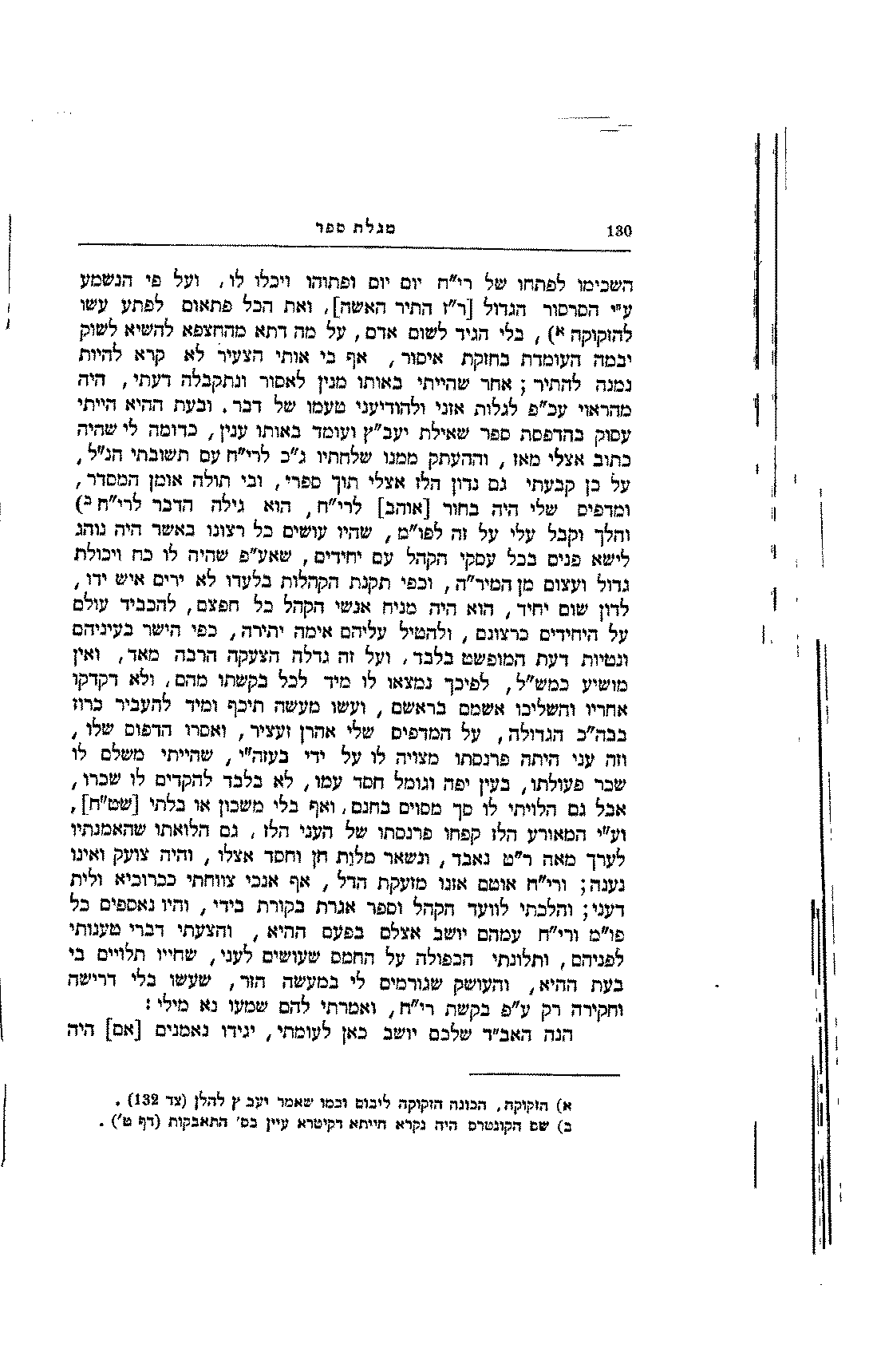
Page 131 (scan 149)
my heart, also in giving rulings, since the days I have been here. Tell now whether I [meddled] ⟨S: "I involved myself"⟩ in the affairs of the congregation or of private persons of my own will. Only when I was summoned and asked by you or by your head of the court was I sometimes called, against my will and against my wish, to look into a case of law and ruling — for where the chip of the beam strikes [one, one cannot escape] — and I could not refuse the old man and your honours. Once I strove his strife and fought for him with all my strength, when he took counsel with me; I also wrote long responsa to rescue him from the hand of his critics, and also raised them on the altar of the press "for acceptance before the Lord" (Lev. 1:3), to defend the Torah of truth with all might; and I spent my own money on it, from my own pocket alone, without any help or benefit in the world, as you see in this book, Iggeret Bikoret, which I have set before you. Then my words were good, right, pleasing and accepted by your head of the court. And now in this case, when they compelled [me] once more to look into his ruling — though the matter was hard in my eyes, for [I am] one of those who fear to give rulings — I could not escape doing his desire, and did his will. This time I could not agree with him, for there is no favouring in the Torah; and so the court [heard] my words and admitted with full mouth that that woman may not be permitted. And now suddenly a deed is done, without notice given first [to a man] like me, this day. Although "I am young in years and he is very old" (Job 32:6), nevertheless, since at his request I undertook to look into the matter and write on it, justice requires [that] he should not do so great a deed without uncovering my ear and letting me know his reason for going back on the first agreement and changing his will within a single hour — especially as it is a matter of forbidden unions, and we all sit in one ship, and no one may bore a hole beneath himself in the place where he sits, and all Israel are sureties for one another; all the more the one who was asked and joined to the matter: the duty lies on him. Those who own the beam must go into the thickness of the beam, as one agrees (?) who pursues his soul's mischief (?). At any rate I want to know the reason for the permission now; though I kept myself out of it at first, and never said, Accept my opinion; rather I say, I am your disciple and will drink your water. "If the waters are sure" (Isa. 33:16), it will not be to me "as a deceitful brook" (Jer. 15:18). Now, so that your words may be justified, "and I will not remove the speech of the trusty" (Job 12:20). But he was like a mute who did not open his mouth to answer, "either good or bad" (Gen. 31:24); only the parnassim and leaders spoke for him and said to me: He need not give a reason or a proof; what he has done is done and cannot be undone. And I said: Not so; he is bound and obliged, not only to clear himself of suspicion and to show that he is "guiltless before the Lord and before Israel" (Num. 32:3), but it is Torah and we must learn, to fix the law; and "he who withholds corn" (Prov. 11:26) shall not be free of punishment. With all the reasons I multiplied in my words, to tip him to the side of merit so that he would explain his ruling, I gained nothing: as one speaking to the trees and the stones. But the parnassim and leaders said: So we understand and decree, that I shall not meddle in this matter and shall not publish it in print at all. Then I answered them: I do not want your decree, harder than Pharaoh's, who did not decree to annul the Torah and break the law; and since you
לבי גם בהוראה מימי היותי כאן, והגידו נא אם ]אתערב[ בעסקי צבור או יחידים מרצוני, רק כאשר אני נתבע ונשאל מאתכם או מאב"ד שלכם, על כרחי ונגד רצוני נקראתי לפעמים לעיין בדין והוראה, כי היכא דלמטייא שיבא מכשורא, ולא יכולתי לסרב לזקן ולכבודכם; ופ"א רבתי ריבו ונלחמתי בעדו בכל כחי כאשר נמלך בי; ג"כ כתבתי תשובות ארוכות להצילו מיד משיגיו, גם העליתים על מזבח הדפוס לרצון לפני ה', להגין על תורת אמת בכל עוז, והוצאתי על זה ממוני מכיסי בלבד, בלי שום עזר והטבה בעולם, כאשר אתם רואים בזה הספר אג"ב שהנחתיו לפניכם, אז היו דברי טובים נכוחים רצויים ומקובלים להאב"ד שלכם, ועתה בנדון הלז שהכריחו עוד לעיין בדינו, אע"פ שהיה הדבר קשה בעיני, כי מיראי הוראה ]אנכי[, לא יכלתי מלט ממצוא חפצו ועשיתי רצונו, ובפעם הזאת לא יכולתי להסכים עמו, כי אין משא פנים בתורה, וכן ]שמעו[ ב"ד דברי, והודו בפה מלא שאין להתיר האשה ההיא; ועתה פתע פתאום נעשה מעשה, בלי הקדמת ידיעה תחלה ]של איש[ כמוני היום; אף כי צעיר אנכי לימים והוא ישיש וזקן, מ"מ אחר שלבקשתו נטפלתי לעיין ולכתוב בדבר, הדין נותן ]שלא[ יעשה מעשה גדול כזה, בלי גילוי אזני ולהודיעני טעמו, בחזרתו מהסכמה הראשונה, ושינוי רצון על שעה חדא; ביחוד היותו דבר שבערוה, ואנחנו כלנו יושבים בספינה אחת, ולא יוכל אחד לקדוח תחתיו במקום שיושב עליו, וכל ישראל ערבים זה בזה, מה גם הנשאל והמצורף לדבר, עליו מוטל החיוב; על בעלי הקורה להכנס בעובי הקורה כהסכם אשר ירדוף הוות נפשו, ועכ"פ אני רוצה לידע טעם ההיתר עכשיו, אע"פ שהייתי משמיט עצמו בתחלה, ולא אמרתי קבלו מעולם דעתי, אכן אני אומר תלמידך אני ומימך אשתה, אם יהיו מים נאמנים לא תהיה לי כמו אכזב, עתה למען תצדק דבר דבריך, ולא אסיר שפה לנאמנים. והוא היה כאלם לא פצה פיו לענות מטוב עד רע, אך הפו"מ מדברים בעדו ואומרים אלי: אינו צריך לתת טעם וראיה, ומה שעשה עשוי ואין להשיב, ואני אמרתי לא כן הוא, אבל מחוייב וחייב הוא, לא לבד להוציא עצמו מחשד ולהראות שהוא נקי מה' ומישראל, אבל תורה הוא וללמוד אנו צריכין לקבוע הלכה, ולא יפטר מעונש מונע בר; ועם כל מה שהרביתי אותותי בדברי טעם, להכריעו לכף זכות שיברר הוראתו לא הועלתי, כמדבר אל העצים ואל אבנים, אך הפו"מ אמרו כך אנו מבינים וגוזרים, שלא אטפל בדבר הזה שלא אפרסם כלל בדפוס, אז עניתי להם: אי אפשי בגזרתכם הקשה משל פרעה, שלא גזר לבטל תורה ולהפר דת, ומאחר שאתם
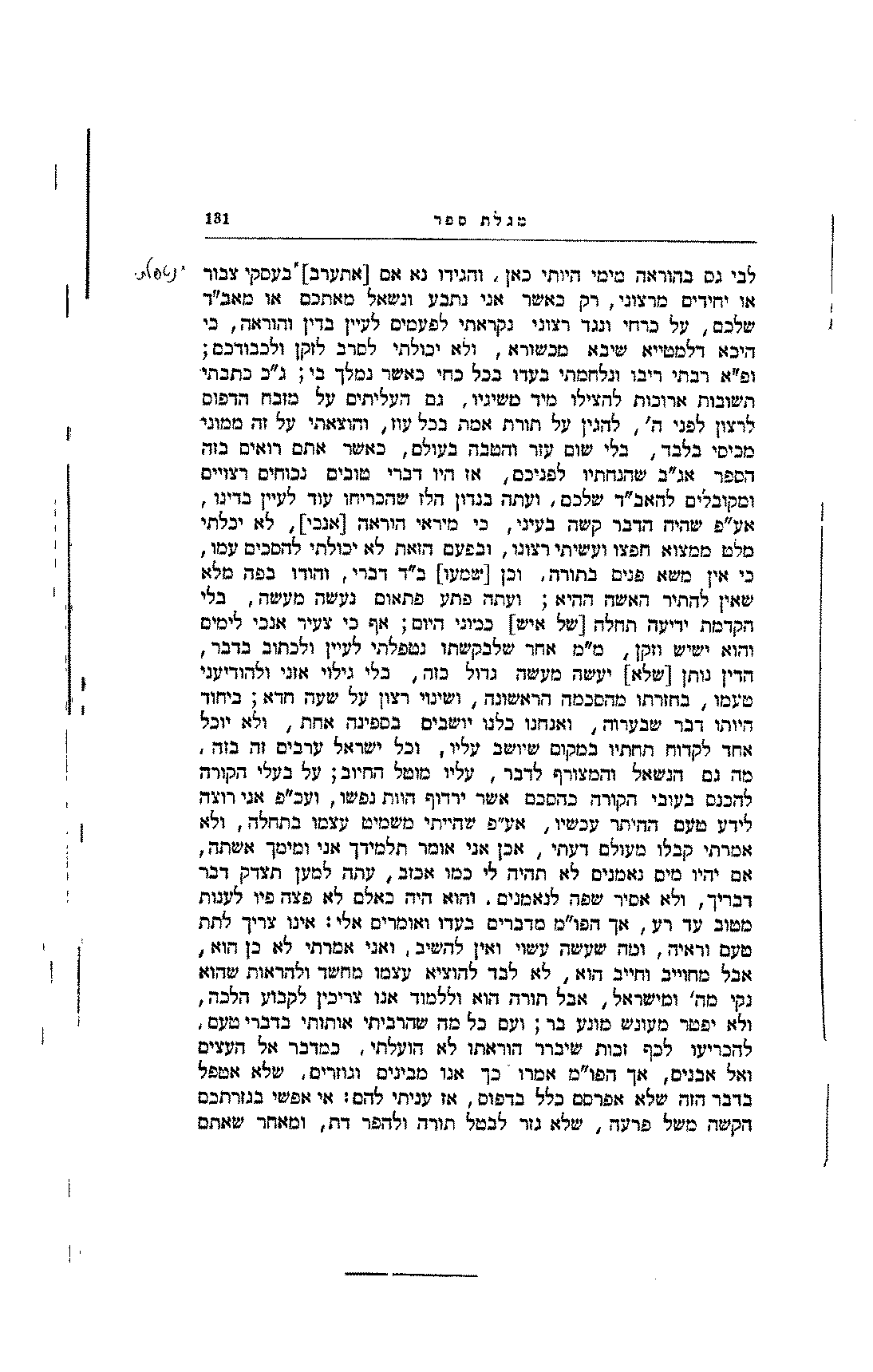
Margin readings in Scholem's copy (1)
| Printed anchor | Type (key sheet) | Mark | Reading | Certainty |
|---|---|---|---|---|
| והגידו נא אם [אתערב] x בעסקי צבור | X: substitution | x mark after the bracket; one word in left (outer) margin | נטפלתי | fairly sure |
Page 132 (scan 150)
come at me in roundabout ways, and I speak words of reason and have no one to hear me, and none of you answers his words with knowledge and understanding, while he wants to be thought a wise man who keeps silent — therefore I may not keep silent, and I pay no heed to your decree, for it is of your own making; the judgement of the Torah is not handed over to you. I will write, if need be (?), to the great men of our time, and seek the word of the Lord, and we shall see whose word will stand (cf. Jer. 44:28); "at their mouth shall the matter be established" (Deut. 19:15) — not as you say and decree without reason [a]. With this I took leave of you in anger and wrath.
Afterwards they sent their messenger, the cantor, to me again, with the word in his mouth that I should take care and beware not to print this affair, and not to publish it in a book all the days of R. Y. Ḥ.'s life. In my place I stood ready to answer them boldly that I would do as my Maker directs me. Nevertheless I ruled my spirit and kept their decree, for I said: I am not obliged to give my life for this; it is enough for me that "I have delivered my soul" (Ezek. 3:19), and the Lord will repay the evildoer according to his evil, and the chain hangs on whoever can protest, not on me, for these men are too hard for me (2 Sam. 3:39). So I did not write to anyone outside. But I heard that the rabbi R. A. of Brody, of blessed memory, who was head of the court in Amsterdam at that time — R. Y. Ḥ. had consulted him too and asked his opinion, and he did not agree to permit but only to forbid. When he heard of the marriage of the bound woman, he was very angry, and "bowed down so that he could not hear" (Isa. 21:3).
Before I went out of the seat of the council of the parnassim and leaders, to which I had come to complain of their decree, I spoke harshly to R. Z. F. here, who was R. Y. Ḥ.'s advocate and gave him strong support, and I said these words to him: Hear now, R. Z.: I know that you do not say this from your own heart, nor do you support R. Y. Ḥ. against the law of the Torah; you are afraid of Popper (for the man ⟨S: "the apostate"⟩ was his uncle, and R. Z. was bent under R. Y. P., as his end proved); for this reason ⟨S: "but for"⟩ you would not have done this to me. For our many sins, not many weeks passed before (pursued) [R. Z. F.] was ruined in a great bankruptcy and remained Popper's debtor; at R. Y. P.'s suit they sentenced R. Z., peace be upon him, and his mind was deranged, God save us, in an evil way. Then also began to be fulfilled what my father, of blessed memory, said about the house of R. B. K. From then on all the descendants of R. B. K. went down lower and lower, to "a loaf of bread" (1 Sam. 2:36), God save us.
[As for the book], which was stopped in the middle, I finished it after R. Y. Ḥ.'s death, with God's help, and then I brought it out, as the parnassim and leaders had permitted me, as said above. In the course of [time] the truth [became known] that the man ⟨S: "the apostate"(?)⟩ was still alive several years after the deed of the bound woman's marriage mentioned above: people let me know this, on the word of valid witnesses who were in [that] place: "if your doubts are so," etc. A wonderful thing also happened with this couple, which did not come about properly: the woman could not become clean for the man who married her,
Kahana's notes
- [a] Ya'avetz hinted at this in the book Ammudei Shamayim, saying: "That the godless man reign not, that there be none to ensnare the people (Job 34:30) — woe, woe, alas and lament, that we have reached the days of Ahaz, who seized the houses of study, so that in a known district they forbade any new thing to be devised from now on, and shut the door before those who toil in Torah for the sake of Heaven". See Toledot Ya'avetz (p. 16).
באים אלי בעקיפין, ואני אומר דברי טעם ושומע אין לי, אין עונה אמריו מכם בדעת ובתבונה, והוא רוצה להיות נחשב חכם מחריש, לכן איני רשאי לשתוק ואינני משגיח בגזרתכם כי זו משלכם, אין משפט התורה מסורה בידכם, אנכי אכתוב למ"א לגדולי זמנינו, ואדרוש דבר ה' ונראה דבר מי יצדק, על פיהם יקום דבר, לא כמו שאתם אומרים וגוזרים בלי טעם א, ובזה נפטרתי מאתם בכעס וחמה. אח"כ הוסיפו לשלוח שלוחם החזן אלי, ודבר בפיו שאשמר ואזהר שלא להדפיס המאורע הלז, ושלא לפרסמו בספר כל ימי חיי רי"ח, ואני במקומי הייתי עומד לענות להם עזות, שאני אעשה כפי שיורני קוני, מ"מ משלתי ברוחי וקיימתי גזרתם, כי אמרתי אין אני מחוייב למסור נפשי על זאת, די לי שאני נפשי הצלתי וישלם ה' לעושה הרעה ברעתו וקולר תלוי במי שיוכל למחות לא בי, כי האנשים האלה קשים ממני, על כן לא כתבתי לשום אדם על פני החוץ, אבל שמעתי שגם הרב מהר"א מבראד ז"ל, שהיה אב"ד באמשטרדם בעת ההיא, גם בו נמלך רי"ח ושאל דעתו, ולא הסכים להתיר כי אם לאסור, וכששמע מעשה נישואין של הזקוקה חרה לו מאד ונעוה משמוע, ובטרם יצאתי מבית מושב ועד פו"מ לקבול על גזרתם, דברתי קשות לרז"ף פה שהיה מליץ בעד רי"ח ותומך בידו מאד, ואמרתי לו כדברים האלה: שמע נא ר"ז: ידעתי כי לא מלבך אתה אומר ומחזיק ביד רי"ח שלא כדת של תורה, אתה מתיירא מפני פופרש (שהאיש היה דודו ור"ז כפוף תחת רי"פ כאשר הוכיח סופ ו מפני זה לא היית עושה לי כך. בעו"ה לא יצאו איזה שבועות והיה (רדף) ]רז"ף[ לפליטה גדולה, ונשאר ב"ח לפופרש, ולתביעתו של רי"פ דנו לר"ז ע"ה, ונטרפה דעתו ר"ל בענין רע, והתחיל להתקיים ג"כ מ"ש אמ"ה ז"ל על בית רב"ך. מן אז ירדו מטה מטה כל י"ח של רב"ך עד ככר לחם ר"ל. ]ובדבר הספר[ שנשתקע באמצעו עד אחר פטירתו של רי"ח גמרתיו בעזה"י, ואז הוצאתיו לאור כאשר הרשוני פו"מ כנ"ל, ובמשך ]הזמן נודע[ האמת שהאיש עודנו חי כמה שנים אחר המעשה עם נשואי הזקוקה הנ"ל, ע"פ עדים כשרים שהיו במקום ]ההוא[ הודיעני כזאת ב"א: אם ספקות שלכם כך כו'. גם אירע דבר נפלא בזוג זה שלא עלה כהוגן, כי לא יכלה האשה להטהר להאיש ההוא שנשאה
- [א] ועל זה רמז יעב"ץ בס' עמודי שמים לאמר: ממלוך אדם חנף ממוקשי עם, וי וי הי ונהי, שהגענו לימי אחז שאחז בתי מדרשות, שאסרו במחוז ידוע לחדש דבר מעתה וסגרו הדלת בפני עמלי תורה לשם שמים, עיין תולדות יעב"ץ (צד ט"ז).
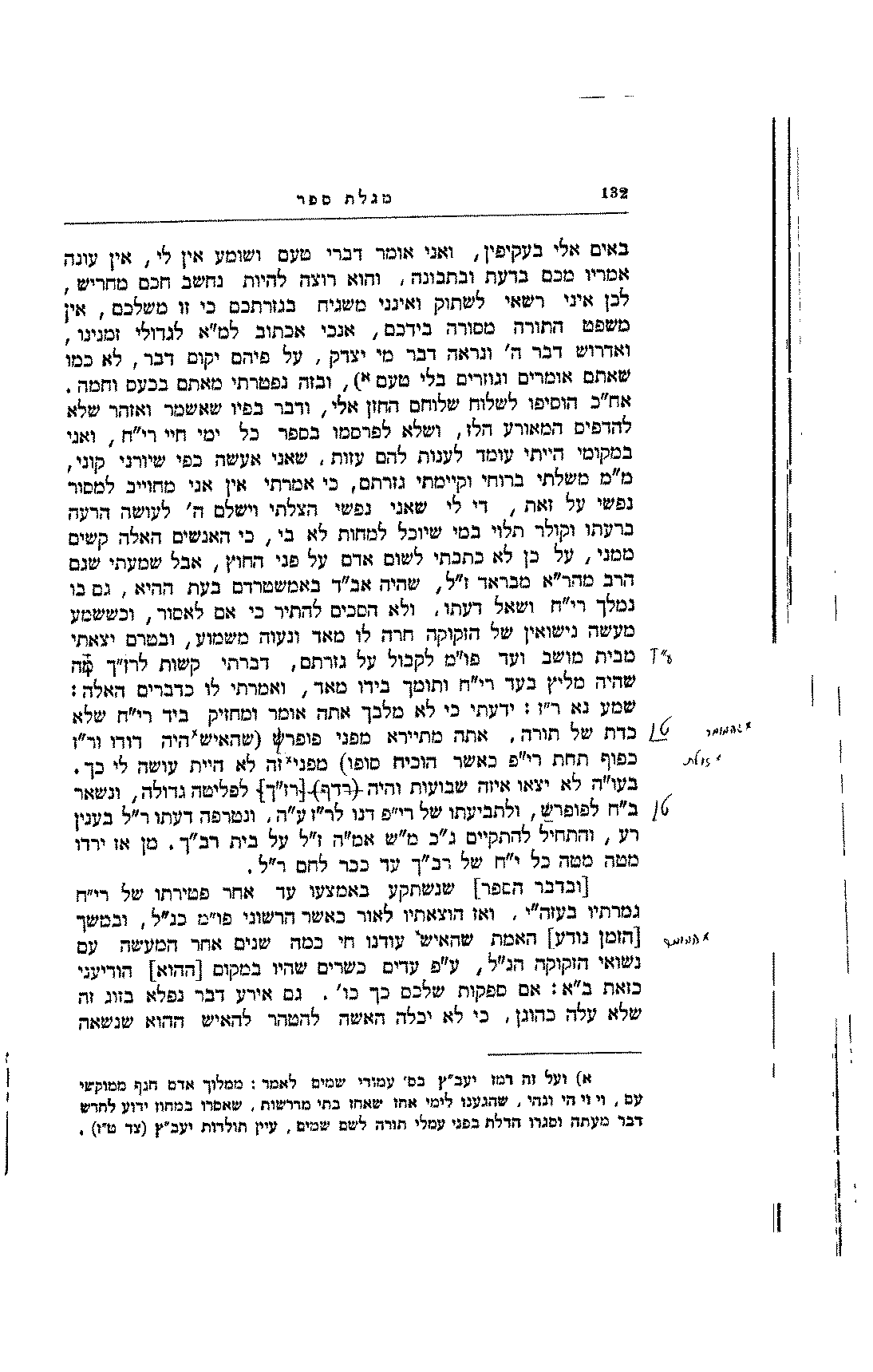
Margin readings in Scholem's copy (6)
| Printed anchor | Type (key sheet) | Mark | Reading | Certainty |
|---|---|---|---|---|
| ובטרם יצאתי מבית מושב ועד פו"מ (line beside it) | — | pencil sign 'T%' beside the line, next to the print; not a collation note | - | sure |
| אתה מתיירא מפני פופרש (שהאיש x היה דודו | X: substitution | x mark after the word; one word in right margin | שהמומר | fairly sure |
| כדת של תורה (line beside it) | — | pencil sign like '16' (an underlined ט?) beside the line, next to the print; not a collation note | - | sure |
| כאשר הוכיח סופו) מפני x זה לא היית עושה לי כך | X: substitution | x mark after the word; one word in right margin | זולת | fairly sure |
| ב"ח לפופרש (line beside it) | — | pencil sign like '16' beside the line, next to the print; not a collation note | - | sure |
| [הזמן נודע] האמת שהאיש x עודנו חי | X: substitution | x mark after the word; one word in right margin | המומר(?) | uncertain |
Page 133 (scan 151)
unlawfully, for she was a widow fully bound to her levir; and so Heaven kept them apart from the forbidden thing. [After some] years both of them died without her having borne him [a child], although the woman was young in years and had had children by her first husband, who died in his lifetime; and her second husband, who married her in a forbidden way, had children by his first wife and also by a wife he married after her — although R. Y. Ḥ. denied what was known, as I wrote [in my book mentioned above].
Another thing happened once in my presence. A woman came to him and said that she had been defiled while under her husband. He was a respected householder of the holy community of Altona, called R. Z., and he was in Danzig at that time. He had several children by her, and she used to stir up quarrels with him, because he had left her for some time, separated from her and travelled to another country; for she was wasteful beyond measure, did not spare his money and did not keep his house. So he hated her, left her and went away, and she lived in straits with her children. It seems she did this to take revenge on him. That woman was also the daughter of a distinguished man, B. Gumprecht, who had been a great leader in former times and by then had already lost his property. Therefore R. Y. Ḥ. took no more account of him — in his way of favouring the rich men of his community, even where there is no room for favour, as said above — and he proclaimed her a harlot and a whore. Her father came to me and told me, with a great complaint, what had been done to his daughter with no one protesting. I said that if things were so, then certainly R. Y. Ḥ. had not done well, and he must not keep silent and bear it; for the matter does not touch honour alone, but it is against the law, since a woman is not believed when she forbids herself to her husband. It may lead to multiplying bastards in Israel, if he compels the husband to give a forced divorce unlawfully; it also brings slander on the children, besides her own blemish and the blemish of the family: "no such thing ought to be done in Israel" (2 Sam. 13:12). So I advised him to go to the parnassim and leaders and tell them all that had been done to his daughter against the Torah. He did so, and my advice helped, thank God: the men of the community decreed that he must release the woman from the prohibition and from the sentence he had passed on her, and they compelled him to go back and make another proclamation, publishing that she was pure.
For in those days the parnassim and leaders ruled over that old head of the court, though his hand was strong over the poor and the afflicted; for he had power and authority from His Majesty to judge and to rule, to fine and to punish, and no one could stay his hand. Surely he should have had dominion over the parnassim and leaders; they should have been bent and subject under him. But he humbled himself beneath them; of his own will he turned to their obedience and did their commands and decrees. By this he found favour in the eyes of the strong men of the congregation, and they praised him for humility. But woe to such a faulty humility, which is nothing but flattery: to strengthen the hand of the rich and the strong men, to subject private persons to their will, for his own near benefit; his good profit came to him from them in peace and love, for in this way they repaid one another. He
שלא כהוגן, שהיתה יבמה זקוקה גמורה, ולכן מן השמים הפרישום מן האיסור. ]אחר איזה[ שנים נפטרו גם שניהם בלי שילדה לו, אע"פ שהיתה האשה ילדה בשנים, והי"ל בנים מבעלה הראשון אבל מתו בחייו, גם בעלה השני שנשאה באיסור, הי"ל בנים מאשתו הראשונה, גם מאשה שנשא אחריה, אע"פ שרי"ח הכחיש הידוע כמ"ש ]בספרי הנ"ל[. עוד קרה פ"א בפני, שאשה אחת באה אליו ואמרה שנטמאת תחת אישה, שהיה ב"ב נכבד מקק"א היה נקרא ר"ז, והיה בדנציג בעת ההיא, ולו כמה בנים ממנה והיתה מרגלת קטטה עמו, על שעזבה זמן מה ופירש ממנה, ונסע לארץ אחרת, לפי שהיתה מפזרת בלתי הסתפקות, ולא חסה על ממונו וביתו אינה שומרת, ועל כן שנאה והניחה והלך לו, והיא יושבת בדוחק עם בניה, כנראה להנקם ממנו עשתה זאת, והאשה ההיא ג"כ בת איש אחד מסוים, ב' גומפריכט שהיה קצין גדול לפנים, ובעת ההיא כבר ירד מנכסיו, ע"כ לא עשה רי"ח עוד חשבון ממנו, בדרכו לישא פנים לעשירי קהלתו אפילו במקום שאין משא פנים כנ"ל, והכריז עליה שהיא פרוצה זונה, ואביה הנ"ל בא אלי וסיפר לי בקובלנא רבה על הנעשה לבתו באין מוחים, ואמרתי שאם כך הדברים, אזי ודאי לא יפה עשה רי"ח, ואינו רשאי לשתוק ולסבול, כי אין הדבר נוגע לכבוד בלבד, אבל הוא שלא כהלכה, לפי שאין האשה נאמנת לאסור עצמה על בעלה, ויכול לגרום להרבות ממזרים בישראל, אם יכוף את הבעל לתת גט מעושה שלא כדין, גם יש בו משום הוצאות לעז על הבנים, מלבד פגמה ופגם משפחה, לא יעשה כן בישראל; לפיכך יעצתיו שילך אל פו"מ ויספר להם כל העשוי לבתו שלא כתורה, וכן עשה והועילה עצתי ב"ה, כי אנשי הקהל גזרו עליו שיוציא האשה מן האיסור ומן הג"ד שפסק עליה, והכריחוהו לחזור ולעשות כרוז אחר לפרסם שהיא טהורה. כי בימים ההם פו"מ מושלים על האב"ד הזקן ההוא, עם שהיתה ידו תקיפה על העניים ומרודים, כי לו היה כח ורשות מן המיר"ה, לדון ולהורות לקנוס ולענוש ולית דימחי בידו, ובודאי הי"ל ממשלה על הפו"מ, הם היו צריכין להיות כפופים ומוכניים תחתיו, אלא שהוא הכניע עצמו התחתיהם, ברצונו סר למשמעתם ועשה מצותם וגזרתם, ובזה מצא חן בעיני תקיפי הצבור ומשבחים אותו בענוה; אבל אוי לענוה פסולה כזאת שאינה אלא חנופה, להחזיק ביד העשירים וגברי תקיפי, לשעבד ביחידים כרצונם להנאתו הקרובה, ותועלתו הטובה מצויה לו עמהם בשלוה ואהבה, כי בזה האופן היו כגומלים זא"ז, הוא
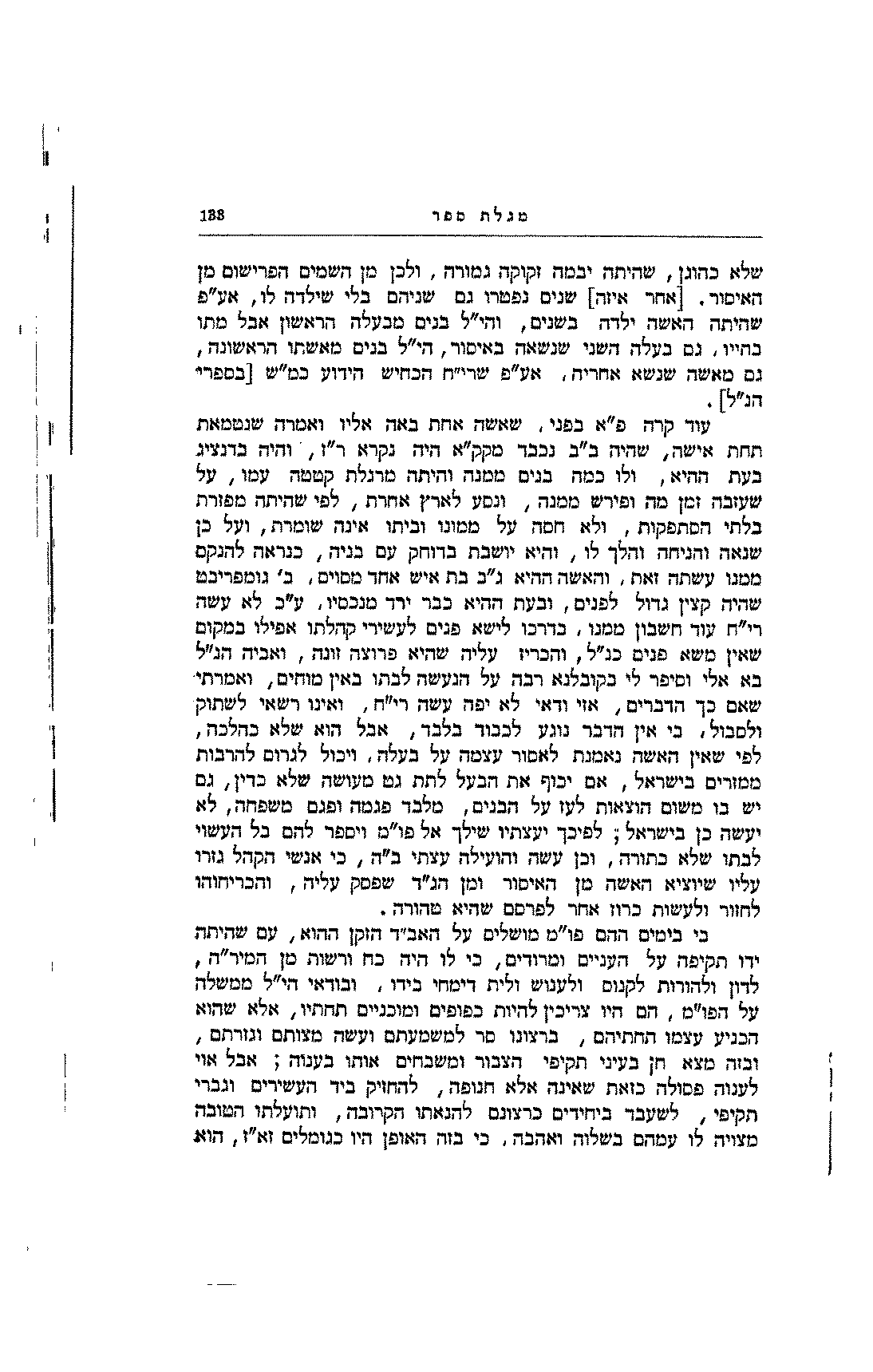
Page 134 (scan 152)
strengthened their hands in every wrong they did to private persons. Those who had no hand with them and were not in their favour, and those who were not dear to him — and they too supported his hands — when he perverted the way for them, they "cried out violence and were not answered" (cf. Job 19:7): "between the midwife and the woman in labour," etc. [a]. To people from whom he had no benefit he was not humble, but hard as stone. In this alone he behaved like a scholar: "taking revenge and bearing a grudge like a serpent" (b. Yoma 23a). Whoever he had some grudge against in his heart, he lay in wait for him and did not rest until he had taken his revenge on him. As for the perversions of justice he committed, "the bed is too short to stretch oneself" (Isa. 28:20), for a large book would not hold them. Before midday he would rule one way, and after midday "another spirit was with him" (Num. 14:24). And so he and his court were suspected of bribery in particular, and there were many grounds for the thing. A man held to be trustworthy told me that he had a case before his court, and one of the judges asked what his reward would be if he decided the case in his favour; and there was an unceasing rumour that they demanded their share with their own mouths. Woe to the ears that hear such things, woe to the generation in whose days such a thing came about! From estates he took whatever his heart desired, things beyond measure. I heard that from the estate of Solomon Yaff' he took, of plain silverware, a weight of eight hundred loth for his share, and many more like this. From there he grew rich, and gave lavish dowries to his daughters. But "as it came, so it went" (cf. Eccl. 5:15) to perdition: for the daughters he married off died in his lifetime, some years after their weddings, and he lost his daughters together with the great wealth he had given them; much of what he had robbed also went to perdition, and that wealth was lost "in an evil venture" (Eccl. 5:13), through the evil breeding there was in his house, as said above, besides what is not mentioned here.
But this community grew poor in his days, for our many sins, through the sin of robbery and false oaths, which multiplied in his time, for they were a joke in their eyes and counted as permitted. Therefore in the end he lost the Jewish jurisdiction over Hamburg, where his hand had been strong at first, as in Altona; for so the Three Communities had been founded: they had one judgement in civil cases, by their rabbi, the head of the court. But the councillors of that great city mentioned were weary of hearing the people's outcry against R. Y. Ḥ., their rabbi, in judgements and rulings; so they took this power from them and decreed that no one from the community of Hamburg should go before the head of the court of the Three Communities, to this day (and from ⟨S: "the abomination"⟩ Eybeschütz ⟨S: "may the name of the wicked rot"⟩ the power was taken away in Altona too, as I wrote above with God's help: "and it came to pass in the days when the judges judged" (Ruth 1:1), "who turn aside to their crooked ways" (Ps. 125:5)).
And what shall we say of his teaching, his novellae, his plain interpretations and his sermons? They were truly "jest and mockery"; it would not be believed if all the madness were told, and the idle words, fancies, "vexation of spirit and vanities" (Eccl. 1:14), so that all who heard them filled their mouths with laughter in spite of themselves. And at his rulings and decisions every man of knowledge and understanding would be astonished, as they are written down with me; and these are only a little part
Kahana's notes
- [a] "Between the midwife and the woman in labour, the son of the poor woman perished" (Gen. Rabbah 60).
מחזיק ידיהם בכל עולה שהיו עושים ליחידים, שלא הי"ל יד אצלם ולא מרוצים להם, וגם המה תומכים בידיו, כשהיה מעביר הדרך למי ומי שלא היו חביבים לו, והיו צועקים חמס ואינם נענים, בין חייתא למחבלתא וכו' א, ולאנשים שלא הי"ל תועלת מהם, לא היו עניו אך קשה כאבן, ובזה בלבד היה נוהג כת"ח נוקם ונוטר כנחש, למי שהיה לו עליו איזה טינא בלבו, היה אורב לו ולא שקט עד שנטל נקמתו ממנו. ומעוות הדין שעשה קצר המצע מהשתרע, כי לא יכילהו ספר גדול. ולפני חצות היום היה פוסק כך, ואחר חצות היתה רוח אחרת אתו. וכך היה הוא והב"ד שלו חשודים על השוחד ביחוד, והרבה רגלים היו לדבר הזה, וספר לי אדם מוחזק נאמן, שאירע לו דין לפני ב"ד שלו, והיה דיין אחד שואל מה יהיה שכרו כשיפסוק הדין לטובתו, וכ"ה קלא דלא פסיק שהיו תובעים חלקם בפיהם. אוי לאזנים שכך שומעות, אוי לדור שכך עלתה בימיו! ומעזבונות היה לוקח מה שלבו חפץ, כדברים שאין להם שיעור. ושמעתי שמעזבון של שלמה יאפ', לקח פשוט כסף שלו משקל ח' מאות לויט לחלקו, וכהנה רבות עמו. משם נתעשר, והפריז נדוניות גדולות לבנותיו; אבל כאשר בא כן הלך לטמיון, כי הבנות שהשיא מתו בחייו, איזה שנים אחר נישואיהן, והפסיד בנותיו עם הממון רב שנתן להן, גם הרבה שגזל הלך לטמיון, ואבד העושר ההוא בענין רע, בתרבות רעה שהי"ל בתוך ביתו כנ"ל, ומלבד שלא נזכר כאן. אך הקהל הלז נתדלדל בימיו בעו"ה, בעון הגזל ושבועות שוא שנתרבה בזמנו, שהיה שחוק בעיניהם ונחשב כהיתר. ולכן היה סופו שאבד דיני ישראל מהמבורג, אשר היתה ידו תקיפה שם בתחלה כמו באלטונא, כי כן נתיסדו הג"ק: משפט אחד היה להם בדיני ממונות ע"פ הרב אב"ד שלהם, אבל שרי יועצי המקום הגדול הנזכר, נלאו לשמוע צעקת העם על רי"ח הרב שלהם במשפטים ופס"ד, לכן לקחו מידם זה הכח, וגזרו שלא ילך אדם מקהל המבורג לפני האב"ד דג"ק עד היום (ומאייבשיצר נלקה גם הכח באלטונא כמש"ל בס"ד, ויהי בימי השופטים המטים עקלקלותם). ומה נאמר מלמודי חדושיו ופשטיו ודרשותיו, גרמו ממש חוכא ואיטלולא, ולא יאומן כי יסופר כל השגעונות ודברים בטלים דמיונות ורעיון רוח והבלים, שכל שומעיהם ימלאו פיהם שחוק בע"כ, ועל פסקיו והוראותיו ישתומם כל יודע מבין, כאשר המה בכתובים אצלי, והמה רק קצת וחלק
- [א] בין חייתא למחבלתא אזל ברא דעלובתא (ב"ר פ' ס').
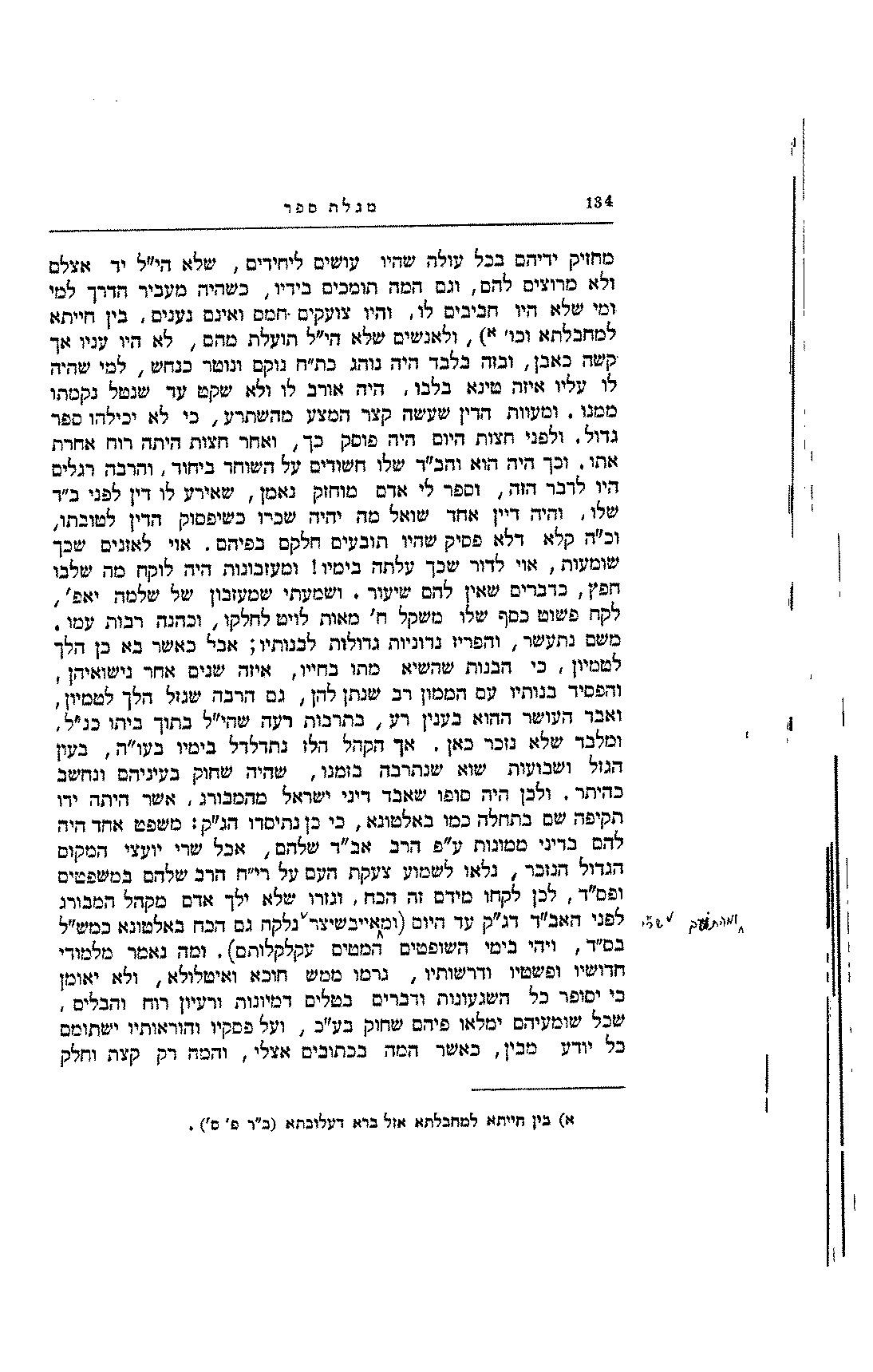
Margin readings in Scholem's copy (2)
| Printed anchor | Type (key sheet) | Mark | Reading | Certainty |
|---|---|---|---|---|
| עד היום (ומ ^ אייבשיצר | V: omission | caret below the word; one word in right margin | ומהתועב | fairly sure |
| (ומאייבשיצר ^ נלקה גם הכח | V: omission | caret (v) after the name; one word in right margin | שר"י | sure |
Page 135 (scan 153)
of much. His book too, which he brought to print as a witness — I have set a little of it as a mere sample in the book She'ilat Ya'avetz. Trustworthy men told me that in the holy community of F[rankfurt] too, the head of the court, our teacher R. Y. Katz, of blessed memory, and other scholars said that the book Keneset Yeḥezkel [a] ought to be burned. Of his errors and mistakes in simple things I will also mention only a very little, as a sign.
In Altona it happened once that when the cantor R. Y., peace be upon him, read from the Torah in the synagogue before the congregation "and you shall look upon the birthstool" (Ex. 1:16) with kamatz under the alef, R. Y. Ḥ. rebuked the cantor and said to him: You are wrong, for one must say ha-avanim with kamatz under the bet, meaning stones (because of what Rashi explained [?]). So expert was he in reading the written [Torah]; and so did he know the oral [Torah], in the Talmud. Once he taught the Gemara of Megillah and came to the passage: "What did Esther see that she invited Haman? R. Eliezer says: She hid traps (paḥim) for him" [b]. He thought it was like pakhim, jugs, as in "a jug in a spoon", and explained the word: she hid jugs for him, Krüglich in German. And in Rosh ha-Shanah: "All who come into the world pass before Him like benei maron, and all of them are surveyed in one survey (sekirah)" [c]: he explained that they are marked with red paint (sikra), as one marks the tithe. And many such things were with him; whoever hears will laugh [at him, and there is no] need to lengthen on this. Far be it from me to mention anything but what is very well known and cannot be denied; and at this time there are still several people who know of these things and the like.
When he first sat on the rabbinic throne of the Three Communities, the pious man, eminent in Torah, R. G. Schnapper, of blessed memory, said of him: If R. Y. Ḥ. had come before me, when I was treasurer of the Talmud Torah, for permission to be a children's teacher in the Three Communities, I would not have given it to him. With all this he ruled with great pride and with violence beyond measure; and even so he got himself a name as a humble and patient man, also through the sins of the generation. In truth his eye was evil; he did all his heart desired, and sat and made sport of the people who were pressed by him. They were angry at him and at his evil affairs, and sometimes, out of their pain, they flung hard words against him from the great bitterness of their hearts; and he heard and kept silent, and answered them with much mockery: Go to the Blessed Name and summon me to judgement! This was his humility. Yet he had in his hand stick and strap, to rule the people by force, with no one able to protest against him. In this he was clever: he did not rouse his anger, but suppressed his wrath, only doing all his will with laughter; and at his ease he took revenge on his enemies, knowing they were sure to fall into his hand. So he had no need to pain his heart in any way. He loved himself, guarded his strength and his health, and "made his heart merry" (cf. Judg. 19:6) with constant drink: he always had wine and mead and fine, spiced wine in plenty. For this he had
Kahana's notes
- [a] The abbreviation means Keneset Yeḥezkel; and R. Y. Katz is the one mentioned earlier (p. 76).
- [b] Megillah (15b).
- [c] Gemara Rosh ha-Shanah (fol. 18).
מעט מהרבה, גם ספרו שהביא לדפוס לעד, והצגתיו מקצת לדוגמא בעלמא בתוך ס' שי"ע. וספרו לי אנשים נאמנים, שגם בק"ק פ' האב"ד כמוהר"י כ"ץ ז"ל ולומדים אחרים, אמרו שראוי לשרוף הס' כני"ח א. שבושיו וטעיותיו בדברים פשוטים, אזכור ג"כ רק מעט מזער לאות. באלטונא אירע פ"א כששמע החזן ר"י ע"ה קורא בתורה בבה"כ בצבור: וראיתן על האבנים אל"ף קמוצה, גער בו רי"ח בהחזן וא"ל טועה אתה, כי צ"ל האבנים בבית קמוצה לשון אבנים (מפני מה שפי' רש"י]?[) כך היה בקי בקריאה בדברים שבכתב, וכן היה יודע בדברים שבע"פ בתלמוד. פ"א הגיד גמרא דמגלה והגיע למ"ש: מה ראתה אסתר שזמנה את המן, ר"א פחים טמנה לו ב, סבור הוא שהוא כמו פכים בכף ופתר המלה, שטמנה לו קריגליך בל"א, ובר"ה: כל באי עולם עוברים לפניו כבני מרון, וכולן נסקרין בסקירה אחת ג, פירש שהם נרשמים בסקרא כמו שסוקרין המעשר, וכאלה רבות עמו, כל השומע יצחק ]לו, ואין[ להאריך בכך. גם חלילה לי להזכיר דבר רק המפורסם מאד שא"א להכחישו, ובזמן הזה עדיין יש כמה ב"א שיודעים מאלה וכיוצא. ובתחלת שבתו על כסא הרבנות דג"ק אמר עליו החסיד המופלג בתורה ר"ג שנאפיר ז"ל. אם היה רי"ח בא לפני, כשהייתי גבאי דת"ת, לתת לו רשיון להיות מלמד בג"ק לא הייתי נותן לו; עם כל זה היה מושל בגאות גדול ובאלמות בלתי משוערים, ואף עפ"כ קנה לו שם עניו וסבלן ג"כ בעונות הדור, ובאמת היתה עינו רעה, ועושה כל מה שלבו חפץ, ויושב ומשחק בבני אדם הנדחקים ממנו, והיו כועסים עליו ועל עסקיו הרעים, ולפעמים מתוך צערם מטיחים דברים קשים כנגדו, מרוב מרירות לבם, והוא שומע ושותק ומשיבם בלעג הרבה: לך אל השי"ת ותבעני לדין! זה היה ענותנותו. עכ"ז היה בידו מקל ורצועה, לרדות את העם בחזקה, באין מי שיוכל למחות בו. בזה היה בעל שכל, שלא היה מעורר קצפו והיה כובש חרון אפו רק עושה כל רצונו בשחוק, ובנחת רוחו היה מתנקם משונאיו, וידע שבטוחים לפול בידו; על כן לא היה צריך להכאיב לבו בשום צד, ואוהב עצמו שומר כחו ובריאתו, ומיטיב לבו משתה תמיד היה לו יין ומי דבש ויין צרוף ומבושם לרוב, לזה היה לו
- [א] ר"ת: כנסת יחזקאל; ומהר"י כ"ץ הוא הנזכר מקודם (צד 76).
- [ב] מגלה (ט"ו ע"ב).
- [ג] גמ' ר"ה (דף י"ח).
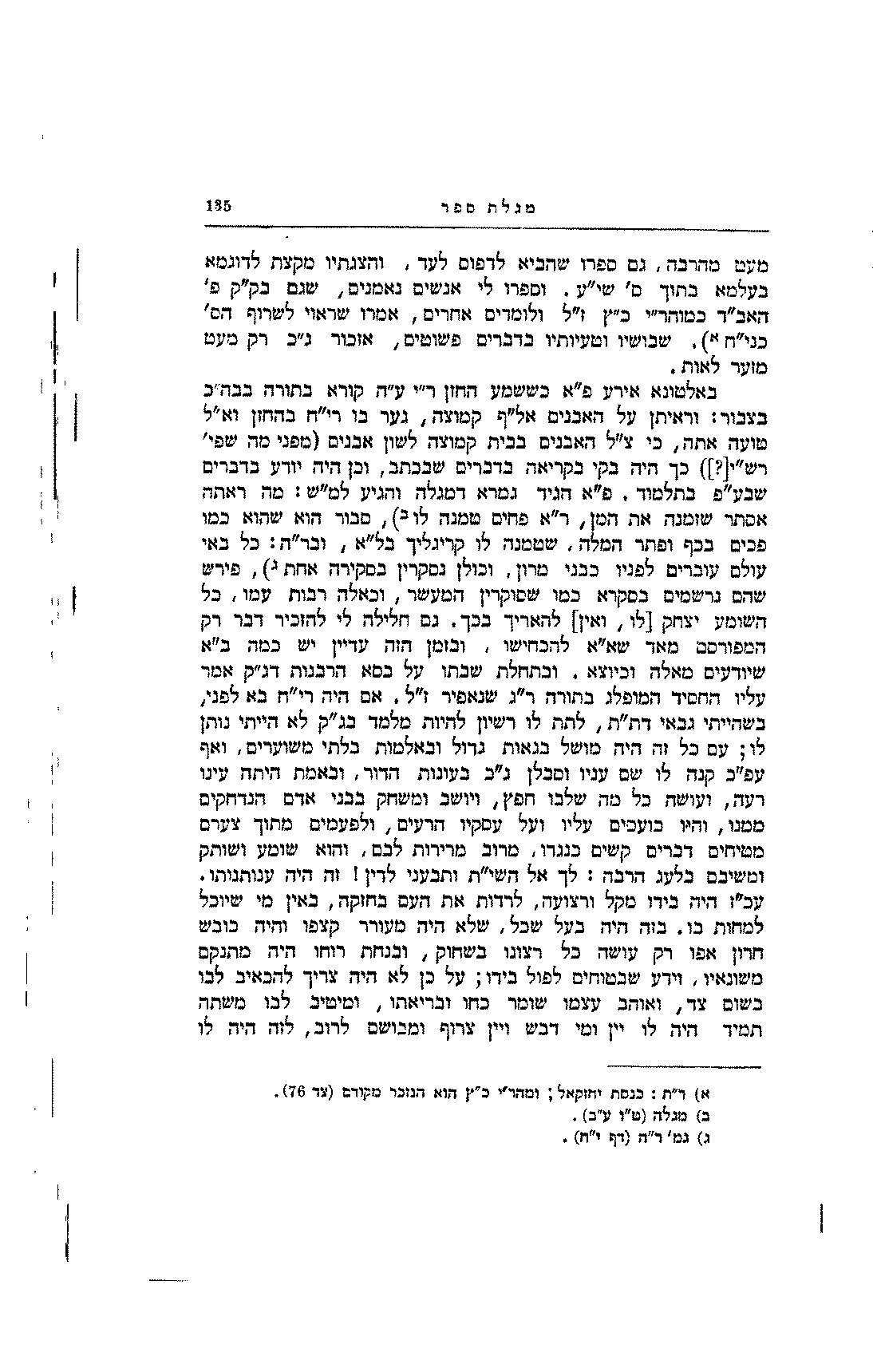
Page 136 (scan 154)
a special place in his house, with vessels and workmen to prepare these drinks in particular, of the choicest possible (?), such as no leader in the world had; besides his food, delicacies of the world, which were found in his house like dust. [He lacked nothing] to disturb his rest; so he saw no reason to trouble his joy and his pleasures through anger and vexation. Nevertheless he saw [his desire] on his enemies, for fortune smiled on him. He paid no heed to the poor of the people and did not turn his heart to their cry; for R. B. K. had obtained for him the licence of His Majesty, which gave him great power to rule over the poor people by force, even to throw men into prison and to keep them desolate in confinement on his word and decree alone. No one was allowed to question him; the officers of the law of the gentiles and their bailiffs did his command and kept his orders, by the licence of His Majesty. And all the time that R. B. K. was alive, R. Y. Ḥ. did his will, as said above; and they used to say of this: The Greek dances the dance of [the bear], Bär in the German language [a].
He had another quality, good for himself: whenever he said something foolish and silly and saw people laughing at his words, he was [glad] and of good heart, for he thought that it came from their great joy and delight in the pleasure of the novel interpretations they had heard from his mouth, which were sweet to them and "sweeter than honey" (Ps. 19:11), and that they delighted greatly; [and therefore] they had gladness and joy. In truth they despised him and mocked him, and he was in their eyes like one who jests, a laughing-stock. Yet he was not so foolish as to grieve himself, so as not to harm [his body]; he made himself as if he did not know that they laughed at his dreams and his words, and he went out "glad and of a good heart" (Esth. 5:9), and said with full mouth that he had won a good name by his sermon, and boasted [of it greatly].
Added to his many delights was constant drinking, of wine and raisin brandy (?) and other drinks, always in a row; he ate and drank all his days. And since he had a strong nature and was coarse, hard as stone, his life was sweet, pleasant and good; for all he did, learned and wrought in the world was good and lovely in his eyes. He never saw any fault in himself, and his heart was glad in his own folly and in every ugly deed. Only when he obtained silver and gold was his heart full of joy, and he thought there was none like him; for the star of his luck helped him in all his ways, a thing to wonder at (only in the last eighteen [years] he saw evils, and in some of them he also saw joys). He prospered in his deeds all the days of his life, even when they were most ugly; but the community went down lower and lower to the bottom of the pit, and with all this his heart was sound and stout (Ps. 73:4). He could sit day and night drinking and getting drunk, for he made his feast much in every place and with everyone, especially at a feast of circumcision or a wedding, in the company of the ignorant and the light-minded, until he was a laughing-stock in the eyes of the mass of the people
Kahana's notes
- [a] The abbreviation means "in the German language"; that is, the rabbi R. Y. Ḥ., who came from the land of Greece, does as the magnate R. Ber Kohen wishes.
מקום מיוחד בביתו, וכלים ופועלין לתקן משקין הללו בפרטות עצהי"ט ומובחר האפשרי, מה שלא היו לשום קצין בעולם, מלבד מאכליו מעדני עולם שהיו מצוים בביתו כעפר, ]לא חסר לו דבר[ להשבית מנוחתו, לכן לא ראה לערבב שמחתו והנאותיו ע"י כעס וקנטור; מ"מ היה רואה בשונאיו, כי היתה השעה משחקת לו, ולא היה משגיח על דלת העם, ולא פנה לבו לצעקתם, כי רב"ך השתדל לו רשיון המיר"ה, שנתן לו כח גדול למשול על עם דל בחזקה, אפילו להשליך אנשים בתפיסה, ולשומם במאסר ע"פ דבורו וגזרתו בלבד, ולא היה אדם רשאי להרהר אחריו, והיו בעלי המשפט עז"ג ושוטריהם, עושים מצותו ושומרים פקודיו כרשיון המיר"ה, וכל זמן שהיה רב"ך חי, היה רי"ח עושה רצונו כנ"ל, והיו אומרים על זו: היון רוקד ברקידת ]הדוב[ בער בל"א א. עוד היתה בו מדה טובה לעצמו, שכל דבר שטות ופשט כשהיה רואה העולם שוחקים לדבריו, היה ]שמח[ וטוב לב כי חשב שמרוב שמחתו בו וגילה שיש להם בהנאת חדושיו ששמעו מפיו, הערב להם ומתוק לחכם מדבש והתענגו מאד, ]וע"כ[ להם הששון והשמחה, ובאמת בזו לו לעגו לו, והיה בעיניהם כמצחק ולשחוק, ולא היה סכל כל כך שלא לצער עצמו, ושלא יזיק לו ]לגופו[, ועשה א"ע כאילו לא ידע ששחקו על חלומותיו ועל דבריו, והוא יוצא שמח וטוב לב, ואומר בפה מלא שקנה ש"ט בדרשה שלו ומתפאר ]בה למאד[. מצורף אל רבוי התענוגים משתה תמיד, מיין וי"צ ושאר משקים תמיד רצופים, אכל ושתה כל ימיו. וגם שהיה לו טבע חזק ועב קשה כאבן, היו חייו ערבים ונעימים וטובים, כי כל מה שעשה ושלמד ושפעל בעולם היה טוב ונחמד בעיניו, לא היה רואה חובה לעצמו, ולבו שמח בשטות עצמו ובכל מעשה מכוער, רק כשהיה משיג כסף וזהב, היה לבו מלא שמחה וחושב שאין כמוהו, כי היה כוכב מזלו עוזר לו בכל דרכיו, דבר מתמיה (רק בי"ח ראה רעות, גם בקצתן ראה שמחות). הוא הצליח במעשיו כל ימי חייו, אפילו שהיו מכוערים ביותר, אבל הקהלה ירדה מטה מטה לתחתית דיוטא ובכל זאת לבו בריא אולם, והיה יכול לישב יום ולילה לשתות ולהשתכר, שהיה מרבה סעודתו בכל מקום ואצל הכל, בפרט בסעודת ברית או נישואין, עם חברת עם הארץ וקלי הדעת, עד שהיה לשחוק בעיני המון העם
- [א] ר"ת: בלשון אשכנז, ר״ל שהרב רי"ח שבא מארץ יון עושה כמו שרוצה הגביר ר' בער כהן .
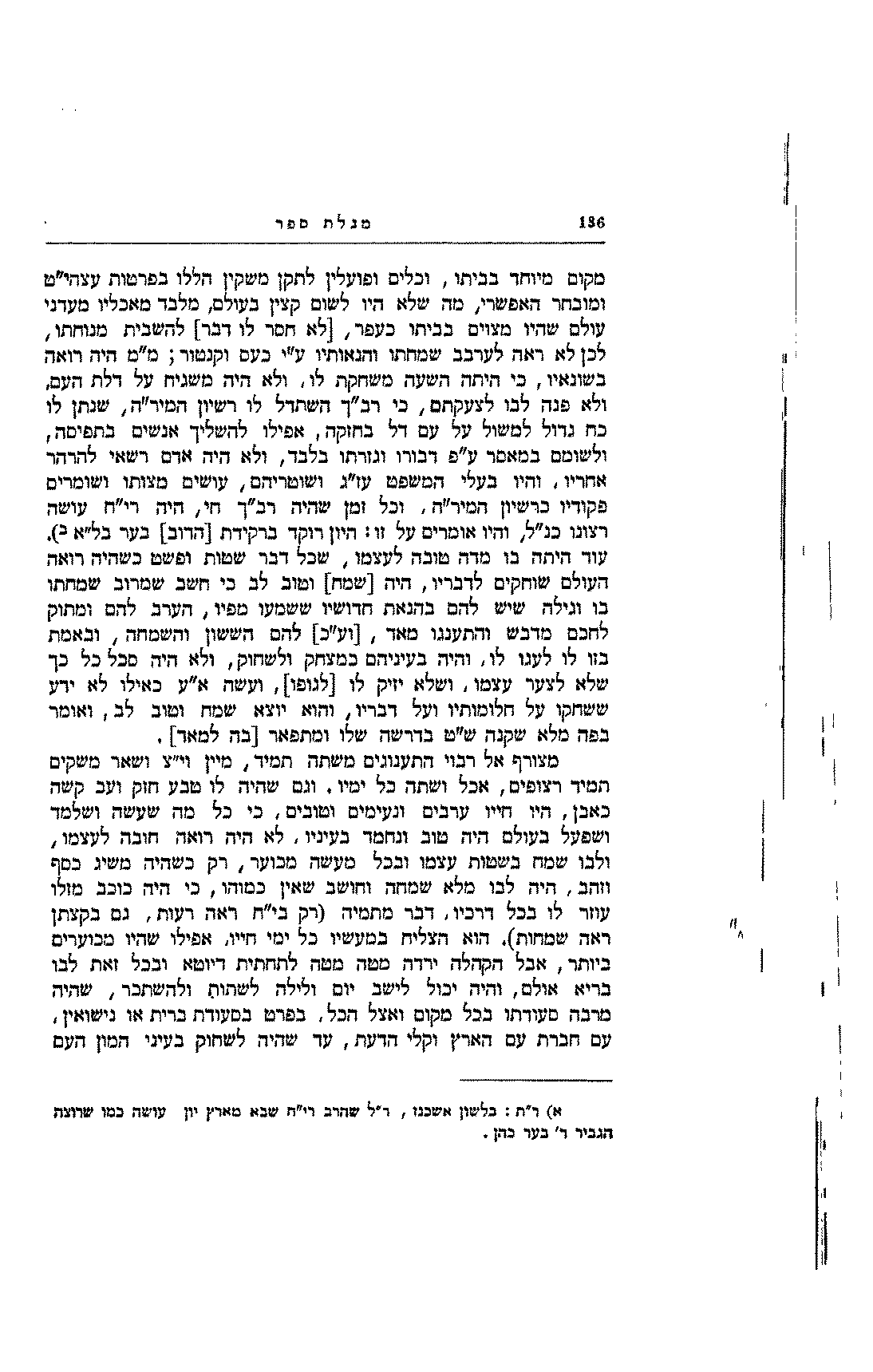
Margin readings in Scholem's copy (1)
| Printed anchor | Type (key sheet) | Mark | Reading | Certainty |
|---|---|---|---|---|
| עוזר לו בכל דרכיו, דבר מתמיה (רק בי"ח ראה רעות (line beside it) | V: omission | caret with a double stroke above it, far out in the right margin; no matching mark found in the printed line; not visible on the NLI image (perhaps a stray mark) | - | uncertain |
Page 137 (scan 155)
at large. The notables were ashamed that he so cheapened and profaned the honour of the Torah in public; so the parnassim and leaders had to decree that he should not go to every feast, but only to the great men's, and to a place where they gave him a share in the commandment, and nowhere else. Moreover, old man as he was, he busied himself much with idle things, and he always had in his house a sitting of ignorant men and "those who sit in the corners" (b. Avodah Zarah 18b), who told him all the news that happened in the world and in their community, and took a mouthful from him. Above all he had spies and investigators of the standing and state of every single person in the Three Communities; through this he knew them and their deeds, and knew the secrets of all of them, what they did "in their chambers of imagery" (Ezek. 8:12): who was rich and who poor, who needed credit, and whose star was rising and shining or sinking and weak, and who would need some lawsuit or the like, to make matches and deal in marriage brokerage, and in every way by which he could increase his wealth, his money and his power. Through this he could also take revenge on the people he knew were not among his friends, for the secrets of every man were revealed to him: "whom he would he raised up, and whom he would he put down" (Dan. 5:19). And on whoever he set his eyes, who in his opinion had not done his duty toward him in the Purim gift and the New Year gift according to the assessment he had made of him, he took his revenge: in a lawsuit when he came before him for judgement, or in the community's assessment in matters of honour, or in the appointment of parnassim, leaders, judges and officers, treasurers and judges, or to harm him in a marriage match, or to spread a rumour about him that he had no money, so as to lessen his credit and cut off his livelihood. He had in his hand a list at Purim and the New Year, when all the men of the Three Communities pass before him "like benei maron" (m. Rosh ha-Shanah 1:2), to see and examine whether anyone was missing of those used to sending him their gifts at these seasons in particular, and to know which of them added and which lessened and subtracted, or left off and withheld; and by the list was every dispute and every plague (Deut. 21:5) that the private persons of the communities who needed him had, in a matter of law and judgement between a man and his fellow.
A distinguished man and scholar told me that there was in the holy community of Altona a respected man who did not love him and was not used to sending him a gift. Once that man summoned a certain person to stand trial with him before R. Y. Ḥ., because he owed him a large sum, several hundred Reichstaler, and he could not get it out of him. R. Y. Ḥ. used every device of delay and perversion of justice, with every trick he could, to acquit the defendant, until this man lost his money; he brought this about to take revenge on him for withholding himself from remembering him with gifts. When that householder saw and understood this, having many debtors with whom he dealt and to whom he gave goods on credit and on trust, he took counsel with himself and said: Why should I bring harm on myself, to lose much for the sake of a small thing that I would give him at Purim and the New Year? Whether it be four Reichstaler or less or more, it is not worth my damage, to gain the love of the rabbi, who will rouse himself for me
בכלל. והנכבדים היו מתכיישים על שהיה מזלזל כל כך ומחלל כבוד התורה בפומבי, לכן הוצרכו פו"מ לגזור עליו שלא ילך לכל סעודה אם לא אצל הגדולים ובמקום שנתנו לו חלק במצוה לא זולת. עוד היה זקן כמותו עוסק בדברים בטלים הרבה, ותמיד הי"ל בביתו ישיבת ע"ה ויושבי קרנות שמודיעים לו כל החדושים המתהוים בעולם ובקהלם ומקבלי לגימה ממנו. ביחוד היו לו תיורים וחוקרים מעמד ומצב כל יחיד ויחיד שבג"ק; ע"י כך היה בקי בהם ובמעשיהם, ויודע סתרי כולם אשר יעשו בחדרי משכיתם, מי עשיר ומי עני, מי הצריך להקפה ומי שכוכב מערכתו הולך ואור יפה או שוקע ורפה, ומי שיצטרך באיזה דבר משפט או זולת, לזווג זווגים לעסוק בשדוכים, ובכל אופן שיוכל להרבות הונו וממונו ואונו, וגם עי"ז היה יכול להנקם ג"כ מהאנשים אשר ידע שאינם מאוהביו, כי גלו אליו מסתורי כל איש ואיש, ודי הוה צבא הוה מרים, די הוה צבא הוה משפיל ובמי שהיה נותן עיניו, שלפי דעתו לא יצא י"ח נגדו במתנת פורים ור"ה כפי הערך אשר העריך אותו, היה לוקח נקמתו ממנו, בדבר משפט כשבא לפניו לדין, או בשומת ערך הקהל בעניני כבוד, או בעסקי מינוי פרנסים מנהיגים שופטים ושוטרים גבאים ודיינים, או להרע לו בענין שידוך, או להוציא עליו קול שאינו בעל כיס, למעט נאמנותו ולקפח פרנסתו; והיתה בידו רשימה בפורים ור"ה, שעוברין לפניו כבני מרון כל אנשי ג"ק, לראות ולעיין אם נפקד איש מהרגילים לשלוח אליו מתנותיהם בפרקים הללו בפרטות, ולדעת מי מהם המוסיף ומי הפוחת וגורע, או עוזב ומונע, ולפי הרשימה יהיה כל ריב ונגע, אשר תהיה ליחידי הקהלות הצריכים אליו, בדבר דין ומשפט בין איש ובין רעהו. וסיפר לי איש מסוים ות"ח, כי היה בק"א נכבד אחד שלא היה אוהבו, ולא היה רגיל לשלוח לו דורון; פעם אחד תבע האיש ההוא אדם אחד לעמוד עמו לדין לפני רי"ח, על שהיה חייב לו סך רב כמה מאות ר"ט, ולא היה יכול להוציאו, ועשה לו רי"ח כל טצדקי בעינוי ועות הדין, בתחבולות כל מה שיוכל, כדי לפטור את הנתבע עד שהפסיד זה מעותיו, שסבב לו כדי להנקם ממנו, על שמונע עצמו לפקדו במתנותיו; וכשראה והבין אותו ב"ב כך, והיו לו ב"ח רבים שהיה עוסק עמהם ונותן להם סחורות בהקפה ובאשראי, היה נמלך בעצמו ואומר על מה זה אגרום רעה לעצמי, להפסיד הרבה בשביל דבר מועט שאתן לו בפורים ור"ה, אם יהיה ר"ט ד"מ או פחות או יותר, זה איננו שוה בנזק שלי, להרויח אהבת הרב שיהא לי מעיר
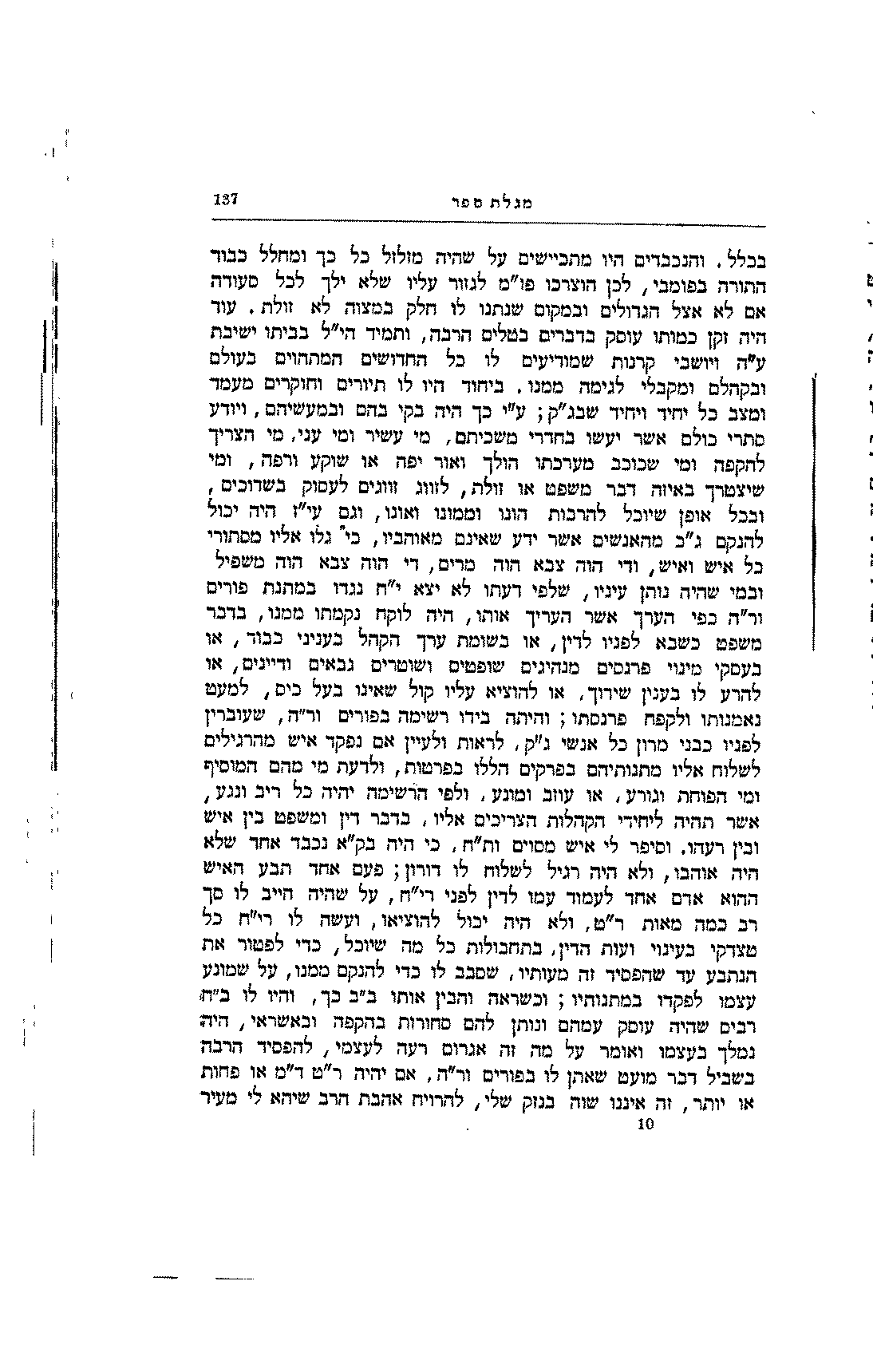
Page 138 (scan 156)
to help me in time of need, in my lawsuits with my debtors. And so he did. From that day on he [the rabbi] was turned into another man, became his friend, and he won his case.
In this way the head of the court of the Three Communities mentioned above compelled the householders under him to submit to his authority and to "multiply dowry and gift" (Gen. 34:12) for him. (Woe to the ears that heard such hard things from one who sits on the seat of judgement and ruling! We can picture what the ignorant think in their hearts of those who hold the Torah; many of them utter with their mouths "may their spirit blow away" [a], and "mock the messengers of God" (2 Chr. 36:16), as though all the scholars were suspected of greed.) They were very afraid of him, for he "smote in secret" (Deut. 27:24) and cast his dread upon the congregation exceedingly, though he was despised in their eyes and in their hearts according to his deeds mentioned above. He had not even one friend at heart, except some strong men of the community who showed him affection outwardly, because he favoured them and did all they wished, in their taking revenge on this man and that and laying a heavy yoke on private persons; for in this he helped them and supported their hands, and was at their disposal at any time, and without him they could not carry out their desire. For so the ordinances of the communities were established: that the rabbi, the head of the court, has strong authority over the parnassim and leaders; whatever they agree on has no force unless it is done with the town's council (?). But he loosed their hands and left all the rule to them, whether in uprightness or in wrong. (And this is what caused the honour they pursued in his days to be taken from them: they ruled by the strength of the arm, "and the rich was not regarded more than the poor" (Job 34:19); afterwards it fell wondrously "from a high roof to a deep pit" (b. Ḥagigah 5b), and what was in their hands was taken from them altogether. When ⟨S: "the wicked"⟩ Eybeschütz came, "contempt came too" (Prov. 18:3), "and it was, as with the people, so with the priest" (Isa. 24:2), as I wrote above with God's help. This was the chief cause of the strife and the division of hearts, which almost drew after it the ruin of the communities; for the private persons found a pretext to take revenge on the parnassim and leaders and to take the rule from them. Then their heart was divided, and they hung themselves on this man, so that he would strengthen their hands in humbling the parnassim and leaders; therefore they strengthened his hands to make him great and give him full rule, and he did all they devised, to bring the honour of the parnassim and leaders down to the dust.) And so they [the parnassim] helped him in the wrong he sometimes did to the private persons who were judged before him, and covered up for him, because they repaid one another.
He had this too for a portion, "a proverb and a byword" (Deut. 28:37): although he was faulty, "no speech had he, nor voice" (cf. 1 Kgs. 18:26) except the voice of coins, and his songs and chirpings ⟨S: "his melodies(?) and chirpings"⟩ were strange, causing laughter and mockery to all who heard — even so he thought himself a great and wonderful cantor and singer, and he prayed on festivals and the Days of Awe in the Great Synagogue, and went down before the ark to discharge the duty of the many; and he caused jest and mockery
Kahana's notes
- [a] The abbreviation means "may their spirit and their soul blow away"; and Ya'avetz means that this is what the ignorant say of those who hold the Torah and of scholars.
לעזור לי בעת צרכי אליו, בעסק דין ודברים עם ב"ח שלי; וכן עשה. מהיום ההוא והלאה נהפך לאיש אחר, ונעשה אוהב ובמשפטו הרויח. באופן זה היה כופה האב"ד דג"ק הנ"ל את הב"ב שתחתיו לסור למשמעתו, ולהרבות לו מוהר ומתן (אוי לאזנים ששמעו כאלה קשות מהיושב על כסא המשפט והוראה. ונוכל לצייר מה הע"ה חושבים בלבם על תופסי התורה, ורבים מהם מוציאים מפיהם תר"ו א, ומלעיבים במלאכי האלהים, כאילו כל הת"ח חשודים על הבצע) והיו יראים מפניו מאד, כי היה מכה בסתר ומטיל אימתו על הצבור ביותר, עם שהיה נקלה בעיניהם ובלבם כפי מעשיו הנ"ל, אבל לא הי"ל אפילו אוהב אחד בלב, חוץ מאיזה תקיפי הקהל שהיו מראים לו חבה לפנים, מחמת שהיה נושא פניהם ועושה כל חפצם, בהנקמם מאיש איש והכבדת עולם על היחידים, כי בזה היה עוזרם וסומך ידם, נמצא להם בכל עת ומבלעדו לא יכלו להוציא אל הפועל תאותם; כי כן נתיסדו תקנות הקהלות, שהרב אב"ד ידו תקיפה על פו"מ, בכל דבר אשר יסכימו עליו אין לו תוקף אם לא נעשה בחבר עיר, אבל הוא התיר ידם ועזב להם כל הממשלה, בין ביושר בין בעולה, (והיא שגרמה שנטל מהם הכבוד שרדפו אחריו בימיו, משלו בכח הזרוע ולא נכר דל לפני שוע, אח"כ ירדה פלאים מאיגרא רמה לבירא עמיקתא, מה שבידם נטל מהם לגמרי. בבוא אייבשיצר בא גם בוז, והיה כעם ככהן כמש"ל בס"ד, וזה הדבר שהיה עיקר הסבה להמחלוקת ופרוד לבבות, שכמעט משך אחריו חורבן הקהלות, לפי שמצאו היחידים עילה להנקם מפו"מ וליטול מהם הממשלה, כי אז חלק לבבם ותלו עצמן באיש הלז, למען יחזק ידיהם בהשפלת הפו"מ, ע"כ חזקו המה ידיו להגדילו ולהמשילו לגמרי, ועשה ככל אשר יזמו, להוריד כבוד הפו"מ עד עפר) וכן המה היו מסייעים אותו בעול שהיה עושה ליחידים לפעמים הדנים לפניו, ומחפים עליו מפני שהן כגומלין זא"ז. ועוד זאת היתה לו למנה, למשל ולשנינה, כי אע"פ שהיה פסל, לא דבור לו ולא קול אליו, כי אם קול המעות, שיריו וצפצופיו היה משונה, שגורם שחוק והתול לכל שומע, אף עפ"כ החשיב עצמו גם לחזן ומשורר גדול ונפלא, והיה מתפלל בי"ט וימים נוראים בבה"כ הגדולה, ויורד לפני התיבה להוציא רבים י"ח, וגרם חוכא ואטלולא
- [א] ר"ת: תפח רוחם ונפשם, וכוונת יעב"ץ שזאת אומרים העמי הארץ על תופסי התורה ות"ח.
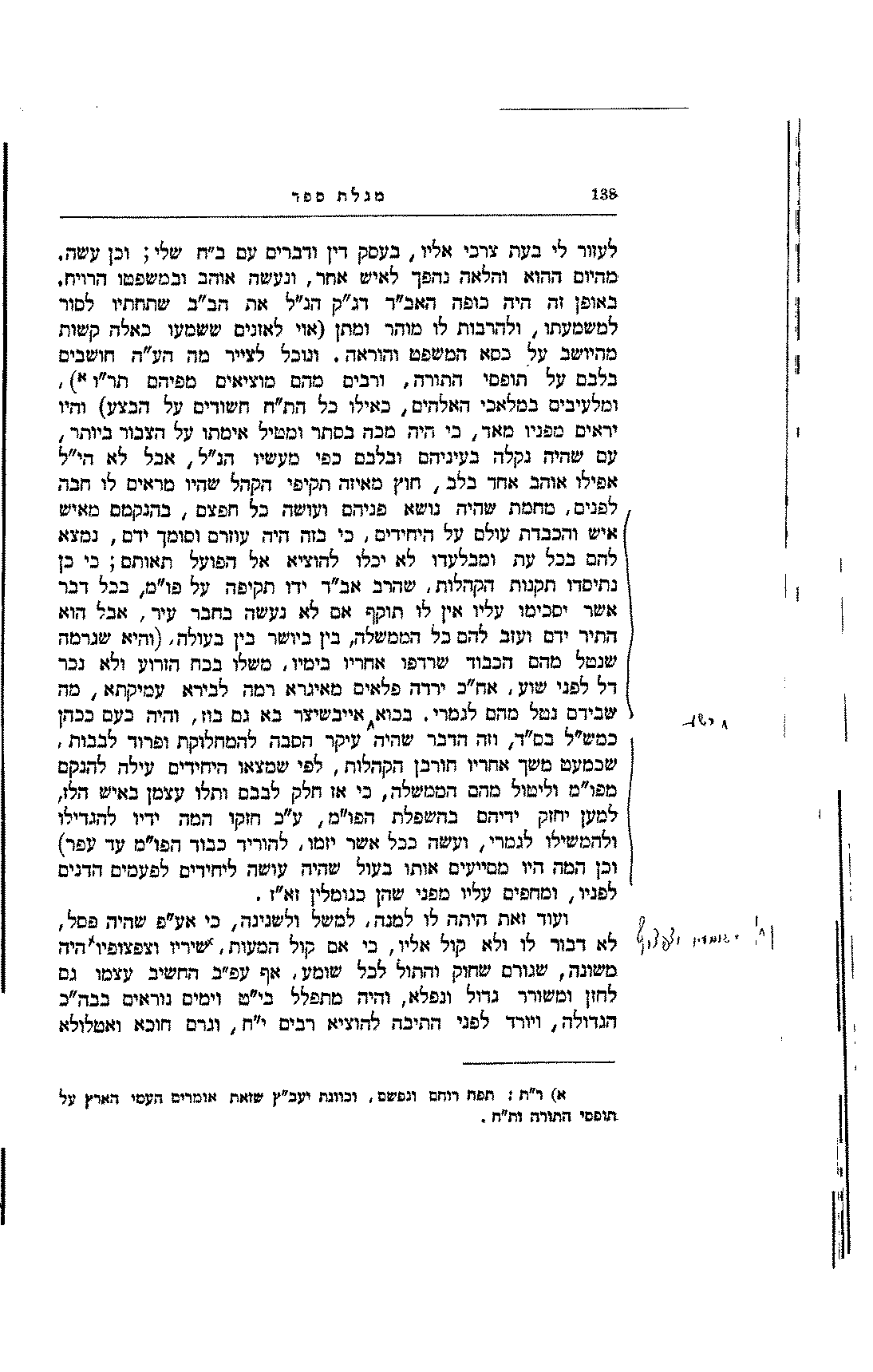
Margin readings in Scholem's copy (3)
| Printed anchor | Type (key sheet) | Mark | Reading | Certainty |
|---|---|---|---|---|
| לפנים, מחמת שהיה נושא פניהם ... וכן המה היו מסייעים אותו (lines 11-26) | — | bracket: a long curved line in the right margin beside these lines (the passage on the power of the parnassim); no text | - | sure |
| לגמרי. בבוא ^ אייבשיצר בא גם בוז | V: omission | caret; one word in right margin | הרשע | fairly sure |
| כי אם קול המעות, x שיריו וצפצופיו x היה משונה | X: substitution | x marks before and after the two words; two words in right margin | נגוניו(?) וצפצופיו | uncertain |
Page 139 (scan 157)
in the "little sanctuary" (Ezek. 11:16), every time he stood in prayer before the reading desk. Whoever has not seen or heard the performance of his melodies and the sound of his chirpings has never seen laughter in his life. He was a great object of mockery and derision, so that the jesters who play in the drinking houses, when they wanted to increase the laughter and enlarge the joy, to cheer the hearts of the people invited to the feast, would begin to play and sing the melodies of the head of the court mentioned above, with all his manners and gestures, imitating him in his ways. Then the mouths of the guests and of those gathered for the celebration were filled with laughter, "and the earth was rent with the sound of them" (1 Kgs. 1:40); for they were used to this as a wonderful gladness, delight and amusement, until it roused laughter in them far beyond the laughter at the deeds of fools and utter idiots, or of those who pretend, make sport and change their behaviour to play the madman (1 Sam. 21:14) in dances and rounds. When the report reached him, he did not mind at all; on the contrary, it gave him great joy too, as one who brings merit to the many, since joy came to the many through him.
There were already men and officials present at times at such scenes of laughter, and it was hard in their eyes to hear the laughter and scorn made of the rabbi, the head of the court of the Three Communities, and their hearts were very sick over it, for it was a great profanation of the Name and a disgrace to scholars before the ignorant. So they wanted to stop those players from [performing] his melodies for pay at wedding feasts and on days of rejoicing, and protested to them and told them not to do so, for such a thing was not proper because of the honour of the Torah and the honour of the congregation. But what did he do? He called to himself privately a boy who was skilled at making those whistlings with his mouth, and who imitated his melodies and chirpings before the crowd to earn his living by it, and said to the boy: Come, and I will teach you a chapter of my song, lest you do not yet know how to play it well enough; so sit, my son, and I will hand down to you a chapter of my song, which people will enjoy very much, and you will be able to earn much money by it. So great was the success of this man in his fancies, that even a deed of folly and stupidity brought him great pleasure. Not that he was such a fool: in truth, in matters of his own benefit in money he was very shrewd and cunning; but his imagination misled him, and from his great success he thought there was none like him in every matter of excellence and praise.
The beadles of the community and of the court in his days too — "if a ruler hearkens," etc. (Prov. 29:12) — took from private persons at every time ⟨S: "pretext"⟩ they could, like a fixed and an unfixed tax-gatherer (cf. m. Bava Kamma 10:1). When I married my second wife, [I gave several] Schock [a], and I gave without any inquiry how and what, for I was then very busy. And at the third match, when I married off my brother's daughter, and they did not know whether [much money] would be given me for a dowry, they demanded from me ⟨S: a two-line note: "only (?) [for] the release of the betrothal of the couple"⟩, besides what the beadle asked for himself, and not
Kahana's notes
- [a] A kind of coin, in the vernacular Schock Heller.
במקדש מעט, כל פעם שעמד בתפלה לפני העמוד. ומי שלא ראה או שמע מעשה נגוניו וקול צפצופיו, לא ראה שחוק מימיו, והיה ללעג ולקלס מרבה, עד שהלצנים המשחקים בבתי משתאות, כשהיו רוצים להרבות השחוק, ולהגדיל השמחה להיטיב לב העם הקרואים בבית המשתה, היו מתחילים לנגן ולשורר נגוניו של האב"ד הנ"ל עם כל תכונותיו ובתנועותיו להדמות אליו בעניניו, אז ימלא שחוק פי המסובים והנקבצים לשמחה, ותבקע הארץ לקולם, כי היו רגילים בכך ששון ושעשוע וטיול נפלא, עד שהיה מעורר להם השחוק בהפלגה גדולה, יותר ממה שצוחקים על מעשי הכסילים והשוטים הגמורים, או המתדמים ומצחקים ומשנים טעמם להתהולל כרקודין ומחולות. וכשבאה השמועה אליו לא הקפיד כלל, אדרבה גרמה לו שמחה עצומה ג"כ כמזכה הרבים, מאחר שממנו באה השמחה לרבים. וכבר היו שם בני אדם ושרים נמצאים לפעמים באותן מעמדות של שחוק, והיה קשה בעיניהם לשמוע השחוק וק"ר שעושין מן הרב אב"ד דג"ק, ולבם דוה מאד על זאת, כי היה ח"ה גדול וקלון לת"ח בפני ע"ה, ע"כ רצו למנוע אותן המשחקים בנגוניו בשכר על סעודות החתונות ובימי שמחה, והיו מוחין בידיהם וא"ל שלא יעשה ככה, ולא יתכן דבר זה מפני כבוד התורה וכבוד הצבור. אך מה עשה הוא, קרא אליו ביחוד נער אחד שהיה בקי לעשות אותן שריקות בפיו, ועשה דמיון נגוניו וצפצופיו בפני ההמון להרויח פרנסתו בזה, ואמר אל הנער בוא ואלמדך פרק שירה שלי, שמא אינך יודע עדיין להיטיב נגן כל הצורך, לכן שב בני ואמסור לך פרק בשיר שלי, שיהנו בו בני אדם מאד, ותוכל להרויח בזה ממון רב. כל כך גדלה הצלחת האיש הלז ברעיוניו, שאפילו מעשה שטות וכסילות היה גורם לו הנאה רבה מאד; ולא שהיה סכל כל כך, כי באמת בדבר תועלת עצמו בעניני ממון, היה פקח וערום גדול, אלא שכח המדמה שלו היה מטעה אותו, לרוב הצלחתו היה חושב מאין כמוהו בכל דבר מעלה ותהלה. גם שמשי הקהל והב"ד בימיו, כמושל מקשיב וגו', לוקחין מן היחידים בכל עת שיוכלו, כמוכס קצוב ושאינו קצוב. כשנשאתי אשתי שנייה ]נתתי כמה[ שוק א, ונתתי בלי שום חקירה איך ומה, כי הייתי אז טרוד מאד, והזווג שלישי שנשאתי בת אחי, ולא ידעו אם יותן ]לי הרבה כסף[ לנדן, תבעו ממנו מלבד מה שבקש השמש לעצמו, ולא
- [א] מין מטבע ובלע"ז Schock Heller.
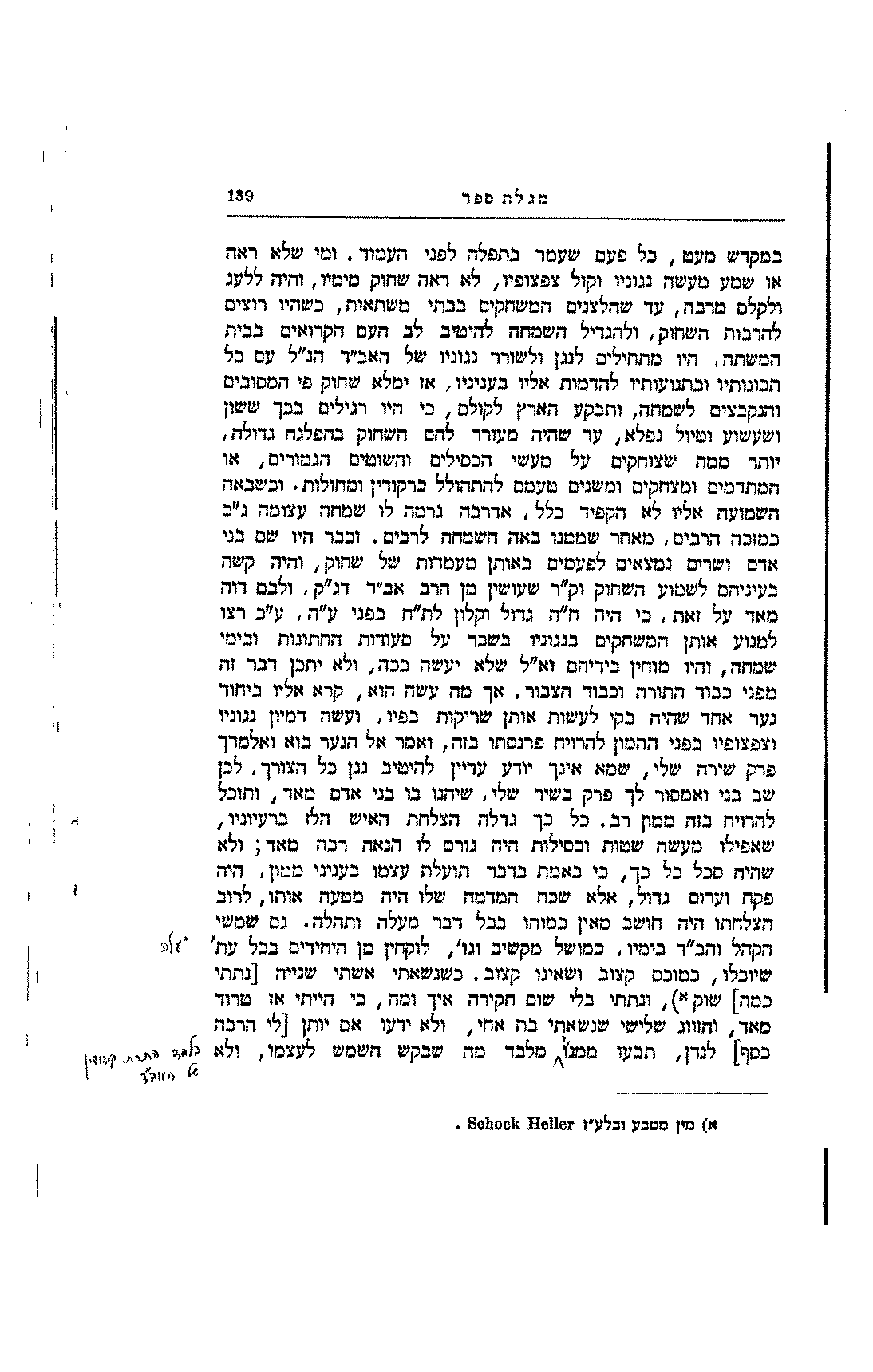
Margin readings in Scholem's copy (2)
| Printed anchor | Type (key sheet) | Mark | Reading | Certainty |
|---|---|---|---|---|
| לוקחין מן היחידים בכל עת x שיוכלו | X: substitution | x mark after the word; one word in left (outer) margin | עלה | fairly sure |
| תבעו ממנו ^ מלבד מה שבקש השמש לעצמו | V: omission | caret; 2-line note in left (outer) margin | בלבד(?) התרת קידושין / של הזווג | fairly sure |
Page 140 (scan 158)
willing to set up the wedding canopy until I first paid what [the community [a]] and he [the head of the court R. Y. Ḥ.] had imposed on me. I will not go on further about his deeds [b].
When I was in Hamburg some weeks before — the matter I already mentioned above — the leader R. Joel Schwab, who had been a faithful friend of my father, of blessed memory, turned into an enemy of mine because I had taken my lodging in the house of R. B. K. out of necessity, as said above. These two hated each other to the death, because of the dispute over taking the rabbinate from my father: over this affair Joel Schwab had been under the ban for many years and excluded from every honour of appointment and office in the holy community of Altona, all the days that R. B. K. was alive. Now, recently, some years before I came to live in Altona, R. B. K. died, and Joel Schwab returned to his former honour and was appointed parnas and leader in the holy community of Altona; and so he was at the beginning of my stay here. At once I felt that his heart was not whole [with me]. For all the members of the community came to me to welcome me, even those who had not loved my father, of blessed memory, and received me with a pleasant countenance, and promised to grant all I asked and to fulfil my request; yet I asked nothing of them at all, except a thing permitted in general: to allow me to gather a quorum in my house to pray with ten regularly, since I could not go to the Great Synagogue, which was a great burden to me — and this was the main reason I had left Emden. They all agreed, as said above, except this man, who did not seek to see me. And although I went against my habit and went to visit him in his house, on the advice of R. M. Ḥ., peace be upon him, whom I obeyed at first, since he was old and I a child in comparison with him — I judged him favourably too: perhaps [because] he was old and heavy he had not come to me, for the thing was too heavy for him; therefore I went to his house to ask after his welfare. I thought he would be a faithful friend to me too, especially as it never entered my mind that he would be my enemy without cause. But in truth he was "a stone of stumbling" (Isa. 8:14) to me, for he opposed me with force, to prevent and cancel the gathering of ten in my house — although they had not protested even to R. M. Ḥ., peace be upon him, who was a Sephardi and a stranger to the community, while I was of the sons of the rabbis and of the children of the community, and had laid no burden on them at all. And all the time that Joel Schwab was in office in the community he did not let me be in this matter: every week he sent the community's beadle to me to protest to me about this thing. Each time his month [of office] ended I had rest from it; when his month came, his decree was renewed, and several times he stopped the regular prayer in my house. It was hard not for me alone, for to the men who came too the thing was very bad in their eyes,
Kahana's notes
- [a] Ya'avetz tells this below in detail; see (p. 128).
- [b] After what Ya'avetz has told us about the head of the court R. Y. Ḥ., we shall no longer be astonished at his strange will, printed in the year [5]510 [1750] in Amsterdam and in the year [5]631 [1871] in Vilna, and at what R. Y. Ḥ. commanded the burial society; see there.
רצה להעמיד החופה, עד שאתן תחלה מה שפסק עלי ]הקהל א[ והוא ]האב"ד רי"ח[ ולא אאריך עוד במעשיו ב. בהיותי בהמבורג לפני איזה שבועות, הענין מה שכבר זכרתי למעלה, שהקצין כ' יואל שוא, אשר היה אוהב נאמן לאמ"ה ז"ל, נהפך לשונא אלי בסבתי שלקחתי אכסניא שלי בבית רב"ך מפני ההכרח כנ"ל, ואלה השנים היו שונאים זא"ז עד למות, מחמת המחלוקת על אודות לקיחת הרבנות מאמ"ה, שעל עסק זה היה יואל שוא מנודה שנים רבות, ומוסר מכל כבוד מינוי ופקידות בק"א, כל הימים אשר היה רב"ך חי, ועתה מקרוב איזה שנים קודם בואי לישב באלטונא מת רב"ך, וחזר יואל שוא לכבודו הראשון, ונתמנה פו"מ בק"א, וכן היה בראשית ישיבתי פה. ומיד הרגשתי שלבו אינו שלם, כי כל בני הקהלה באו אלי לקבל פני, אפילו אותן שלא היו אוהבים לאמ"ה ז"ל, וקבלוני בספ"י והבטיחוני לתת כל שאלתי ולהגיד בקשתי ותעש, ולא בקשתי דבר מעמם לכלל ופרט, רק דבר שהותר מכללו: להרשות לי לקבץ מנין בביתי להתפלל בעשרה בתמידות, מאחר שלא יכולתי לילך לבה"כ הגדולה דטריחא לי מילתא טובא, והוא עיקר הסבה שעקרתי מעמדן, ונאותו לי כולם כאמור לעיל, חוץ מהאיש הלז אשר לא בקש לראות פני, ואף ע"פ שעברתי על מדתי, והלכתי אליו לבקרו בביתו, ע"פ עצתו של הרמ"ח ע"ה שהייתי נשמע אליו מתחלה, בהיותו זקן ואני ילד בערכו, ודנתיו ג"כ לזכות, שמא ]מחמת[ היותו זקן וכבד לא בא אלי, כי כבד ממנו הדבר, ועל כן הלכתי לביתו לדרוש שלומו. כסבור הייתי יהא לי ג"כ אוהב נאמן, בפרטות כי לא עלה על דעתי כלל שיהא לי שונא חנם; אבל באמת היה לי לאבן נגף, כי התנגד לי בכח למנוע ולבטל ממני קבוץ עשרה בביתי, אף ע"פ שלא מיחו אפילו לרמ"ח ע"ה שהיה ספרדי ואיש נכרי לקהלה, ואני מבני הרבנים ומילדי הקהל, ולא העמסתי עליהם במאומה. וכל זמן שהיה יואל שוא בקהל, לא הניח לי מעסק זה; כל שבוע היה שולח שמש הקהל אלי, למחות בידי על הדבר הזה, וכל פעם שנסתלק מהחודש שלו היה לי מנוחה מזה, כאשר הגיע חדשו נתחדשה גזרתו, וכ"פ בטלו התמיד בביתי והיה קשה לא לי בלבד, כי גם להאנשים הבאים היה הדבר רע מאד בעיניהם,
- [א] הדבר הזה הגיד יעב"ץ להלן בפרטות עיין (צד 128).
- [ב] ולפי מה שהגיד לנו יעב"ץ אודות האב"ד רי"ח, לא נשתומם עוד על צואתו המשונה, הנדפסה בשנת תק"י באמשטרדם, ובשנת תרל"א בווילנא, ומה שצוה רי"ח לחבורא קדישא, ע"ש.
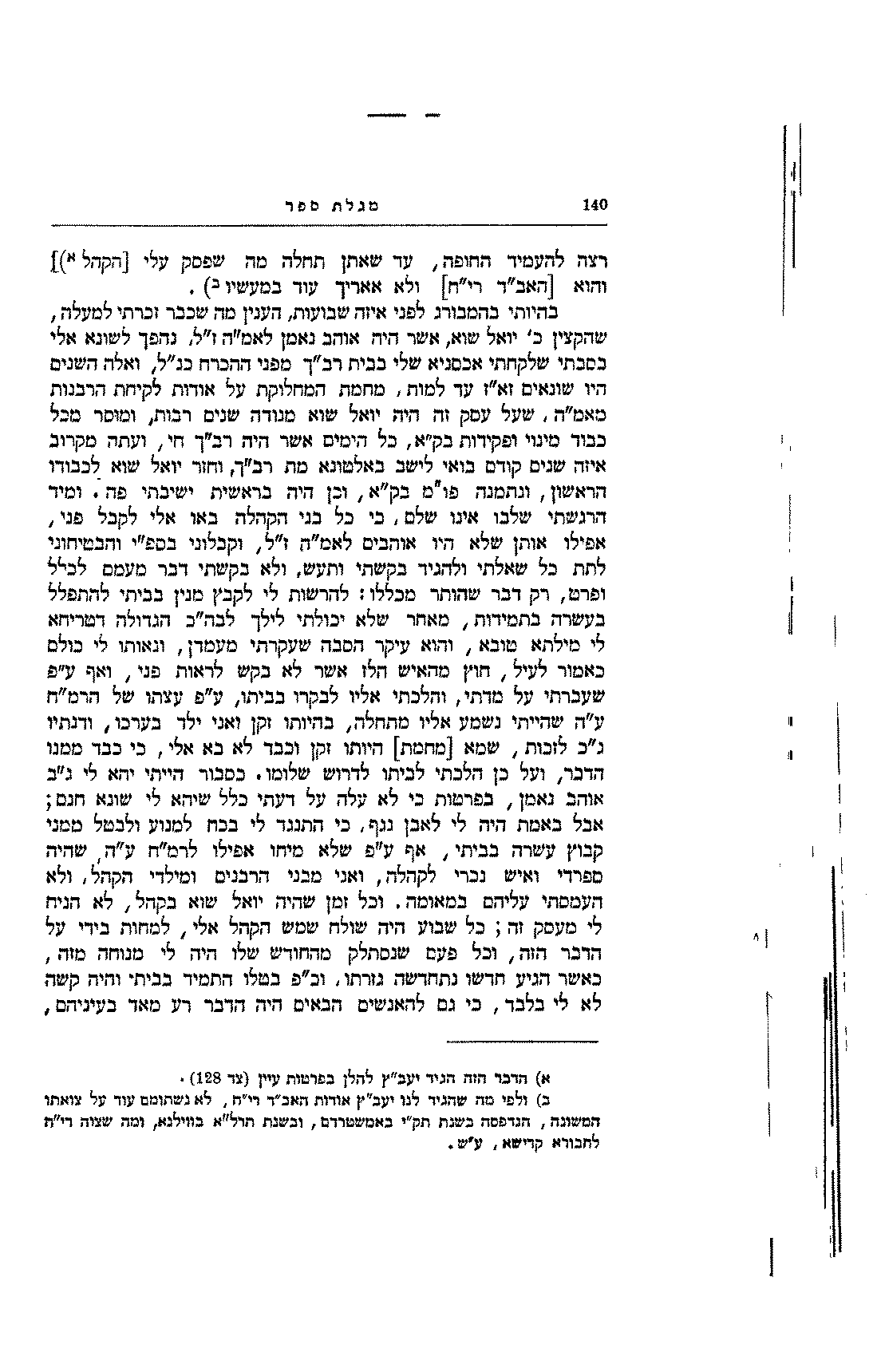
Margin readings in Scholem's copy (1)
| Printed anchor | Type (key sheet) | Mark | Reading | Certainty |
|---|---|---|---|---|
| לי מעסק זה; כל שבוע היה שולח שמש הקהל (line beside it) | V: omission | caret with a vertical stroke, far out in the right margin; no matching mark found in the printed line; not visible on the NLI image (perhaps a stray mark) | - | uncertain |
Page 141 (scan 159)
for they found contentment in praying without hearing idle talk, as is common in the Great Synagogue. Once they stopped my quorum on the Days of Awe and Sukkot. Then I went to the synagogue of the Sephardim, and the men who used to come to my house for prayer had to go to the Great Synagogue. Among them was a worthy, God-fearing man, very humble, of the stock of righteous proselytes. On the eve of the festival he stood at the door of my house, sighing over the loss of the commandment from my house, for he was not easy about going to the Great Synagogue, because of bad neighbours and people who are not decent. "His star saw it" (b. Megillah 3a): for our many sins, there [the holy R. Ephraim] was killed. For he saw in the court of the synagogue a light-minded guest who took into his mouth a tobacco pipe in the holy place and drew in the smoke publicly in the synagogue. This displeased the good and God-fearing man mentioned above, so he protested against the light-minded man and told him it was not proper to do so in the holy place and in public. Since the guest would not listen, R. Ephraim, of blessed memory, struck the guest's pipe and threw it from his mouth. At this the guest's wrath grew, and he took a knife and thrust it into the belly of R. E., of blessed memory, and struck his bowels or his heart; he rolled in his blood and in the pangs of death about seven days, and afterwards died, "and he shall live and not see the pit" [a]. I had very great sorrow over this worthy man, on whom the attribute of justice fell because of his fear [of God] and his zeal, as said above. "Let it be for an everlasting remembrance" (cf. Ex. 17:14): "this ruin was under the hand" (Isa. 3:6) of the leaders of the community, for our many sins; from them came this stumbling-block. The man mentioned forgave the murderer his blood; but he was tried in the gentile courts, which wanted to be the avengers of blood. Only, because witnesses would not testify to the murder, and the murdered man too had denied it, they ruled by their law that the murderer should swear that he had not struck him mortally, and go free ⟨S: a three-line note, its edge cut off, partly read: "and R. Y. Ḥ. ruled for him (?) … to swear … falsely"⟩. And so he did, and went free by human law ⟨S: a four-line note: "But in my opinion he did not rule well; it is written by me in the book She'ilat Ya'avetz(?), part 2 …"⟩. This was the fruit of stopping the prayer in my house.
Now I will tell what more I did for the good of the son-in-law of Joel Schwab mentioned above; and all this did not help to remove the enmity from his heart. The story is this. [The leaders] of the Norden family asked me then, near the time I settled in the holy community of Altona, about R. Z. Stern, his son-in-law mentioned above, what kind of man he was, because they had heard that he had a daughter, and they wished to match her with their brother R. Sender. They would not rely on anyone in this matter but me, and as I advised them, so they would do. I was at their service and made myself a matchmaker, which I had not done until then. All the days I was in Emden I did not engage in matchmaking, [as is the way] of the rabbis of Ashkenaz in general; I kept myself from it for two reasons: one, because I was not so well acquainted with the affairs of the leaders and their sons and daughters, without inquiry
כי מצאו קורת רוחם להתפלל בלי שמיעת שיחה בטלה כמצויה בבה"כ הגדולה. ופ"א בטלו המנין שלי בימים נוראים וסכות, אז הלכתי אני בבה"כ של הספרדים, והאנשים אשר היו רגילים לבוא אל ביתי לתפלה היו מוכרחים ללכת לבה"כ הגדולה. בתוכם נמצא אדם כשר ירא אלהים ע"ה מאד מגזע גרי צדק; בעי"ט עמד על פתח ביתי, להתאנח על בטול המצוה מביתי, כי לא היתה דעתו נוחה בהליכת בה"כ הגדולה, מטעם שכנים רעים וב"א שאינם הגונים. ומזליה חזי, כי בעו"ה שם נהרג ]הקדוש כ' אפרים[, לפי שראה בעזרת בה"כ אורח קל מסובין, לוקח בפיו שפופרת של טובק במקום הקודש ושואף הענן בפומבי בבית הכנסת, והרע לאיש הטוב וירא שמים הנ"ל, לכן מיחה בקל הדעת, וא"ל שלא יתכן לעשות כן במקום הקודש ובצבור, ולפי שלא אבה האורח לשמוע, הכה כ' אפרים ז"ל שפופרת של האורח והשליכה מפיו; עד"ז גברה החמה של האורח, ונטל סכין ותקעה בבטנו של כ"א ז"ל, ונגע במעיו או בלבו ונתגולל בדמו ובחבלי מיתה כשבעה ימים אחר כך נפטר וחלי"ש א. והיה לי צער גדול מאד על אודות האדם כשר הלז, שפגעה בו מדה"ד על אודות יראתו וקנאתו להנ"ל. לזכר עולם יהיה, והמבשלה הזאת תחת מנהיג הקהלה בעו"ה, מידם היתה זאת התקלה, והנ"ל מחל להרוצח על דמו, אכן נשפט בערכאות, המה רצו להיות גואלי הדם, רק מפני שלא רצו עדים להעיד על הרציחה, גם הנרצח כחש, לכן פסקו בדיניהם שישבע הרוצח שלא הכהו נפש ויפטר, וכן עשה ונפטר בדיני אדם. וזה היה הפרי של בטול תפלה מביתי. עתה אספר מה שעשיתי עוד לטובת חתנו של יואל שוא הנ"ל, וכל זה לא הועיל להסיר המשטמה מלבו, וכך המעשה: שאלוני אז ]הק' נורדשי, סמוך לקביעת ישיבתי בק"א, על אודות ר"ז שטערן חתנו הנ"ל מה טיבו, בשביל ששמעו שיש לו בת וחפץ לשדכה לאחיהם כ' סענדר, ולא רצו לסמוך על שום אדם בענין זה רק עלי, וכאשר אייעץ אותם ככה יעשו; נמצאתי להם והכנסתי א"ע להיות שדכן, מה שלא עשיתי עד עתה. גם כל ימי היותי בעמדן לא נטפלתי בעסק שדוכים, ]כדרך[ רבני אשכנז בכלל, רק אני מנעתי עצמי מזה לשתי סבות, אחת להיותי בלתי בקי כל כך בענייני הקצינים ובניהם ובנותיהם, בלי דרישה
- [א] ר"ת: וחי לא יראה שחת (תהלים מ"ט, י') ועיין בספר התאבקות (דף ע"ג ע"ב)
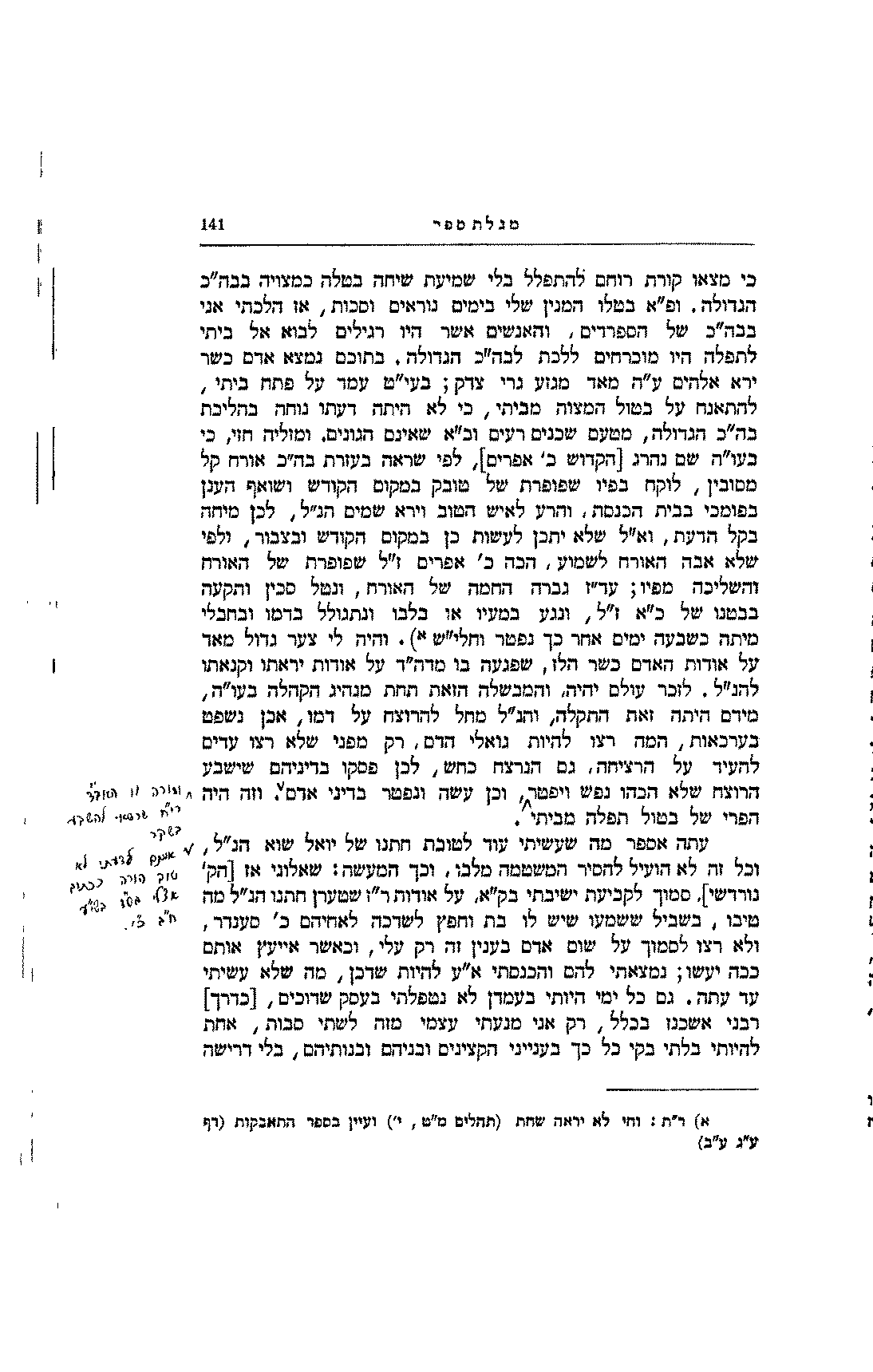
Margin readings in Scholem's copy (3)
| Printed anchor | Type (key sheet) | Mark | Reading | Certainty |
|---|---|---|---|---|
| שישבע הרוצח שלא הכהו נפש ויפטר ^, וכן עשה | V: omission | caret below the word; 3-line note in left (outer) margin, its left edge cut off in both scans | והורה לו(?) ... / רי"ח ... להשב[ע] / בשקר | partial |
| וכן עשה ונפטר בדיני אדם ^. וזה היה | V: omission | caret (v) after the word; 4-line note in left (outer) margin | אמנם לדעתי לא / טוב הורה כתוב / אצלי בס' שי"ע(?) / ח"ב כ'(?) | fairly sure |
| הפרי של בטול תפלה מביתי ^. | V: omission | caret after the word; no separate note seen | - | uncertain |
Page 142 (scan 160)
and investigation and attention to it, and I feared lest I stumble into harming someone, and something not right come out of my hands, and I would bring complaints on myself. And the second, which is the essential one: from worry over the waste of time in sending letters and troubling my thoughts with these matters, so that I would cause [neglect of] my work, the work of the Lord, God forbid — though even without this there are so many interruptions. So I kept away from it, as I showed in practice several times. Only these men I could not turn away empty; so I exerted my strength, and did not rest or keep quiet until the Lord had completed the thing through me as both sides wished. Even though I reckoned that I would not bring myself much good by it — for the Norden leaders used at first to send precious stones to me on commission, and when I found them this in-law, who had also begun to deal in this trade, [and here I had] (?) more by this, I would then cut off my own livelihood, as it seemed; and as I imagined [so it was] — even so I did not refrain from doing him good, as I wrote above of this. And so I told him plainly, when I was busy with him completing the match mentioned, that he should not think of me as a mere matchmaker for his daughter, but should consider that I was bringing into his hand a great business of trade with such great men, who were then at the highest rank of name and praise in all the world, of wealth and good name, in the abundance of their charity and kindness and their giving to the needy, such as no man had attained for many years; and all over the land of Ashkenaz [people sought] to attach themselves to them; also because of their great wealth, and their trade in precious stones was very great, and their credit was so strong as to be heard ⟨S: "the hearing of the ear"(?)⟩ in all the world, and whoever dealt with them was reckoned already blessed and enriched. R. Z. S. seemed to me a good and upright man, and I reckoned on him that even so I would hope to have him as a faithful friend all his days for this thing; for my eye was not evil and I did not care for my own benefit. For I could easily have spoken against him and held up the match and turned it elsewhere, for there were many who jumped at it, above all the leader R. A. Halle (?), who also had a fitting daughter and wanted to marry her to the brother of the Nordens mentioned. That man was old and respected, leader of the community for several years with a good name, and much richer than R. Z. S., and had no trade in precious stones at all; and he too was my in-law and an old and faithful friend. Through this he too turned against me and was like an enemy, complaining of me and saying: Am I not as worthy as R. Z. S., that you passed me over? But it was from the Lord, for R. Z. S. seemed to me more fitting and upright. I completed the match well, but at my own loss: for not only did I receive nothing from the parties beyond the plain matchmaker's fee, but R. Z. S. even cut it down for me, and I bore it, and thought that at least he would be a help to me and of use in every way I would need him — both on his side, with good counsel in business that came before me, and in turning his father-in-law's heart toward me, as he had promised me. And I in my innocence, at first after the completion of the match, used to go to him and show him the goods of precious stones I had received to sell,
וחקירה ושימת לב על זאת, ויראתי פן אכשל להרע לאדם, ולא יצא דבר שאינו מתוקן מת"י, ואעמיס תרעמות עלי; וזאת שנית והיא העצמית, מדאגה מדבר אבוד זמן, בהרצאת אגרות ולהטריד מחשבתי באלה הענינים, ואגרום ]בטול[ מלאכתי מלאכת ה' ח"ו, אף כי בלא"ה כמה בטלים, לכן נמנעתי מזה וכאשר הראיתי בפועל כמה פעמים, רק לאנשים האלה לא יכולתי להשיב פניהם ריקם, על כן השתדלתי בכח שלי, ולא נחתי ולא שקטתי עד אם כלה ה' הדבר על ידי כחפץ שני הצדדים, ואף אם שערתי כי לא אסבב לי כל כך טובה ע"י זה, לפי שהק' נורדשי היו מתחלה שולחים לידי א"ט בקומיסיאן, וכאשר אמציא להם מחותן הזה שהתחיל ג"כ לעסוק במו"מ הלז, והנה לי לו די יותר בזה, אז אקפח פרנסתי כפי הנראה, וכאשר דמיתי ]כן היה[, אעפ"כ לא נמנעתי מלהיטיב לו, וכמ"ש להנ"ל בזה, וכך אמרתי לו בפירוש כשהייתי עסוק עמו בשידוך הנ"ל לגמרו, כי לא יחשבני לשדכן גרידא לבתו, אבל יחשוב שאני מביא לידו עסק גדול של מו"מ עם אנשים גדולים כאלה, שהיו אז במעלה עליונה לשם ולתהלה בכל העולם, לעושר ולש"ט בהפלגת נתינת הצדקה וג"ח והענקה לנצרכים, מה שלא זכה אדם בשנים רבות, והיו בכל פני ארץ אשכנז להדבק בהם, וגם בסבת עשרם הרב ועסק במו"מ בא"ט כי גדול מאד ונאמנותם כי גברה לשמוע אותן בכל העולם, וכל אשר עסק עמהם היה חשוב שכבר נתברך ונתעשר; ורז"ש היה נראה איש טוב וישר בעיני, ועשיתי חשבון עליו שאעפ"כ אקוה אותו לאוהב נאמן כל הימים על הדבר הזה, כי לא היתה עיני רעה ולא חששתי לתועלת עצמי, כי בקלות הייתי יכול לקטרג ולעכב השידוך ולפנות לד"א, כי היו הרבה קופצים, ביחוד הק' ר"א האלי שהי"ל ג"כ בת הגונה, ורצה להשיאה לאחיהם של הנורדשי הנ"ל, והאיש הלזה היה זקן ונשוא פנים, מנהיג הקהלה כמה שנים בש"ט, ועשיר מופלג הרבה יותר מרז"ש, ולא הי"ל עסק בא"ט כלל, וגם הוא היה מחו' ואוהב ישן ונאמן, ועפ"ז נהפך גם הוא עלי, היה כאויב בהתרעמו עלי, ואמר וכי איני חשוב כרז"ש שהניח אותי, אך מה' היה, כי היה רז"ש נדמה בעיני יותר הגון וישר, וגמרתי השידוך בטוב, אבל בהפסד שלי, כי לא די שלא קבלתי מאנשי הצדדים יתר על שכר שדכנות פשוט מאומה, אך רז"ש גרע לי ג"כ וסבלתי, וחשבתי עכ"פ יהא לי לעזר ולהועיל בכל אופן שאצטרך לו, הן מצדו בעצה טובה בעסקי מו"מ שיזדמן לפני, והן להטות לב חמיו עלי, כאשר הבטיחני. ואני בתומי, מתחלה אחר גמר השידוך, הייתי הולך אליו ומראה לו סחורה א"ט שקבלתי למכור,
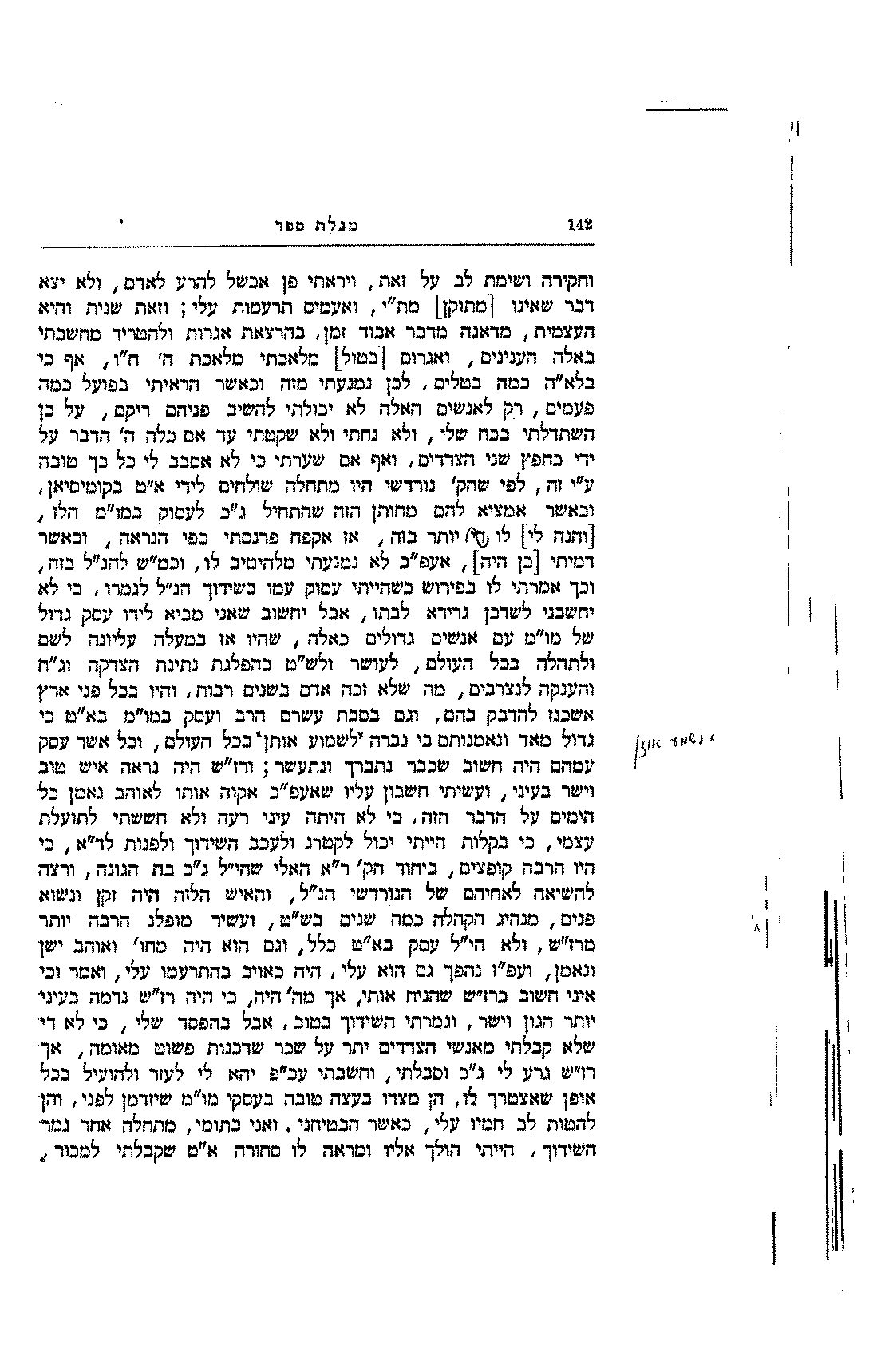
Margin readings in Scholem's copy (1)
| Printed anchor | Type (key sheet) | Mark | Reading | Certainty |
|---|---|---|---|---|
| ונאמנותם כי גברה x לשמוע אותן x בכל העולם | X: substitution | x marks before and after the two words; two words in right margin | שמע אוזן(?) | uncertain |
Page 143 (scan 161)
and asked him how and what, since I was not expert in trade. I said in my heart: I have a good friend, a good, upright and faithful heart, to take counsel from; for so he showed himself, as an upright man. "But his heart did not think so" (Isa. 10:7): in his heart he thought to swallow up all the trade of the Nordens, and his eye was evil toward my own small share that I had with them. And so R. Y. B. ⟨S: "R. Y. K."(?)⟩ told me the secret that I was [eating] his bread (?), and how R. Z. S. and his wife grumbled and complained that I was taking trade that was fit for him — although it was I who had brought him great trade and much business with them: perhaps he exchanged with them in one year more than a hundred thousand gulden in precious stones, and he did not give me a penny of brokerage; while I, in the several years I dealt with them in precious stones, did not reach in all half the sum he dealt in in one year. "They did me two [wrongs]: it was not enough that they did me no good" — he and his father-in-law Joel Schwab; but this old man's [enmity] against me was doubled, because of the trade mentioned that was before me, for their eye was evil toward me. This was the main reason for the hatred of the man mentioned, though he hung it [on another matter]; so much that he pursued me with every opposition he could make against me, not only in the matter of the quorum mentioned above, and against my will and in my anger I had to do so. In short he opposed me in everything possible on his side, and had it been in his power to drive me from this place, he would have done it, as R. Y. Buchbinder, who was of his family, told me plainly. I asked whether what Joel had done to me with the workman mentioned above was done because of me, and R. Y. said to me: God forbid; and he revealed to me in secret that it came to this from his hatred. Because of all the insults he did me I was filled with wrath against him, and I said to his son-in-law R. Z. S., when he was with me at a feast I made for my son-in-law R. S. Norden: I am sure that his father-in-law will not die of old age before he sees the disgrace of his descendants. And so it was with him: within a short time his son-in-law R. M. Stuttgart, who was parnas and leader in Frankfurt-on-Main, went bankrupt, and came here, a wanderer from his home, with his wife, Joel's daughter. R. Z. S. too — though he was not as bad in my eyes as his father-in-law — died some years later in his father-in-law's lifetime, and left many children to his father-in-law, but not much money; for, being eager for money, he extended much more credit, though he earned a lot. In the few years he dealt with the great Nordens he saw good fortune and prospered; but in the end, being hasty to get rich (Prov. 28:22), he lost a great deal.
I have now made known the opposition there was at the beginning of my stay in the holy community of Altona. But apart from this there was no opponent in the community; on the contrary, even those who had hated my father, of blessed memory, loved me very much, above all the whole house of R. B. K., his sons and sons-in-law, and in general the people at large; even the old man R. Y. Ḥ., the head of the court, and the householders spoke in my praise behind my back. The community of Altona in particular showed me affection: every festival of Sukkot they sent me a fine etrog as a gift, and so they did with me year by year until the year [5]511 [1751]. When ⟨S: "the wicked"⟩ Eybeschütz ⟨S: "may the name of the wicked rot"⟩ came, "contempt came too" (Prov. 18:3), and it was
ושואל לו איך ומה, לפי שלא הייתי בקי במו"מ; אמרתי בלבי יש לי חבר טוב ולב טוב וישר ונאמן לקחת ממנו עצה, וכפי שהיה מראה את עצמו כאיש ישר; ולבבו לא כן ידמה, כי בלבו חשב לבלוע כל מו"מ של הנורדשי, והיתה עינו רעה בשלי המעט מזער שהי"ל עמהם, וככה הגיד לי רי"ב הסוד שהיה אני לחמו, ואיך רז"ש ואשתו מתאוננים ומתרעמים על שאני לוקח מו"מ הראוי לו, עם היות אני שהבאתי לו מו"מ גדול ועסק רב עם הנ"ל, אפשר החליף עמהם בשנה אחת יותר ממאה אלף זהובים בא"ט, ולא ההנה אותי פרוטה סרסרות, ואני כמה שנים שעסקתי עמהם בא"ט, לא עלה הכל לחצי הסך שעסק הוא בשנה אחת, ותרתי עבדי לי, ]לא[ מסתייהו דלא עבדו לי טובה, הוא וחמיו יואל שוא, אבל נכפלה ]האיבה של[ זה הזקן נגדי, על אודות מו"מ הנ"ל אשר לפני, שהיתה עינם רעה בי, וזה היה עיקר טעם השנאה של הנ"ל, אע"פ שתלה ]בענין אחר[, כל כך שרדף אותי בכל התנגדות שהיה יכול לעשות לי, לא לבד בדבר המנין כנ"ל, ועל אפי וחמתי הוצרכתי לעשות כן; בקיצור התנגד אלי בכל מה שהיה אפשר מצדו, ואם היה ביכולתו לגרשני מן המקום הזה היה עושה, וכמו שהגיד אלי בפירוש ר"י בוך בינדר שהיה מבני משפחתו, ושאלתי אם בסבתי נעשה מה שעשה לי יואל עם הפועל הנ"ל, ואמר לי ר"י: ח"ו, וגלה לי בסוד שמשנאתו בא לכלל זה; ומפני כל הנאצות שעשה לי נתמלאתי עברה עליו, ואמרתי לחתנו רז"ש כשהיה אצלי על סעודה שעשיתי לחתנו ר"ש נורדן, מובטח אני שלא ימות חמיו מן הזקנה, עד שיראה בזיונות בי"ח, וכן היה לו: בתוך זמן קצר היה לפליטה חתנו ר"מ שטוקרט, שהיה פו"מ בפפד"מ, ובא עד הנה נודד מביתו זו אשתו בתו של יואל, גם רז"ש עם שלא רע בעיני כחמיו, אחר איזה שנים מת בחיי חמיו, והניח ילדים רבים לחמיו אבל לא ממון רב, כי בסבת היותו להוט אחר הממון הקיף הרבה יותר, עם שהרויח הרבה. באיזה שנים שעסק עם נורדשי הגדולים ראה סימן יפה והצליח, אבל בסוף שהיה נבהל להון אבד הרבה. הנה הודעתי ההתנגדות שהי"ל בתחלת ישיבתי בק' אלטונא; אבל זולת זאת לא הי"ל מתנגד בקהלה, אדרבה אפילו אותן שהיו שונאים לאמ"ה ז"ל, היו אוהבים אותי מאד, ביחוד כל בית רב"ך בניו וחתניו ובכלל גם העם מקצה, וגם אפילו הזקן רי"ח האב״ד, והב"ב היו מספרים בשבחי מאחורי; וקהל אלטונה בפרטות הראו לי חבה, בכל יו"ט של סכות היו שולחים לי אתרוג נאה במתנה, וכך נהגו עמי דבר שנה בשנה עד שנת קי"א; בבוא אייבשיצר בא גם בוז, והיה
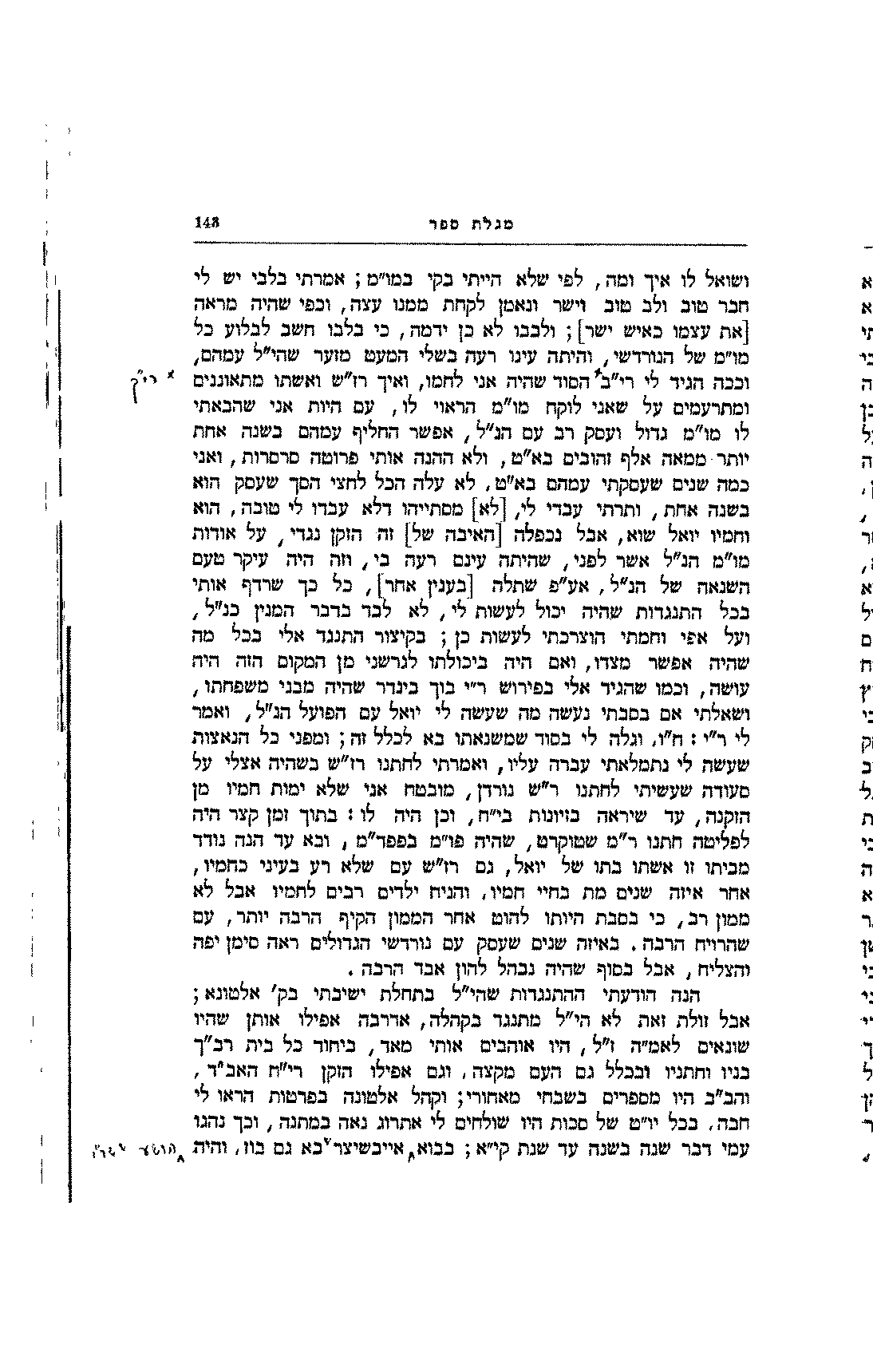
Margin readings in Scholem's copy (3)
| Printed anchor | Type (key sheet) | Mark | Reading | Certainty |
|---|---|---|---|---|
| וככה הגיד לי רי"ב x הסוד | X: substitution | x mark after the name; one word in left (outer) margin | רי"ך(?) | uncertain |
| עד שנת קי"א; בבוא ^ אייבשיצר בא גם בוז | V: omission | caret below the line; one word in left (outer) margin | הרשע | sure |
| בבוא אייבשיצר ^ בא גם בוז | V: omission | caret (v) after the name; one word in left (outer) margin | שר"י | sure |
Page 144 (scan 162)
[at peace with me] on all sides (cf. 1 Kgs. 5:18) for a long time; those near to me as said above. Especially since not only was I a servant pleasing to everyone, with my body and my means and all my hand could reach, but also with what belonged to others, as I will tell after this. But first I will tell a few grains of the good I did to the house of R. A. Wind, who are somewhat related to me, and whom I regarded as close kin; and almost all of them repaid me evil for good.
First, "my soul was grieved for the poor" (Job 30:25), R. Bendet, son-in-law of R. A., who had lost his property and was seized by the pangs of poverty. So my compassion was kindled for him, and I said in my heart: I will not withhold the good that is in my hand to do, "and great is the deed," etc. For when I saw that all the faces of this [people] were at peace with me and loved me in their hearts and wanted to do me a favour, only that the hindrance was on my side, for I would not accept anything, I thought: would it not [be good if] I could obtain favour from the Lord, by rousing the hearts of the generous among the people to make a livelihood for R. B. mentioned? So this is what I did: I wrote the text of a deed of donation and obligation, for people to sign, for the livelihood of the man mentioned, and I spoke at great length in his praise, with great exaggeration and the stirring of fine and elegant rhetoric — so much that even his brother-in-law, my second cousin R. Z., peace be upon him, told me I had praised him too much. Only the greatness of the pain I had for him, and the love of a poor man and a man of Torah, "upset the order" (Gen. Rabbah 55:8), outside my nature and my custom; for I hate exaggeration greatly, but this time I went outside my bounds, because of the love of kinship together with the love of Torah, as said. I went myself and knocked on the doors of the generous, and rose early to the doors of the leaders of Hamburg, and these were my words to them: Since I have seen your good and upright heart, and you have shown your mind several times that you wish to benefit me, and I thanked you for your good will, and did not wish to burden you with anything — now the Lord has brought before me a great, double commandment, and I have come to give you its merit: to come to the help of a worthy poor scholar. They agreed at once. R. Z. asked me who had written this text of the obligation, for it pleased him greatly, and I told him: one of the Poles who go around [here in Altona]; and he answered me that he could not believe it, and laughed at my words. Be that as it may, the writing together with the spoken words brought about for the good of the man mentioned some hundreds of Schock, over the course of several years, which they took upon themselves, each man as he could, by their signatures under the said writing, which is in my hands. And with all that I was moved and strove to rouse the hearts of the leaders to have pity on the poor man mentioned, in truth they did it only for my sake, as they told me with full mouth that they were not doing it for his sake, and spoke ill of him; and had they not shown me favour, they would not have looked at him. Especially R. M. Kohen, the son of R. B. K., who was married to a relative of R. B. [a].
Kahana's notes
- [a] The abbreviation means R. Bendet, mentioned before. R. M. Kohen is the rabbi Abraham Meir Kohen, who was
לי שלום מכל עבריי איזה זמן רב. מעשי קרבוני כנ"ל. ביחוד כי לא לבד הייתי עבד נרצה לכל אדם, בגופי ובמאודי ובכל אשר תשיג ידי, אבל גם בשל אחרים, כאשר אספר אחר זאת. רק תחלה אספר איזה גרגרים שעשיתי בטובה לביתו של ר"א ווינד, שהם קצת קרובים עמי וחשבתי אותם כקרובים גמורים, ורובם ככולם כמעט גמלוני רעה תחת טובה: ראשונה עגמה נפשי לאביון ר' בענדט חתנו של ר"א, שירד מנכסיו ואחזוהו חבלי עוני, על כן נכמרו רחמי עליו, ואמרתי בלבי לא אמנע הטוב שבידי לעשותו, וגדול המעשה כו', כי הנה בראותי כל פני ]העם[ הזה שלמים עמי, ואוהבים אותי בלבם ורצו לעשות עמי חטיבה, רק המניעה מצדי שלא רציתי לקבל מאומה, וחשבתי הלא ]טוב אם[ אוכל להפיק רצון מה', בהעיר לב הנדיבים בעם לעשות מעמד פרנסה לר"ב הנ"ל, לכן זאת עשיתי: כתבתי נוסח שטר התנדבות והתחייבות על אנשים שיבואו על החתום לצורך פרנסת הנ"ל, והרביתי לספר בשבחו בהפלגה גדולה והתעוררות מליצה נאה וצחה, עד שאפילו גיסו ש"ב ר"ז ע"ה, אמר אלי שהפלגתי בשבחו יותר מדאי, רק גודל הצער שהי"ל בעבורו, ואהבת עני ובעל תורה היא קלקלה את השורה וחוץ לטבעי ומנהגי, כי אני שונא לדור הפלגה, אך הפעם יצאתי חוץ לגדרי, בסבת אהבת הקורבה עם אהבה של תורה כנ"ל, והלכתי בעצמי ודפקתי על פתחי נדיבים, והשכמתי לפתחי קצינים שבהמבורג, וכה היו דברי אליהם: הנה אחר שראיתי לבבכם הטוב והישר, וגליתם דעתכם כ"פ שרצונכם להנות אותו, והחזקתי לכם טובה על רצונכם הטוב, ולא להעמיס עליכם בכלום; ועתה הקרה ה' לפני מצוה רבה כפולה, ובאתי לזכות אתכם בה, הלא היא: לבוא בעזר עני הגון ת"ח. נאותו לי מיד. ור"ז שאל אותי מי כתב זה הנוסח של התחייבות, כי הוטב בעיניו מאד, וא"ל אחד מאנשי פולין הסובבים ]בפה אלטונא[, וענה אותי זה לא יוכל להאמין ושחק לדברי. יהי מה הכתב עם דברים שבע"פ, פעלו לטובתו של הנ"ל איזה מאות שוק, על משך איזה שנים שקבלו עליהם, איש איש כמסת ידיו בחתימת ידיהם תחת כתב הנ"ל, אשר הוא תחת ידי. ועם כל מה שהתפעלתי והשתדלתי לעורר לבם של הקצינים לרחם על העני הנ"ל, באמת לא עשו אלא בשבילי, כאשר אמרו אלי בפה מלא שאינם עושים בשבילו ודברו בגנותו, ולולי פני נושאים לא הביטו אליו. ובפרטות ר"ם כהן בנו של רב"ך, שהיה נשוי קרובתו של ר"ב א.
- [א] ר"ת: ר' בענדט הנזכר מקודם. ר"ם כהן הוא הרב אברהם מאיר כהן, שהיה
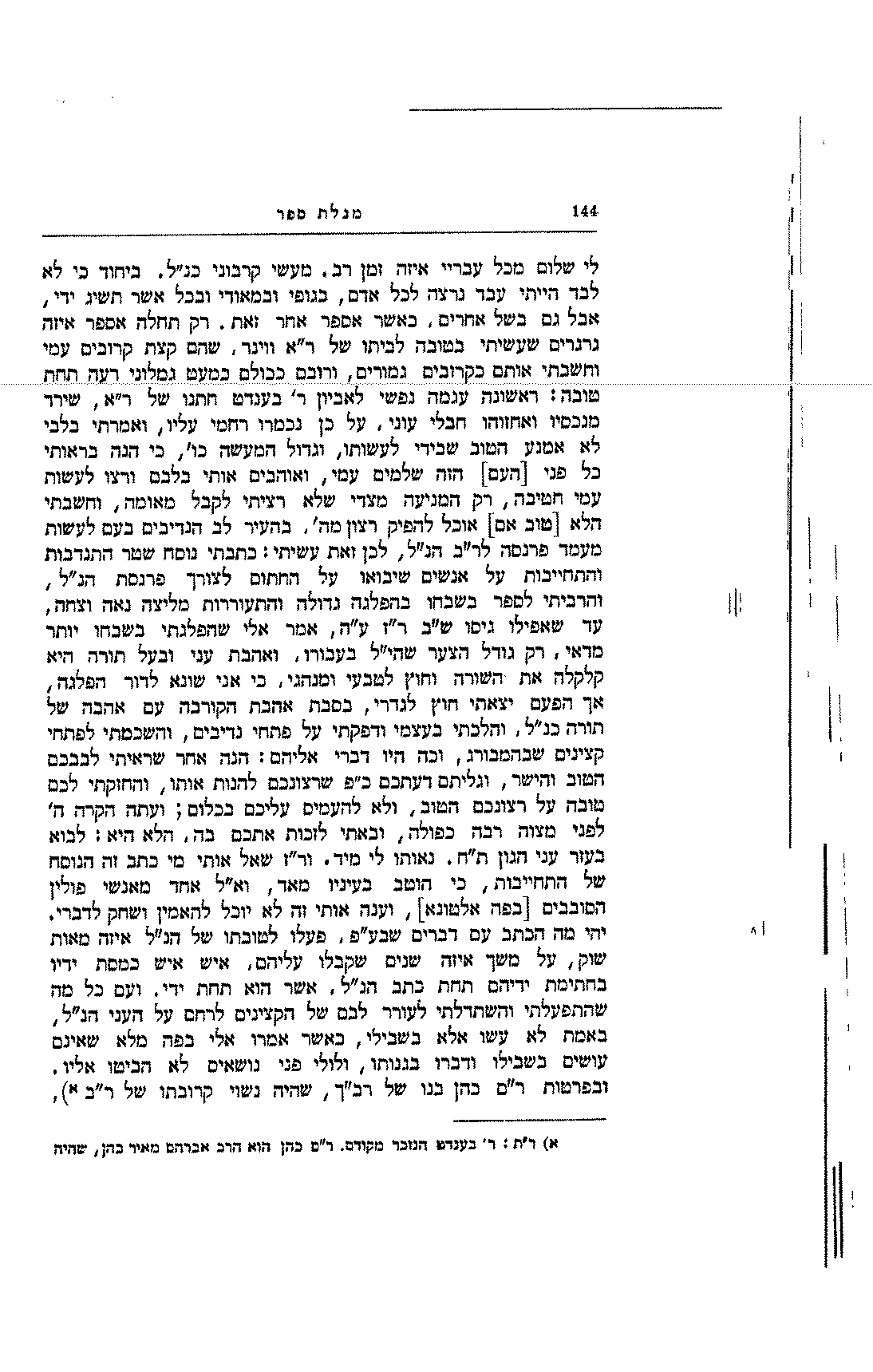
Typed insert for p. 145 (scan 164)
A typed sheet bound into Scholem's copy (scan 163, before it, is blank), headed "(for p. 145)" and "Gloss:". It gives a gloss that the Oxford manuscript has in a narrow column in the margin; a caret at its head matches the caret after "to take a bribe to pervert [justice]" on p. 145. One handwritten footnote.
Here I will mention more of the Lord's kindnesses: not only did I take the trouble to go myself [and to as]k kindness of others with a request, which I had not been used to before, but also in Emden for the needs of R. Aberle, as I wrote above. And though it was very hard for me to go round the town from house to house, for several reasons — both because of the loss of time, and because "I know not to give flattering titles" (Job 32:22) — and moreover I was prone to [trouble from] the urine, as said above; besides this I was like one lame in one leg, ever since I was in Emden, when an ailment afflicted me in one of my legs, on which a swelling (?) rose because of a joint (?) [a], which turned into a salty discharge (?) for some years; I treated it with medicines in Emden and it did not help, and I brought this pain too to Altona. With it I went round the houses of the leaders for R. B. D., and paid no heed even when at times I could not stand. But the merit of the commandment stood by me. Afterwards the Lord sent me a Jewish doctor, who healed me with God's help.
(The gloss is written in the manuscript in a narrow column beside p. 1 of fol. 73.)
Footnote (handwritten) - [a] A blank space in the manuscript.
(לעמ' 145) הגהה: כאן אזכיר עוד חסדי ה' כי לא לבד שטרחתי לילך בעצמי [ולש]אול לחסד מזולתי בבקשה מה שלא נחיתי תמול שלשום, רק גם בעמדין לצורך ר' אברלי כמש"ל. וגם שהיה קשה לי מאד לסבב העיר מבית לבית מכמה טעמים אם מחמת הביטול ואם כי לא ידעתי אכנה ועוד שהייתי עלול מן השתן כנ"ל נוסף על זה הייתי כמו נכה רגל אחת גם מאז בהיותי בעמדן התעולל בי מיחוש ברגלי אחת שעלתה בו נימי מחמת חבור א שב ממנו לחלוח מלוח איזה שנים ועסקתי ברפואה בעמדן ולא הועיל והבאתי גם זה הכאב לאלטונה ועמו חזרתי על בתי הקצינים בשביל רב"ד ולא חששתי אף אם לפעמים לא יכולתי עמוד. אך זכות המצוה עמדה לי. הזמין לי ה' אח"כ רופא יהודי שריפא אותי בעז"ה. (ההגהה כתובה בכ"י בעמודה צרה בצד עמ' א' של דף 73)
- [א] מקום פנוי בכ"י
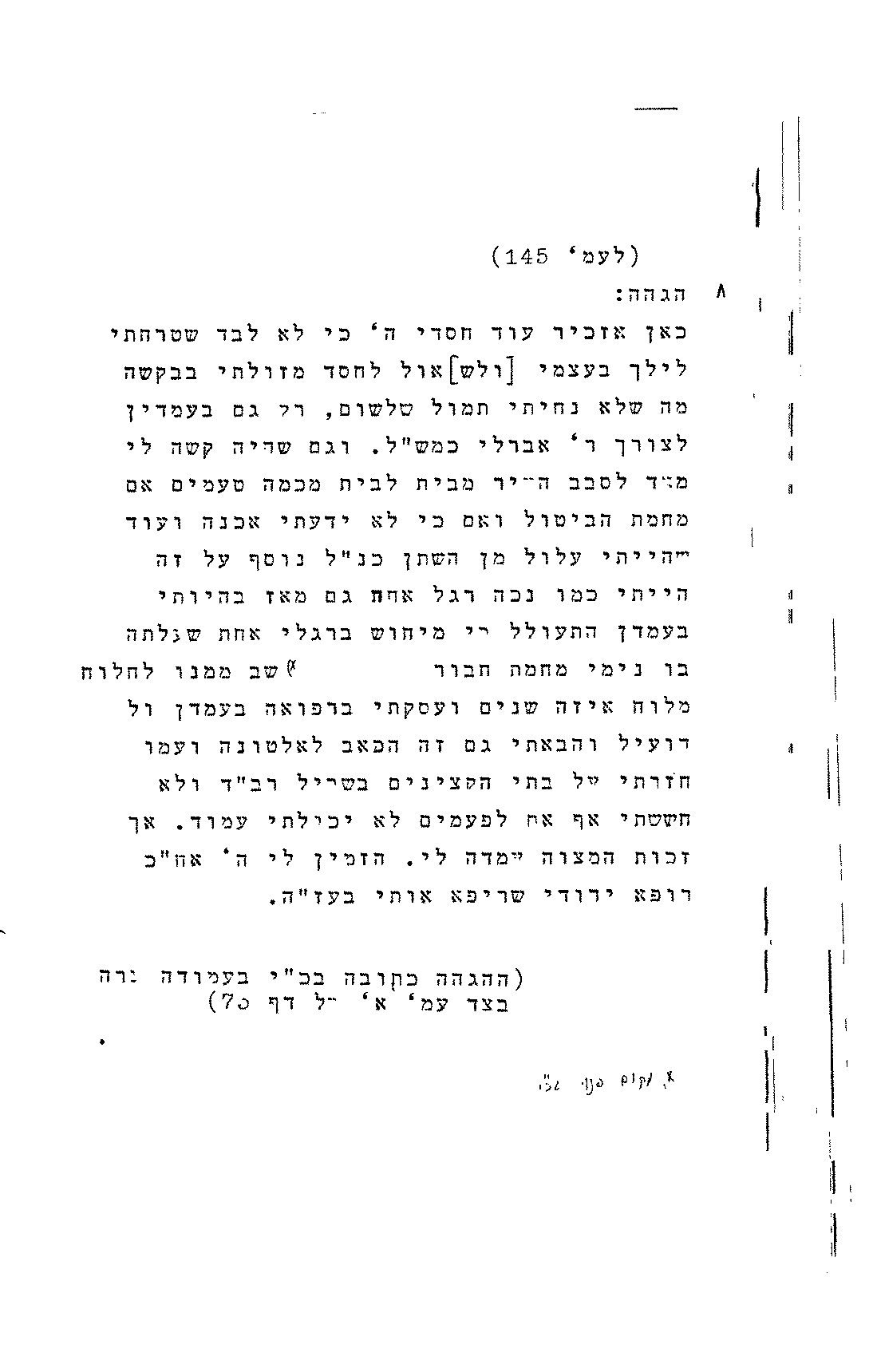
Page 145 (scan 165)
[The matter] was plain in my eyes, that he would do it at once as a duty. But he told me plainly that he did not want to give R. B. anything, for he was not worth it; but he did not want to turn me away empty. So, if I was willing to accept a favour from him, he would do it. I told him: So be it; I will count myself the receiver of the favour. He doubled the words, that on this condition he resolved to grant my request: that I assure him that the benefit touched me myself. I had to say to him truly: I regard it as if I had received it. Then he vowed a fitting gift, fifty Schock a year for some years; and so did his brother R. Z. and his brother-in-law R. E. A. and others [a], each according to his means: they signed and concluded, for they were doing kindness with me; but for this they would have sent me away empty. But two great leaders, on whom I had reckoned more than on all the others, sent me away in dejection: they were Joel Schwab, who was a near relative of the poor man, and R. Eli Schayer (?), who were mighty leaders. With these I could do nothing; for all the force of my pleading and my eloquence, they would not [give] to me. The first gave a reason for it and spoke at length to his discredit; he told me ugly deeds of his, that he was suspected of money not honestly come by, and of taking a bribe to pervert [justice]. ⟨S: a caret, pointing to the typed sheet that comes before this page⟩
This was my way and my practice with R. B. in particular, besides what I gave him of what was sent into my hands. Once his brother-in-law R. T., peace be upon him, asked me to buy from his brother-in-law R. B. an iron chest that had been left to him empty of money, and I gave fifteen Reichstaler for it at once, as he asked, though it was not worth half. Also to the son-in-law of [R. T.], R. Y. Breslauer, I used to do kindness with my money; for he used to send to me to borrow some sum, about fifty Reichstaler, sometimes less and sometimes more, and I did not refuse to send it to him and to lend to him as he wished, without any pledge or security at all. He profited by my money as he liked, kept the money for his needs as long as he needed, and returned it when it suited him, without any gain in the world, God forbid. But once I lent fifty Reichstaler, and R. T. counted the money into his messenger's hand, [and he had] the money for a fixed time; at the time of payment he sent me only forty-nine Reichstaler, one less than I had sent him, with the excuse in his messenger's mouth that one Reichstaler had been missing from the money he received. At this R. T., the uncle of R. Z.'s wife, was angry, for he said: I am the one who counted the money correctly into the messenger's hand, and why did he keep silent then? At any rate he did not return it to me ⟨S: a three-line note: "and I bore it willingly, and this was my profit"⟩; and even so he came back and borrowed from me several times, in every
Kahana's notes
- [continued from p. 144] head of the court and head of the yeshiva in the community of Hanover, and died on 22 Sivan [5]518 [1758]; see the history of R. Ber Kohen, written with good taste and knowledge by Prof. D. K[aufmann], may his light shine, in the journal mentioned before (p. 274, no. 4).
- [a] R. Z. is R. Judah Seligmann, and his brother-in-law R. E. A. is R. Elijah Oppenheim, who stood strongly at the right hand of R. Jonathan Eybeschütz; but Ya'avetz kept silent about him, and said in his book Shevirat Luḥot ha-Aven (fol. 44) that R. E. A. "is counted as dead", for the pangs of poverty had seized him.
]הדבר[ היה פשוט בעיני שיעשה מיד בתורת חיוב, אבל הוא אמר אלי בפירוש שהוא אינו רוצה לתת לר"ב מאומה, שאינו שוה, אך אינו רוצה להשיב פני ריקם, בכן אם אני רוצה לקבל ממנו טובה יעשה, וא"ל כן יהיה, אני אחשב מקבל הטובה, וכפל הדברים שעל אופן זה הוא גומר בדעתו לתת בקשתי, שאבטיח לו כך שלי לעצמי נוגע ההטבה, והוצרכתי לומר לו באמת: הריני כאלו התקבלתי; אז נדר מתנה הגונה חמשים שוק לשנה על איזה שנים, וכן אחיו ר"ז וגיסו רא"א ואחרים א, כ"א לפי ערכו חתמו וגמרו כי עמי היו גומלים חסד, לולי זאת ריקם שלחוני; אך שנים קצינים גדולים שעשיתי עליהם חשבון יותר מכל זולתם, המה הוציאוני בפחי נפש, הלא המה יואל שוא והוא היה קרוב לדל, וכ' אלי' שייאר שהיו קצינים אדירים; אצל אלה לא יכולתי לפעול מאומה, בכל תוקף התעוררותי והמליצתי לא אבו ]לתת[ אלי, והראשון נתן טעם לדבר והרבה לספר בגנותו; כך סח לי מעשים מכוערים ממנו, שהוא נחשד על ממון שאינו של יושר ולקחת שוחד להטות. זה היה דרכי ומנהגי עם ר"ב בפרטות, מלבד מה שהענקתי אותו ממה שנשלח לידי, ופ"א בקש ממני גיסו ר"ט ע"ה, שאקנה מגיסו ר"ב ארגז של ברזל שנשארה לו ריקנית מכסף, ונתתי מיד בעדה ט"ו ר"ט כאשר שאל, ולא היתה שוה החצי, גם לחתנו של ]ר"ט[ הוא ר"י ברעסלר, הייתי רגיל לעשות ג"ח בממוני, כי היה רגיל לשלוח אלי ללות סך מה כחמשים ר"ט, פעם פחות או פעם יותר, ולא מנעתי ממנו לשלוח לו, ולהלותו כחפצו בלי שום משכון ובטחון כלל והיה מרויח בממוני כרצונו, ומחזיק המעות לצרכו כאשר היה צריך, ומחזיר בעת אשר ייטב בעיניו, בלי שום הנאה בעולם ח"ו, אבל פ"א הלויתי חמשים ר"ט, ור"ט ספר המעות ליד שלוחו, ]והיה בידו[ המעות זמן מסוים, ובזמן הפרעון שלח לי רק מ"ט ר"ט, אחד פחות ממה ששלחתי לו, ומענה בפי שלוחו, שהיה חסר א' ר"ט מן המעות שקיבל, ועד"ז נתקצף ר"ט דוד אשתו של ר"ז, כי אמר אני הוא שספרתי המעות ליד השליח לנכון ומדוע שתק אז, עכ"פ לא השיב לי, ואעפ"כ חזר ולוה ממני כ"פ בכל
- אב"ד ור"מ בקהלת הנובר, ונפטר כ"ב סיון תקי"ח, עיין תולדות ר' בער כהן שכתב בטוב טעם ודעת הפראפֿ' רד"ק נ"י, במ"ע הנזכר מקודם (צד רע"ד סי' ד').
- [א] ר"ז הוא ר' יהודה זעליגמאן, וגיסו רא"א הוא ר' אליהו אופנהיים, והוא עמד לימין מהר"י אייבשיץ מאד, אך יעב"ץ שתק ממנו ואמר בספרו שבירת לוחות האון (דף מ"ד) שרא"א חשוב כמת כי אחזוהו חבלי עוני.
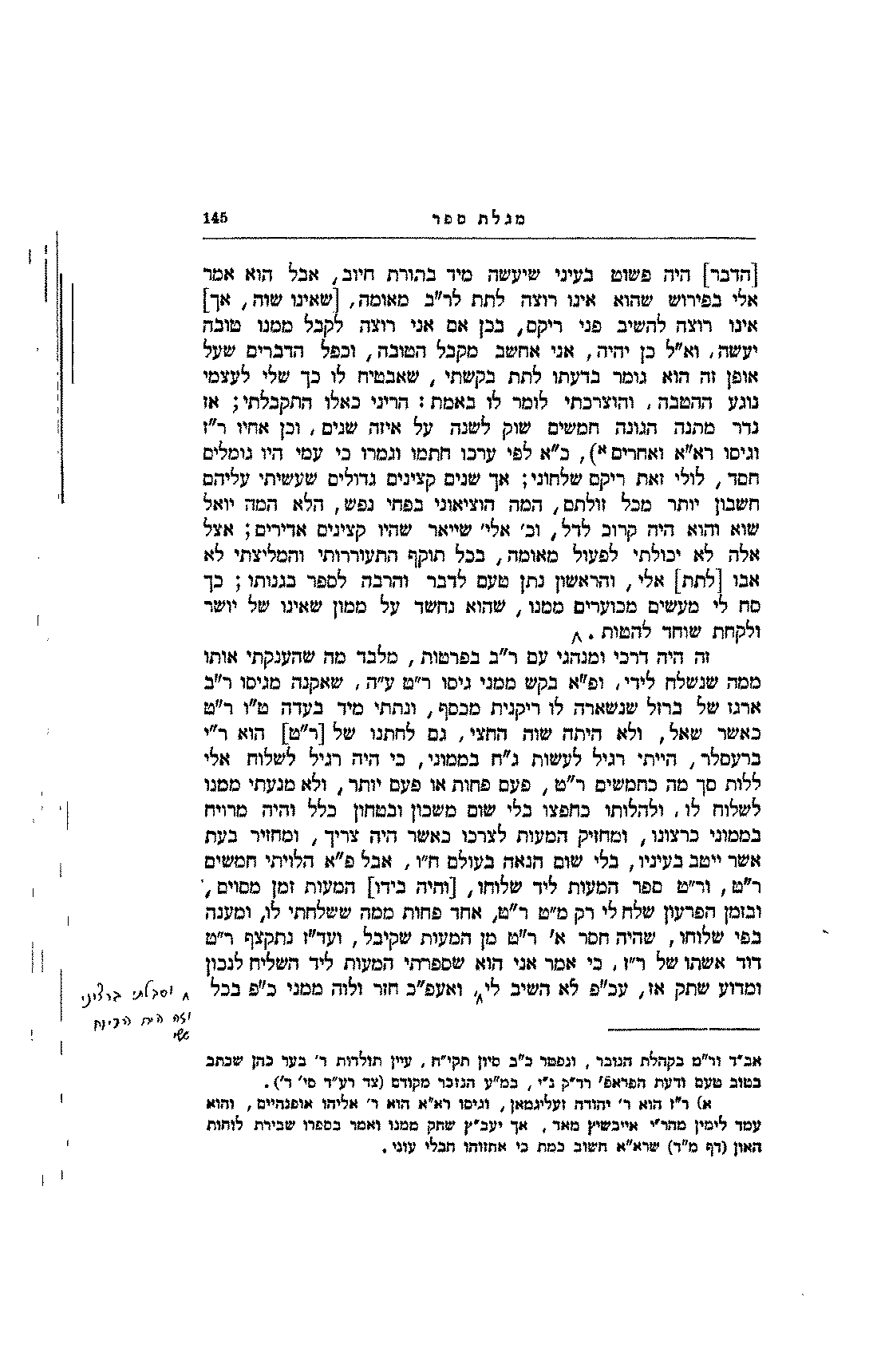
Margin readings in Scholem's copy (2)
| Printed anchor | Type (key sheet) | Mark | Reading | Certainty |
|---|---|---|---|---|
| ולקחת שוחד להטות. ^ | V: omission | caret after the paragraph, pointing to the typed sheet (scan 164) | (see scan 164) | sure |
| עכ"פ לא השיב לי ^, ואעפ"כ חזר ולוה ממני | V: omission | caret; 3-line note in left (outer) margin | וסבלתי ברצון / וזה היה הריוח / שלי | fairly sure |
Page 146 (scan 166)
time that he needed money. These two men were among my troublers at the time of the quarrel of ⟨S: "the enemy"⟩ Eybeschütz ⟨S: "may the name of the wicked rot"⟩; they strengthened his hand ⟨S: two words, "force(?) and rebellion(?)"⟩ with all their might. And R. B. is the broker of sin [a] who brought him here to destroy the community, and afterwards they repaid [me] with evil, as I wrote above.
To the rest of the house of R. A. I did good with all my power, especially to the brothers R. N. and R. T., peace be upon them, the sons of R. A.: I was a father and a patron to them in all they asked of me. To the son-in-law of the first I also lent a certain sum on trust, and I stood a great risk, and it was already almost past hope; after a long time and with great difficulty I saved what was mine, through goods I took from him. And R. T. was master over all I had. These brothers were faithful in their love for me from beginning to end, and acknowledged the good I had done them. Even their brother-in-law R. U. Halle had a benefit from me: I used to deposit with him sums of money from what I had sold of precious stones, and when I received bills of exchange I used to hand them to him, and took from him bills of exchange on Amsterdam, and he made the account for me as was right in his eyes, but not as was right in the eyes of those who understand these matters; for I was not expert in the exchange rate [b], and I relied on his honesty. But afterwards those who knew revealed to me that he had not dealt fairly with me in this, as I wrote above. I will not break off the course of the story, so I will leave this aside until the time for it comes. Only to make known that R. U. Halle too and his whole house turned their backs on me at the beginning of the quarrel ⟨S: a note, its edge cut off, partly read: "… of my enemies(?)"⟩ mentioned above. From them evil went out to this community; "from them profaneness went out into all the land" (Jer. 23:15), to believe lies about me, as though I had invented falsehoods about Eybeschütz ⟨S: a two-line note, its edge cut off, partly read: "… the abomination / … the enemy mentioned"⟩ out of envy of his greatness. For they said: Is it not something, that this man R. U. Halle, "my familiar friend, in whom I trusted" (Ps. 41:10), especially because of his wife's kinship — and I was a crown and a diadem to the whole family, and great affection was shown me by them at first; and this man R. U. too had won the name of a worthy man, as he was held in my eyes too, only he was a fool — and he and his father-in-law's house betrayed me. Therefore they believed him ⟨S: two words, "that he is not (?) [as] he is"(?)⟩, and he caused great harm. In the end he recognised his sin, but he repented and confessed only after "the waters had come in even to the soul" (Ps. 69:2), and he paid for it on his own head, as I wrote above, for our many sins — may his death be his atonement. Then his wife and sons turned and confessed that they had done so unlawfully.
Now, besides that I was there with my strength and my wealth for all "who seek the face of Jacob, selah" (cf. Ps. 24:6), I did this too: at the beginning of my stay here my beloved Norden of London appeared to me "from afar" (Jer. 31:2), [which had not entered] my mind, and "I had not thought to see his face" (Gen. 48:11). I let him know that I did not need this, for I was content [with what] I had ⟨S: a three-line note, its edge cut off, partly read⟩, but [in this I would agree] with him: that I would accept the surplus for the needs of the poor of my town; [and if he wished it], well and good. And he agreed
Kahana's notes
- [a] R. B. is R. Bendet mentioned before; see Edut be-Ya'akov (fol. 64b), where he says: "The brother-in-law of R. Z., R. B. ['A.], who helped the hand of the transgressor (?), was shattered and his neck was broken."
- [b] The abbreviation means "in the exchange rate (Kurs) of money"; see Edut be-Ya'akov (fol. 28b).
עת שהיה צריך למעות. אלה שני האנשים היו בעוכרי בזמן הריב של מאייבשיץ, החזיקו בידו בכל כחם, ור"ב הוא הסרסור עבירה א שהביאו לכאן להחריב הקהלה ואח"ז גמלו רעה כמש"ל. ולשאר בית ר"א עשיתי טובה בכל יכולתי, בפרט להאחים ר"ן ור"ט ע"ה בני ר"א, הייתי לאב ולפטרון בכל אשר מבקשים ממני. גם לחתנו של הראשון הלויתי סך מסוים באמונה, והייתי באחריות גדולה וכבר היה כמעט אחר יאוש, ואחר זמן רב ובקושי גדול הצלתי את שלי, ע"י סחורה שלקחתי ממנו, ור"ט היתה מושל בכל אשר לי; ואלה האחים היו נאמנים באהבתי מתחלתם עד סופם, והכירו הטובות שעשיתי עמהם, גם אפילו גיסם ר"ו האלי היתה לו טובת הנאה ממני, שהייתי מפקיד בידו סך ממון, ממה שמכרתי סחורה א"ט, וכשהייתי מקבל ח"כ הייתי מוסר בידו, ולוקח ממנו ח"כ על אמשטרדם, והיה עושה לי חשבון כפי הישר בעיניו, אך לא כאשר הישר בעיני המבינים בענינים הללו, שלא הייתי בקי בק"מ ב והייתי סומך על נאמנותו, אבל אח"כ גלו לי היודעים שלא נהג עמי כשורה בזה וכמש"ל. ולא אפסיק המשך ספור, לכן אניח זה מן הצד עד עת בוא דברו. רק להודיע שגם ר"ו האלי וביתו בכלל הפכו אלי עורף בהתחלת הריב להנ"ל, מהם יצאה הרעה לקהל הזה, מאתם יצאה חנופה לכל הארץ, להאמין עלי כזבים כאלו המצאתי שקרים על אייבשיץ מקנאת גדולתו, כי אמרו הלא דבר הוא, שזה האיש ר"ו האלי איש שלומי אשר בטחתי בו, ביחוד בסבת קורבת אשתו, והייתי לנזר ולעטרה לכל המשפחה, וחבה יתירה נודעת לי מהם בתחלה, גם האיש הלז ר"ו זכה לשם אדם כשר, כאשר היה מוחזק בעיני ג"כ, רק היה סכל, וגם הוא ובית חמיו בגדו בי; על כן האמינו אותו, וגרם רעה רבה ולסוף הכיר עונו, אבל נתחרט והודה אחר שבאו מים עד נפש, ושלם אותו בראשו כמש"ל בעו"ה, תהא מיתתו כפרתו, אז שבו והודו אשתו ובניו אשר כן עשו שלא כדת. הנה מלבד שהייתי נמצא בכחי והוני לכל מבקשי פני יעקב סלה, עוד זאת עשיתי, כי בראשית ישיבתי פה, מרחוק נראה לי אהובי נורדן מלונדון ]אשר לא עלה[ על דעתי וראה פניו לא פללתי, והודעתי שאינני צריך לכך כי אני מסתפק ]במה[ שבידי, רק ]בזאת אאות[ לו שאקבל המותר לצרכי עניי עירי, ]ואם רוצה בכך[ הרי טוב, והתרצה
- [א] ור"ב, הוא ר' בענדט הנזכר מקודם, ועיין עדות ביעקב (דף ס"ד ע"ב) וז"ל: גיסו של ר"ז רב"ע שסייע ידי ע"ע, נפץ ונשברה מפרקתו.
- [ב] בק"מ, ר"ת: בקורש ממעות, עיין עדות ביעקב (דף כ"ח ע"ב).
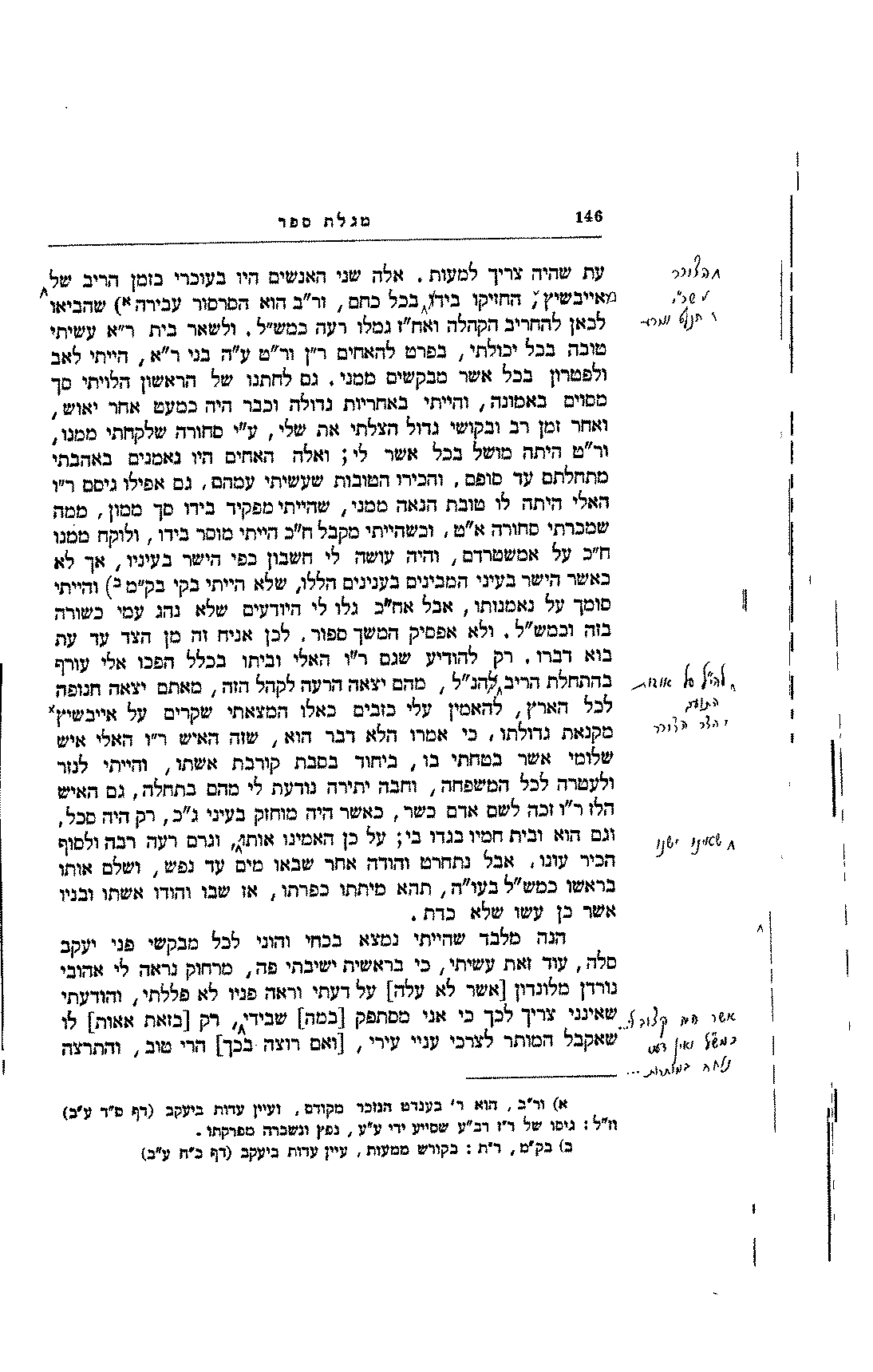
Margin readings in Scholem's copy (7)
| Printed anchor | Type (key sheet) | Mark | Reading | Certainty |
|---|---|---|---|---|
| בזמן הריב של ^ | V: omission | caret at the line end; one word in right margin | הצורר | fairly sure |
| מאייבשיץ ^, החזיקו בידו | V: omission | caret (v) after the name; one word in right margin | שר"י | sure |
| החזיקו בידו ^ בכל כחם | V: omission | caret below the line; two words in right margin | תוקף(?) ומרד(?) | uncertain |
| בהתחלת הריב ^ להנ"ל (the ל marked) | V: omission | caret below the line; note in right margin, its right edge cut off in both scans | ... הי"ל(?) של אוי[בי](?) | partial |
| כאלו המצאתי שקרים על אייבשיץ x | X: substitution | x mark after the name; 2-line note in right margin, its right edge cut off | ... התועב / ... הנ"ל הצורר | partial |
| על כן האמינו אותו ^, | V: omission | caret after the word; two words in right margin | שאינו ישנו(?) | uncertain |
| כי אני מסתפק [במה] שבידי ^, | V: omission | caret after the word; 3-line note in right margin, its right edge cut off | שר ... קלוב לו... / מש"ל ואין ... / ... במעותיו(?)... | partial |
Page 147 (scan 167)
with me in this, and he used to send into my hands at every festival a certain sum, for me, in my name, to distribute also as I wished; and he kept this up for some years. He is also remembered for good, for the kindness he did me in sending me some goods from England, by which, with God's help, I earned a scanty livelihood for my house. But I did not attain this except with great difficulty, and not as I wished and wanted; for against his will he made the effort in this matter (?), which was dearer to me than all the gifts, and I could have obtained the needs of my livelihood easily in this way, had I been fortunate enough that it came to me as I wished and at the proper time; then it would have been a perfect kindness. But he too did not merit to fulfil the commandment properly, even at that time when he was whole in his love for me, faithful to his covenant with me, ready to serve me and diligent for my good more than I asked, as is seen from the above; but I was not content with him [because of much] slackness. All my aim was that I might earn my living from the labour of my hands, from the hand of Him who sustains and feeds "from the horns of the wild oxen to the eggs of lice" (b. Shabbat 107b), and not from the hand of flesh and blood; and from a business which came into my hand with great pain for a time, and afterwards stopped altogether.
I will tell things as they were and in their order. As I have already mentioned, how the other leaders, the Nordens, together with their brother-in-law, my second cousin R. A. K., of themselves made me a certain provision for my stay here, and promised me to support me, and so they did. About ten years they kept their promise, from the beginning of my stay in Emden until the year [5]500 [1740]; afterwards it stopped altogether. But when I first came to my native town they added to their promise a few years. Yet this was a kindness more valuable to me than all they had done for me ⟨S: a four-line note, its edge cut off, partly read: "… a hundred gold pieces … I did not receive from them …"⟩: that they trusted me with goods of precious stones, to earn something with honour. This too went on for some years, and very little came into my hands. Nevertheless in the first years I lived here I found, thank God, enough in plenty; and had I been "of little faith" (b. Sotah 48b) and wanted to be sparing, I could have saved. But in those days silver was counted as nothing in my eyes, and I did not worry what I would eat tomorrow; I said, "Blessed be the Lord day by day" (Ps. 68:20). I spent in every way that seemed right to me: on gifts to the poor, on the teaching of my sons, may they live, for whom I kept a special teacher in my house, on printing my first book, and on buying my dwelling house. I also bought, with God's help, some silver vessels and ornaments for the Torah scroll, and for service and use. I merited the commandment of circumcision especially (and with all this I did not make myself any new garment for my body, and kept the commandment to honour wife and children more than my own body) with many householders here; above all the poor to whom a son was born used to seek me out to be their circumciser, practically every week or two, and sometimes twice a week I merited to bring children into the covenant, because I was free with my money. I also laid out a certain sum for loans to the poor and to those who needed to borrow on a pledge, and by this I acquired a good name. At first everyone spoke in my praise, all the more as they added to praise and laud me when money came into my hands also from London, from R. L., to distribute as said above.
אלי בזה, והיה רגיל לשלוח לידי בכל רגל סך מסוים לי לשמי לחלק ג"כ כאות נפשי, והתמיד בזה איזה שנים. גם זכור הוא לטוב שהטיב עמי, לשלוח לי איזה סחורות מענגלאנד שהרוחתי בעזה"י ע"י כך פרנסת ביתי בצמצום, אך לא זכיתי לכך כי אם בקושי גדול ולא כחפצי ורצוני, כי בע"כ אמצי לי נפשיה בזה הענין, שהיה חביב לי יותר מכל המתנות, והיה אפשר לי להשיג בקלות צרכי פרנסתי באופן זה, אם הייתי זוכה שהיה נמצא לי כפי החפץ ובעת הראוי, אזי היתה טובה שלמה; אבל לא זכה גם הוא לקיים מצוה כתיקונה, אף בעת ההיא שהיה שלם באהבתי ונאמן בבריתי ומוכן לשירותי ושוקד על טובתי יותר מאשר שאלתי כנראה מהנ"ל, אבל לא היתה דעתי נוחה בו ]מרוב[ עצלות. וכל מגמתי שאזכה להתפרנס מיגיע כפי, מיד המפרנס ומכלכל מקרני ראמים ועד ב"כ ולא מידי ב"ו ומעסקן שעלה בידי בצער גדול זמן מה ואחר פסק לגמרי. ואספר דברים כהוייתן וכסדרן. שכבר זכרתי, איך הקצינים האחרים נורדשי בצרוף גיסם ש"ב רא"ך, המה מעצמן עשו לי איזה מעמד ישיבתי פה, והמה הבטיחוני להחזיק בידי, וכן עשו. כעשר שנים קמו בהמנותיהון מראשית שבתי בעמדן עד שנת ת"ק, אח"כ פסקה לגמרי, אבל בתחלת בואי לעיר מולדתי, הוסיפו על הבטחתם איזה שנים מועטות; אך זאת היתה לי טובה חשובה יותר מכל מה שגמלו עמדי, כי האמינו לי סחורות א"ט להרויח מאומה בכבוד ונמשך זה ג"כ איזה שנים ועלה בידי מעט מזער, מ"מ בשנים הראשונות שישבתי פה מצאתי ב"ה די ספוק בשופי, ואם הייתי מקטני אמנה ורוצה לצמצם הייתי יכול להותיר, רק בימים ההם לא היה כסף נחשב בעיני למאומה, ולא דאגתי מה אוכל למחר, אמרתי: ברוך ה' יום יום, והייתי מפזר בכל אופן שמצאתי נכון בעיני, הן במתנות עניים והן בלמוד בני שי', שהייתי מחזיק להם מלמד מיוחד בביתי, והן בהדפסת ספרי הראשון והן בקניית בית דירתי, וקניתי ג"כ איזה כלי כסף ותכשיטין בעזה"י גם לס"ת ולמשרת ולשמוש, וזכיתי במצות מילה ביחוד (ובכל זאת לא עשיתי לי שום בגד חדש בגופי, וקיימתי מצוה לכבד אשה ובנים יותר מגופי) אצל הרבה בעלי בתים פה; ביחוד העניים שנולד להם זכר, היו מחזירים אחרי להיות להם למוהל ממש בכל שבוע או שבועות, ולפעמים פעמים בשבוע זכיתי להכניס ילדים לברית, ע"י שהייתי ותרן בממוני; גם הוצאתי איזה סך לצורך הלואת עניים, והצריכים ללות על משכון, וע"י כך קניתי ש"ט; מתחלה היו הכל מספרים בשבחי, וכל שכן שהוסיפו להלל ולשבח כשבאו לידי ג"כ מעות מלונדון מר"ל לחלקם כנ"ל;
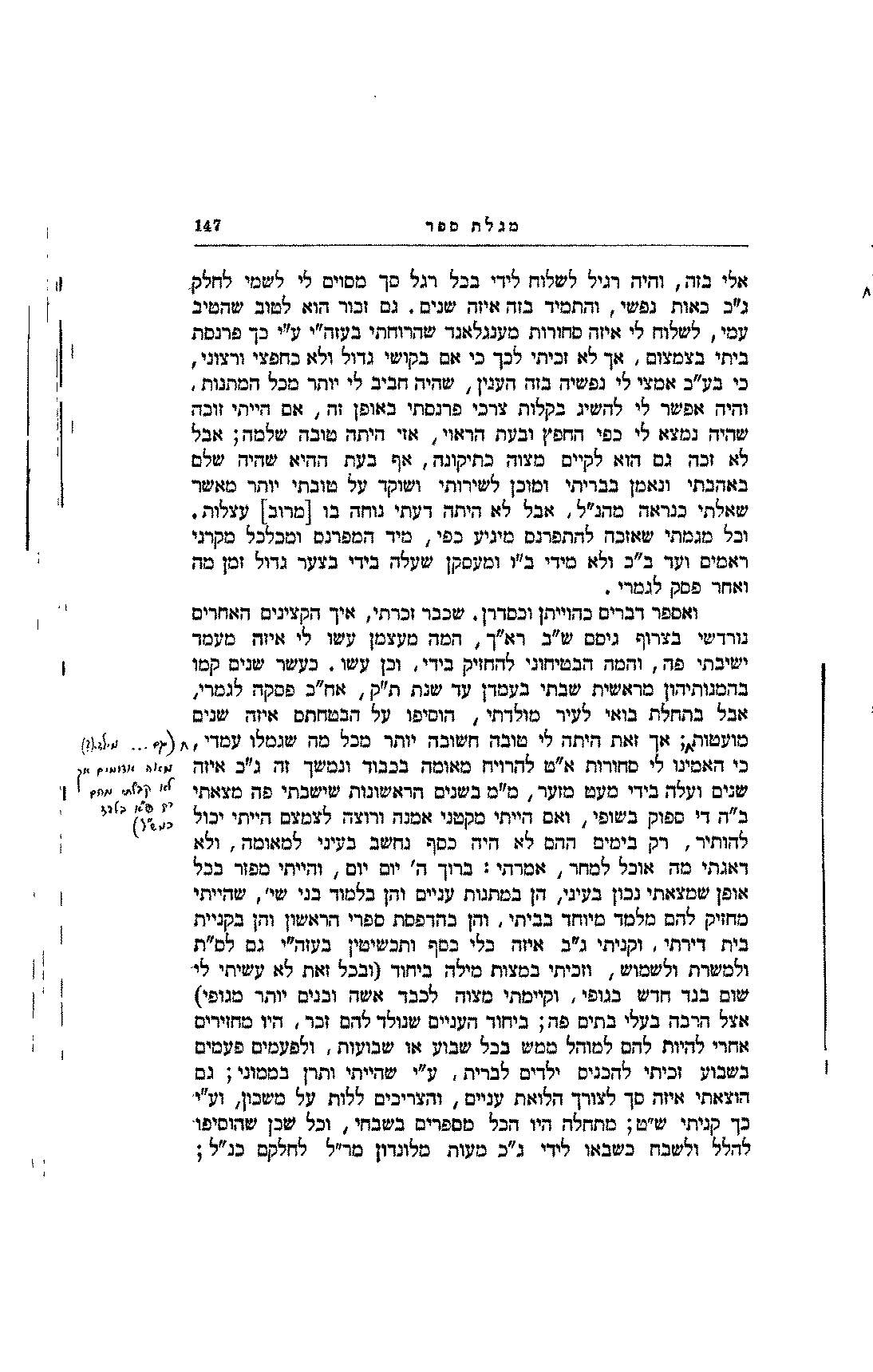
Margin readings in Scholem's copy (1)
| Printed anchor | Type (key sheet) | Mark | Reading | Certainty |
|---|---|---|---|---|
| יותר מכל מה שגמלו עמדי ^, | V: omission | caret after the word; 4-line note in left (outer) margin, its left edge cut off | (קמ... מילג(?)) / מאה אדומים א... / לא קבלתי מהם / ... | partial |
Page 148 (scan 168)
But these two good things also caused me evils, as "the proverb of the ancients" (1 Sam. 24:14) says: There is no good thing from which no evil at all comes forth [a]. So it happened to me in this. For as long as I had plenty and had the means in my hand to bestow on others, it was good, and I was praised by all the people at large. But when it stopped, and "the silver cord was loosed" (Eccl. 12:6), then enemies and liers-in-wait multiplied against me, thinking that I had and did not want [to give]; they imagined that I could command the Norden leaders and their purse as I wished. In truth for some years it was almost so: if I recommended anyone at all, they listened to me and gave fitting gifts at once; even when they saw only my signature in a poor man's hand, they gave him much. As a poor man from here told me, who travelled from here — I gave him my signature, because he was one of the men of my quorum — and when he reached Amsterdam and came to the house of the Nordens, as soon as they saw my signature they brought him in and gave him seven gulden. For in those days these men had plenty from the hand of the Lord in great measure. But one by one their generosity also lessened; so I drew my hand back from them and did not want to burden them. Even what they had fixed on themselves as an obligation for my needs year by year I would not accept from the year [5]500 [1740] on, for then I understood that the plenty was no longer as in former days, although they were certainly still very rich; only a great burden had fallen on them because of their family and their father's house. In the year mentioned, after I married my second wife, their giving stopped altogether, and also my business with the Nordens in Amsterdam. I still had some support from R. L. in London by way of trade; in that year too he sent me a certain sum, and did not add again; only in the trade of tin and haberdashery (Galanterie) he supported me some years more. Afterwards it dwindled "like the fruit of the festival", until it passed away altogether, until at last, in the time of my distress, he would not do me even a kindness that costs nothing, in which one is compelled against the trait of Sodom (b. Bava Batra 12b), as I will write with God's help.
Now, in the first days, which were good, when my livelihood was at hand and I had some capital, my first wife began also to deal in loans on pledges to the neighbours. It was somewhat against my will, for in truth I did not need it, as said above; only she, the wise woman, said: We cannot know "what a day may bring forth" (Prov. 27:1); so it is good to take hold of this too, to obtain some more secure provision for our livelihood, with God's help. So I did not protest. But it brought on me at once an evil eye, from those who dealt in loans, who were grudging about it. One was my neighbour Ḥaim Kh. (?), who used to borrow from me too, a loan of favour and kindness, free; for I loved and drew near
Kahana's notes
- [a] And in the book Tzeror ha-Mor (fol. 24) the opposite is said: There is no evil without some good in it.
אכן שני הדברים הטובים הללו גרמו לי ג"כ רעות, כמשל הקדמוני: אין דבר טוב שלא יצא ממנו רע מאומה א, ככה אירע לי בזה, כי כל זמן שהיה שפע אצלי, והיה ספוק בידי להשפיע לזולתי היה טוב, והייתי משובח לכל העם מקצה, אך כשפסק ונרתק חבל הכסף, אז נתרבו עלי אויבים ואורבים, בחשבם שיש לי ואינו רוצה, דמו בנפשם שיכולני לצוות על הק' נורדשי ועל כיסם כחשקי; ובאמת איזה שנים כמעט כך היה, שאם הייתי ממליץ ג"כ בעד מי שהוא, היו נשמעים אלי והיו נותנים מתנות הגונות מיד, ואפילו כשראו רק חתימתי ביד עני, היו מעניקים אותו הרבה, כאשר הגיד לי עני אחד מכאן, שנסע מזה ונתתי לו חתימתי, באשר היה מאנשי מנין שלי, וכשהגיע לאמשטרדם ובא עד בית נורדשי, כראותם חתימתי מיד הכניסוהו ונתנו לו שבעה זהובים, כי היה להם השפע לאנשים האלה מיד ה' במדה מרובה באותן הימים, אבל אחת לאחת נתמעטה נדיבותם ג"כ, על כן משכתי ידי מהם, ולא רציתי להעמיס עליהם; אפילו מה שקצבו על עצמן לחובה לצרכי דבר שנה בשנה, לא אביתי לקבל משנת ת"ק והלאה, כי אז הבנתי כי אין עוד השפע כימים ראשונים, אע"פ שהיו עדיין עשירים גדולים בודאי, ורק נפלה עליהם הכבדה רבה, בסבת משפחתם ובית אביהם; ובשנה הנ"ל אחר שנשאתי אשתי השניה, נפסק לגמרי הענקתם ועסקי לגמרי עם נורדשי באמשטרדם, ועדיין הי"ל יניקה מר"ל לונדון בדרך מו"מ, גם בשנה ההיא שלח לי סך מסוים ולא יסף עוד, רק במו"מ של בדיל וגלאנטריע החזיק בידי עוד איזה שנים, אח"כ נתמעט כפרי החג, עד שחלף הלך לו מכל וכל, עד שלבסוף בעת דוחקי לא רצה לגמול לי, אפילו טובה שאין בה חסרון כיס, שכופים על מדת סדום, כמש"ל בס"ד. הנה בימים הראשונים שהיו טובים מאלה שהיתה פרנסתי מצויה, והיה לי איזה סך קרן, התחילה זוגתי הראשונה לעסוק ג"כ בהלואה על משכנות לשכנים, והיה קצת נגד רצוני, כי באמת לא הייתי צריך לכך כנ"ל, רק היא האשה חכמה אמרה לא נוכל לידע מה יולד יום, על כן טוב לאחוז גם בזה, להשיג איזה מעמד פרנסה בעזה"י בטוח יותר, על כן לא מחיתי בידה, אבל גרם לי תיכף עין רע, מצד העוסקים בהלואה שהיתה עינם צרה בכך, ואחד היה שכני חיימכי שהיה רגיל ללות ממני ג"כ הלואת חן וחסד חנם, כי הייתי אוהב ומקרב
- [א] ובספר צרור המור (דף כ"ד) נאמר להפך: אין רע שאין בו טוב.
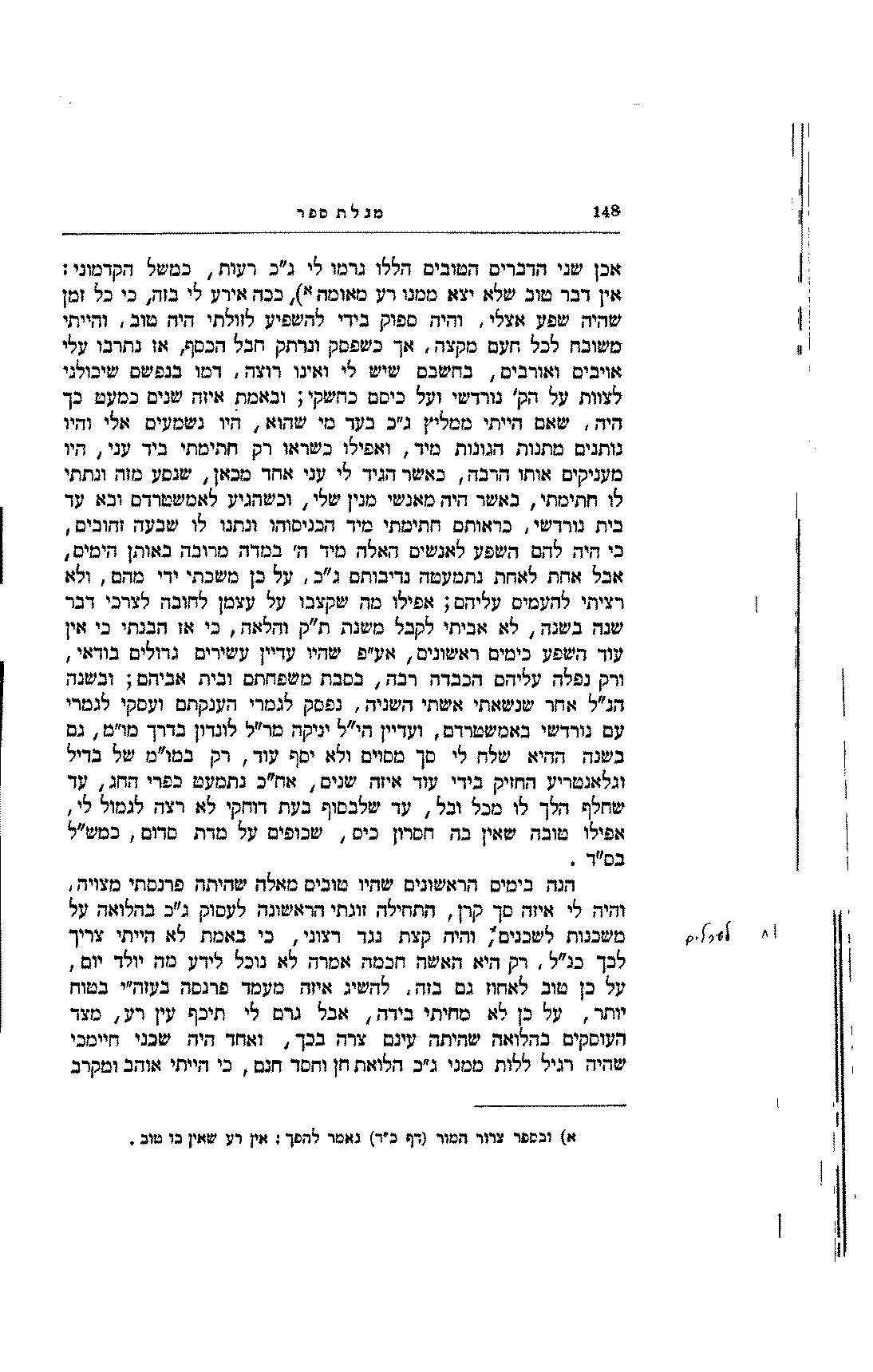
Margin readings in Scholem's copy (1)
| Printed anchor | Type (key sheet) | Mark | Reading | Certainty |
|---|---|---|---|---|
| בהלואה על משכנות לשכנים ^, והיה קצת נגד רצוני | V: omission | v mark after the word; no margin text seen in either scan | - | uncertain |
Page 149 (scan 169)
my neighbour. Afterwards he became my enemy and reviled me and my wife publicly in the street with harsh curses, in the hearing of Jews and gentiles, thinking that I had taken his ma'arufia [a]. In truth the community wanted to pass sharp judgement on him for the disgrace he had done us, but I did not ask for it; he only paid [a fine] to the charity box (?). All the time my first wife was engaged in lending, there was in truth some blessing in it: of the little I put into this business, perhaps about two hundred Reichstaler in all, not only did I lose nothing, but there was also a certain profit in proportion to the capital. But when I married my second wife, a certain sum was sunk in it in loans ⟨S: "to gentiles"(?)⟩, about two thousand Reichstaler, and most of it was lost, "until the money was gone", as I wrote above.
The business in precious stones that I had at first also went down afterwards, and I had to let it go from my hand and leave it in another's hand. For R. D. Worms ⟨S: a two-line note, its edge cut off: "so … / read R. Zalman"(?)⟩, who used to buy these goods from me on credit, made an agreement with me that I would bring the Nordens to deal with him in these goods without a middleman, and he fixed my fee on every sum he bought from them: he would give me a fixed amount, as was proper, according to the value of the goods. So he did and kept his condition once and twice; and then he betrayed me, as became clear to me afterwards without his telling me, and he wanted to hide it from me ⟨S: a four-line note, its edge cut off, partly read: "through R. U. … / who revealed to me in secret … / for he saw … / some goods …"⟩ and to deny it. In the end his deceit was revealed, and he was forced to give me my fee by compulsion; but he did not give me all that was due to me in full, and after that I received nothing more from his hand — who knows how much he hid? Swindlers also got the better of me, to lend to the neighbours ⟨S: "to the gentiles"⟩ on bills of exchange, and much was lost. They also cheated me by bringing me pledges of Jews, saying they belonged to neighbours ⟨S: "gentiles"⟩; afterwards they said they were theirs or others' — perhaps true and perhaps false. Through this quarrels and many disputes surrounded me. One forged pawn tickets (Zettel) on the Lombard and pawned them with me for about four hundred Schock, for they came to a large sum; and when I first showed the tickets to people who knew, they said they were good, and in the end it came out that they were forged, and I lost everything. And still a miracle happened to me, that I had not sent to redeem the pledges from the Lombard, or they would have accused me of having forged those tickets. Blessed be the Lord who saved me! Only what I had lent on them was lost [b]. So too several thousands that I sank in my loans on bonds to the neighbours ⟨S: "to the gentiles"⟩, whom I did not know, relying only on the brokers; and they took the money and divided it with the neighbour ⟨S: "the gentile"⟩ who borrowed, or according to what they settled between them. I laid out portion after portion; this one came and that one was lost. I also tried my hand at lotteries (?), and in the first years, when I used to try one each year, I did not lose, but I gained
Kahana's notes
- [a] See Shulḥan Arukh, Ḥoshen Mishpat (sec. 156, para. 5, in the gloss).
- [b] See below, p. 158.
שכני, אח"כ נעשה לי שונא וחרף אותי ואת אשתי בפומבי ברחוב בקללות נמרצות, באזני יהודים ונכרים, בחשבו שלקחתי מערופי"א שלו א; ובאמת הקהל רצו לעשות בו משפט חרוץ על הקלון שעשה לנו, ולא בקשתי, אבל שקל למטרפסי; וכל זמן שהייתה אשתי הראשונה עוסקת בהלואה. באמת שרתה בו ברכה קצת, כי המעט שהנחתי בזה העסק, אפשר כשני מאות ר"ט בכלל, עכ"פ לא די שלא הפסדתי בו מאומה, אבל היה בו גם רוח מסוים לפי ערך הקרן ; אבל כשנשאתי אשתי שנייה, היה סך מסוים תקוע בו בהלואות כשני אלפים ר"ט, והלך רובו לאבוד עד דכלי זוזי כמש"ל. עוד גם עסק סחורות א"ט שהיה לי מתחלה אח"כ ירד לשערים, והוצרכתי להניחו מידי ולעזבו ביד אחר, כי ר"ד ווירמש, שהיה רגיל לקנות ממני סחורה זו בהקפה נתקשר עמי, שאעמיד הנורדשי שיעסקו עמו בסחורה זו בלי אמצעי וקצב לי שכרי מכל סך שיקנה מהם, שיתן לי כפי הראוי דבר קצוב לפי ערך הסחורה, וככה עשה וקיים תנאו פעם ושתים, ושוב בגד בי, כאשר נתברר לי אח"ז בלי הגיד לי, ורצה להעלים ממני ולהכחיש בכך וסוף נגלית מרמתו, והוכרח לתת לי שכרי בחזקה, אך לא נתן לי כל מה שהגיע לי משלם, ואח"כ לא קבלתי עוד מאומה מידו, מי יודע כמה העלים; גם יכלו לי אנשים רמאים, להלות לשכנים על ח"כ והלך הרבה לאבוד; עוד רמוני להביא לי גם משכנות של יהודים, ואמרו שהם של שכנים, אח"כ אמרו שהם שלהם או של אחרים, אפשר אמת ואפשר פעם שקר, ע"י זה הקיפוני קטטות ומריבות מרובות, ואחד זייף צעטליש על לומברד, והשכינם אצלי בעד כמו ארבע מאות שוק כי היו עולים לסך רב, וכשהראיתי הצעטליש תחלה למכירים, אמרו כי טובים הנה ובסוף נתגלה שזיוף הם ואבדתי הכל; וגם עדיין נעשה לי נס שלא שלחתי לפדות המשכנות מן הלומברד והיו מעלילים עלי שאני זייפתי אותן צעטליש. ברוך ה' שהצילני! רק מה שהלויתי עליהם נפסד ב, וכן כמה אלפים שתקעתי בהלואתי שט"ח לשכנים, שלא הכרתים רק סמכתי על הסרסורים, והם לקחו המעות וחלקו עם השכן הלוה, או כפי מה שנתפשרו ביניהם, הוצאתי מנה על מנה בא זה ואבד זה. גם בלאמין עסקתי ונסיתי, ובשנים ראשונות שהייתי רגיל לנסות באחד בכל שנה לא הייתי מפסיד, אבל הרוחתי
- [א] עיין ש"ע חשן משפט (סי' קנ"ו סעיף ה' בהג"ה).
- [ב] עיין להלן עמוד 158.
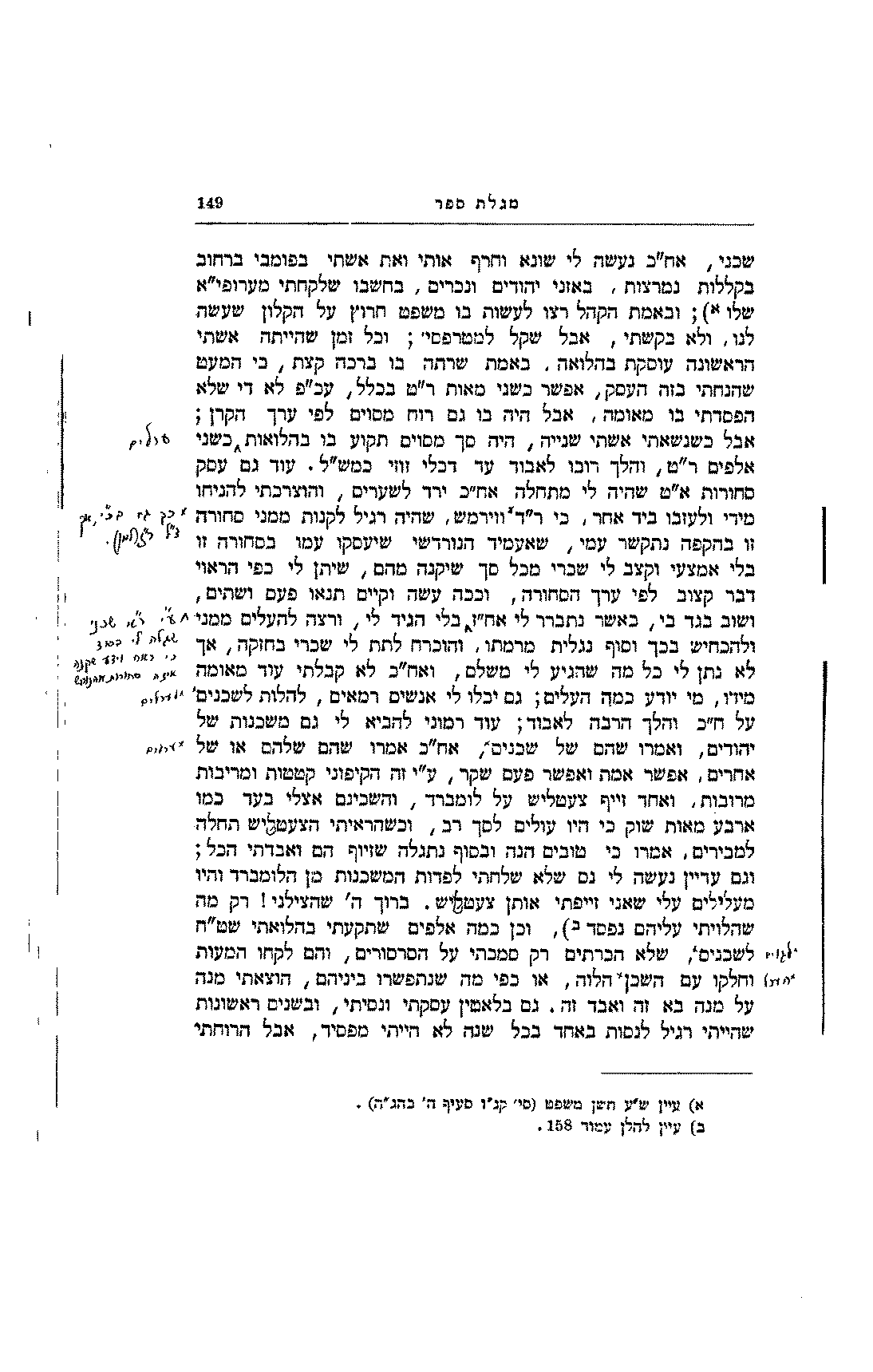
Margin readings in Scholem's copy (7)
| Printed anchor | Type (key sheet) | Mark | Reading | Certainty |
|---|---|---|---|---|
| תקוע בו בהלואות ^ כשני אלפים ר"ט | V: omission | caret below the line; one word in left (outer) margin | בגוים(?) | uncertain |
| כי ר"ד ווירמש x שהיה רגיל לקנות | X: substitution | x mark after the name; 2-line note in left (outer) margin, its left edge cut off | כך ... / צ"ל ר' זלמן(?) | partial |
| ורצה להעלים ממני ^ | V: omission | caret at the line end; 4-line note in left (outer) margin, its left edge cut off | ע"י ר"ו שנ... / שגלה לי בסו[ד] ... / כי ראה ויגע(?) ... / איזה סחורות ... | partial |
| גם יכלו לי אנשים רמאים, להלות לשכנים x | X: substitution | x mark after the word; one word in left (outer) margin | לגוים | fairly sure |
| ואמרו שהם של שכנים x, אח"כ אמרו שהם שלהם או של | X: substitution | x mark after the word; one word in left (outer) margin at the line end | גוים | fairly sure |
| בהלואתי שט"ח לשכנים x, שלא הכרתים | X: substitution | x mark after the word; one word in left (outer) margin | לגוים | fairly sure |
| וחלקו עם השכן x הלוה | X: substitution | x mark after the word; one word in left (outer) margin, its edge cut off | הגו[י] | fairly sure |
Page 150 (scan 170)
something — not a fixed sum, except that once I won a hundred ducats, and apart from that small sums; and for several years I hardly lost at all. But when I began to deal in more than one at a time, they were all lost, and a large sum went to perdition in this too, in those years when the penny was still to be found. But the last was the heaviest: when I returned from exile from Amsterdam, and sat at home for some time without any business, I wanted to deal in selling lottery tickets (?), and I lost a huge sum of mine. I am still paying off this debt, and am forced to pay interest from my money to a gentile, from whom I borrowed eight hundred Reichstaler for this, as I will write with God's help. For everything may the Giver and Taker be praised; may His name be blessed for ever. On Him I have cast my burden (Ps. 55:23); may He fill my lack and send blessing on my money!
I return to the matter, to tell my experiences in Altona. In the first Kislev my wife bore me a male child, and I called him Tzvi Hirsch, after the name of my father, of blessed memory. I longed to raise up a name for him among my descendants; I had already had a son in Brod whom I called by this name, and he did not survive. And because my wife the rabbanit, peace be upon her, had already ceased bearing other sons, I paid no heed to the testament of R. Y. Ḥ. [a]; and for our many sins he too did not survive, as I wrote above. But at his birth I had great joy, for several years had passed in which my wife had ceased bearing, as I wrote above. So I made a great feast on the day of the weaning (?) ⟨S: "the weaning", its edge cut off⟩, for the penny was to be found in my purse at that time, and it was at the beginning of my stay in this place, and I said I would honour the town too. Therefore I made a great meal on the day of the circumcision, and invited to it all the chief leaders of the Three Communities; R. Y. Ḥ., the head of the court, was the godfather, and the guests rejoiced greatly. Nor did I forget to invite some poor men who were reckoned worthy in my eyes and who came to my house. On the third day too there was a feast.
I also founded a society of learned men in my house, to study a chapter of Mishnah every day, morning and evening, and I paid them their wage from the money I received from London, as said above, as long as they persevered properly; until they became negligent and did not come as I had stipulated with them, and even so asked to be given the allowance as of right. Then I dismissed them and gave the money to poor men who were upright in my eyes. And all the time that I had small sons who needed to learn, I kept a rabbi for them in my house at my table, and did not spare my money. This was my way from then on, in Brod, in Emden and in Altona.
After two years and three months my wife bore again my daughter Esther, may she live; because she was born in the days of Purim I called her by this name. Afterwards she bore another daughter, with a blemish, God save us, who died within thirty days of her birth. Afterwards she bore a daughter, whole
Kahana's notes
- [a] The abbreviation means R. Judah the Pious; and see Sefer Ḥasidim (secs. 244 and 246).
מאומה, אך לא דבר מסוים, כי אם פ"א הרוחתי מאה דוקאטין, וזולת זה סך קטנים, וכמעט שלא הפסדתי בשום פנים כמה שנים, אבל כשהתחלתי לעסוק ביותר מאחד בפ"א, נאבדו כולם והלך לטמיון גם בזה סך רב, באותן השנים שעדיין פרוטה מצויה. אבל אחרון הכביד בשובי מגלות מאמשטרדם, זה שבתי הבית איזה זמן בלי שום עסק, רציתי לעסוק במכירת לאטין, ואבדתי סך עצום ממני, שעדיין אני פורע חוב זה, ומוכרח לשלם ממוני רבית לנכרי, שלויתי ממנו שמונה מאות ר"ט לצורך זה כמש"ל בס"ד. ועל הכל ישתבח הנותן ולוקח יהי שמו מבורך לעד, ועליו השלכתי יהבי ימלא חסרוני, וישלח ברכה בממוני! חוזרני לענין לספר קורותי באלטונא. וכבר שבכסלו הראשון ילדה לי אשתי בן זכר, וקראתיו בשם צבי הירש כשם אמ"ה ז"ל, הייתי חושק להקים לו שם בי"ח, וכבר היה לי בן בברודא שקראתיו בשם זה ולא נתקיים, ובשביל שכבר הפסיקה זוגתי הרבנית ע"ה בלידת בנים אחרים, לא שמתי לבי לצואת רי"ח א, ובעו"ה גם הוא לא נתקיים כמש"ל, אך בלידתו הי"ל שמחה גדולה, כי עברו לנו כמה שנים שעמדה אשתי מלדת כמש"ל; לכן עשיתי משתה גדול ביום הנמל, כי היתה הפרוטה מצויה בכיסי בעת ההיא, והיה בראשית ישיבתי במקום הלז, ואמרתי לכבד פני העיר ג"כ, על כן עשיתי סעודה גדולה ביום הברית, וקראתי עליה כל ראשי קציני הג"ק, ורי"ח האב"ד היה הסנדק ושמחו הקרואים מאד, גם לא שכחתי להזמין איזה עניים, שהיו נחשבים הגונים בעיני ואשר הלכו למעון שלי, גם ביום השלישי הי"ל משתה. עוד יסדתי חברה בביתי מלומדים שילמדו פרק משניות בכל יום בבקר ובערב, ושלמתי להם שכרם מן המעות שקבלתי מלונדון כנ"ל, כל זמן שהיו מתמידים כראוי, עד שפשעו ולא באו כאשר התניתי עמהם, ואעפ"כ בקשו לתת להם הקצבה בחזקת היד, אז בטלתים ונתתי המעות לעניים אשר ישרו בעיני. וכל זמן שהי"ל בנים קטנים הצריכים ללמוד, הייתי מחזיק להם רב בביתי על שולחני, ולא חסתי על ממוני. כה דרכי מאז גם בברודא גם בעמדן גם באלטונא, אחר שתי שנים וחדשים שלשה, חזרה אשתי וילדה בתי אסתר תי', ולפי שנולדה בימי הפורים קראתיה בשם זה. אח"כ ילדה עוד בת עם מום ר"ל ומתה בתוך שלשים ללדה. אחר ילדה בת שלמה
- [א] ר"ת: ר' יהודה חסיד, ועיין בספר חסידים (סי' רמ"ד ורמ"ו).
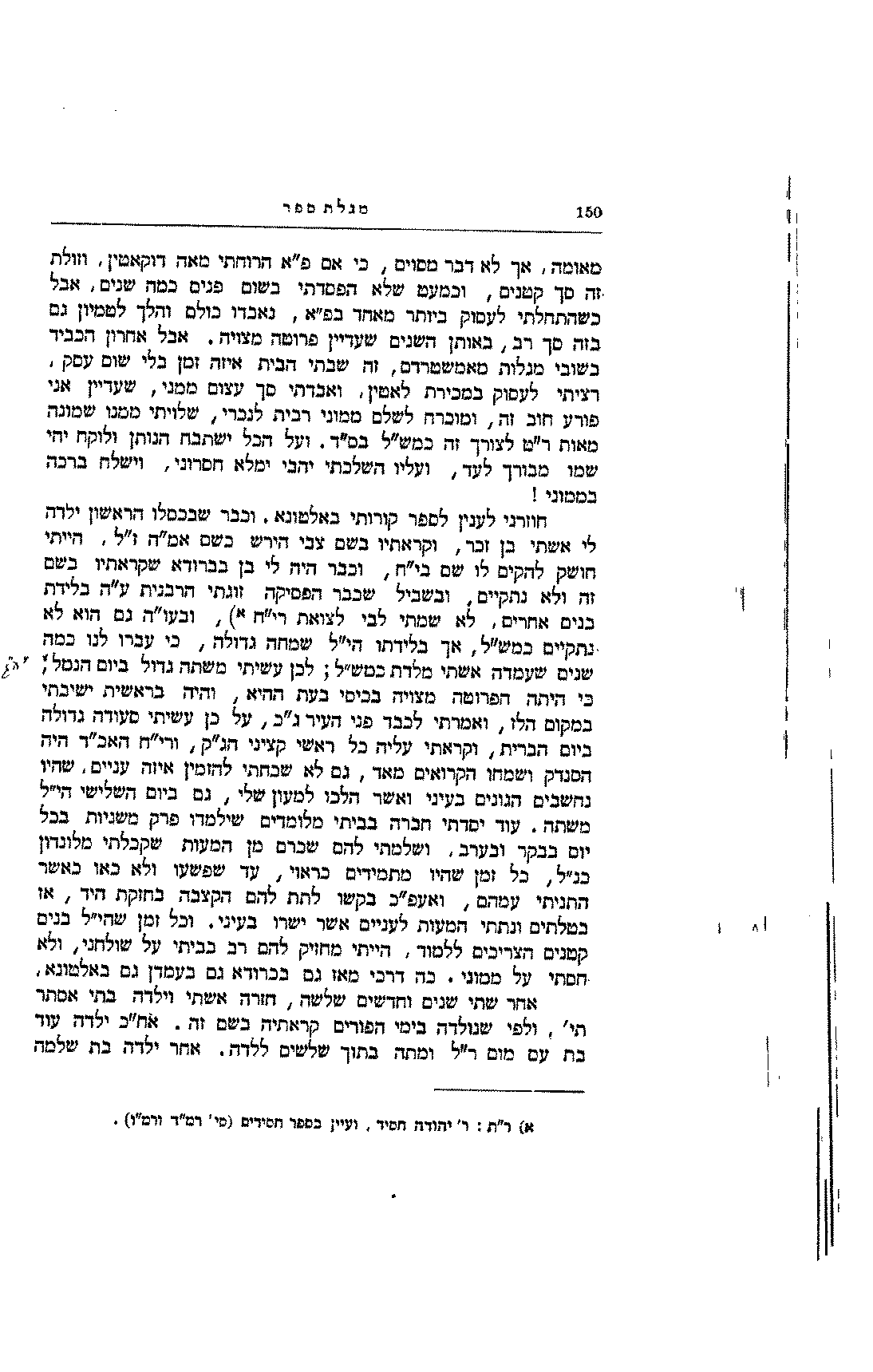
Margin readings in Scholem's copy (1)
| Printed anchor | Type (key sheet) | Mark | Reading | Certainty |
|---|---|---|---|---|
| לכן עשיתי משתה גדול ביום הנמל x, | X: substitution | x mark after the word; one word in the outer margin, its edge cut off (only in the NLI image) | הג[מ]ל(?) | fairly sure |